Grand Ole BBQ Flinn Springs
Grand Ole BBQ at Flinn Springs sits on Old Highway 80 in the unincorporated eastern reaches of San Diego County, where the county's barbecue tradition runs deep and the smoke is the point. This is counter-service, open-air eating in the tradition of American roadside pits, positioned well outside the coastal dining circuit. For visitors making their way through the backcountry, it marks a specific and deliberate detour.
Pearl is the En Primeur Club membership app — saves, bookings, and concierge access live there. Same editors, same standards.
- Address
- 15505 Olde Hwy 80, El Cajon, CA 92021
- Phone
- +1 619 312 0714
- Website
- grandolebbq.com
- Directions
- Get directions
 Saves & bookings on Pearl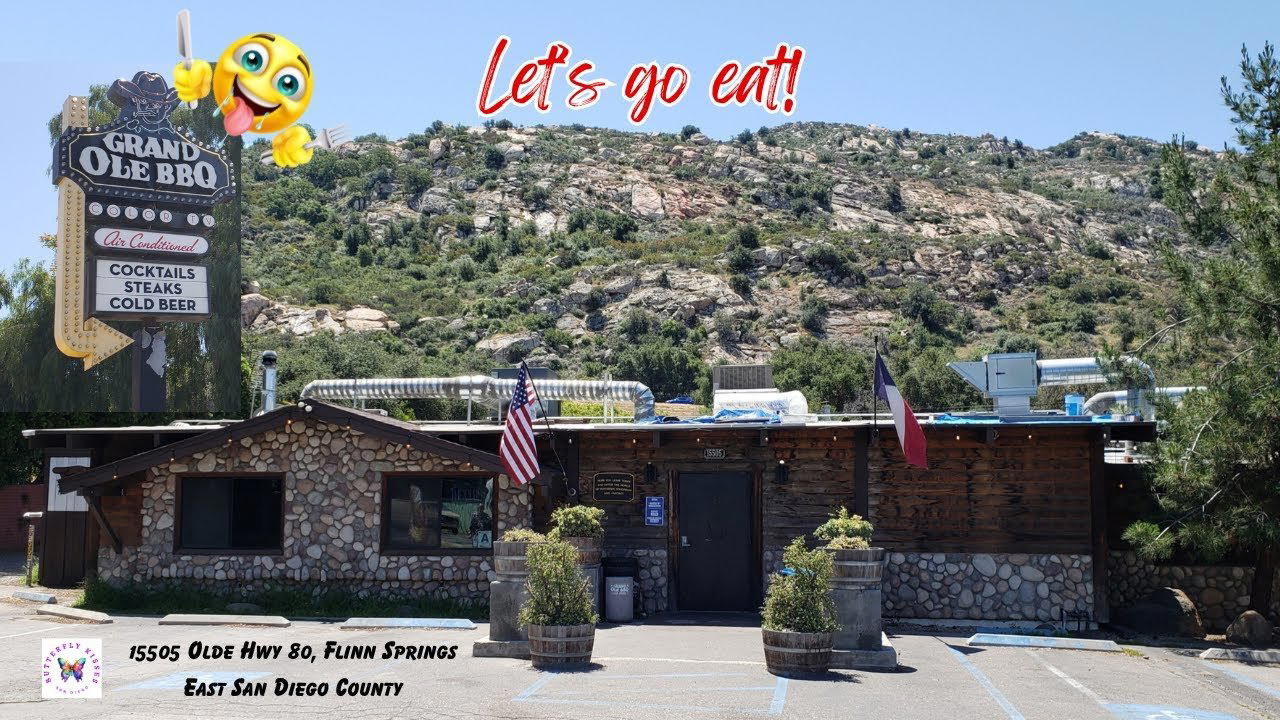
Where the County Ends and the Smoke Begins
East of El Cajon, San Diego County stops feeling like a coastal metropolis and starts feeling like the American interior. Old Highway 80, the route that predates the interstate, cuts through Flinn Springs with the unhurried logic of a road that was never meant to be fast. It is on this stretch that Grand Ole BBQ operates, and the geography is not incidental. American barbecue has always been a product of its terrain: the wood available, the animals raised locally, the pace at which the surrounding community eats. Along this corridor, that logic still holds. The pits here are not a lifestyle concept imported from a food-trend cycle. They are a function of place.
For readers accustomed to the county's coastal dining circuit, the tasting menus at Addison in San Diego, or the farm-driven precision you find at places like Single Thread Farm in Healdsburg or Blue Hill at Stone Barns in Tarrytown, Grand Ole BBQ at Flinn Springs operates in an entirely different register. It is not trying to be those places, and that distinction is the point. Where those kitchens foreground provenance through menu language and tasting notes, a good barbecue pit foregrounds provenance through smoke, time, and fire. The argument is the same; the vocabulary is different.
Sourcing in the Backcountry Tradition
American pit barbecue is, in its most defensible form, one of the country's oldest locally-sourced cooking traditions. Long before ingredient sourcing became editorial shorthand for premium dining, barbecue pitmasters were making decisions that fine-dining kitchens now frame as philosophy: which wood produces the right smoke ring, which animals from which nearby operations hold fat in the right places for a long cook, how the dry air or humidity of a particular region changes the bark on a brisket. These are sourcing decisions made with fire rather than with language, and they define the character of a pit's output as surely as the procurement list at a place like Smyth in Chicago or Providence in Los Angeles.
San Diego County's eastern backcountry has a long agricultural presence, livestock operations, small ranches, and the kind of supply chains that don't require refrigerated long-haul freight. For a barbecue operation positioned on Old Highway 80, that geography represents a practical sourcing advantage. The smoke-forward tradition this part of California maintains is distinct from Central Texas brisket orthodoxy and from the pulled-pork culture of the Carolinas. It tends to absorb the local rather than impose a regional template, which is what gives a place like Grand Ole BBQ at Flinn Springs its specific identity within the broader American barbecue conversation.
This sourcing logic is worth understanding if you are comparing it against the more documented farm-to-table programs you find at venues like Bacchanalia in Atlanta or Frasca Food & Wine in Boulder. The mechanics differ, but the underlying argument, that proximity to ingredients produces better food, does not.
The Roadside Pit in the American Dining Hierarchy
American dining has a complicated relationship with barbecue. The genre sits outside the credentialing systems, no Michelin stars, no formal tasting-menu apparatus, yet commands particularly sustained queues and fiercest loyalty in the country. Franklin Barbecue in Austin, for reference, operates a four-hour wait line for a counter-service experience that costs a fraction of what you would spend at Le Bernardin in New York City or The French Laundry in Napa. The comparison is not about equivalence; it is about how differently American diners assign value.
Grand Ole BBQ at Flinn Springs sits in the regional tier of this hierarchy: a destination within its county rather than a national pilgrimage point, but a destination nonetheless. The Olde Hwy 80 address, about twenty miles east of downtown San Diego, puts it firmly in the backcountry category. Diners who make the drive are self-selecting for the experience the format implies: open-air eating, smoke as the dominant sensory note, portions measured by the pound rather than the course. Compared to the introspective tasting-menu format you find at Lazy Bear in San Francisco or the Korean-inflected precision of Atomix in New York City, this is a different kind of deliberate eating, less about sequencing and more about a single sustained argument made with heat and time.
Context Within San Diego County's Broader Dining Map
San Diego County's dining identity has historically split between its coastal concentration and a sparser, more utilitarian inland and backcountry presence. The county's recognized fine-dining, farm-to-table, and internationally-oriented restaurants cluster overwhelmingly near the coast and in central urban neighborhoods. Further east, the dining map thins out and the format shifts: barbecue operations, roadside diners, and community-anchored spots serve populations that are less connected to the coastal food trend cycle and more connected to the agricultural and ranching history of the region.
Grand Ole BBQ at Flinn Springs occupies that eastern tier. It is not a coastal restaurant that happens to do barbecue; it is a barbecue operation in a part of the county where the format is native. That distinction matters when placing it on our full San Diego County restaurants guide, where the geography of the county's dining is as relevant as the cuisine categories within it. The same ingredient-sourcing logic that drives acclaimed kitchens like Oyster Oyster in Washington, D.C. or the Alpine-regionalist approach at Atelier Moessmer Norbert Niederkofler in Brunico is present here, operating at a different price register and with a different vocabulary.
Planning Your Visit
Grand Ole BBQ at Flinn Springs is located at 15505 Olde Hwy 80, El Cajon, CA 92021, in the unincorporated Flinn Springs community roughly twenty miles east of downtown San Diego. The address is on the historic route rather than off a freeway interchange, which means the approach itself is part of the experience. The format, characteristic of the roadside pit tradition, typically accommodates walk-in traffic rather than advance reservations. Timing your visit earlier in the day is advisable, as barbecue operations of this type frequently sell through their supply before closing.
Comparable Venues
Comparable venues nearby, for context on price, style, and recognition.
| Venue | Cuisine | Price | Notes |
|---|---|---|---|
| Grand Ole BBQ Flinn SpringsThis venue — the venue you are viewing | Central Texas Style BBQ | $$ | Not listed |
| Marigold Bagels | New York-Style Bagels | $$ | North Park |
| The Mission/ East Village | Health-Conscious American Breakfast & Brunch | $$ | Downtown |
| Farmer & The Seahorse | Farm-to-Table American | $$ | University |
| SODA & SWINE | American Meatball House | $$ | Peninsula |
| 94th Aero Squadron | Classic American Steakhouse & Seafood | $$ | Kearny Mesa |
Continue exploring
More in San Diego
Restaurants in San Diego
Browse all →
Bars in San Diego
Browse all →
At a Glance
- Rustic
- Lively
- Family
- Group Dining
- Casual Hangout
- Live Music
- Beer Program
Current opening hours
- Monday
- Closed
- Tuesday
- 12–9 PM
- Wednesday
- 12–9 PM
- Thursday
- 12–9 PM
- Friday
- 12–9 PM
- Saturday
- 12–9 PM
- Sunday
- 12–9 PM
Hours can change for holidays and private events. Last verified .
Family-friendly outdoor environment with fire pits, grass, a wooden train for kids, picnic tables, and live country music on weekends.