Our verdict
Grabneralm sits in the Gesäuse mountain terrain outside Admont, operating in the tradition of Austrian alpine huts where proximity to the source, forest, pasture, and stream, shapes what ends up on the plate. The setting is as much the point as the food: this is a place where the surrounding landscape of the Enns valley informs the cooking in the most direct way possible.

Pearl is the En Primeur Club membership app, where members save venues, book tables and use the concierge.
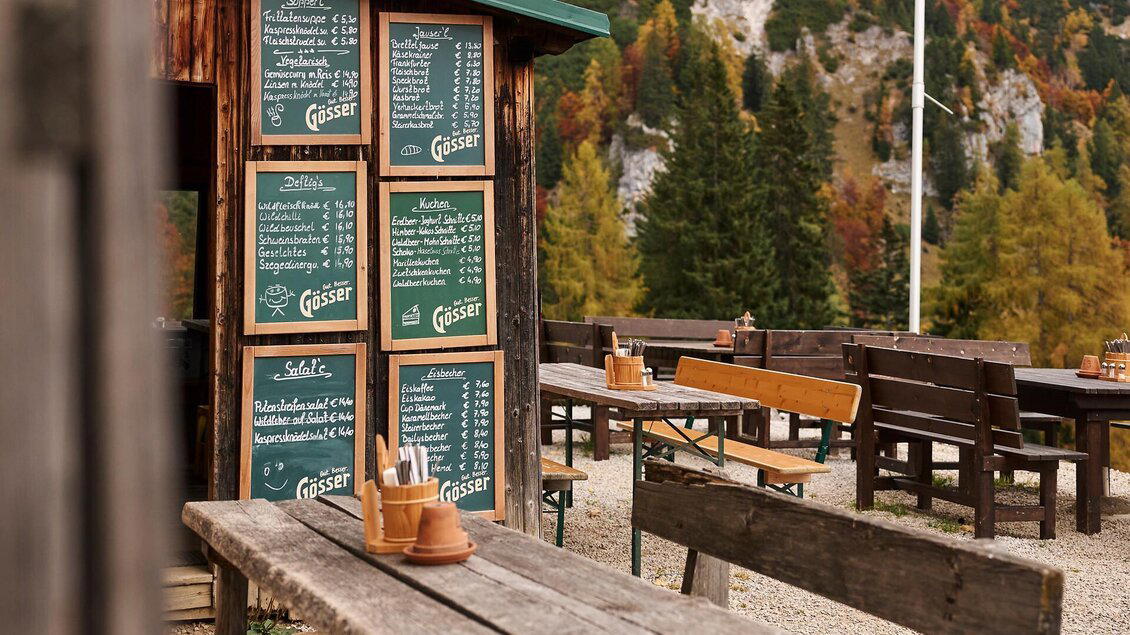
Where the Enns Valley Sets the Menu
The approach to Grabneralm tells you something before you've ordered anything. The address, Buchau 34, in the municipality of Admont, places the alm (mountain pasture hut) firmly in the Gesäuse National Park zone of Upper Styria, a region where the Enns river cuts through limestone karst and the forests run thick with spruce, larch, and beech. Austrian alpine huts of this type exist in a specific culinary category: neither fine dining nor simple snack stops, but places where the sourcing is geographic by necessity. What grows, grazes, or swims within reach is what you eat.
This is a pattern common to the Styrian highlands and the Salzburg–Tirol corridor. In regions where supply chains are short by geography rather than by chef manifesto, the connection between terrain and table is less a marketing proposition and more a daily operational fact. Grabneralm operates within that tradition. The Gesäuse was designated a national park in 2002, which constrains development and, in doing so, preserves the kind of landscape that makes ingredient sourcing from wild and semi-wild sources genuinely possible.
Alpine Hut Cooking and Its Place in Austria's Dining Spectrum
Austria's restaurant culture runs a wide range, from the creative precision of Steirereck im Stadtpark in Vienna to the alpine regionalism of places like Obauer in Werfen or the herb-driven cooking at Kräuterreich by Vitus Winkler in Sankt Veit im Pongau. The alm category sits apart from all of these. It answers to different priorities: physical setting, seasonal availability, and the logic of mountain hospitality rather than the demands of a tasting menu format.
The distinction matters when calibrating expectations. Across the Austrian alpine corridor, from Tirol venues like Griggeler Stuba in Lech and Gourmetrestaurant Tannenhof in Sankt Anton am Arlberg to the more formal Stüva in Ischgl, there is a clear split between mountain venues that have moved toward gourmet formats and those that remain embedded in the practical traditions of hut cooking. Grabneralm's address and setting suggest the latter: a place shaped by where it sits, not by competition with urban fine dining.
That positioning is not a limitation. In the Gesäuse, seasonal wild herbs, game from the national park buffer zones, dairy from high-pasture cattle, and freshwater fish from the Enns and its tributaries are the natural material. The alpine hut that sources well and cooks without overcomplication is doing something harder than it looks, it is letting geography do the editorial work.
Ingredient Geography: What the Gesäuse Produces
Upper Styria is not a region known primarily for its restaurants. It is known for iron and steel history (Eisenwurzen, the iron root), for the Benedictine monastery at Admont with its baroque library, and for the Gesäuse's climbing and hiking terrain. The food culture is embedded in that broader regional identity: Styrian pumpkin oil, local game, mountain dairy, and river fish are the anchoring ingredients across the region's cooking.
In this context, sourcing is less about supply chain innovation and more about not abandoning what the region has always produced. The nearby Buchsteinhaus operates in related mountain terrain, and the pattern across Admont's eating options reflects a shared reliance on the same natural larder. For a broader look at what the area offers, our full Admont restaurants guide maps the local options across formats and price points.
The comparison with Styrian fine dining further down the food chain is instructive. Artis in Graz, the Styrian capital, works within the same regional ingredient base but in an urban, more formally structured format. The alm model strips that structure back and lets the sourcing speak with less mediation. Neither approach is superior; they serve different purposes and different moments in a trip.
How Grabneralm Fits a Broader Austrian Alpine Itinerary
Visitors spending time in the Gesäuse or combining a Styrian stay with stops in Salzburg or Tirol have a coherent set of reference points. The contemporary Austrian fine dining tier, Döllerer in Golling an der Salzach, Ikarus in Salzburg, and Landhaus Bacher in Mautern an der Donau, represents one end of that spectrum. The alpine hut tier, where Grabneralm operates, represents the other. Both reward attention; the latter rewards it differently, on its own terms and at its own pace.
For travellers approaching Austria from a purely urban or fine-dining angle, venues like Taubenkobel in Schützen am Gebirge, Schwarzer Adler in Hall in Tirol, Ois in Neufelden, or Restaurant 141 by Joachim Jaud in Mieming provide useful reference points in the intermediate range. Grabneralm sits outside all of those comparisons, it answers to the logic of place and season, not to the conventions of scored restaurants. For context on how alpine sourcing translates at an international level, the discipline applied at Le Bernardin in New York City or the ingredient precision of Atomix in New York City shows how seriously provenance can be taken; here in the Gesäuse, the version is earthier and less mediated, but the underlying logic is comparable.
Planning a Visit
Grabneralm is located at Buchau 34, 8913 Admont, Austria, within the broader Gesäuse National Park zone. The area is most accessible during the warmer months when mountain roads and trails are open, and the core season for alm-style venues in this part of Austria runs from late spring through early autumn. Admont itself is roughly two hours from Graz by car and accessible from Salzburg with a longer drive through Styria. Given the rural location, arriving by car is the practical approach.
Frequently asked questions
Is Grabneralm good for families?
The Buchau 34 address places Grabneralm in a relaxed, outdoor-oriented corner of the Gesäuse National Park zone, which suits families well. Alpine huts in this part of Upper Styria typically operate informally, with open-air seating and a pace that does not demand rigid dining protocol. Children accustomed to outdoor activity will find the setting natural rather than restrictive.
How would you describe the vibe at Grabneralm?
Grabneralm sits within the Gesäuse National Park zone outside Admont, which anchors the atmosphere firmly in working mountain-hut territory rather than resort polish. Expect terrain, not theatre: the Enns valley setting shapes the mood more than any interior design decision. This is the unhurried, boot-friendly end of Austrian hospitality.
What type of traveller is Grabneralm best suited to, and when is the ideal time to visit?
Grabneralm at Buchau 34, Admont is positioned for visitors already engaged with the Gesäuse National Park on foot or by road, hikers, cyclists, and those touring Upper Styria rather than day-trippers seeking a standalone dining destination. Accessibility in this part of the Enns valley is strongest during the warmer months, when alpine hut operations in the Gesäuse zone are typically at full capacity. Winter access depends on conditions and should be confirmed ahead of any visit.
What's the address for Grabneralm?
Grabneralm is located at Buchau 34, 8913 Admont, Austria, Admont.
Is Grabneralm reservation-only?
Alpine huts in the Admont area and the Gesäuse zone vary considerably, some operate walk-in only during hiking season, others take advance bookings for larger groups or weekend lunch service. Contacting the venue directly before making the drive from Admont is the practical approach.
Comparable Spots, Quickly
| Venue | Cuisine | Price | Awards | Notes |
|---|---|---|---|---|
| GrabneralmThis venue (the venue you are viewing) | Traditional Austrian Alpine Cuisine | $20–30 | Not listed | Not listed |
| Steirereck im Stadtpark | Modern Austrian Fine Dining | $200–300 | 3 Michelin Stars · World's 50 Best #33 | Creative |
| Döllerer | Modern Alpine Cuisine | $100–150 | 2 Michelin Stars · La Liste Top Restaurants | Contemporary Austrian, Innovative |
| Ikarus | Guest Chef Fine Dining | $200–300 | 2 Michelin Stars · La Liste Top Restaurants | Modern European, Creative |
| Konstantin Filippou | Modern Fish-Led Fine Dining | $200–300 | 2 Michelin Stars · La Liste Top Restaurants | Modern European, Modern Cuisine |
| Landhaus Bacher | Classic Austrian Fine Dining | $100–150 | 2 Michelin Stars · La Liste Top Restaurants | Austrian, Classic Cuisine |
Continue exploring
More in Admont
Restaurants in Admont
All restaurants in Admont →
Hotels in Admont
Browse all →
Wineries in Admont
Browse all →
Details
- Scenic
- Rustic
- Classic
- Casual Hangout
- Group Dining
- Family
- Panoramic View
- Terrace
- Garden
- Mountain
- A La Carte
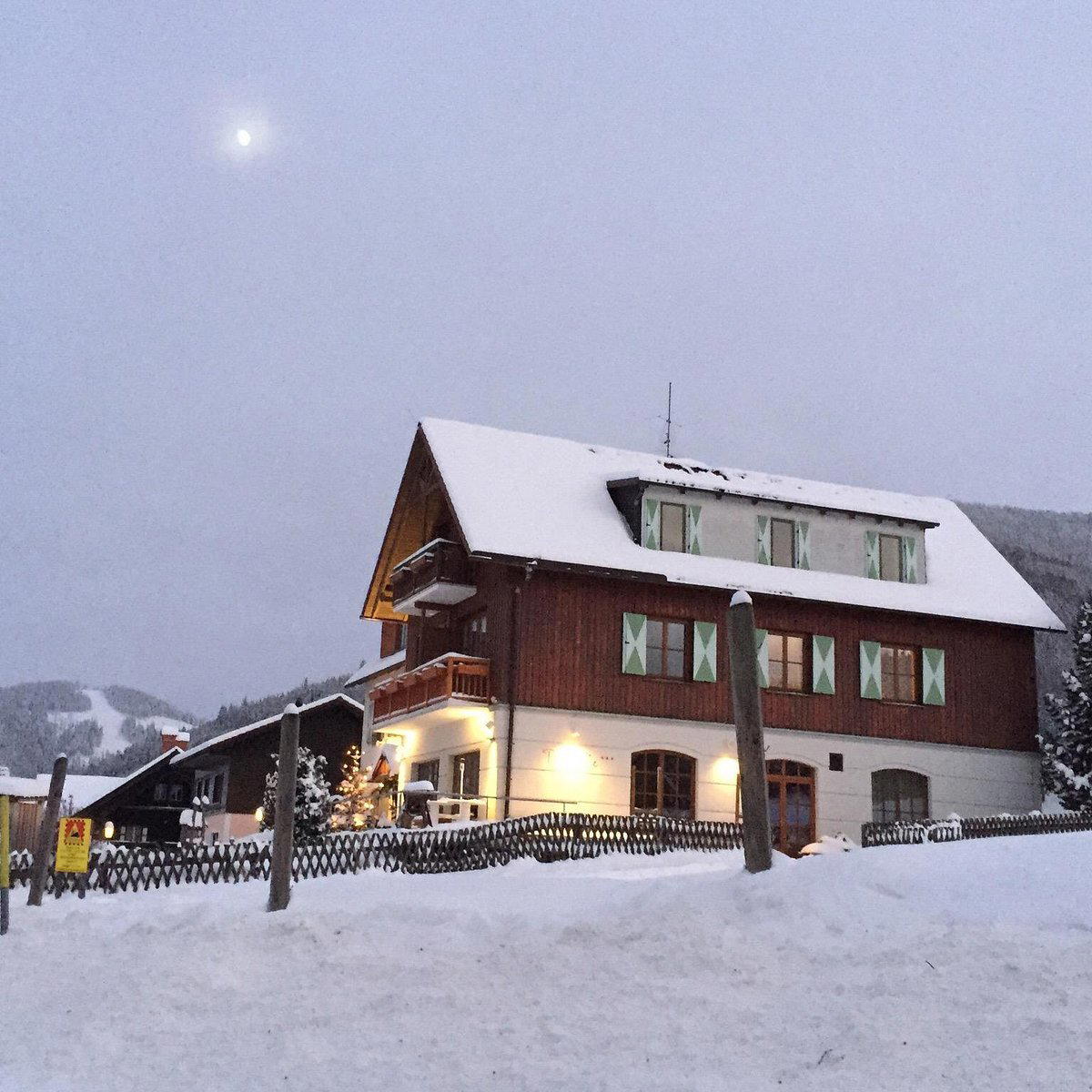
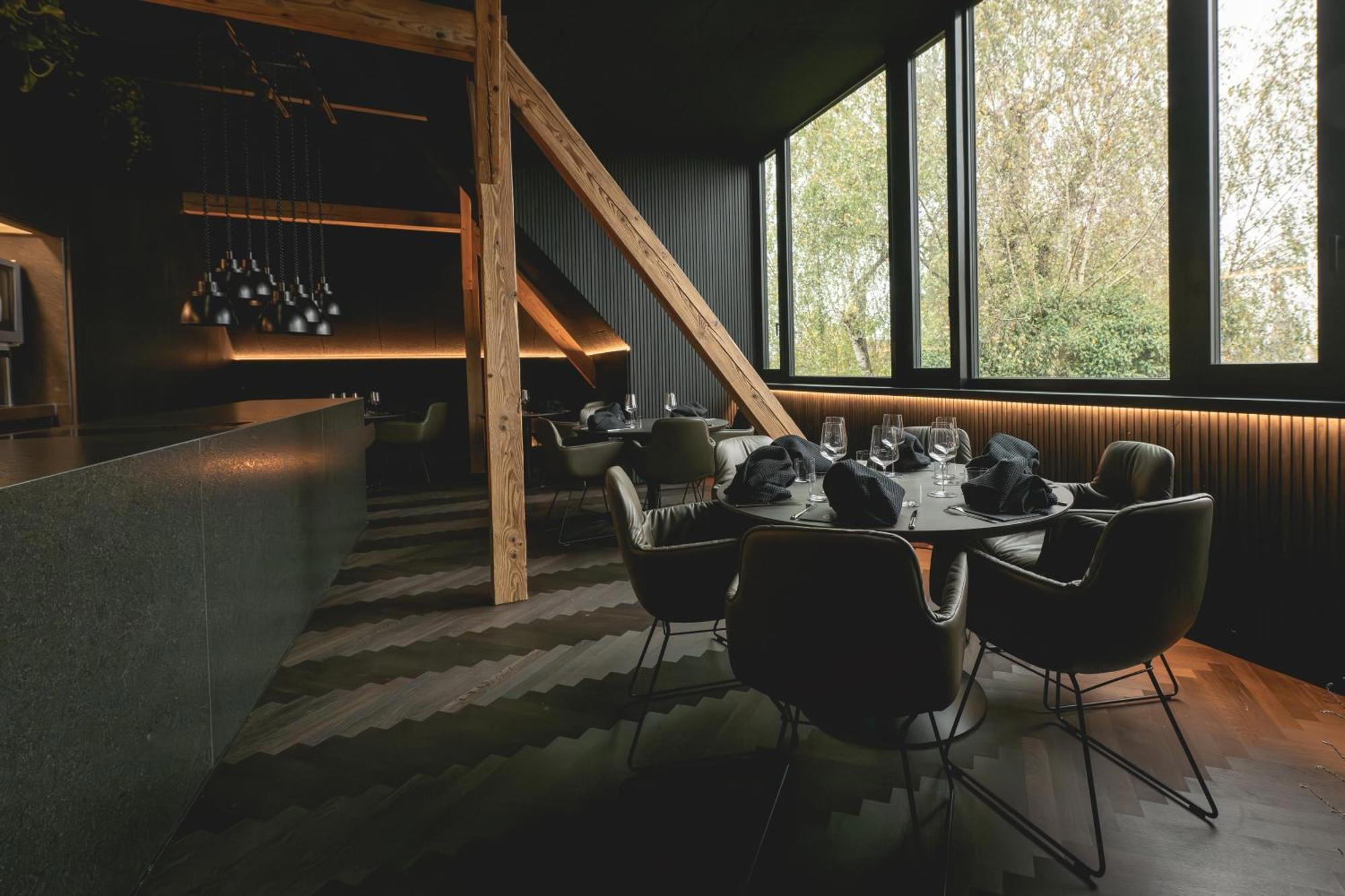
Bright and airy with natural mountain light, featuring rustic alpine decor and expansive windows showcasing the dramatic Gesäuse landscape.