Edelrautehütte
Our verdict
Edelrautehütte sits in the mountain terrain above Hohentauern, a Styrian alpine village in the Ennstaler Alps where altitude and landscape shape what ends up on the plate. The hut occupies a category of Austrian mountain dining where the sourcing story is inseparable from the setting, elevation, seasonality, and proximity to pasture and forest define the kitchen's range. For the full picture of dining in the area, see our Hohentauern restaurants guide.

Pearl is the En Primeur Club membership app, where members save venues, book tables and use the concierge.
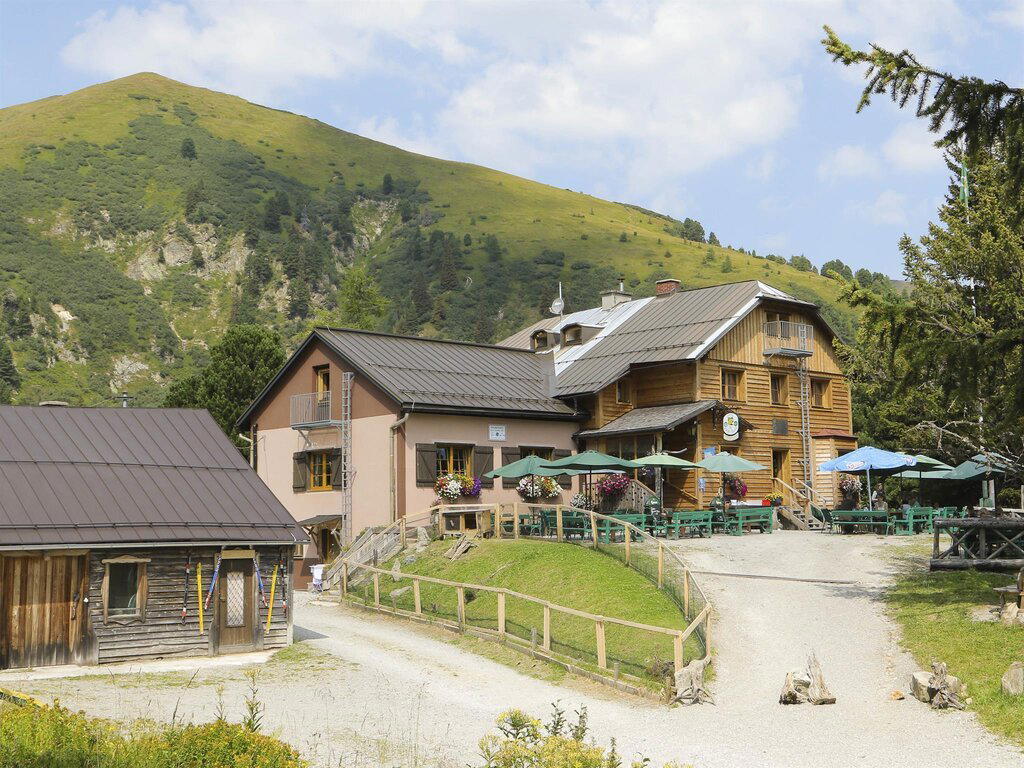
Mountain Terrain as Ingredient: Dining at Altitude in the Ennstaler Alps
There is a particular logic to alpine hut dining in Styria that has little to do with refinement in the urban sense. The elevation dictates the menu. At altitude in the Ennstaler Alps, the growing season is compressed, the pasture is grazed by cattle and sheep that move slowly across steep ground, and the forests produce mushrooms, berries, and game that no lowland supplier can replicate. Edelrautehütte, positioned above the small mountain village of Hohentauern in the Murtal district of Styria, operates inside that logic. The setting is not a backdrop, it is a supply chain.
Hohentauern itself sits at roughly 1,274 metres above sea level, one of the higher-altitude permanently inhabited settlements in Styria. The pass road connecting the Murtal and Paltental valleys has historically made the area a transit point, and the huts along that corridor have long served a practical function: shelter, warmth, and food for those moving through mountain terrain. That tradition shapes what alpine establishments like Edelrautehütte represent in the Austrian dining context, less destination restaurant, more integrated part of the landscape's hospitality logic.
The Sourcing Argument for High-Altitude Austrian Kitchens
Austria's most discussed fine dining addresses, Steirereck im Stadtpark in Vienna, Döllerer in Golling an der Salzach, and Landhaus Bacher in Mautern an der Donau, share a sourcing philosophy that prizes Austrian regional produce over imported prestige ingredients. What separates mountain hut kitchens from those urban or peri-urban addresses is proximity. A kitchen at altitude in Styria does not need to arrange relationships with highland producers; those producers are, in many cases, adjacent. Dairy from cattle grazed on alpine meadows, game hunted in surrounding forests, herbs gathered from the slopes, these are not curated additions but operational defaults.
This is the category in which Austrian alpine huts occupy a distinct position relative to their urban counterparts. Obauer in Werfen and Kräuterreich by Vitus Winkler in Sankt Veit im Pongau represent the model where alpine ingredient sourcing is formalised into a kitchen program with national recognition. Mountain huts like Edelrautehütte operate at a different register, the sourcing is often informal and hyper-local, the menu shaped by what the surrounding terrain offers at a given point in the season rather than by a structured tasting format.
Seasonality Without Compromise
The alpine seasonal calendar in Styria runs differently from the wine-country or river-valley version. Snow can persist above 1,200 metres into May; the summer grazing season is concentrated into three or four months. Autumn brings the most productive foraging window, mushrooms, game, and the last of the high-altitude herbs before the first hard frosts close the season. A kitchen working within that calendar has limited room for off-season workarounds. What is available is what is served.
This hard seasonality is, arguably, what gives mountain hut kitchens their credibility on the sourcing question. Establishments operating in lower-altitude Austrian regions, even committed ones like Taubenkobel in Schützen am Gebirge or Ois in Neufelden, have access to a longer and more varied growing season. The mountain hut operates under a tighter constraint, and that constraint produces a more direct relationship between terrain and plate.
Where Edelrautehütte Sits in the Hohentauern Dining Picture
Hohentauern's dining options are few, which is itself informative. The village is small enough that the available establishments define the local eating experience rather than compete within a broader scene. Restaurant and Cafe Passhöhe represents the other identifiable address in the immediate area. Between them, these two establishments cover the practical range of what the pass offers visitors moving through or staying in the area.
For those arriving from the Styrian or Carinthian side and looking to extend time in the mountains, Edelrautehütte occupies the hut category: a place reached on foot or by mountain road, associated with the physical experience of altitude rather than the dining room comfort of a valley restaurant. This positions it differently from the Tyrolean alpine dining addresses, Gourmetrestaurant Tannenhof in Sankt Anton am Arlberg, Stüva in Ischgl, or Griggeler Stuba in Lech, which have formalised the mountain setting into recognised fine dining formats with Michelin attention. Hohentauern's version is less polished and more direct.
Planning a Visit to Edelrautehütte
Hohentauern is not a destination with frequent public transport connections. Access from Judenburg to the south or Liezen to the north requires a vehicle, and the pass road itself is seasonal, winter conditions can close or complicate the route between November and April. For those combining a visit with broader Austrian alpine touring, the region sits within reasonable driving distance of Graz to the southeast and within the broader Styrian alpine corridor that connects several mountain communities. Given the limited venue data available publicly, contacting the hut directly on arrival or through local tourism channels in Hohentauern is the most reliable approach for confirming seasonal opening, food availability, and any booking requirements. The nature of mountain hut hospitality in Austria generally means walk-in visits are standard during operating season, though groups should confirm ahead. For broader context on eating and drinking in the area, our full Hohentauern restaurants guide covers the available options.
Those building a longer Austrian dining itinerary through the mountain regions might also consider Atelier Fischer in Sankt Gilgen or, for a point of contrast with international-facing formats, Ikarus in Salzburg. The range between a Styrian mountain hut and a Salzburg restaurant with a rotating global guest chef program illustrates how wide the Austrian dining spectrum has become. For those travelling from further afield and calibrating expectations, the comparison with ambitious sourcing-led formats internationally, Lazy Bear in San Francisco or the seafood-focused precision of Le Bernardin in New York City, underscores that alpine hut dining operates on entirely different terms: informality, terrain-dependence, and seasonal limitation are features rather than shortcomings.
Frequently asked questions
Would Edelrautehütte be comfortable with kids?
Alpine huts in Styria generally run at a relaxed pitch, and Edelrautehütte's setting in Hohentauern, a small mountain village above 1,200 metres, suits families arriving after a hike or ski outing. The informal hut format tends to be more forgiving of children than a formal restaurant. That said, access requires a vehicle from Judenburg or Liezen, so arrival logistics with young children need planning.
What's the overall feel of Edelrautehütte?
Edelrautehütte operates within the logic of a Styrian alpine hut rather than a destination restaurant. The setting in Hohentauern places it at altitude in the Ennstaler Alps, where the surroundings and seasonal constraints shape the atmosphere more than interior design choices. Expect a working mountain hut tone rather than an urban dining room.
How do you reach Edelrautehütte in Hohentauern, and is it open year-round?
Hohentauern sits in the Ennstaler Alps and is accessible by car from Judenburg to the south or Liezen to the north, public transport connections are limited. Like most high-altitude Styrian huts, seasonal closure is a practical reality: snow can persist above 1,200 metres into May, and operating windows typically align with hiking and ski seasons. Confirming current opening dates before travel is advisable given the village's remote position.
What dish is Edelrautehütte famous for?
No single dish is publicly documented as a signature at Edelrautehütte. Alpine huts in this part of Styria typically anchor their menus to what the season and altitude allow, game, dairy, and foraged ingredients through summer and autumn, with availability shifting sharply once snow covers the upper passes. What's on the plate depends heavily on when you visit.
How do I find Edelrautehütte?
Edelrautehütte is located at 8785, Austria, Hohentauern.
Do they take walk-ins at Edelrautehütte?
Walk-in practice at Edelrautehütte is not formally documented, but Hohentauern's remote position on the Phyrn-Eisenwurzen route means visitor numbers are bounded by geography rather than hype. Arriving without a reservation is less risky here than at an urban address, though calling ahead is sensible given the limited local dining options in the village.
What do critics highlight about Edelrautehütte?
In the Styrian alpine context, the relevant reference points are regional: Steirereck, Döllerer, and Landhaus Bacher set the benchmark for Austrian seasonal sourcing, and Hohentauern huts sit in a different category entirely, valued for terrain-driven cooking rather than competition with those dining room formats.
In Context: Similar Options
Comparable venues nearby, for context on price, style, and recognition.
| Venue | Cuisine | Price | Notes |
|---|---|---|---|
| EdelrautehütteThis venue (the venue you are viewing) | Traditional Austrian Mountain Hut Cuisine | $20–30 | Not listed |
| Restaurant & Cafe Passhöhe | Authentic Austrian | $20–30 | Hohentauern |
| Jedermann's | Austrian | $20–30 | Innsbruck city center |
| Landhotel Gafringwirt | Regional Austrian Country Inn Cuisine | $30–50 | Mostviertel |
| Buchsteinhaus | Traditional Austrian Regional Cuisine | $20–30 | Gesäuse National Park |
| Mostschenke im Heustadl Restaurant & Heurige | Traditional Austrian Heuriger | $20–30 | Rindbach |
Continue exploring
More in Hohentauern
Restaurants in Hohentauern
All restaurants in Hohentauern →
Hotels in Hohentauern
Browse all →
Details
- Rustic
- Cozy
- Scenic
- Family
- Casual Hangout
- Terrace
- Historic Building
- Mountain
- A La Carte
- Buffet
- Vegetarian Friendly
Cozy rustic mountain hut atmosphere with friendly service and hearty, warming ambiance ideal for post-hike relaxation.