Gorilla

Our verdict
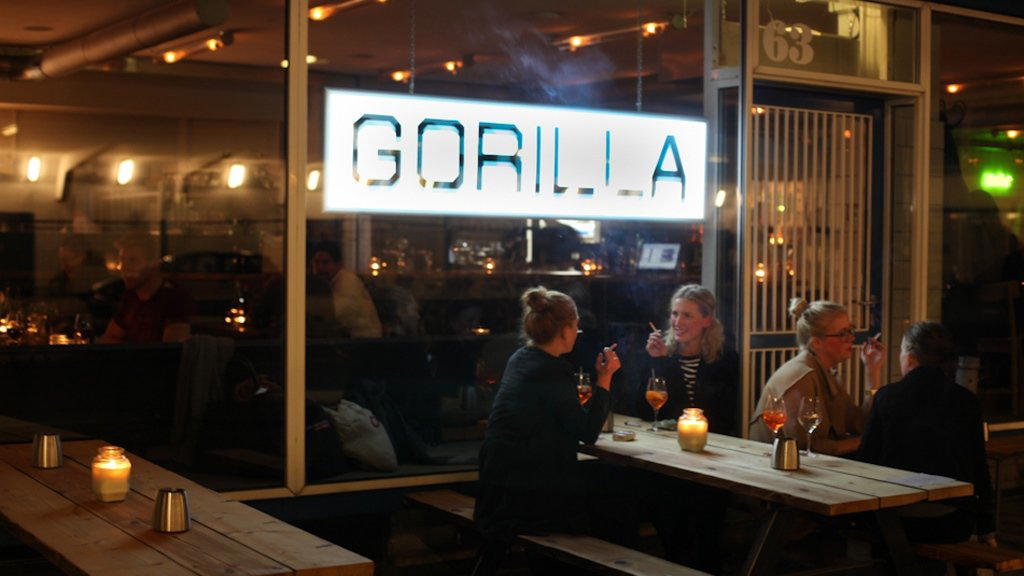
Gorilla occupies a former meatpacking warehouse on Flæsketorvet in Vesterbro, where the neighbourhood's industrial bones have been turned into one of Copenhagen's more relaxed but seriously sourced dining rooms. The kitchen draws on a tradition of ingredient-led cooking that sits closer to the market-driven end of the New Nordic spectrum than to the tasting-menu formalism of the city's Michelin circuit.

Pearl is the En Primeur Club membership app — saves, bookings, and concierge access live there. Same editors, same standards.
- Address
- Flæsketorvet 63, 1711 Vesterbro, Denmark
- Phone
- +4533338330
- Hours
- Mon–Wed 5:30 PM–12 AMThu 5:30 PM–1 AMFri–Sat 5 PM–2 AMSun 5:30 PM–12 AM
- Website
- restaurantgorilla.dk
- Directions
- Get directions
- Booking
- Book on the venue's website
The menu
What to order
- Lamb Shank
- Risotto
- Iron Steak
- Spaghetti Guanciale
- Veal Tartare
- Affogato
Vesterbro's Meatpacking District, and What It Asks of a Restaurant
Flæsketorvet — Copenhagen's meatpacking square — has gone through a familiar post-industrial transition over the past two decades, shifting from working abattoir to a cluster of bars, restaurants, and late-night venues that still carry the district's utilitarian aesthetic in their bones. Exposed brick, steel fittings, high ceilings, and the faint memory of a harder-working past are the dominant design language here. In that context, a restaurant either leans into the setting or fights it. Gorilla, at number 63 on the square, leans in.
The address places it squarely inside Vesterbro's most visited stretch, where weekend crowds spill across the cobbles and the noise level is reliably high. This is not the Copenhagen of hushed omakase counters or white-tablecloth formality. The dining culture here runs toward informality, convivial tables, and kitchens that frame their ambition in produce rather than ceremony. That context matters for understanding where Gorilla fits in the city's broader dining picture, it belongs to a cohort of Copenhagen restaurants that treat sourcing and technique as serious disciplines while keeping the room itself deliberately unpretentious.
Where the Food Comes From, and Why That Shapes Everything
Copenhagen's ingredient-led restaurant scene has its roots in the New Nordic movement that emerged in the early 2000s, codified most publicly by the kitchen at Noma and refined over subsequent years by a generation of chefs who trained there and then opened their own rooms across the city and the country. The movement's central proposition, that Nordic producers, foragers, and farmers could support a world-standard kitchen without reliance on imported luxury goods, has now filtered into the broader restaurant culture well below the €€€€ tier occupied by Geranium, Alchemist, and Koan.
Gorilla operates within that downstream current. The kitchen's orientation toward local and seasonal produce is less a marketing position than a practical frame that shapes the menu's rhythm through the year. Danish spring produce, coastal herbs, early root vegetables, young dairy, gives way to summer's abundance of berries, wild greens, and open-water fish, then to autumn preserving traditions and the long winter stretch where fermentation, curing, and storage techniques move to the front of the repertoire. This seasonal rotation is not unique to Gorilla; it is the operating logic of most serious Copenhagen kitchens. What matters is whether a restaurant executes within that logic with enough discipline and specificity to make it legible on the plate.
Denmark's agricultural geography concentrates high-quality producers within a relatively compact radius of Copenhagen, which gives kitchens in the city genuine access to short-supply-chain sourcing in a way that few major European capitals can match. That structural advantage is one reason why ingredient-focused restaurants at a range of price points have flourished here. Kadeau, for instance, built its identity explicitly around Bornholm island produce, while Jordnær in Gentofte and Henne Kirkeby Kro in Henne anchor their kitchens to hyperlocal supplier relationships outside the capital. Gorilla's Vesterbro location puts it in the city's grain rather than on its quiet periphery, which shapes both its clientele and its pace.
The Room and the Format
The physical environment at Flæsketorvet 63 reflects the meatpacking district's characteristic register: industrial-scale space softened by warm light and the controlled noise of a full dining room. The format is closer to the sharing-plates and small-dishes model that has become Copenhagen's default informal dining grammar than to the set tasting menu structure that governs the city's starred restaurants. That format suits the neighbourhood, Vesterbro draws a mixed crowd of locals, visiting food-focused travellers, and the after-work contingent from the offices that now occupy the surrounding district, and it allows the kitchen to rotate dishes with seasonal availability rather than locking into a fixed progression.
Compared to the disciplined theatrics of Alchemist's multi-stage experience or the precision counter work at Koan, Gorilla's proposition is lower-pressure and higher-volume. That is not a criticism; it is a description of a different and legitimate position in the market. Not every meal needs to be an event. Some of the most instructive dining in any city happens in the middle tier, where kitchens are working without the safety net of high ticket prices and long booking windows.
Copenhagen's Broader Dining Geography
Understanding Gorilla also means understanding its position within Denmark's wider restaurant map. Copenhagen concentrates the country's highest-profile kitchens, but serious cooking has spread to secondary cities and rural settings over the past decade. Frederikshøj in Aarhus, Alimentum in Aalborg, ARO in Odense, LYST in Vejle, Domæne in Herning, Dragsholm Slot Gourmet in Hørve, Frederiksminde in Præstø, and MOTA in Nykøbing Sjælland all represent the geographical spread of the country's kitchen ambition. Gorilla, by contrast, is resolutely urban and resolutely informal, a Vesterbro restaurant in the fullest sense of that description.
For travellers building a multi-day Copenhagen itinerary, the meatpacking district fits naturally into a programme that might also include a longer meal at one of the city's tasting-menu houses. The contrasts are instructive. A night at Geranium or an evening working through Alchemist's extended format occupies a different register entirely from a meal at Gorilla, and both are worth experiencing on the same trip, not as alternatives but as complementary readings of the same city's food culture. The comparison points are also international: kitchens like Le Bernardin in New York and Atomix in New York represent the high-formality end of a spectrum that Gorilla occupies at a very different coordinate.
Planning a Visit
Gorilla sits at Flæsketorvet 63 in Vesterbro, a ten-minute walk from Copenhagen Central Station and easily reached on foot from most of the city's central accommodation. The meatpacking district is most animated from Thursday through Saturday, when the square fills early and stays busy into the night. Arriving before 19:00 on weekends gives you the better chance of a calmer entry into the room; later in the evening the atmosphere in the surrounding district builds considerably. For the fuller Copenhagen dining picture, see our complete Copenhagen restaurants guide.
Frequently asked questions
What's the overall feel of Gorilla?
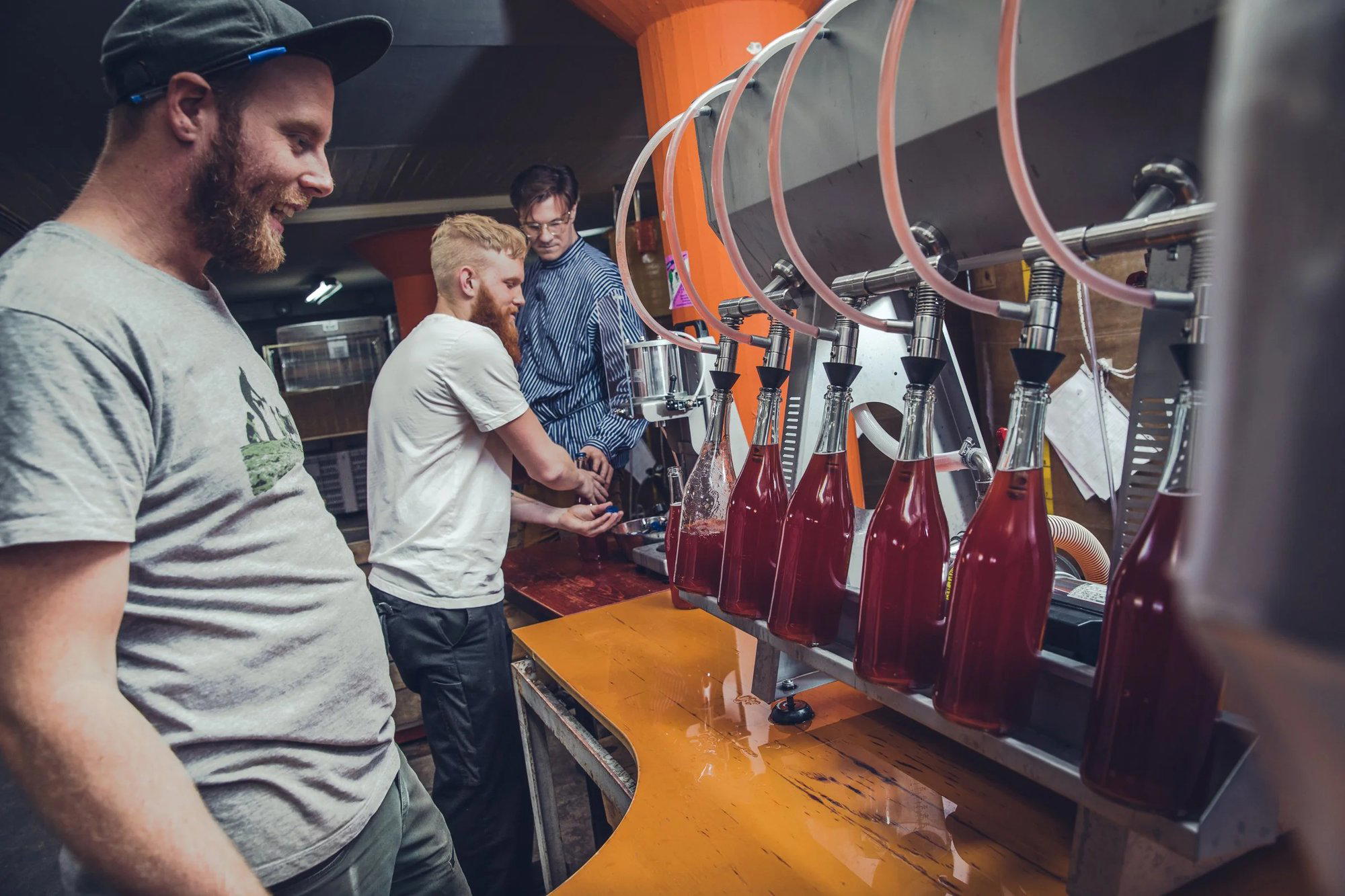
Gorilla occupies the post-industrial register that Flæsketorvet's meatpacking architecture sets naturally: generous proportions, warm light doing real work against raw materials. The pitch is confident and informal rather than ceremonial, closer in spirit to a neighbourhood room with serious sourcing than to the high-ceremony tasting-menu format that Copenhagen's starred tier operates on. It sits at Flæsketorvet 63 in Vesterbro, a district that has made a point of sustaining this kind of mid-register ambition.
Where do I go for Gorilla?
Gorilla is located at Flæsketorvet 63, 1711 Vesterbro, Denmark, Copenhagen.
Is Gorilla in Copenhagen's Vesterbro a good option for a weeknight dinner without a reservation made months in advance?
Gorilla's Vesterbro address at Flæsketorvet 63 puts it within Copenhagen's more accessible informal dining tier, distinct from the heavily pre-booked starred restaurants that dominate the city's international profile. While specific booking lead times are not formally documented, the format — produce-driven, no mandatory tasting menu — draws a different demand pattern than the city's multi-month reservation queues.
What's the signature dish at Gorilla?
No single dish has been formally established as a fixed signature, which reflects a kitchen approach organised around seasonal produce rather than a static menu. In Copenhagen's ingredient-led restaurant culture, that flexibility is a deliberate position, not an oversight. What recurs is a commitment to sourcing that shapes the menu rotation rather than any one plate holding permanent status.
Quick Comparison
Comparable venues nearby, for context on price, style, and recognition.
| Venue | Cuisine | Price | Notes |
|---|---|---|---|
| GorillaThis venue — the venue you are viewing | Mediterranean Small Plates | $50–100 | Not listed |
| Nærvær | Modern Mediterranean Wine Bar | $50–100 | Indre By |
| Sonny | Scandinavian Café & Healthy Bites | $10–20 | Indre By |
| Restaurant UVA | Modern Italian | $50–100 | Indre By |
| Huks Fluks | Mediterranean Bistro with French and Spanish Influences | Not listed | Indre By |
| Sanders | Mediterranean Sharing Plates | $50–100 | Indre By |
Recognition history
Dated appearances from independent guides and award organizations, with the underlying list record or original source where available.
Opinionated About Dining Casual in Europe Recommended
Opinionated About Dining
Full recognition history (2 entries)
Opinionated About Dining Newly Added European Restaurants
Opinionated About Dining
Continue exploring
More in Copenhagen
Restaurants in Copenhagen
Browse all →
Bars in Copenhagen
Browse all →
Hotels in Copenhagen
Browse all →

Details
- Lively
- Industrial
- Trendy
- Energetic
- Group Dining
- Casual Hangout
- Special Occasion
- After Work
- Open Kitchen
- Standalone
- Design Destination
- Craft Cocktails
- Local Sourcing
- Small Plates
- Family Style
- Set Menu
- A La Carte
- Cocktails
- Wine
- Vegetarian Friendly
- Vegan Options
- Gluten Free Options
- Allergy Accommodating
Current opening hours
- Monday
- 5:30 PM–12 AM
- Tuesday
- 5:30 PM–12 AM
- Wednesday
- 5:30 PM–12 AM
- Thursday
- 5:30 PM–1 AM
- Friday
- 5 PM–2 AM
- Saturday
- 5 PM–2 AM
- Sunday
- 5:30 PM–12 AM
Hours can change for holidays and private events. Last verified .
Industrial décor with lively, informal settings; bright Mediterranean influences; open kitchen views; welcoming staff creating an experimental, energetic environment.