Golden Peony
Golden Peony occupies a prominent address in Singapore's Downtown Core, where the conventions of refined Cantonese dining shape every element of the meal. The restaurant positions itself within the city-state's upper tier of Chinese fine dining, where ceremony, pacing, and the quality of classical technique carry as much weight as any individual dish. For those tracking the evolution of Cantonese cuisine in Singapore, this is a meaningful reference point.
Pearl is the En Primeur Club membership app — saves, bookings, and concierge access live there. Same editors, same standards.
- Address
- 2 Temasek Blvd, Singapore 038982
- Phone
- +6564327482
- Website
- hilton.com
- Directions
- Get directions
 Saves & bookings on Pearl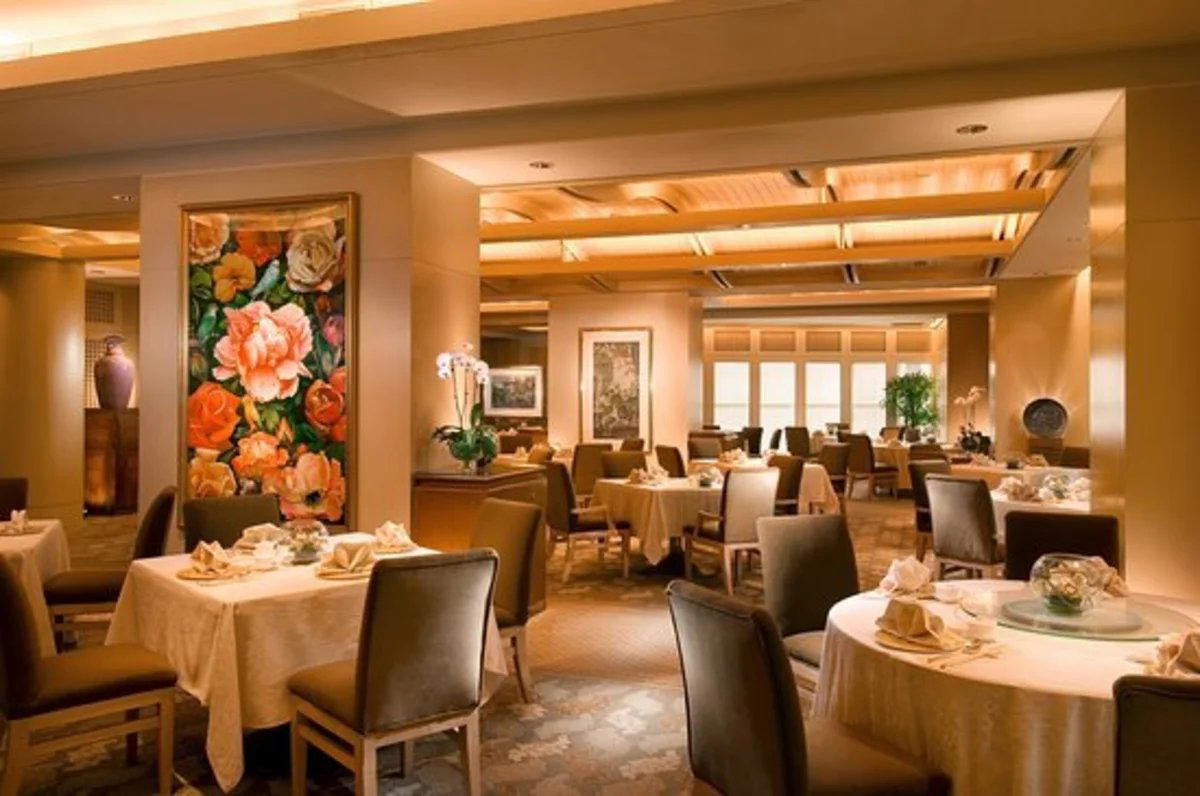
The Weight of the Room
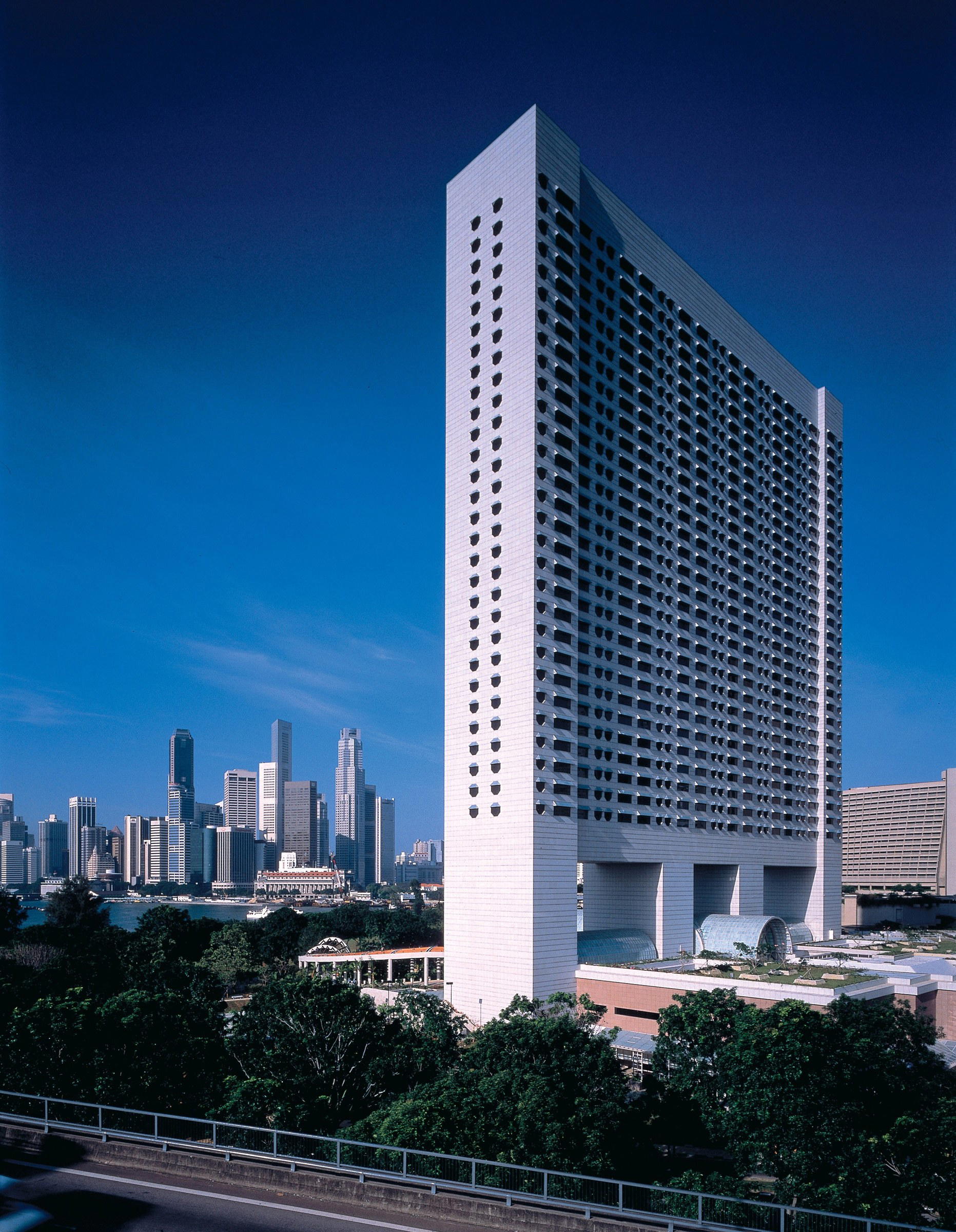
Singapore's Downtown Core has a particular relationship with formal Chinese dining. Along the Temasek corridor and within the towers surrounding Marina Bay, a cluster of restaurants operates at a register where the room itself communicates intent before any food arrives: high ceilings, white tablecloths, trolleys that move with deliberate purpose, and staff who have learned to read the table rather than perform for it. Golden Peony, at 2 Temasek Boulevard, sits within this tradition. The address alone signals something about the dining proposition: this is a part of Singapore where lunch runs on corporate timetables and dinner carries ceremonial weight, whether for family milestones or business negotiations conducted over many courses.
In a city where the conversation about Chinese fine dining has expanded to include Shanghainese, Hokkien, and fusion formats, the Cantonese tradition remains the discipline against which the others are implicitly measured. Technique here is accumulated and conservative in the leading sense: stocks built across hours, proteins that reveal their quality through restraint rather than seasoning, and dim sum that treats the wrapper as a structural argument rather than an afterthought.
The Architecture of a Cantonese Meal
The dining ritual at a restaurant like Golden Peony follows a grammar that has been refined across decades of Cantonese banquet culture. A formal meal does not begin with menus distributed simultaneously; it begins with tea, poured from height to aerate, chosen by the host and accepted without examination. Cold appetisers arrive before any discussion of the main event. Whole fish and poultry dishes typically come before noodles or rice, which signal the meal is drawing toward its close. Understanding this sequencing matters because it shapes what you order and in what order you ask for it. Cantonese fine dining in Singapore operates within this inherited structure, and venues in this tier expect guests to engage with it rather than override it.
Dim sum, where offered, occupies a separate ritual entirely. The yum cha tradition, when executed at this price point, is less about volume and more about precision: the skin-to-filling ratio on har gow, the temperature at which cheung fun arrives, the char siu that holds its caramelisation without crossing into sweetness. These are the markers that differentiate a serious kitchen from a competent one. Cherry Garden and Imperial Treasure Fine Chinese Cuisine represent the comparable set against which any serious Cantonese room in this neighbourhood is judged.
Downtown Core's Dining Tier and Where This Fits
Singapore's premium Chinese dining market has stratified sharply over the past decade. At one end, hotel-based Cantonese restaurants command private dining rooms and multi-course banquet menus priced for corporate entertainment. At the other, a new generation of chef-driven Chinese restaurants has emerged with shorter menus, tighter sourcing, and wine lists that would not look out of place at Les Amis. Golden Peony occupies the established hotel-dining tier, which carries its own logic: consistency across service, the infrastructure to handle large group bookings, and a kitchen brigade trained to execute at volume without sacrificing precision on individual covers.
The comparison set extends beyond the neighbourhood. Singapore's appetite for refined Chinese cuisine pulls from a broader regional tradition, and a meal at a restaurant like this should be evaluated alongside what a traveller might encounter in Hong Kong's hotel dining rooms or Taipei's formal banquet halls. What distinguishes the Singapore iteration is the multicultural overlay: the guest beside you may be ordering in Cantonese, Mandarin, or English, and the kitchen will have calibrated its seasoning to serve all three palates without obvious compromise.
For those exploring the wider Singapore dining scene beyond Cantonese, Béni in Orchard represents the French-Japanese counter format that has gained ground among the same demographic, while Nutmeg & Clove makes the case for Peranakan as a serious fine dining tradition. Both point to how Singapore's premium dining market now sustains multiple heritage cuisines at the same price tier simultaneously.
Etiquette, Pacing, and the Practical Side
A reservation at a restaurant of this type in the Downtown Core should be made well in advance for weekend lunch service, which fills quickly for family dim sum gatherings, and for group dinners around public holidays. The Temasek Boulevard address is accessible from Promenade MRT station, and the surrounding towers provide valet infrastructure for those arriving by car. Dress expectations at this tier default to smart casual at minimum, with business attire carrying no friction whatsoever.
Group dining here follows the Chinese table custom of shared dishes rather than individual plating, which means the effective per-head cost scales with the number of people and the ambition of the ordering. A two-person meal that mirrors a banquet menu structure will cost more per head than the same meal eaten across eight. The ritual of ordering together, negotiating dishes, and deferring to the eldest at the table is not incidental to the experience; it is the experience.
TWG TEA handles the post-meal or afternoon occasion with precision, and Ah Ter Teochew Fishball Noodles provides useful calibration for how the same city holds both the elaborate and the essential in equal esteem. Bugis Street Ah Huat Hainanese Chicken Rice at Changi Airport and KTMW chicken rice tea-cafe in Bedok each demonstrate how deeply Singapore's dining culture distributes excellence across price points and formats.
Lazy Bear in San Francisco and the precision hospitality of Le Bernardin in New York City, even if the culinary lineage runs in an entirely different direction.
Where It Fits
Comparable venues nearby, for context on price, style, and recognition.
| Venue | Cuisine | Price | Notes |
|---|---|---|---|
| Golden PeonyThis venue — the venue you are viewing | Modern Cantonese | $$$$ | Not listed |
| Imperial Treasure Fine Chinese Cuisine | Fine Cantonese Chinese Cuisine | $$$$ | Downtown Core |
| Cherry Garden | Modern Cantonese | $$$$ | Marina Centre |
| TWG TEA | Luxury Tea Salon | $$$ | Downtown Core |
| Ah Ter Teochew Fishball Noodles | Teochew Fish Ball Noodles | $ | Downtown Core |
| Wine Universe Singapore | Contemporary Swiss Gastrobar | $$$ | Downtown Core |
Continue exploring
More in Downtown Core
Restaurants in Downtown Core
Browse all →
Bars in Downtown Core
Browse all →
At a Glance
- Elegant
- Sophisticated
- Classic
- Business Dinner
- Special Occasion
- Family
- Celebration
- Hotel Restaurant
- Private Dining
- Sake Program
Current opening hours
- Monday
- 11:30 AM–2:30 PM, 6:30–10:30 PM
- Tuesday
- 11:30 AM–2:30 PM, 6:30–10:30 PM
- Wednesday
- 11:30 AM–2:30 PM, 6:30–10:30 PM
- Thursday
- 11:30 AM–2:30 PM, 6:30–10:30 PM
- Friday
- 11:30 AM–2:30 PM, 6:30–10:30 PM
- Saturday
- 11:30 AM–1 PM, 1:30–3 PM, 6:30–10:30 PM
- Sunday
- 11:30 AM–1 PM, 1:30–3 PM, 6:30–10:30 PM
Hours can change for holidays and private events. Last verified .
Elegant ambiance with cream-colored walls adorned with Chinese artworks, tasteful decor, sophisticated lighting, and an upscale atmosphere praised for enhancing special dining experiences.