Glou occupies a corner of Rue Vieille du Temple in the Marais, where the wine bar format has long been taken seriously as a dining proposition rather than a prelude to one. The address sits within a neighbourhood that treats natural and biodynamic pours as the organising principle of a meal, with small plates built around the glass rather than the other way around.
Pearl is the En Primeur Club membership app — saves, bookings, and concierge access live there. Same editors, same standards.
- Address
- 101 Rue Vieille du Temple, 75003 Paris, France
- Phone
- +33142744432
- Website
- glou-resto.com
- Directions
- Get directions
 Saves & bookings on Pearl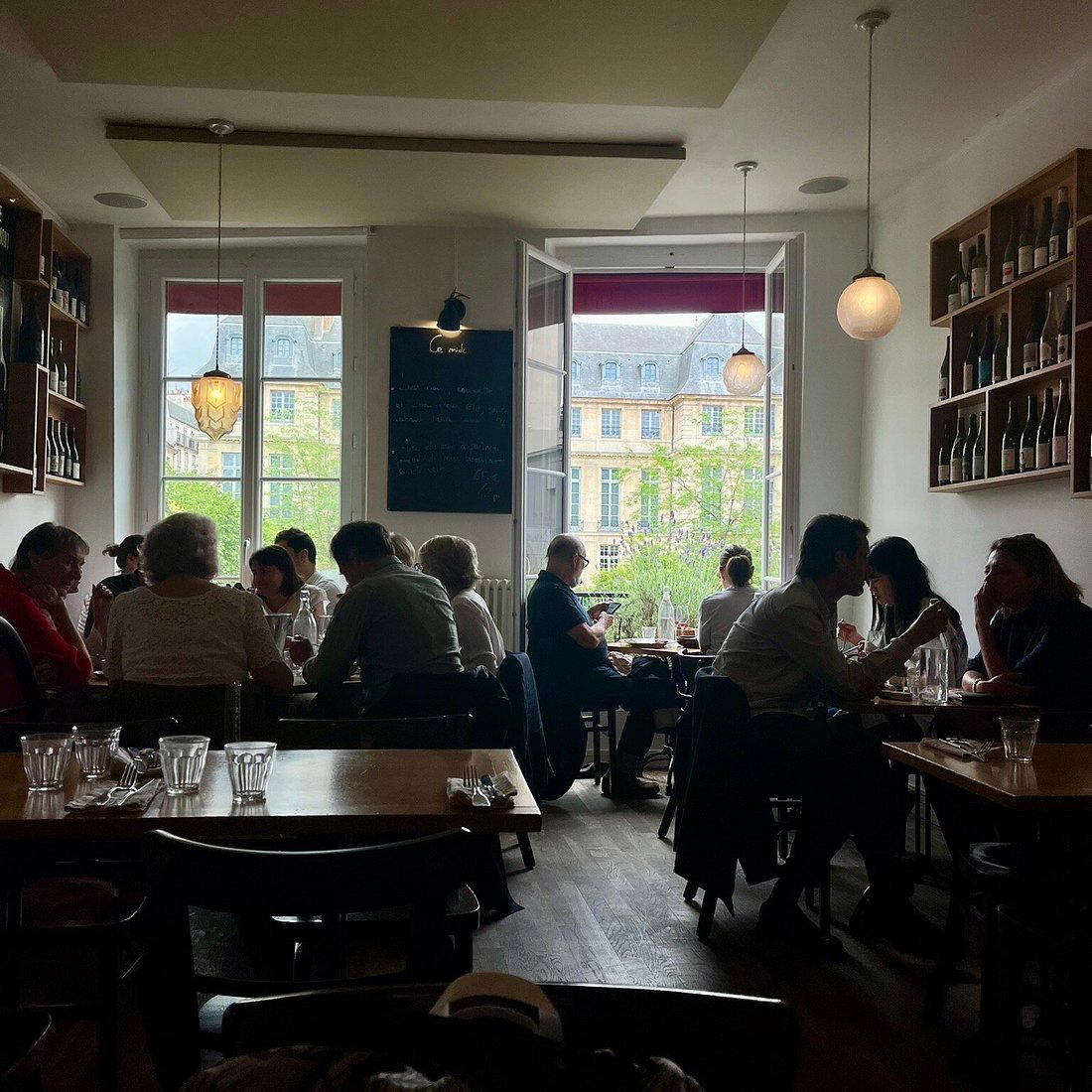
The Marais and the Wine Bar as Meal
Paris has two distinct traditions of drinking well with food. The first runs through the grand restaurants — places like L'Ambroisie and Le Cinq at the Four Seasons Hôtel George V, where the cellar is a supporting architecture for cooking that carries its own institutional weight. The second runs through neighbourhood wine bars — the cave à manger format, where the bottle arrives first and the kitchen organises itself around what's open. Glou, at 101 Rue Vieille du Temple in the 3rd arrondissement, belongs to the second tradition, and has for long enough that it helped define what that tradition looks like in the Marais.
The cave à manger format spread across Paris from the early 2000s onwards, partly as a reaction against the formality of haute cuisine institutions and partly because a generation of sommeliers and wine professionals wanted to open places where the glass was the point rather than an afterthought. By the time the Marais consolidated its identity as a neighbourhood where food and drink coexist on genuinely equal terms, a handful of addresses on and around Rue Vieille du Temple had become reference points for this approach. Glou is among the more-cited of them.
A Wine List Built Around Conviction
The editorial angle that defines Glou's position in the Paris wine bar conversation is curation over volume. The list at addresses like this one is rarely encyclopedic in the way that the cellars at Alléno Paris au Pavillon Ledoyen or Arpège are encyclopedic. Instead, the wine bar model depends on a tighter selection chosen to reflect a point of view, typically a preference for natural, biodynamic, and low-intervention producers, with a geographical spread that leans toward the Loire, Burgundy, the Rhône, and the Languedoc, the four French regions that have produced particularly influential figures in the natural wine movement over the past two decades.
This is the format in which sommelier expertise is expressed not through the depth of a printed volume but through the quality of the conversation at the table. At Glou, the selection has historically reflected the broader shift in Parisian wine culture away from classified Bordeaux and prestige Burgundy toward grower producers and smaller appellations. That shift is well documented in the city's wine press and visible across the Marais, where the density of natural wine bars is among the highest in Europe. Peer addresses in the neighbourhood include a cluster of cave à manger operations that have drawn consistent coverage from French and international food media throughout the 2010s and into the present decade.
France's most celebrated kitchens, from Mirazur in Menton to Troisgros in Ouches and Bras in Laguiole, have increasingly aligned their cellars with grower and biodynamic producers rather than classified estates alone. The same sensibility, at a fraction of the price point and without the formality, is what the cave à manger format delivers in a neighbourhood like the Marais. Glou operates inside that democratised version of the same conversation.
What the Kitchen Does
The structural logic of a wine bar kitchen is built around small plates that complement rather than compete with the glass. Portions are sized to be ordered in multiples, and the menu rotates to reflect seasonal availability and whatever the kitchen is receiving from producers that week. This is a format that rewards frequent visits more than a single occasion: the address is leading understood as a local resource rather than a destination event, the kind of place that functions as a neighbourhood anchor for people who live within walking distance of the Marais.
Across the cave à manger category in Paris, kitchens at this level tend to draw on French regional cooking, charcuterie, terrines, aged cheeses, preparations that ask for the acidity and tension characteristic of natural wines. The food is a frame rather than the canvas. That framing places Glou in a different competitive tier from the more formal expressions of French cuisine, whether traditional establishments with long institutional histories like Auberge de l'Ill or modern fine dining addresses like Kei. The comparison set is lateral rather than hierarchical.
The Neighbourhood Context
Rue Vieille du Temple runs through the heart of the Haut-Marais, the northern section of the 3rd arrondissement that has been the primary site of Parisian gallery culture, independent retail, and destination dining for the past twenty years. The street and its immediate surrounds have attracted enough food and drink openings that the area functions as a self-contained circuit for an evening. The concentration of wine bars, bistros, and cave à manger operations in this corridor is among the highest in Paris, and the format has stabilised here in a way that it has not in more commercial or tourist-facing parts of the city. Glou's position at number 101 places it within easy reach of several comparable addresses, which is part of what makes the neighbourhood work for this kind of evening.
For context on how the Marais fits into Paris's broader dining geography, our full Paris restaurants guide maps the city by neighbourhood and price tier, including the cave à manger corridor along Rue Vieille du Temple. France's wine bar tradition also has regional expressions worth comparing: Flocons de Sel in Megève and Auberge du Vieux Puits in Fontjoncouse represent the serious cellar tradition outside Paris, while Les Prés d'Eugénie in Eugénie-les-Bains and Georges Blanc in Vonnas anchor the classical Burgundy and Gascony cellar model. For international reference points in the wine-forward dining format, Le Bernardin in New York and Lazy Bear in San Francisco show how American fine dining has absorbed the same bias toward producer-led wine programs. Paul Bocuse - L'Auberge du Pont de Collonges and La Table du Castellet complete the picture of how France's institutional cellar tradition contrasts with the cave à manger model.
Planning Your Visit
Glou's address on Rue Vieille du Temple in the 3rd arrondissement is accessible from the Saint-Sébastien-Froissart metro station on line 8, a short walk from the restaurant. The Marais wine bar circuit tends to fill earliest on Thursday and Friday evenings, when the neighbourhood draws both local and visiting diners; arriving early in the week or at opening time on busier nights gives the leading chance of a table without advance planning. Given the address has been a fixture on this street for long enough to develop a regular following, booking ahead for weekend evenings is advisable.
How Glou Paris compares with similar nearby venues.
| Venue | Cuisine | Price |
|---|---|---|
| Breizh Café | Breton - Crepes | Not listed |
| Les Enfants du Marche | Neo-bistro | Not listed |
| Dessance | Modern Cuisine | €€€ |
| Ogata | Japanese | €€€€ |
Continue exploring
More in Paris
Restaurants in Paris
Browse all →
Bars in Paris
Browse all →
Hotels in Paris
Browse all →




At a Glance
- Cozy
- Trendy
- Lively
- Casual Hangout
- Date Night
- Open Kitchen
- Natural Wine
- Natural Wine
- Street Scene
Current opening hours
- Monday
- 12 PM–12:30 AM
- Tuesday
- 12 PM–12:30 AM
- Wednesday
- 12 PM–12:30 AM
- Thursday
- 12 PM–12:30 AM
- Friday
- 12 PM–12:30 AM
- Saturday
- 12 PM–12:30 AM
- Sunday
- 12 PM–12:30 AM
Hours can change for holidays and private events. Last verified .
Cozy and convivial with neutral calming interior accented by shiny red enamel lanterns, brick walls, communal high tables, and an open kitchen.