Our verdict
Glas on Chatham Street sits within Dublin's compact but serious vegetable-forward dining scene, occupying a position that plant-based cooking in Ireland has been working toward for over a decade. The room draws a mixed crowd of committed regulars and curious first-timers, with a format that shifts noticeably between lunch and evening service in both mood and ambition.

Pearl is the En Primeur Club membership app — saves, bookings, and concierge access live there. Same editors, same standards.
- Address
- 15/16 Chatham St, Dublin 2, D02 FV50, Ireland
- Phone
- +35316724534
- Hours
- Mon–Thu 4:45–9 PMFri–Sun 12–2:30 PM, 4:45–9:30 PM
- Website
- glasrestaurant.ie
- Directions
- Get directions
- Booking
- Book on OpenTable
The menu
What to order
- Sweet Potato Parfait
- Hazelnut Gnocchi
- Roast Onion
Chatham Street and the Rise of Serious Vegetarian Cooking in Dublin
Dublin's restaurant scene has spent the better part of the last decade consolidating around two poles: the formal Franco-Irish tradition represented by rooms like Patrick Guilbaud and Glovers Alley, and a looser, produce-driven modern Irish register found at places like Bastible. What has been slower to emerge is a credible, dedicated vegetarian kitchen operating at the same level of seriousness. Glas, at 15/16 Chatham Street in Dublin 2, occupies that narrower niche. It is not a health-food canteen or a casual bowl concept; it is a restaurant that builds full-length tasting and à la carte menus around vegetables, grains, and dairy, without leaning on meat substitutes as a crutch.
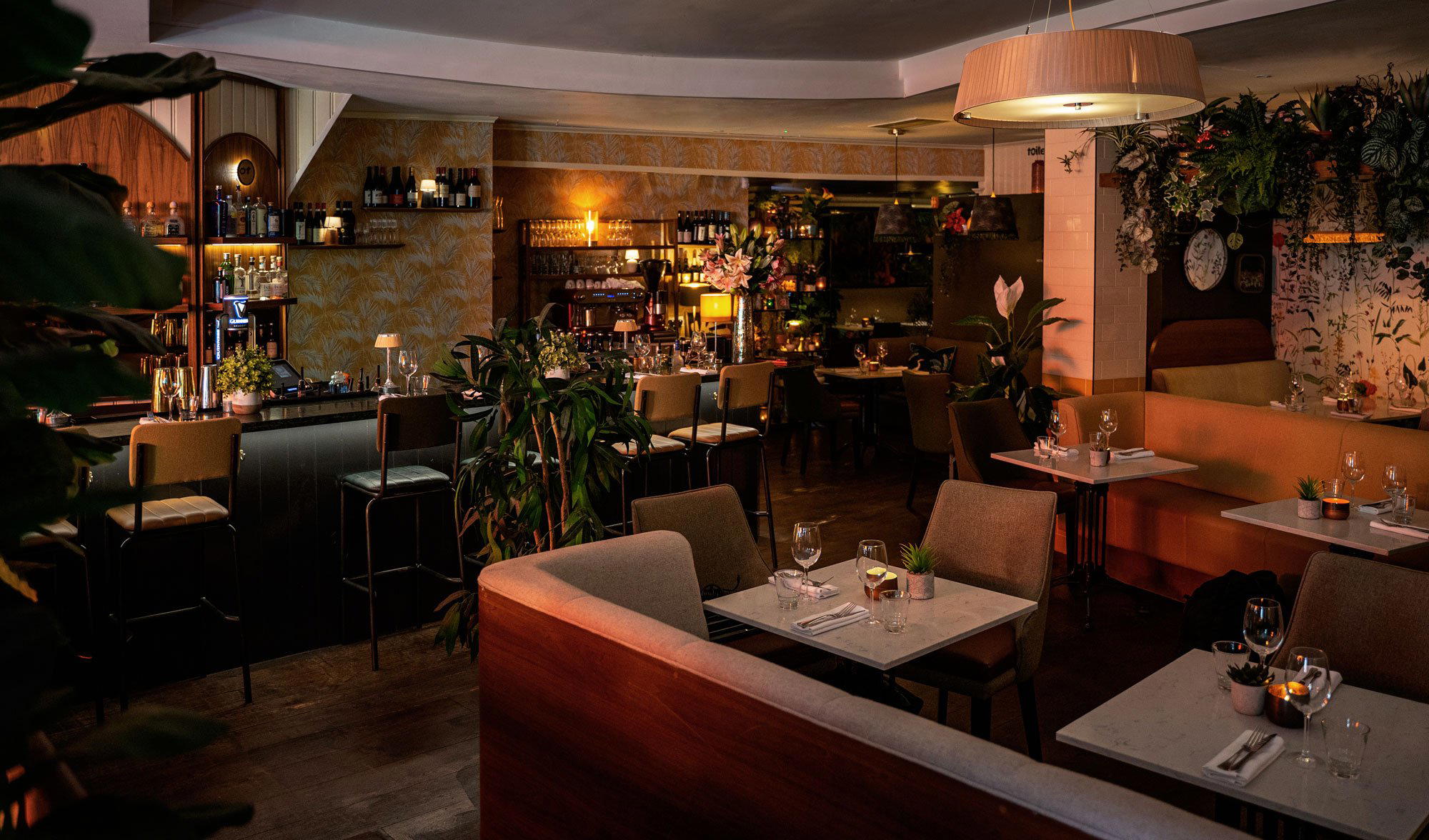
Chatham Street itself is a useful address. A short walk from St. Stephen's Green and the southern edge of the city's retail core, the street sits adjacent to the Powerscourt Centre and a cluster of independently minded cafés and bars. It draws foot traffic without being a thoroughfare, which means Glas attracts a mix of neighbourhood regulars, pre-theatre diners heading toward the Gaiety, and deliberate visitors who have sought the place out specifically. That mix shapes the room's energy differently depending on when you arrive.
Lunch and Dinner: Two Distinct Registers
The divide between lunch and dinner at a focused vegetarian restaurant is worth understanding before you book. In many European cities, plant-forward kitchens have settled into a pattern where daytime service is lighter in ambition and price, aimed at the working lunch crowd, while evening service stretches into longer, more composed territory.
What the format signals, broadly, is that the evening experience is where the kitchen's ambition is most visible. Tasting menus at this category of restaurant typically compress the season's leading produce into a sequence of courses where technique is the real subject: fermentation, emulsification, careful charring, and reductions that take vegetable stock into territory usually reserved for meat-based foundations. Lunch, by contrast, tends to offer better value and a shorter format, often attracting solo diners and pairs who want to engage with the cooking without committing to a full evening's arc.
For a city that has historically under-served the serious vegetarian diner, the existence of a kitchen working at this register on Chatham Street carries some weight. The comparison that travels internationally is instructive: in cities like San Francisco, chef-driven vegetable-forward restaurants such as Lazy Bear have demonstrated that produce-led cooking can sustain a full tasting format at high price points with a committed audience. In New York, the technical discipline of a kitchen like Le Bernardin has long shown what it means to build an identity around a single category of ingredient. Glas operates in the same conceptual territory, scaled to a Dublin context and a Dublin price register.
Ireland's Wider Vegetable-Forward Moment
The interest in produce-driven cooking is not confined to Dublin. Across Ireland, kitchens have been building increasingly sophisticated relationships with local growers, with menus that track seasonal availability rather than import calendars. Aniar in Galway has made terroir-led cooking its organising principle for years. Liath in Blackrock operates at a tasting-menu level where the sourcing is as legible as the technique. Further south, dede in Baltimore, Bastion in Kinsale, and Chestnut in Ballydehob each work within a coastal and agricultural supply chain that makes vegetable and dairy-forward cooking a natural output rather than a philosophical stance.
What Glas contributes to this picture is a city-centre version of that thinking, available to the Dublin diner without a trip to West Cork or Connemara. That urban accessibility matters. Chapter One by Mickael Viljanen and D'Olier Street represent Dublin's engagement with ambitious modern cuisine in a more conventional omnivore frame. Glas sits adjacent to that conversation while pulling it in a different direction.
The Irish restaurant scene beyond the capital offers further reference points for how seriously the country has begun treating kitchen gardens and local producers. Terre in Castlemartyr, The Oak Room in Adare, Campagne in Kilkenny, Homestead Cottage in Doolin, and The Morrison Room in Maynooth all illustrate a national pattern in which seasonal sourcing and regional identity have become the dominant currency of serious kitchens, not a niche affectation.
Reading the Room
A vegetable-focused restaurant at this level asks something specific of its diner: a willingness to engage with the cooking on its own terms rather than measuring it against what is absent. That is a reasonable ask in a city that has matured considerably as a dining destination over the past fifteen years. Dublin in 2024 supports a range of serious kitchens across multiple registers, and an audience capable of sustaining them. Glas fits into that picture as the option that goes furthest in committing to a single culinary philosophy.
The Chatham Street location keeps it accessible, with St. Stephen's Green Station a short walk away on the Luas Green Line, and most of the city's key hotel corridors within comfortable walking distance. Pre-booking is advisable, particularly for evening service at the weekend, where demand at this type of focused restaurant typically outpaces walk-in availability.
For a broader view of where Glas sits within Dublin's eating-out options, see our full Dublin restaurants guide.
Know Before You Go
- Address: 15/16 Chatham Street, Dublin 2, D02 FV50, Ireland
- Getting there: St. Stephen's Green Luas stop is the nearest public transport point; the venue is walkable from most city-centre hotels
- Booking: Advance reservation recommended, especially for weekend evening service
- Format: Dedicated vegetarian kitchen; expect both à la carte and tasting menu options across service periods
- Leading for: Diners looking for a serious, produce-led menu without the city-centre omnivore default
Frequently asked questions
What's the address for Glas?
Glas is located at 15/16 Chatham St, Dublin 2, D02 FV50, Ireland, Dublin.
Is Glas suitable for non-vegetarians looking for a serious dinner in Dublin?
Glas on Chatham Street, Dublin 2 is a fully vegetarian restaurant, meaning the menu contains no meat or fish, but the cooking operates at a level that addresses technique and composition rather than substitution. Dublin's dining scene has historically centred on Franco-Irish traditions with animal protein at the core, making Glas a notable point of difference for any diner interested in how far produce-driven cooking can be pushed. The dinner service in particular is structured to engage on its own terms rather than replicate a conventional multi-course format.
What should I eat at Glas?
Glas operates as a dedicated vegetarian restaurant on Chatham Street, Dublin 2, so the entire menu is built around produce-driven cooking rather than a single standout dish. The format likely differs between lunch and dinner, with the evening service offering a more structured approach to plant-forward cooking. Arrive with appetite and openness to a menu shaped by season and supply rather than fixed choices.
Should I book Glas in advance?
For dinner at a focused vegetarian restaurant operating at this level in Dublin's city centre, advance booking is advisable. Glas sits on Chatham Street in Dublin 2, a well-trafficked area where demand for serious plant-based cooking outpaces available covers.
What's the signature at Glas?
The signature at Glas is the commitment to vegetarian cooking as a complete proposition rather than a dietary accommodation. Located at 15/16 Chatham Street in Dublin 2, the kitchen works within a vegetable-only framework at a level of ambition that places it alongside the more produce-focused kitchens emerging across Ireland. That discipline, applied across both lunch and dinner services, defines the restaurant's identity.
Recognition Snapshot
Comparable venues nearby, for context on price, style, and recognition.
| Venue | Cuisine | Price | Awards | Notes |
|---|---|---|---|---|
| GlasThis venue — the venue you are viewing | Modern Vegetarian Fine Dining | $50–100 | Not listed | Not listed |
| Pearl Brasserie | Modern French Brasserie with Asian Fusion | $100–150 | Not listed | Mansion House B |
| Seasons Restaurant | Contemporary Irish | $50–100 | Not listed | Pembroke East E |
| Fade Street Social | Modern Irish Gastropub | $50–100 | Not listed | Royal Exchange B |
| Nightmarket | Authentic Regional Thai (Chiang Mai & Hua Hin) | $30–50 | The Sunday Times Ireland’s 100 Best Restaurants | Rathmines East A |
| Forbes Street by Gareth Mullins | Contemporary Irish Grill | $50–100 | Star Wine List · Wine Spectator Award of Excellence | South Dock |