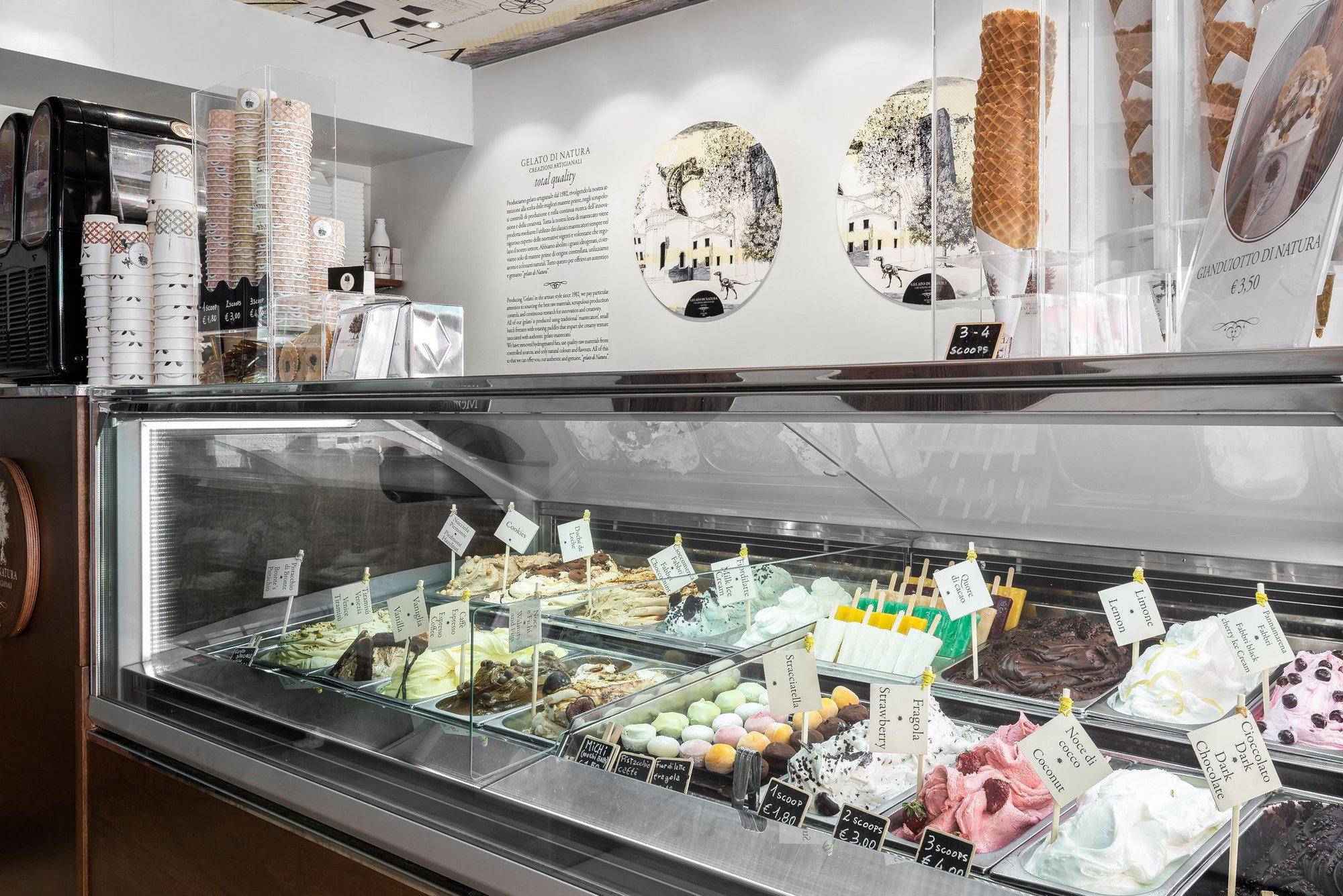
Among Venice's artisan gelato makers, Gelato di Natura positions itself within a narrower, sustainability-conscious tier defined by natural ingredients and seasonal sourcing. Where most tourist-facing gelaterie in the city rely on industrial bases and synthetic stabilisers, this producer works closer to the raw-ingredient end of the spectrum, making it a reference point for visitors who treat a cone as a considered choice rather than a convenience purchase.
 Request Booking on Pearl
Pearl is the En Primeur Club membership app — saves, bookings, and concierge access live there. Same editors, same standards.
Where Artisan Gelato Fits in Venice's Food Ecosystem
Venice's food culture divides more sharply than most Italian cities between the tourist-facing and the genuinely local. At the high end, restaurants like Glam Restaurant by Enrico Bartolini and Ristorante Quadri represent the city's serious dining ambitions, while places like Local and Wistèria work the contemporary Italian middle ground. Beneath all of that, the street-level gelato market is considerably less curated. The vast majority of gelaterie that line Venice's high-traffic calli operate on industrial bases, pre-mixed powders, and synthetic colourings that make product consistency easy and sourcing accountability essentially absent.
Gelato di Natura occupies a different position in that market. The name signals intent: gelato made from natural ingredients, without the synthetic stabilisers and artificial flavourings that define the industrial tier. In Italian artisan gelato culture, this distinction matters more than it might appear. The difference between a gelato made on a custard base with fresh milk and seasonal fruit and one assembled from a powder sachet and UHT cream is not subtle, it shows in texture, in flavour intensity, and in how the product behaves as it melts. Sourcing real, traceable ingredients is both the ethical and the technical foundation of what artisan producers in this tier do.
The Sustainability Frame: Natural Ingredients as a Production Commitment
Across Italy, the artisan gelato movement has developed a clearer language around ingredient sourcing over the past decade. Producers operating under the slow food and natural-ingredient philosophies treat the supply chain as part of the product, seasonal fruit from identified growers, milk from specific local dairies, nuts from named origins. This is not mere marketing framing. It changes what a gelateria can and cannot put on its menu: no artificial colours means no shocking blues or neons, no synthetic flavourings means the pistachio must come from actual pistachios (ideally Sicilian, from Bronte), and no industrial bases means the base recipe requires real technical skill to stabilise correctly without chemical shortcuts.
This production philosophy also creates a different relationship to seasonality. Producers who source real fruit cannot fake strawberry in January or fig in March. The menu shifts with what is available and what is good, which is a constraint that most commercial operations avoid entirely by using stable synthetic flavours year-round. For the visitor planning around specific flavours, this matters: summer in Venice brings stone fruit and berry profiles, autumn brings chestnut and pear, and winter narrows the fruit palette considerably toward citrus and preserved ingredients. The ideal time to visit, purely by ingredient availability, is late spring through early autumn, roughly May to October, when Venetian and northern Italian produce is at its most varied.
Venice's Artisan Gelato Tier: What Separates It from the Mass Market
Italy's serious restaurant scene, represented nationally by institutions like Osteria Francescana in Modena, Le Calandre in Rubano, and Piazza Duomo in Alba, has long treated ingredient provenance as a non-negotiable. The same rigour is now filtering into Italy's artisan gelato sector, though unevenly. In Venice specifically, the pressure from tourist volume creates a strong commercial incentive to cut sourcing corners. Operators who do not are making a deliberate and economically less convenient choice.
Gelato di Natura's positioning within this context places it alongside a small cohort of Venetian producers for whom the natural-ingredient commitment is a structural decision rather than a branding exercise. The practical consequence for the visitor: expect a shorter flavour list than a commercial gelateria, a colour palette that runs to muted naturals rather than vivid artificials, and a product that is softer and more immediately perishable than its industrial counterparts, all of which are signs of genuinely lower-intervention production.
For those building a broader picture of Italy's ingredient-led dining culture, it is worth noting that the same sourcing philosophy underpins producers far beyond the gelato category. Atelier Moessmer Norbert Niederkofler in Brunico has built an internationally recognised restaurant around Alpine ingredient sourcing and waste reduction. Uliassi in Senigallia applies a similar rigour to Adriatic seafood. The scale differs, but the underlying argument, that traceability and natural sourcing produce better food, runs across categories and price points.
Planning a Visit: What to Know Before You Go
Venice operates differently from most Italian cities in terms of visitor flow. The city receives tens of millions of tourists annually, and the concentrated geography of the historic centre means that even relatively unknown producers can face significant queues during peak season, roughly from April through October and especially around Carnival in February. Artisan gelaterie in the natural-ingredient tier tend to have shorter production runs and more limited seating or standing space than their commercial competitors, which means late afternoon and early evening, prime gelato hours in Italy, can involve a wait.
Visit in person, ideally outside peak tourist hours: mid-morning or mid-afternoon on weekdays tends to be quieter than weekend evenings in summer. No advance reservation is required or expected for a gelateria format. Pricing at artisan producers in Venice typically runs above the commercial tier, a cone or cup at this level of production quality generally sits at the higher end of the city's gelato price range, reflecting real ingredient costs rather than margin expansion.
Visitors who treat the gelato stop as part of Venice's food culture will find the natural-ingredient tier more rewarding. The same discipline that drives serious Italian restaurants internationally, from Dal Pescatore in Runate to Enoteca Pinchiorri in Florence, operates here at a different price point and format but with comparable commitment to what goes into the product. That is the level at which Gelato di Natura asks to be evaluated.
At a Glance
Comparable venues nearby, for context on price, style, and recognition.
| Venue | Cuisine | Price | Notes |
|---|---|---|---|
| Gelato di NaturaThis venue — the venue you are viewing | Santa Croce, Artisan Italian Gelato | $ | |
| Hosteria Al Vecio Bragosso | Santa Croce, Venetian Seafood Osteria | $$ | |
| Trattoria alla Rivetta | $ | Castello, Traditional Venetian Seafood Trattoria | |
| Osteria Alla Frasca | $$ | Cannaregio, Traditional Venetian Seafood Trattoria | |
| Busa alla Torre | $$ | Murano, Traditional Venetian Seafood Trattoria | |
| Dal Moro's Fresh Pasta To Go | Castello, Fresh Pasta To Go | $$ |
Continue exploring
More in Venice
Restaurants in Venice
Browse all →

At a Glance
- Cozy
- Hidden Gem
- Casual Hangout
- Standalone
- Local Sourcing
- Street Scene
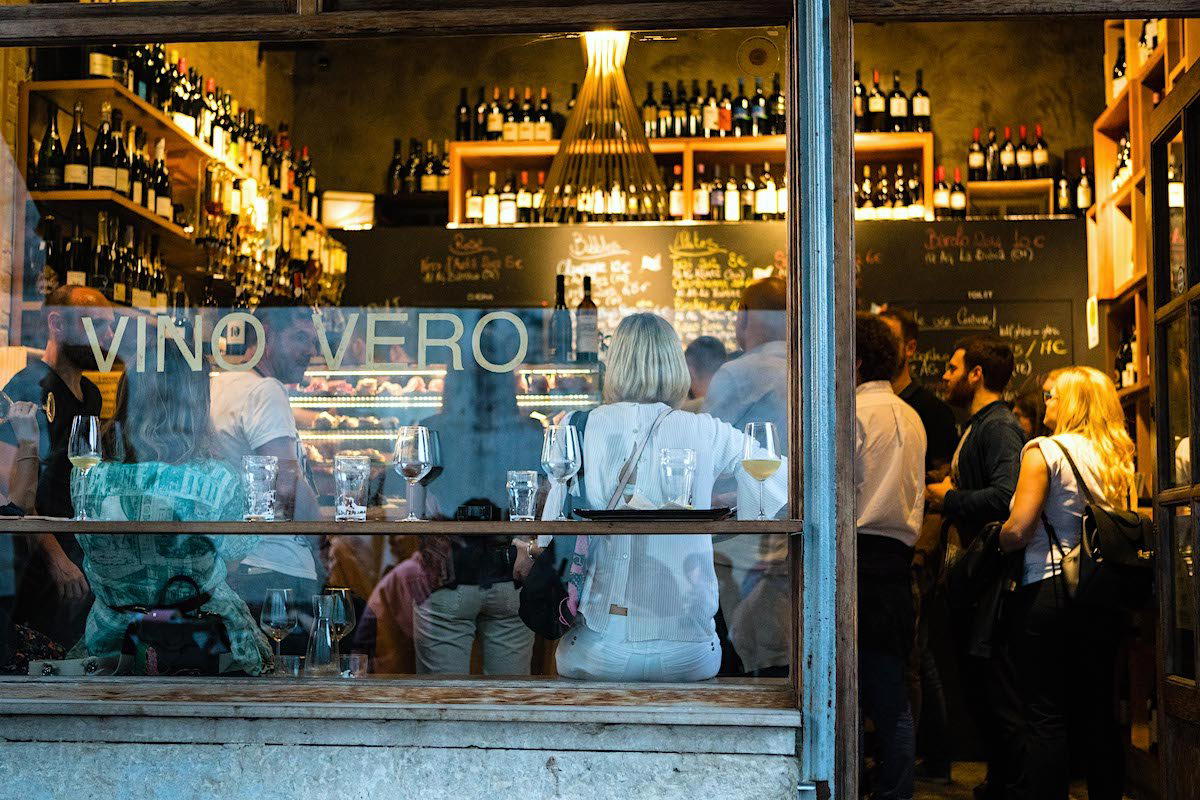
Casual and welcoming atmosphere in a small, bustling ice cream shop perfect for a quick, flavorful treat amid Venice's streets.