Gelateria 5 Terre
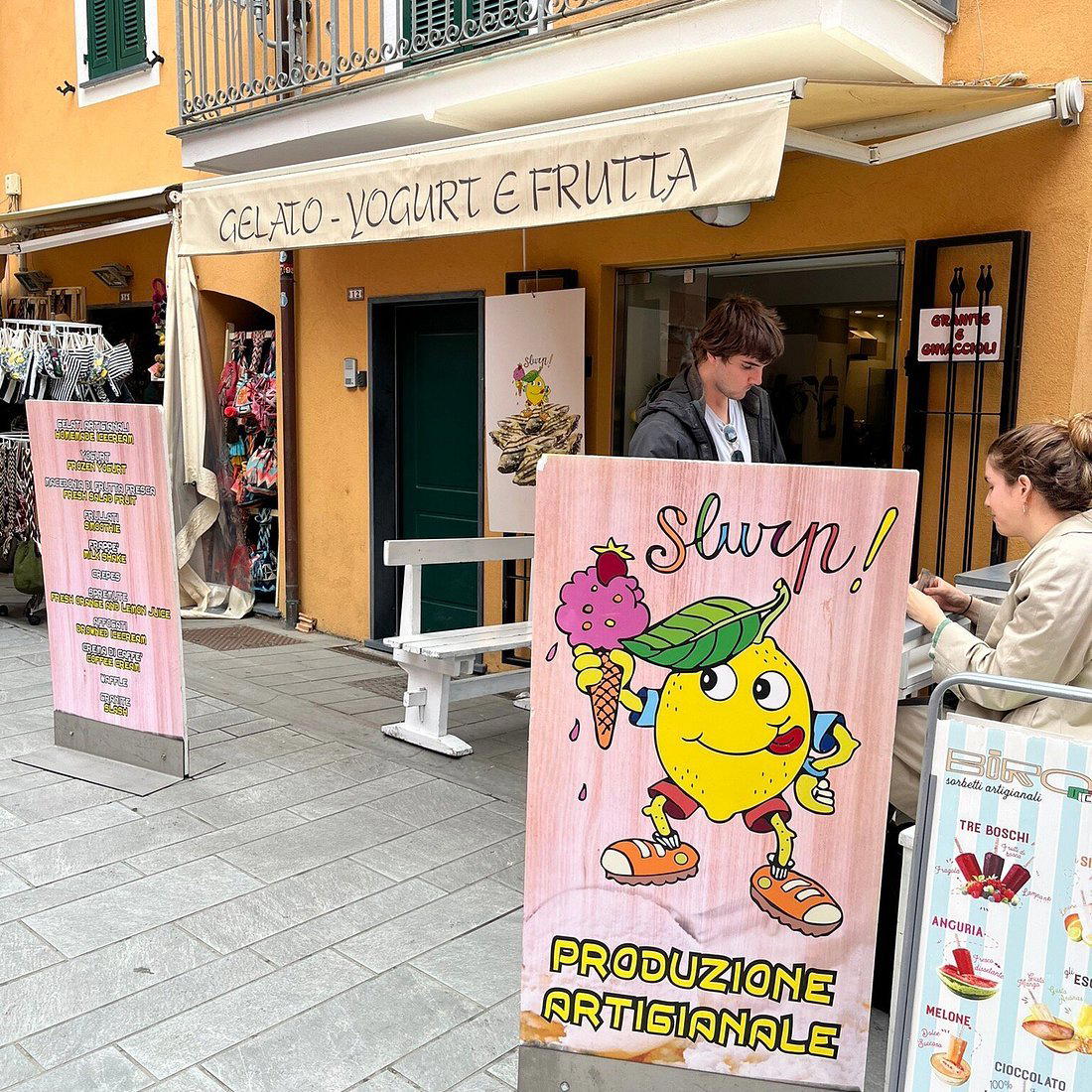
In the villages of Cinque Terre, gelato functions less as dessert and more as the rhythm of the day, consumed between hikes, after fish lunches, and at the harbour rail as the light drops. Gelateria 5 Terre sits within that tradition, drawing on the Ligurian coastline's produce to shape a menu rooted in place rather than novelty.
 Discover on Pearl
Pearl is the En Primeur Club membership app — saves, bookings, and concierge access live there. Same editors, same standards.
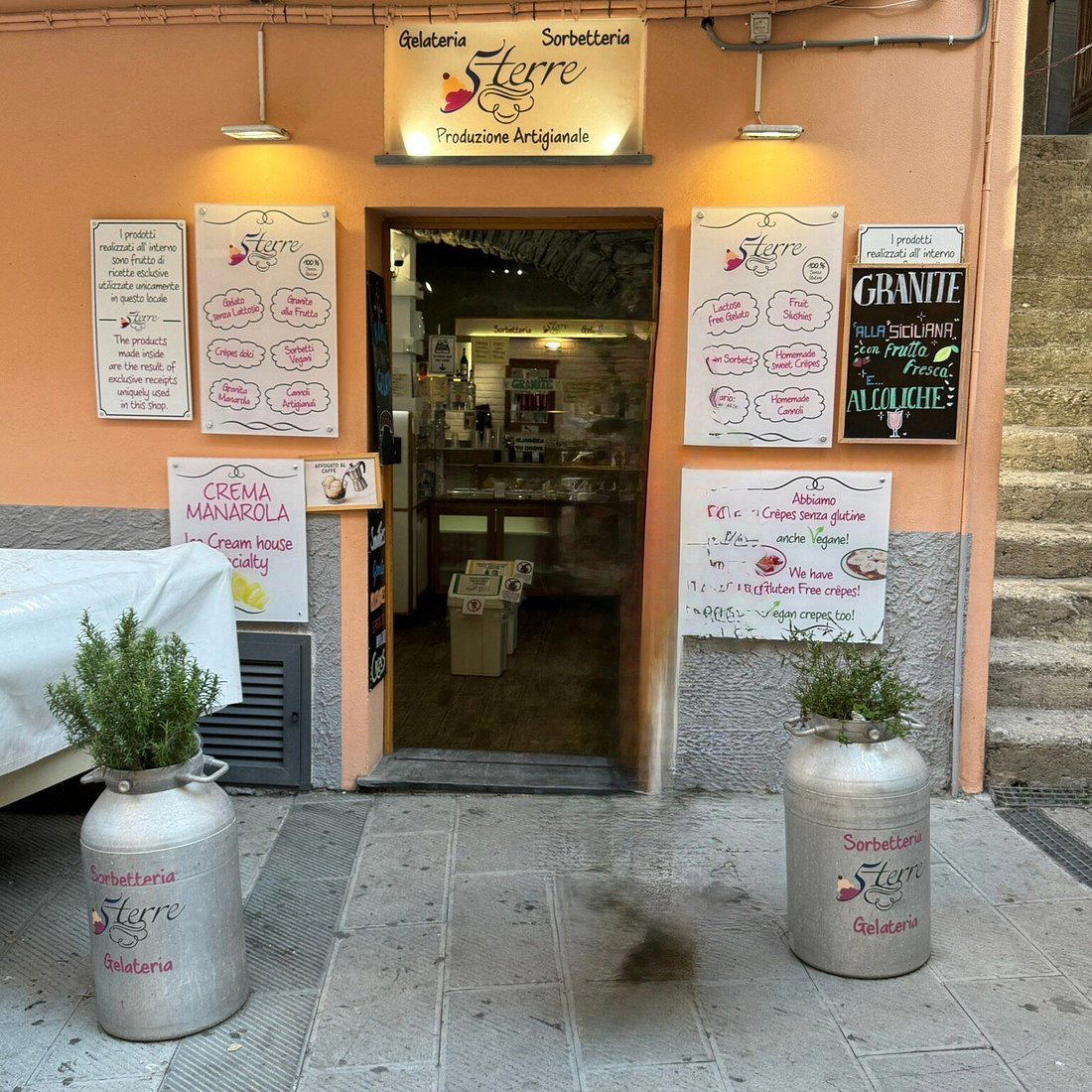
Where the Ligurian Coast Shapes the Scoop
Arrive in any of the five villages on a warm afternoon and the pattern repeats: travellers and locals alike spill out of narrow caruggi clutching paper cups, choosing shade and a sea view over another sit-down course. Gelato in Cinque Terre is not a souvenir format. It is how people punctuate the day, and the gelaterias that hold local respect are those whose product reflects the territory rather than a generic northern Italian house style. Gelateria 5 Terre is a casual artisanal Italian gelato counter in Cinque Terre, priced at about $3 per person, and its focus is Ligurian sourcing behind the counter.
The Sourcing Logic Behind a Coastal Gelato Counter
Liguria's agricultural profile is narrow and specific. The coastal strip running through the Cinque Terre produces Sciacchetrà-grape vineyards on near-vertical terraces, basil that supplies much of the national pesto trade, citrus on sun-facing ledges, and the small, dense lemons that define the local limonata tradition. A gelato programme built around Ligurian ingredients works with this produce rather than importing standardised flavour bases from a central distributor. That distinction matters at the counter level: basil gelato made with Genovese DOP basil reads differently from one made with a commercial extract, and lemon sorbetto produced from Ligurian fruit carries an acidity and aromatic intensity that the same fruit grown elsewhere does not replicate.
This is the broader story of Italian artisan gelato in coastal and agricultural zones: the leading counters in Campania lean on local hazelnuts and buffalo milk; Sicilian shops anchor menus to almond paste and blood orange; and here, on the Ligurian Riviera, the most credible producers build around what the terraced hillsides and the sea directly supply. For comparison, Quattro Passi in Marina del Cantone and Uliassi in Senigallia both demonstrate at the fine-dining tier how coastal Italian kitchens derive authority from hyperlocal sourcing. The same logic, applied at street level, produces gelato counters that tourists find worth returning to.
Reading the Counter: What Ingredient Provenance Signals
At a gelato counter anywhere in Italy, the physical presentation of the product gives the first signal about production method. Gelato stored under metal lids or held in covered pozzetti (sunken cylinders) is almost always produced in-house and held at a lower fat content than ice cream, showing colour and texture closer to the base ingredient. Gelato piled high in open display cases, often dyed in vivid colours, tends to signal a semi-industrial base paste. Neither presentation proves quality on its own, but the former format correlates with artisan production far more reliably.
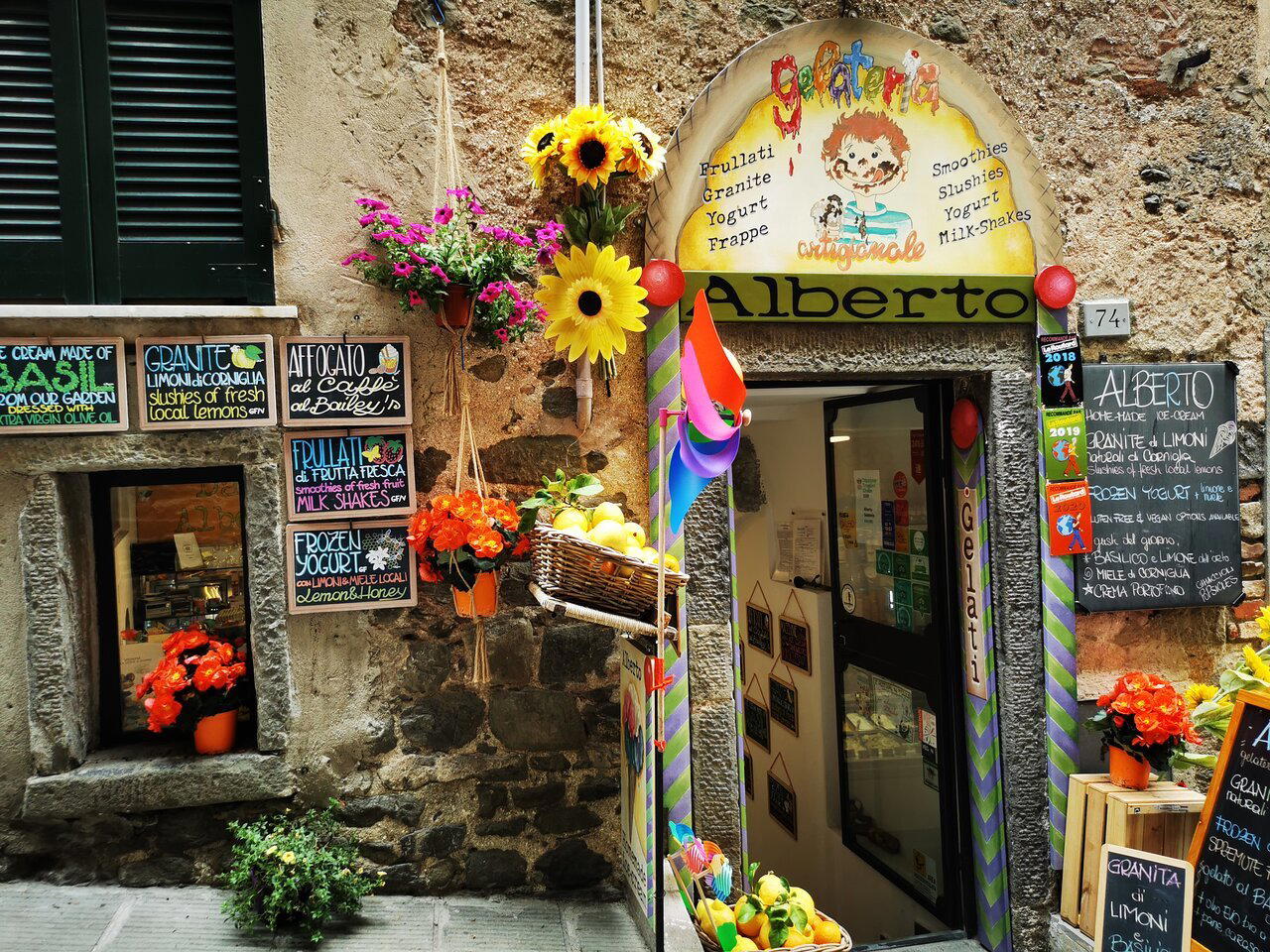
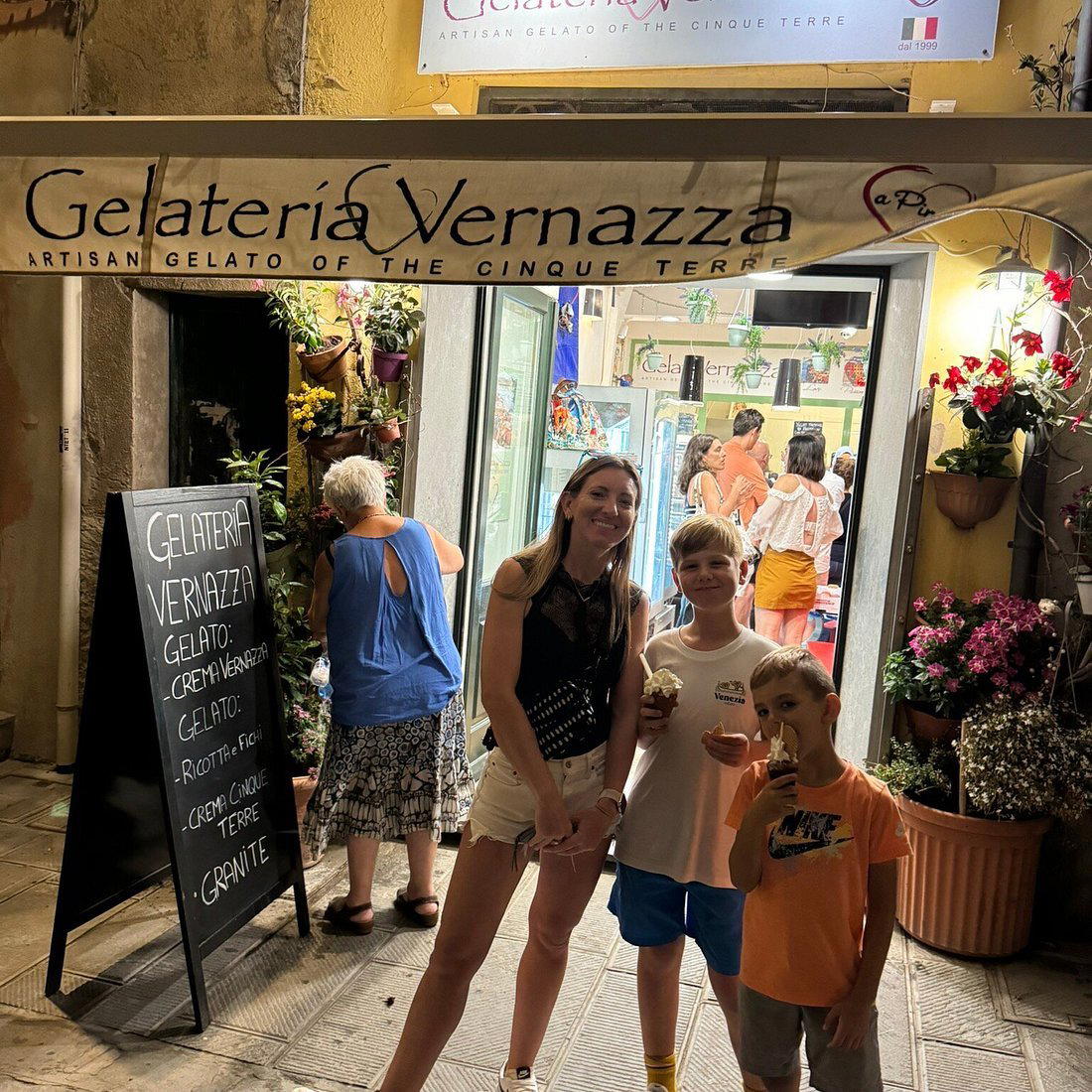
The Cinque Terre's gelato market includes several counters across the villages. Alberto Gelateria, Gelateria Centrale, Gelateria Vernazza, and Slurp Gelato Artigianel each occupy different positions within that set. The question for any visitor is not simply which counter has the longest queue, tourist volume in Cinque Terre is high enough that queue length reflects logistics and location as much as product quality, but which counter's menu reflects actual Ligurian sourcing rather than a generic seasonal rotation.
The Five-Village Geography and What It Means for Planning
Cinque Terre's geography distributes visitors across five distinct villages connected by trail, train, and ferry rather than road. Monterosso al Mare, Vernazza, Corniglia, Manarola, and Riomaggiore each attract different visitor volumes and support different commercial footprints. The villages with rail stations and ferry access, Monterosso and Vernazza in particular, carry the heaviest foot traffic and therefore support more gelato counters. Corniglia, accessible only by stair or trail from the train station, sees lower volume and fewer options.
Trains run frequently between villages but are crowded between 10am and 4pm in high season (June through August).
Cinque Terre in the Context of Italian Coastal Dining
Italy's coastal dining hierarchy is a long one. At the top tier, restaurants like Osteria Francescana in Modena and Enoteca Pinchiorri in Florence have redefined what Italian fine dining can mean internationally, while Dal Pescatore in Runate, Piazza Duomo in Alba, Le Calandre in Rubano, Reale in Castel di Sangro, Casa Perbellini 12 Apostoli in Verona, Enrico Bartolini in Milan, and Atelier Moessmer Norbert Niederkofler in Brunico represent the regional depth of Italian tasting-menu culture. Internationally, Le Bernardin in New York City and Atomix in New York City benchmark what coastal-ingredient-focused and tightly edited menus can achieve at the highest level.
The gelato counter sits at a different register entirely, but the underlying discipline, knowing your source ingredients, understanding seasonality, resisting the pressure to over-expand, applies across price points. Cinque Terre's artisan gelaterias operate in a tourist-heavy market that applies constant pressure to lower production standards in exchange for volume. The counters that hold quality are those that treat the Ligurian ingredient list as a constraint worth keeping rather than a marketing claim to dispense with when the season gets busy.
Planning Your Visit
Gelato counters in Cinque Terre are walk-in by nature, and pricing in the villages reflects the tourist economy: expect to pay about $3 per person. The villages are busiest between late morning and early evening, and late afternoon service often means faster queues at the counter as day visitors begin returning to La Spezia or Genova by train. There are no reservations, and the dress code is casual. The practical questions are which village you are spending time in and whether the counter you choose reflects local sourcing.
Quick Comparison
Comparable venues nearby, for context on price, style, and recognition.
| Venue | Cuisine | Price | Awards | Notes |
|---|---|---|---|---|
| Gelateria 5 TerreThis venue — the venue you are viewing | Artisanal Italian Gelato | $ | , | |
| Alberto Gelateria | Artisanal Italian Gelato | $ | , | Corniglia |
| Gelateria Vernazza | Artisanal Italian Gelato | $ | , | Vernazza |
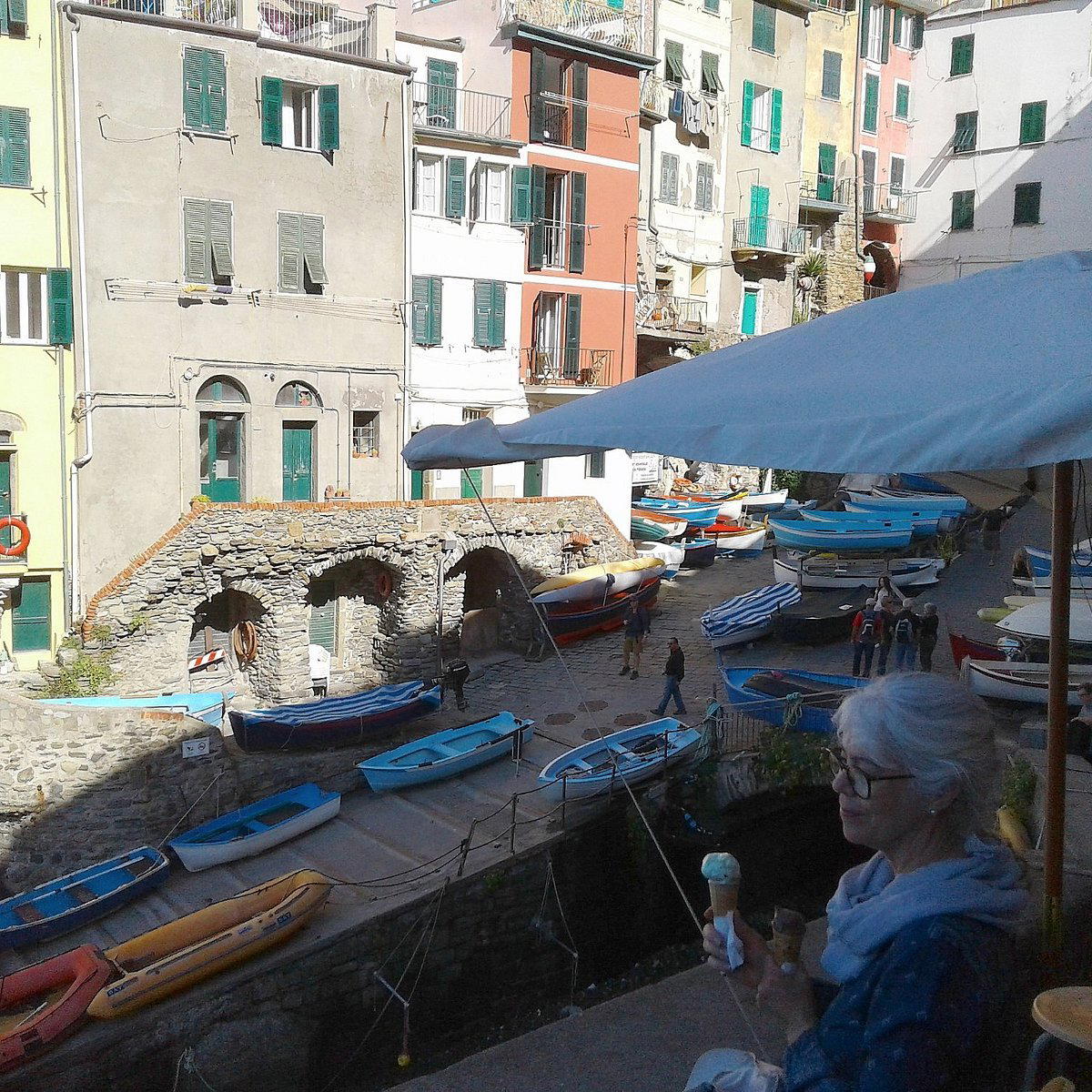
| Gelateria Centrale | Italian Gelato | $$ | , | Riomaggiore |
| Slurp Gelato Artigianel | Artisanal Italian Gelato | $ | , | Monterosso al Mare |
| Ancient Saint Francis Focaccia Shop | Sicilian Street Food | $ | , | Tribunali |
Continue exploring
More in Cinque Terre
At a Glance
- Casual
- Hidden Gem
- Rustic
- Casual Hangout
- Solo
- Standalone
Casual, welcoming neighborhood gelateria with authentic Italian charm and no tourist trap atmosphere.