Gelateria Centrale
Gelateria Centrale operates in one of Italy's most visited coastal corridors, where the gelato counter has long functioned as the village square made edible. Set within the Cinque Terre's cluster of cliff-hugging villages, it occupies a category where local craft and tourist-facing demand pull in opposite directions. What keeps gelato culture honest here is precisely that tension.
 Discover on Pearl
Pearl is the En Primeur Club membership app — saves, bookings, and concierge access live there. Same editors, same standards.
Where the Village Slows Down
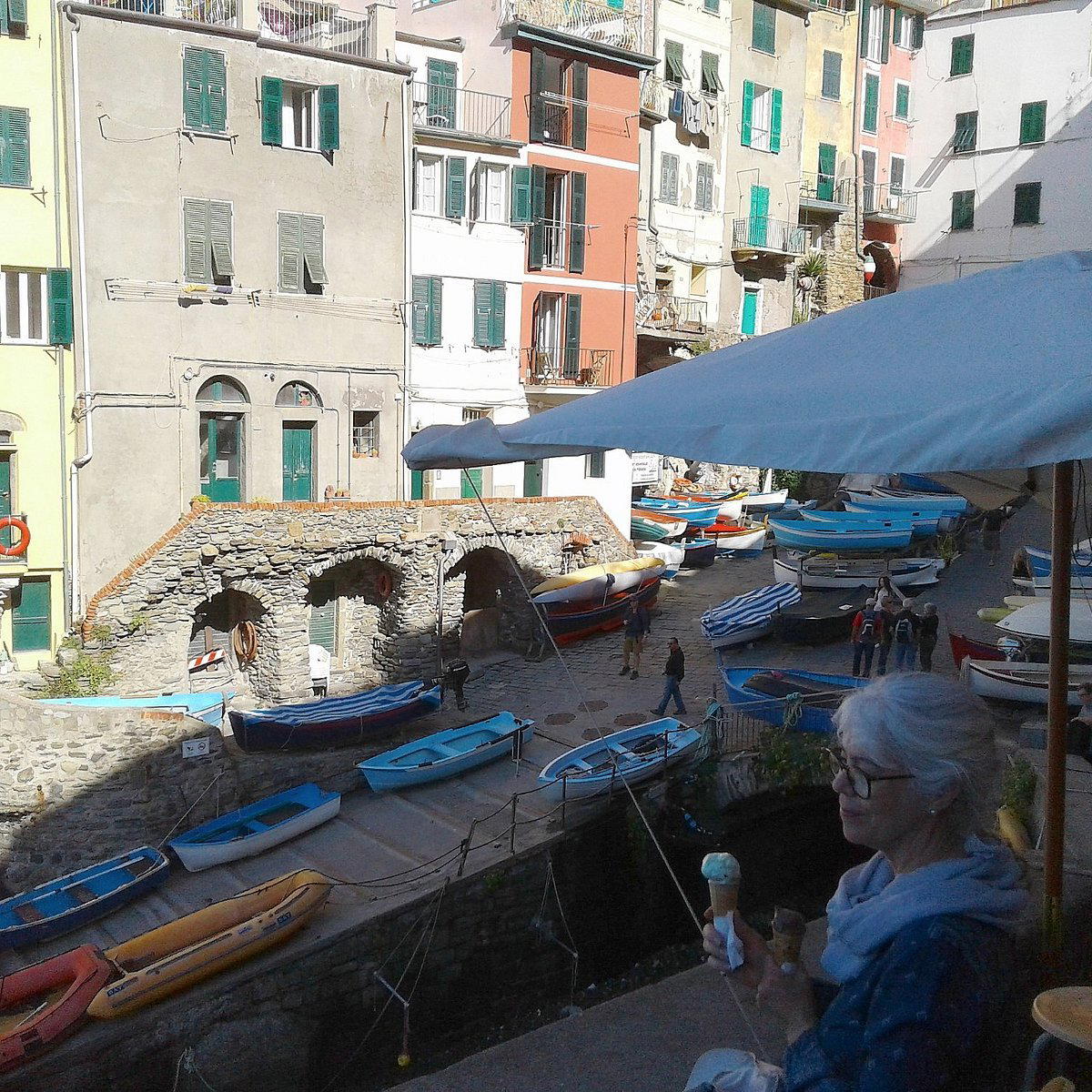
Cinque Terre's five villages share a particular rhythm: the boats, the terraced vineyards, the narrow caruggi that funnel foot traffic toward the water. In Manarola, Vernazza, Corniglia, Monterosso, and Riomaggiore alike, the gelato counter operates as a fixed point in that rhythm, a place where the walk pauses before the next stretch of coastal path. Gelateria Centrale is a casual Italian gelato counter in Cinque Terre, priced at about $5 per person and known for walk-in service. Gelateria Centrale belongs to that geography, positioned where passing traffic and returning locals converge, and that position shapes everything about how it functions.
The Cinque Terre draws several million visitors annually through a coastline that barely has the infrastructure to absorb them. The consequence for food and drink businesses along the route is a permanent tension between production quality and sheer throughput. The gelaterias that hold their ground within that pressure tend to do so through a commitment to artigianale methods, slower churn, shorter shelf life, locally sourced fruit where the season allows, rather than through novelty or spectacle.
The Gelato Tier in Cinque Terre
Italy's gelato culture has stratified considerably over the past two decades. At one end sit the certified produzione propria operations, making fresh batches on premises with visible machinery and chalkboard flavour rotations that shift with available produce. At the other end sit the industrial distributors, often spotted by identical tubs and vivid artificial colouring. Most coastal tourist corridors carry both. The Cinque Terre is no exception, and reading the signals correctly matters if the quality of what's in the cone matters to you.
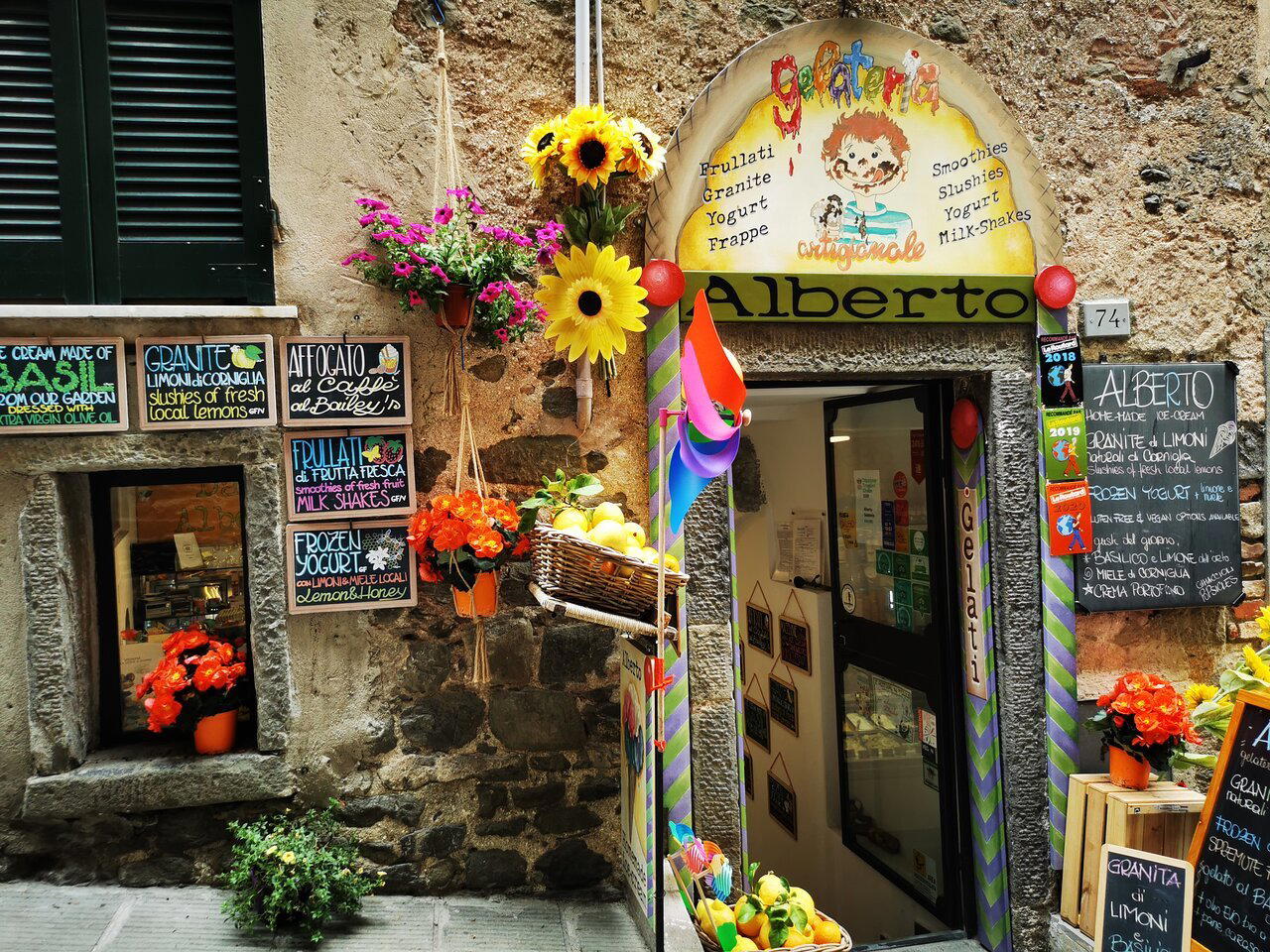
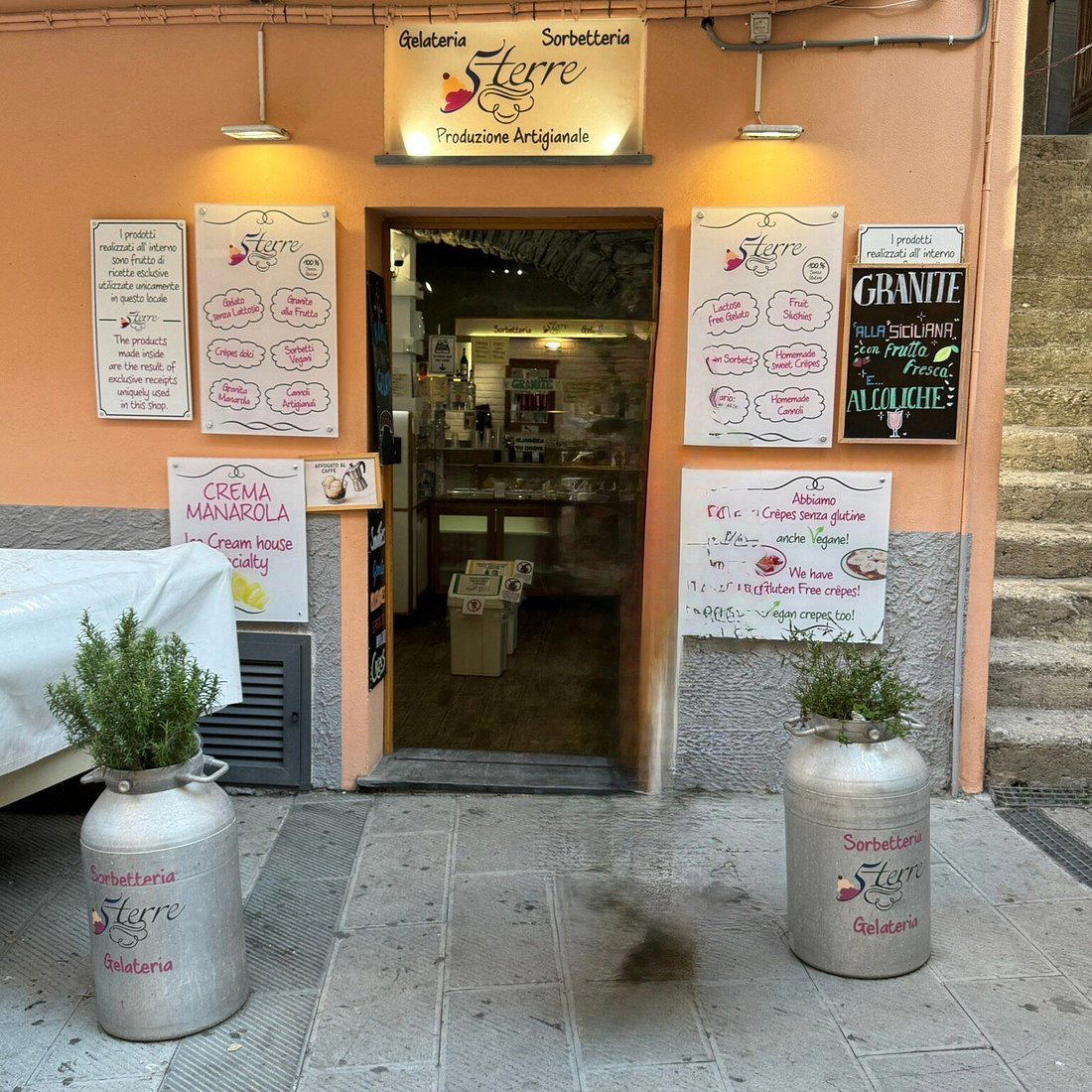
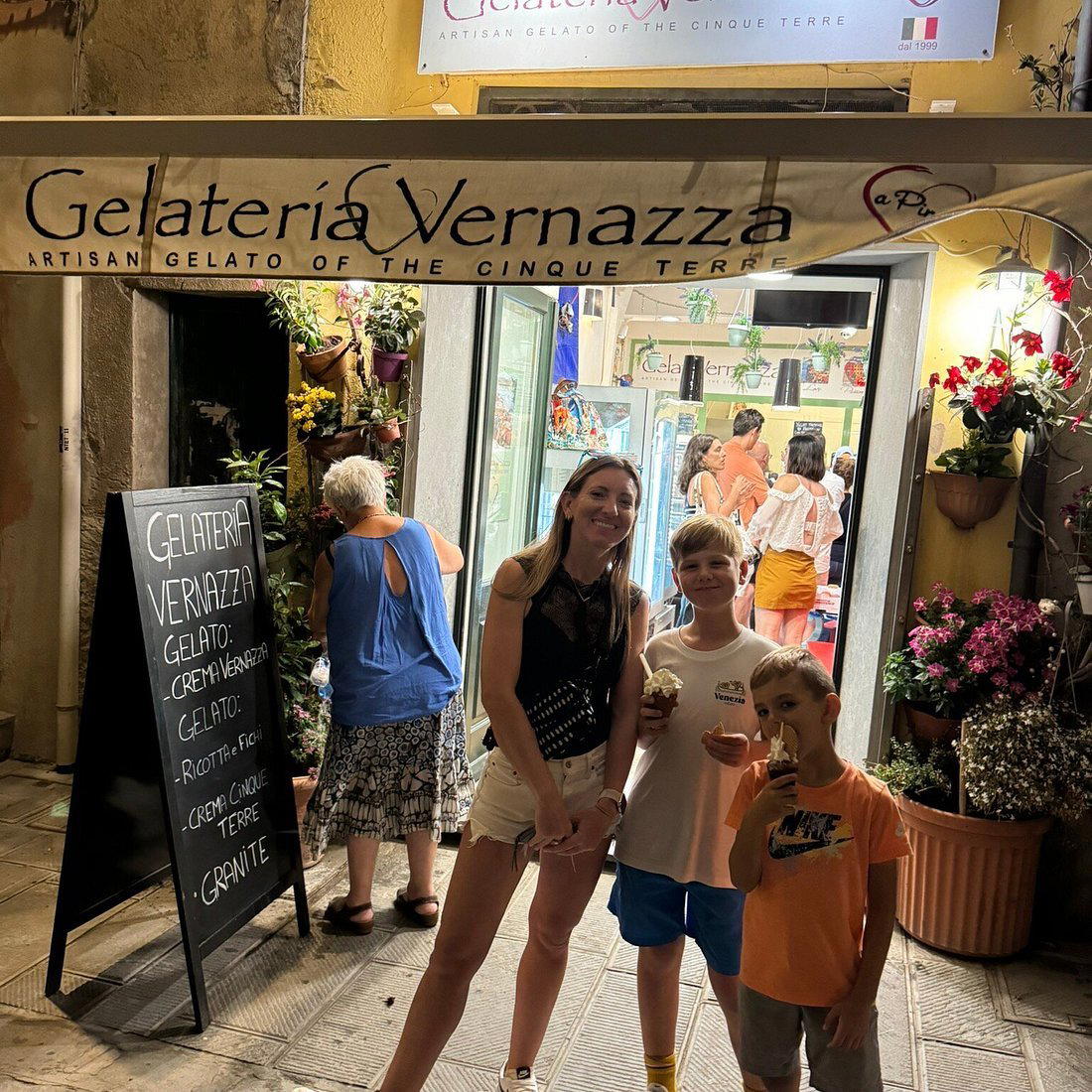
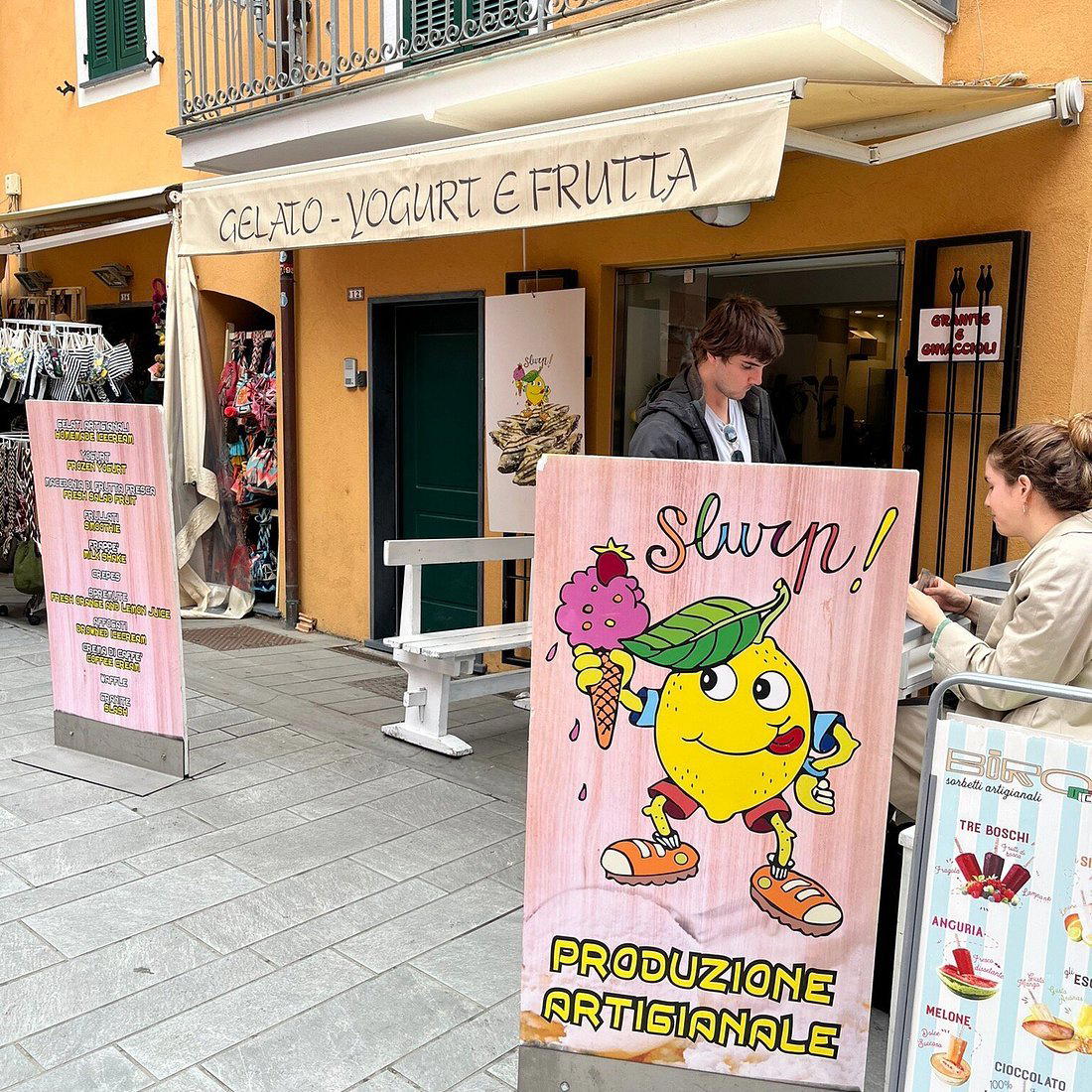
Gelateria Centrale competes in a local field that includes Gelateria 5 Terre, Alberto Gelateria, Gelateria Vernazza, and Slurp Gelato Artigianel, each operating across different villages with different production philosophies. The differentiation between them is rarely about grand claims; it's about texture, temperature, and whether the flavour reads as the thing it says it is. A nocciola made from Piedmontese hazelnuts will have a different weight and finish than one built from paste. Those distinctions become legible after enough cones, and the Cinque Terre, given the volume of gelato consumed along its trails, is a reasonable place to develop the habit of noticing.
Place as Context
The editorial angle on any gelateria along this coast requires understanding what the Cinque Terre itself does to food culture. The villages are connected by train (the La Spezia to Levanto line stops at each) and by trail, and the movement between them is part of the experience for most visitors. Food consumed here carries the weight of the walk, the light on the water, and the hour of the day. A gelato eaten on the steps above Vernazza's harbour at four in the afternoon is a different experience than the same gelato in a Milan shop, not because the product has changed, but because the setting amplifies it.
That context also creates risk. The most visited stretches of Monterosso and Vernazza in particular attract operations where the margin pressure of peak season pushes quality decisions in a direction that favours volume over craft. Knowing which counter resists that pressure, and which village you're in when you encounter it, is the kind of practical intelligence that makes a difference in how the afternoon lands.
Italian Coastal Craft in a Wider Frame
The Cinque Terre's food identity, gelato included, operates at a different register than Italy's Michelin-tracked fine dining corridor. That corridor runs through Modena, where Osteria Francescana anchors the country's most globally cited restaurant, through Florence's Enoteca Pinchiorri, through the Adriatic at Uliassi in Senigallia, and into the Abruzzo highlands at Reale in Castel di Sangro. Coastal Liguria operates on a different economy of pleasure: simpler, more immediate, and in the case of gelato, more democratic in its access.
That democratic access is worth taking seriously. The Italian tradition of artigianale gelato as everyday food, rather than aspirational treat, means that the quality ceiling in a well-run gelateria can be surprisingly high relative to price. The gap between a competent gelato and a poor one is more easily felt in a two-euro cone than in a twelve-course tasting menu, because there's nothing else in the experience to compensate. The gelateria either delivers or it doesn't, and the local customer, who returns the next day, will register the difference immediately.
Italy's serious food culture extends to corners that don't carry the same institutional recognition as operations like Le Calandre in Rubano, Piazza Duomo in Alba, or Dal Pescatore in Runate. Those rooms operate at one end of a long spectrum. At the other end, a well-made gelato in a village square with a functioning railway connection represents its own form of Italian craft, one that the country has been refining for considerably longer than most of the world's fine dining formats have existed.
Planning Your Visit
The Cinque Terre is leading approached with logistical realism. The Cinque Terre Express train connects the five villages frequently throughout the day, with a single Cinque Terre Card covering multiple journeys. Peak season, running from late June through August, brings queues at the most popular gelaterias that can stretch considerably; mid-morning and early evening tend to be the quieter windows. Shoulder season, particularly May and September, compresses the crowds substantially without sacrificing the coastal light that makes the setting work.
Gelateria Centrale is walk-in friendly, and specific hours are not listed in the record. Walk-in access is standard for gelaterias throughout the region. For dietary questions, dairy-free sorbetti are common across Ligurian gelaterias, and many operations now carry labelled allergen information by Italian regulatory requirement, asking directly at the counter before ordering is the most reliable approach.
A Minimal comparable set
Comparable venues nearby, for context on price, style, and recognition.
| Venue | Cuisine | Price | Notes |
|---|---|---|---|
| Gelateria CentraleThis venue — the venue you are viewing | Riomaggiore, Italian Gelato | $$ | |
| Slurp Gelato Artigianel | $ | Monterosso al Mare, Artisanal Italian Gelato | |
| Gelateria Vernazza | Vernazza, Artisanal Italian Gelato | $ | |
| Alberto Gelateria | Corniglia, Artisanal Italian Gelato | $ | |
| Gelateria 5 Terre | Manarola, Artisanal Italian Gelato | $ | |
| Radical Sorrento | $$ | Sorrento center, Modern International Brunch |
Continue exploring
More in Cinque Terre
At a Glance
- Scenic
- Rustic
- Cozy
- Casual Hangout
- Standalone
- Street Scene
Casual and welcoming atmosphere in a coastal village setting.