Our verdict
Garfish has been a fixture of Crows Nest's dining scene for years, drawing northern Sydney residents who want well-executed seafood without crossing the bridge. The room is relaxed but focused, the fish sourced with care, and the kitchen's approach — clean flavours, confident technique — places it clearly in the neighbourhood-local tier rather than the destination-dining bracket. It is the kind of place that fills on a Tuesday.

Pearl is the En Primeur Club membership app — saves, bookings, and concierge access live there. Same editors, same standards.
- Address
- 6/29 Holtermann St, Crows Nest NSW 2065, Australia
- Phone
- +61299660445
- Hours
- Mon ClosedTue–Sat 12–9 PMSun 12–3 PM
- Website
- garfish.com.au
- Directions
- Get directions
- Booking
- Book on OpenTable
The menu
What to order
- Snapper Pie
- Sri Lankan Fish and King Prawn Curry
Crows Nest and the Case for Neighbourhood Seafood
There is a particular kind of Sydney restaurant that exists not to attract a pilgrimage but to hold a neighbourhood together. Crows Nest, the lower north shore suburb sitting just above the harbour tunnel, has long operated as a genuine local dining precinct rather than a tourist corridor — the kind of area where residents measure loyalty in decades, not visits. Garfish, at 6/29 Holtermann Street, sits inside that tradition. It is a seafood-focused restaurant that has built its reputation on a simple proposition: the leading fish available, treated with restraint, served in a room that does not ask you to perform.
In Sydney's seafood dining hierarchy, the positions are reasonably clear. At the leading, Saint Peter in Paddington has redefined what Australian seafood cooking can look like at an ambitious level, and Rockpool set the template for premium Australian produce-led dining over a generation. Garfish operates in a different register entirely — closer in spirit to the Balmoral or Kirribilli fish restaurants that have served the north shore for decades, but with a kitchen discipline that places it above the category's median. That positioning is its editorial interest: it represents the healthy middle of Sydney's seafood scene, where cooking quality and neighbourhood utility are not in conflict.
The Arc of the Meal
The tasting progression at a restaurant like Garfish is less about formal multi-course architecture and more about a logical sequence from the water's edge to the table. Sydney's fish-focused kitchens, when they are working well, follow a rhythm: something raw or lightly cured to open, then heat applied with increasing confidence, and a finish that does not overstay the fish's welcome with unnecessary weight. The cooking tradition here draws from both the Australian seafood brasserie format, where freshness is the primary argument, and a broader awareness of technique that separates kitchens with genuine skill from those coasting on good suppliers.
That distinction matters in a city where proximity to excellent raw product can mask a mediocre kitchen. Sydney's fish markets in Pyrmont supply restaurants at every price tier, so sourcing alone is not a differentiator. The question is always what happens next, how the kitchen reads the fish on a given day, whether salt timing is correct, whether acid and fat are used to support rather than cover. Seafood restaurants at this tier in Australian cities increasingly show influence from the European brasserie model, where the menu is shorter and more responsive than a large à la carte list would allow. Ormeggio at The Spit in nearby Mosman applies Italian coastal technique at a more formal register; Garfish works at a lower temperature but with comparable seriousness about the primary ingredient.
Where Garfish Sits in the Broader Picture
Australian seafood dining has fragmented considerably over the past decade. At one end, destination restaurants like Pipit in Pottsville, Salt Water in Cairns, and the acclaimed Lizard Island Resort have built propositions around remote sourcing and a sense of place that is inseparable from their geography. At the other end, casual fish-and-chip shops and prawn-on-the-harbour formats address a different market entirely. Garfish occupies the space in between: urban, accessible, consistent, and representative of the kind of neighbourhood anchor that makes a suburb function as a real dining community rather than just a residential postcode.
That middle position is not a compromise, it is a service. The restaurants in this tier carry an important role in a city's food culture, building the long-term audience that eventually supports more ambitious cooking. Sydney's northern suburbs have a tradition of seafood restaurants that the inner-city dining conversation tends to overlook. 10 William St and 10 Pounds operate in different neighbourhoods with different formats, but they share with Garfish a focus on execution over spectacle. 1021 Mediterranean similarly holds its ground through consistency rather than concept novelty.
Internationally, the model Garfish represents has strong parallels. Le Bernardin in New York defines what seafood-focused cooking looks like at the formal apex of the category, and Lazy Bear in San Francisco shows how a fixed-format restaurant can build deep neighbourhood loyalty alongside critical recognition. Garfish makes no claim to that tier, but the comparison is instructive: the underlying logic, respected sourcing, focused execution, a room that serves the food rather than the other way around, holds at every price point.
The Australian Produce Context
It is useful to set Garfish against the broader Australian fine-dining seafood conversation. Brae in Birregurra and Attica in Melbourne have made Australian native ingredients and coastal produce central to their identities at a level that attracts international critical attention. Botanic in Adelaide, Hentley Farm in Seppeltsfield, and Laura at Pt Leo Estate in Merricks represent a version of Australian dining deeply tied to regional terroir. Garfish is not in that conversation, and is not trying to be. Its contribution is to demonstrate that thoughtful seafood cooking does not require either critical ambition or a destination address to be worth seeking out. For a thorough map of where Sydney's restaurants sit relative to each other, our full Sydney restaurants guide covers the range from neighbourhood locals to the city's most awarded rooms.
Planning a Visit
Logistics at a Glance
| Detail | Garfish (Crows Nest) | Saint Peter (Paddington) | Ormeggio at The Spit (Mosman) |
|---|---|---|---|
| Location type | Lower north shore, suburban strip | Inner east, high-traffic precinct | Northern harbour, waterfront |
| Format | Neighbourhood seafood restaurant | Destination seafood, à la carte | Italian coastal, formal à la carte |
| Booking lead time | Short to moderate | Several weeks ahead recommended | Moderate; waterfront tables longer |
| Price tier | Mid-range | Upper-mid to premium | Premium |
| Suited to | Local regulars, weeknight dining | Occasion meals, seafood enthusiasts | Special occasions, harbour setting |
Frequently asked questions
Is Garfish child-friendly?
For families with older children who eat fish, Garfish in Crows Nest is a practical choice within Sydney's mid-range seafood bracket. The neighbourhood setting on Holtermann Street is relaxed rather than formal, which takes the edge off the usual anxieties around younger diners. It is less suited to toddlers or very young children for whom the menu focus may be limiting.
What is the atmosphere like at Garfish?
Crows Nest sits at the quieter, more local end of the Sydney dining spectrum compared to the louder rooms around Surry Hills or Newtown. Garfish fits that register: a neighbourhood restaurant that holds a community together rather than courting destination traffic from across the city. Expect a room that prioritises ease over theatre.
How does Garfish compare to other seafood restaurants in Sydney?
Garfish in Crows Nest occupies a different position from destination-driven Sydney seafood rooms that draw city-wide reservations. It operates closer to the neighbourhood end of the market, where consistency across regular visits matters more than a single showpiece tasting menu. That places it alongside other community-anchored seafood restaurants rather than in direct competition with higher-profile CBD or harbourside operations.
What's the best thing to order at Garfish?
At a Sydney seafood restaurant operating at this level, the strongest play is almost always the freshest whole fish listed on the day rather than any fixed signature dish. Australian waters produce exceptional species that change with season and availability, and a kitchen focused on local seafood will reflect that in what arrives on the daily list. Ask staff what came in that morning.
Where is Garfish in Sydney?
Garfish is located at 6/29 Holtermann St, Crows Nest NSW 2065, Australia, Sydney.
Recognition Snapshot
Comparable venues nearby, for context on price, style, and recognition.
| Venue | Cuisine | Price | Notes |
|---|---|---|---|
| GarfishThis venue — the venue you are viewing | Modern Australian Seafood | $50–100 | Not listed |
| Opera Bar | Modern Australian Seafood with Global Flavours | $30–50 | Sydney |
| The Boatshed Pyrmont | Modern Australian Seafood | $30–50 | Pyrmont |
| Angelo's Cabarita | Modern Australian Seafood Grill | $50–100 | Cabarita |
| Kitchens On Kent | Luxury Seafood Buffet with International Stations | Not listed | Millers Point |
| Aces Ocean Foods | Fresh Seafood and Pizza | $20–30 | Padstow |
Continue exploring
More in Sydney
Restaurants in Sydney
Browse all →
Bars in Sydney
Browse all →
Hotels in Sydney
Browse all →


Details
- Lively
- Modern
- Date Night
- Group Dining
- Casual Hangout
- Waterfront
- Open Kitchen
- Extensive Wine List
- Local Sourcing
- Sustainable Seafood
- Waterfront
- A La Carte
- Small Plates
- Vegetarian Friendly
- Vegan Options
- Gluten Free Options
Current opening hours
- Monday
- Closed
- Tuesday
- 12–9 PM
- Wednesday
- 12–9 PM
- Thursday
- 12–9 PM
- Friday
- 12–9 PM
- Saturday
- 12–9 PM
- Sunday
- 12–3 PM
Hours can change for holidays and private events. Last verified .
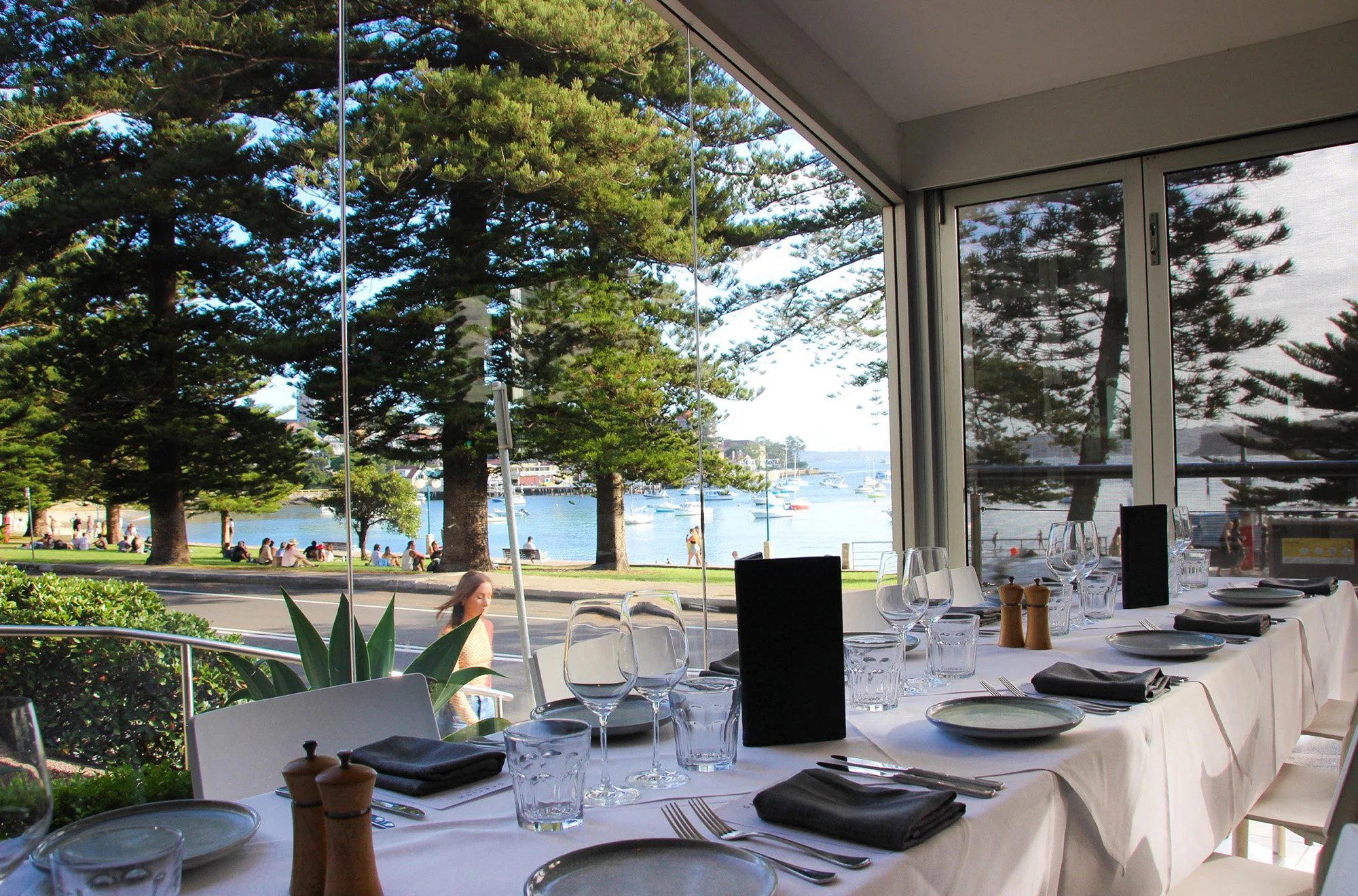
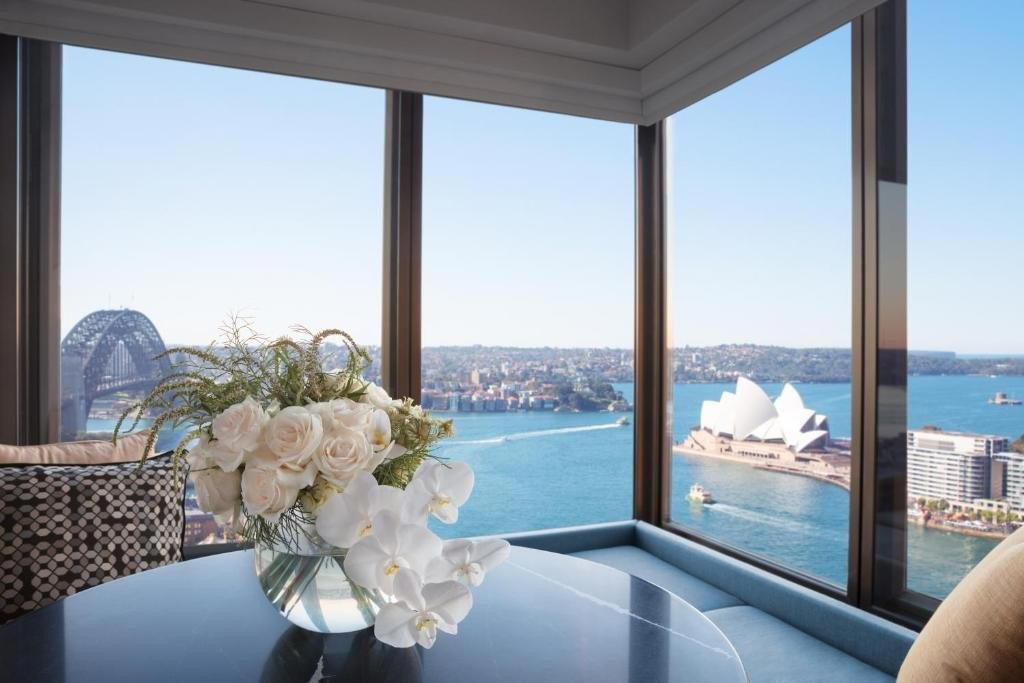
Bright and lively waterfront atmosphere with large glass windows offering harbour views, wood-fired oven, and a busy cafe-like energy.