Gamskogelhütte Fine Dining by Stefan Lastin


At 1,850 metres above sea level in the Carinthian Alps, Gamskogelhütte Fine Dining delivers an ambitious three- to six-course set menu inside a rustic Alpine space of warm timber and natural stone. Chef Stefan Lastin presents dishes personally, the wine list runs to rare selections, and in winter the snowmobile transfer alone signals the kind of evening this is going to be.
Pearl is the En Primeur Club membership app — saves, bookings, and concierge access live there. Same editors, same standards.
- Address
- Rennweg am Katschberg, Kärnten, 9863, AUT
- Phone
- +43 664 3376678
- Website
- gamskogelhuette.at
- Directions
- Get directions
 Saves & bookings on Pearl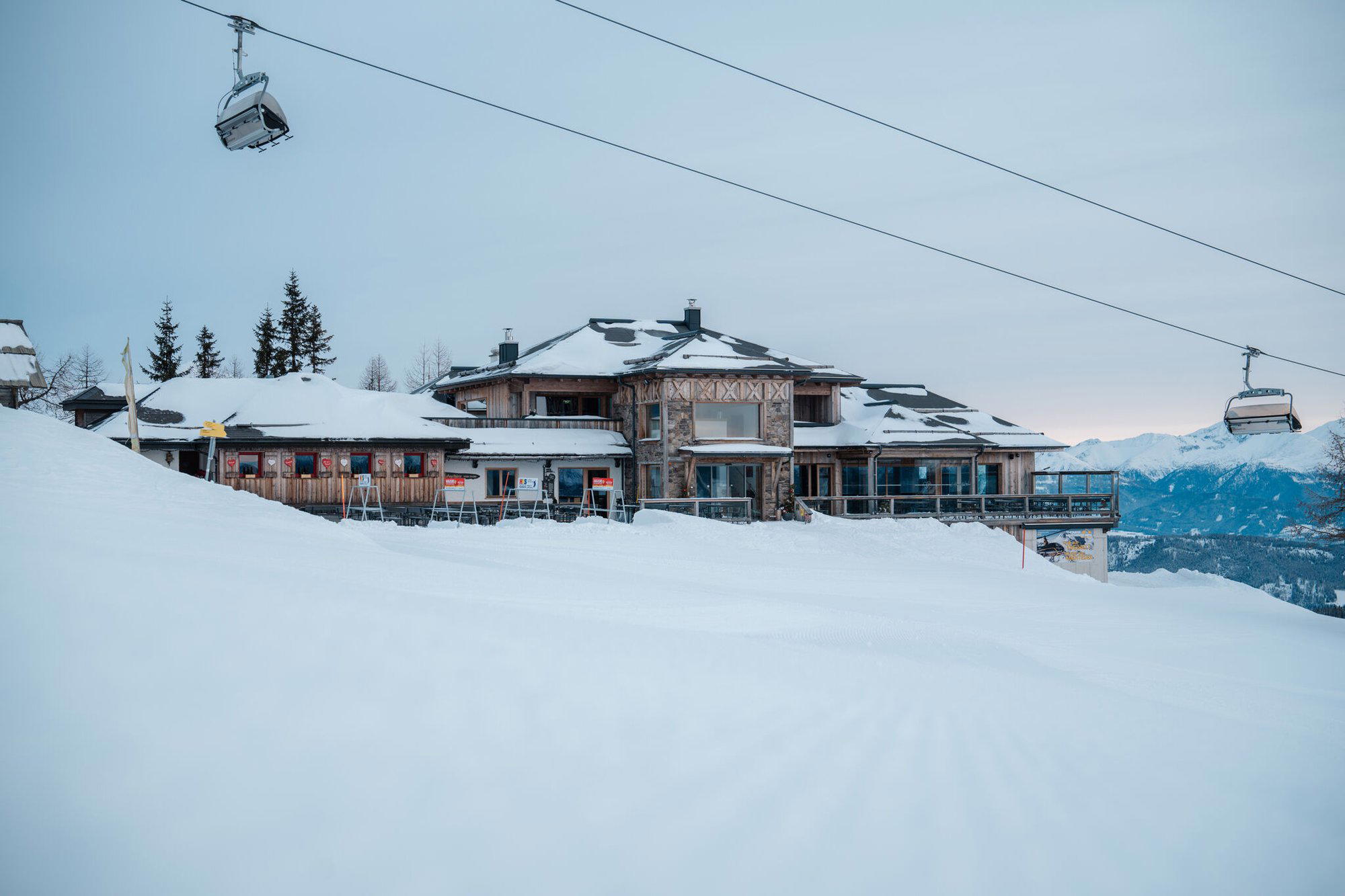
A Mountain Setting That Does Real Work
Most fine dining rooms in the Alps use altitude as decoration. The panoramic window, the edelweiss on the table, the obligatory chamois on the menu, these are signifiers rather than substance. At 1,850 metres on the Katschberg in Carinthia, the setting at Gamskogelhütte Fine Dining operates differently. The approach alone, a winding mountain road in summer, a snowmobile transfer from the valley in winter, or a descent directly from the ski slope, frames the meal before a single course arrives. The physical commitment required to reach the restaurant tells you something about what awaits inside: this is not a place operating on footfall or convenience. It exists for diners who have already decided.
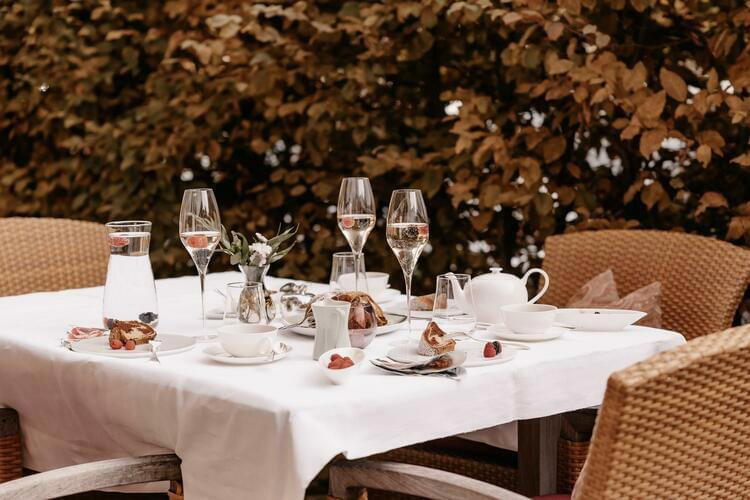
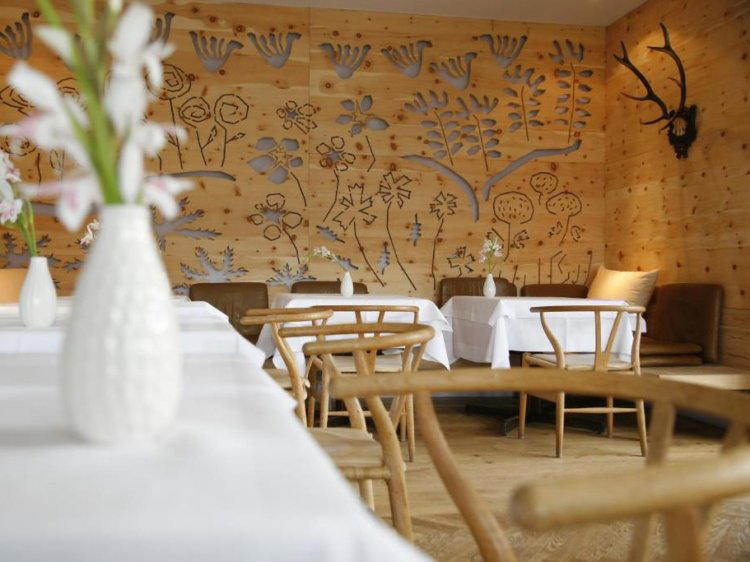
Inside, the room is constructed around the logic of an Alpine hütte, with rustic timber and natural stone doing the structural and atmospheric work that would cost considerably more in a city restaurant to replicate convincingly. The tables, however, are set with the kind of precision associated with set-menu fine dining: polished glassware, composed place settings, the small signals that tell a regular restaurant visitor they are in a different register from a mountain tavern. The contrast is specific and earned rather than affected.
What the Altitude Means for the Plate
The argument for sourcing from Alpine terrain is not sentimental. High-altitude pastures in the eastern Alps produce dairy, game, and herbs with measurable intensity differences compared to lowland equivalents, shorter growing seasons concentrate flavour in a way that chefs further down the valley have to work around rather than with. Austrian mountain cooking, at its most considered, treats elevation as an ingredient. The Carinthian and Styrian traditions that inform the region's better kitchens draw on game from the surrounding forests, lake fish from nearby waters, and dairy from small herds on communal pastures.
For a kitchen operating at this altitude and in this format, the seasonal calendar matters more than it does in urban fine dining. In summer, the arrival of wild herbs, foraged greens, and shorter-season vegetables shapes what an ambitious menu can credibly offer. In winter, the larder shifts toward preserved, cured, and game-led preparations that reflect both the season and the supply lines available when the mountain road is under snow. This is not a kitchen that can rely on next-day deliveries from a metropolitan market. That constraint, when taken seriously, tends to produce more focused menus rather than less interesting ones.
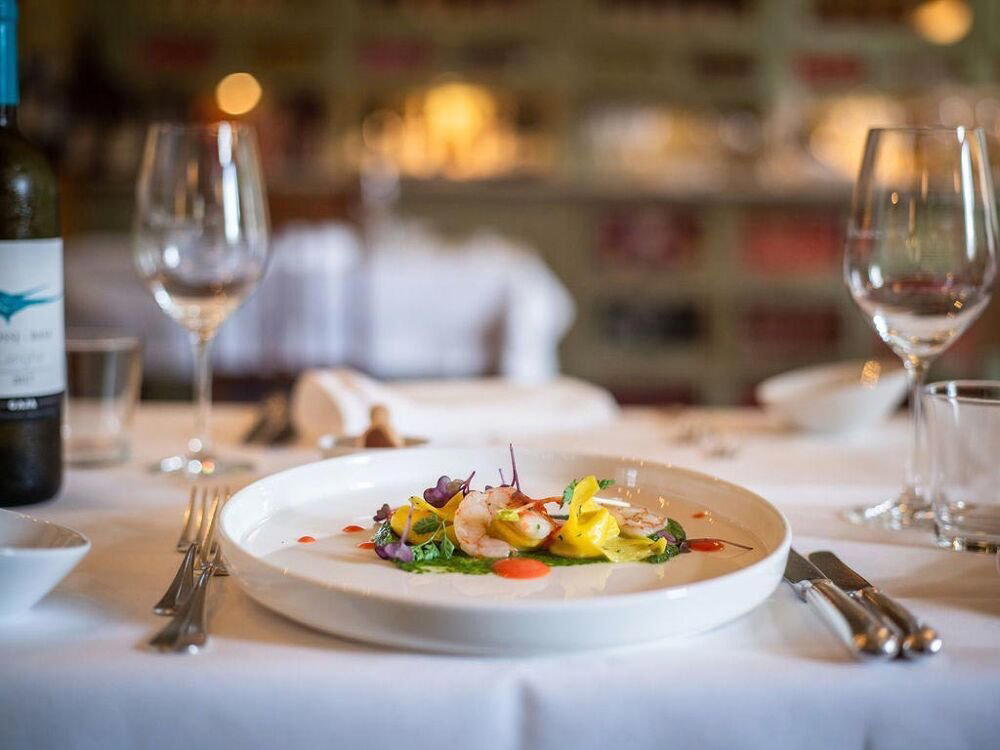
Stefan Lastin's approach to the set menu, which runs to between three and six courses depending on the format chosen, fits this pattern. Elaborate amuse-bouches open the meal and sweet preparations close it, framing a structure that is closer to the Austrian fine dining tradition seen at places like Kräuterreich by Vitus Winkler in Sankt Veit im Pongau or Obauer in Werfen than the looser, sharing-oriented formats that have taken hold in urban Austrian dining over the past decade. The set menu is the right vehicle here: it allows a kitchen this far from a resupply chain to commit fully to what is available and cook it with discipline.
Wine at This Elevation
The wine list is worth treating as a separate consideration rather than an afterthought to the menu. The note that the list includes rare selections worth sampling independently suggests a cellar built with some depth, a meaningful investment for a restaurant of this size and format at this location. Austrian fine dining has become increasingly serious about its wine program over the past two decades, with the leading mountain-adjacent rooms maintaining lists that span both domestic Grüner Veltliner and Blaufränkisch alongside selections from further afield. The wine pairings offered alongside the set menu are described as well-matched, which in a high-altitude setting raises a question about format that most diners don't consider: altitude affects palate perception, and kitchens that cook for the mountain rather than at the mountain tend to build menus where acidity and freshness register differently than at sea level.
For context, the Austrian fine dining circuit that connects places like Steirereck im Stadtpark in Vienna, Landhaus Bacher in Mautern an der Donau, and Ikarus in Salzburg has long included serious mountain rooms as a distinct sub-category. The Arlberg and Tyrol sides of this tradition are well documented, see Gourmetrestaurant Tannenhof in Sankt Anton am Arlberg, Griggeler Stuba in Lech, and Stüva in Ischgl, but the Carinthian side has historically operated with less international attention, which means properties here tend to price against local expectations and compete on different terms. That asymmetry works in the diner's favour.
Service at Altitude
Proprietor Peter Aschbacher's hospitality is noted specifically for genuine engagement with guests rather than formal distance, and Lastin presents his dishes personally at the table, a practice more common in smaller Austrian fine dining rooms than in their French or British equivalents. In rooms of this scale, personal presentation carries information: the chef can explain sourcing, preparation logic, and seasonal context in a way that a set menu card cannot. It also shortens the distance between kitchen intent and diner understanding, which matters when a menu is responding to constraints and opportunities that an urban kitchen doesn't face. The service model is warm and attentive rather than ceremony-led, which suits both the physical environment and the likely composition of the room on any given evening.
Planning the Visit
Access logistics separate this from any comparable fine dining experience in the Austrian calendar. In summer, the mountain road to the restaurant can be driven, the route is described as somewhat arduous, and transport by bus or on foot is also possible for those who prefer not to drive the ascent. In winter, the journey changes character entirely: guests are collected by snowmobile from the valley, or can arrive by skiing directly to the restaurant from the adjacent slope. The winter arrival by snowmobile is a practical solution to a genuine access problem at 1,850 metres, and it sets the tone for an evening outside the conventions of urban restaurant dining. Booking is essential given the small scale of the operation.
For comparison points elsewhere in the Austrian fine dining register, Schwarzer Adler in Hall in Tirol, Restaurant 141 by Joachim Jaud in Mieming, and Ois in Neufelden offer additional points of reference for the kind of serious, regionally grounded cooking this format belongs to. Venues like Le Bernardin in New York City and Emeril's in New Orleans represent the urban fine dining scale against which mountain-format restaurants like this one are not competing.
Comparable Venues
Comparable venues nearby, for context on price, style, and recognition.
| Venue | Cuisine | Price | Awards | Notes |
|---|---|---|---|---|
| Gamskogelhütte Fine Dining by Stefan LastinThis venue — the venue you are viewing | Modern Alpine Fine Dining | $$$$ | Michelin Plate | Not listed |
| Restaurant am Hochfuchs | Modern Austrian Regional | $$$$ | Michelin Plate | Eugendorf |
| Bärenwirt | Modern Austrian Regional | $$$ | Michelin Plate | Hauptplatz |
| Ennstalerhof | Modern Austrian Fine Dining | $$$$ | Not listed | Ramsau am Dachstein |
| Luckys Restaurant Haus am Hang | Contemporary Central European Fine Dining | $$$$ | Michelin Plate | Sankt Gilgen |
| Strasserwirt Gourmetstuben | Regional Tyrolean Fine Dining | $$$$ | Michelin Plate | Strassen |
Recognition history
Dated appearances from independent guides and award organizations, with the underlying list record or original source where available.
Falstaff Restaurant - 96 Falstaff Points
Falstaff
Michelin 1 Star
Michelin
Continue exploring
More in Rennweg am Katschberg
Restaurants in Rennweg am Katschberg
Browse all →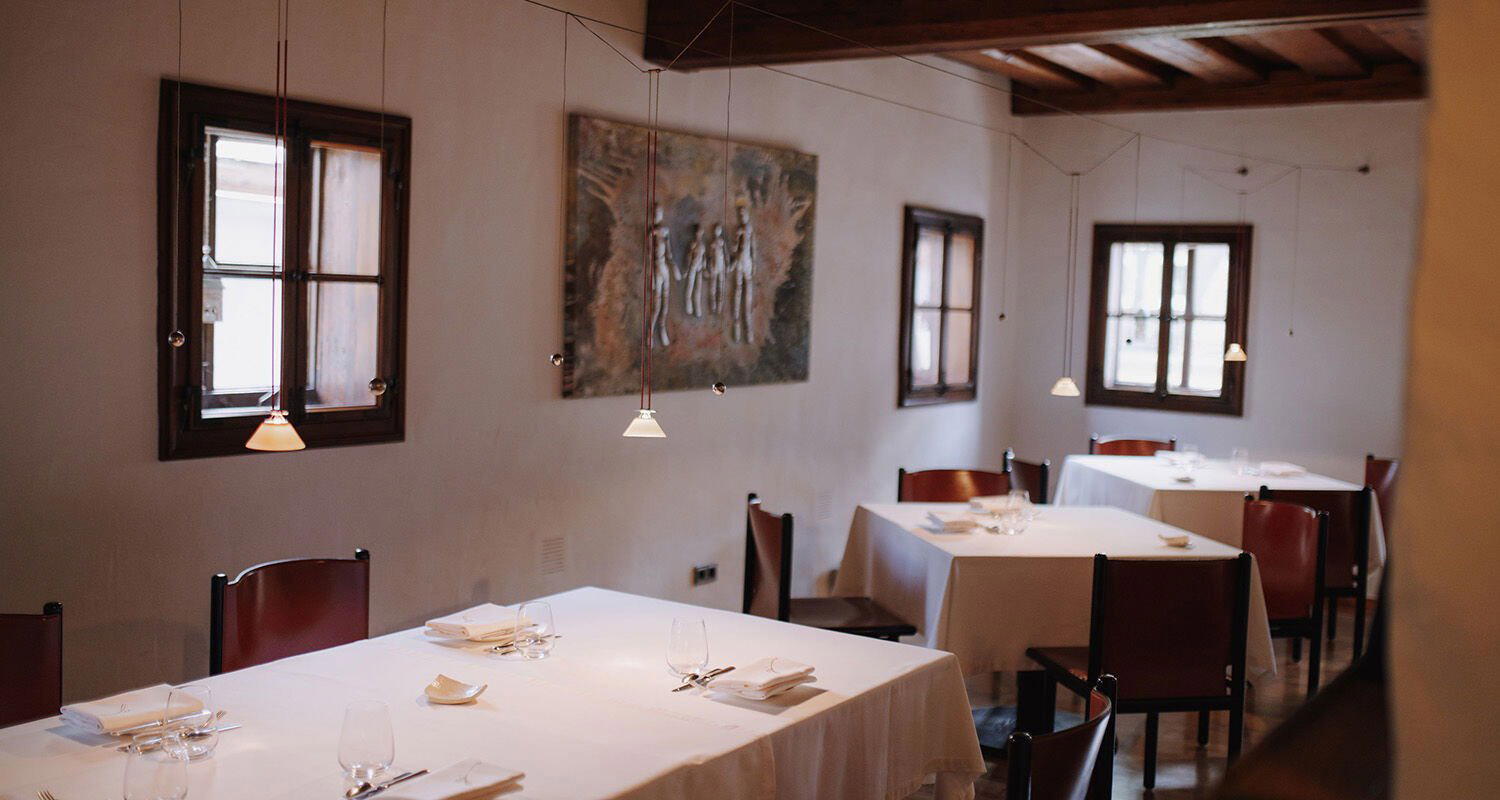
Bars in Rennweg am Katschberg
Browse all →
At a Glance
- Romantic
- Scenic
- Cozy
- Elegant
- Rustic
- Intimate
- Date Night
- Special Occasion
- Celebration
- Business Dinner
- Panoramic View
- Private Dining
- Open Kitchen
- Standalone
- Extensive Wine List
- Sommelier Led
- Local Sourcing
- Mountain
Current opening hours
- Monday
- 9:30 AM–5 PM
- Tuesday
- 9:30 AM–5 PM
- Wednesday
- 9:30 AM–5 PM
- Thursday
- 9:30 AM–5 PM
- Friday
- 9:30 AM–5 PM
- Saturday
- 9:30 AM–5 PM
- Sunday
- 9:30 AM–5 PM
Hours can change for holidays and private events. Last verified .
Warm, cozy Alpine-style interior with rustic charm; intimate and refined atmosphere enhanced by personal service from chef Stefan Lastin and proprietor Peter Aschbacher.