
Tabelog 100 #84
Our verdict
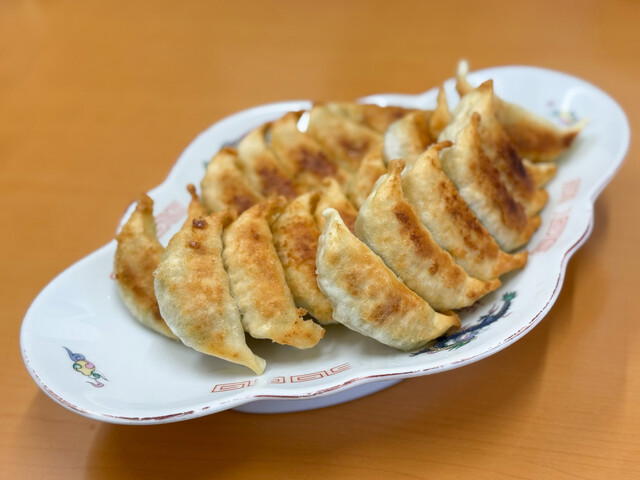
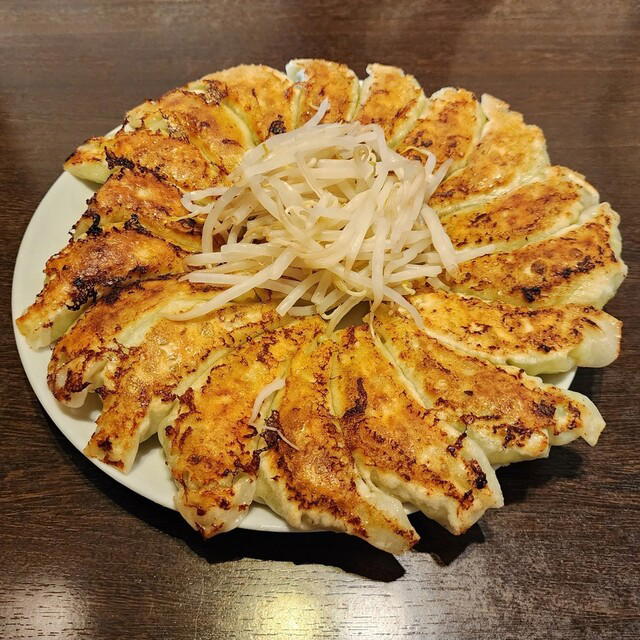
Hamamatsu’s gyoza culture is built on repetition, local demand, and a style that treats dumplings as everyday dining rather than ceremony. Fukumitsu belongs to that civic category: a dumpling and cafeteria address selected for Tabelog 100 Dumplings in 2019, 2021, and 2024, with take-out and a family-friendly room reinforcing its local utility.

Pearl is the En Primeur Club membership app — saves, bookings, and concierge access live there. Same editors, same standards.
- Address
- 1 Chome-25-8 Sato, Chuo Ward, Hamamatsu, Shizuoka 430-0807, Japan
- Phone
- +81 53-461-6501
- Hours
- Mon 11 AM–8:25 PMTue–Wed ClosedThu–Sun 11 AM–8:25 PM
- Website
- x.com
- Directions
- Get directions
The menu
What to order
- Hamamatsu gyoza
- Pan-fried gyoza with bean sprouts
- Takeout grilled gyoza
Approaching a house-style restaurant in Hamamatsu, the signal is not theatre but throughput: a local dining room set up around dumplings, cafeteria pacing, and seated meals. That matters in a city where gyoza is not merely a side order borrowed from ramen culture, but a civic food with its own rhythm. The point is volume, consistency, and a filling-to-wrapper balance that can survive repeat eating. Fukumitsu sits inside that tradition rather than above it, which is exactly why it belongs in the conversation.
Hamamatsu’s dumpling identity is tied to the city’s working appetite and to the broader food culture of Shizuoka. The local style is commonly discussed through generous portions and a balance that keeps the format approachable as an everyday meal. That everyday emphasis is not a decorative detail. It explains why the category works as casual dining rather than a tasting-menu interlude, and why repeatability matters as much as novelty.
Hamamatsu gyoza is a local staple, not a specialist performance
The useful way to read Fukumitsu is through the city’s everyday food economy. Hamamatsu has enough serious dining to support higher-spend rooms such as Binshan Li, Kitanose, and the more expensive end represented by Yoshitomo, but gyoza operates on a different axis. It is democratic, quick to understand, and demanding in a quieter way: poor texture, weak balance, or inconsistent cooking have nowhere to hide.
Selection for Tabelog 100 Dumplings in 2024 gives the restaurant a credible external marker without turning the meal into a trophy hunt. Tabelog’s gyoza list is useful because it separates dumpling specialists from broader Japanese dining categories; a place can earn attention for execution in a narrow field rather than for luxury cues. In Hamamatsu, that distinction is significant. The city’s gyoza addresses are measured less by spectacle than by whether they can feed regulars with the same confidence across the day.
Preparation discipline is the quiet editorial point here. Hamamatsu gyoza depends on the quality of humble inputs, the handling of the wrapper, the filling, heat, and timing. None of those elements needs to read as expensive on paper, but the city’s better dumpling rooms show how small differences accumulate. The format rewards balance and consistency more than visible luxury, and that is the lens through which Fukumitsu should be read.
The cafeteria format keeps the focus on repetition and reliability
Fukumitsu is categorized as both dumpling shop and cafeteria, a pairing that tells the reader more than a chef biography would. Cafeteria culture in Japan often values legibility: dishes are meant to be ordered without negotiation, shared across generations, and repeated. The category reinforces that local role. This is not counter dining with a chef narrating each plate; it is a straightforward format built for people who already know what they came for.
That distinction also changes how visitors should judge the experience. In Tokyo or Kyoto, the premium restaurant conversation can drift toward scarcity, named chefs, and booking difficulty. Hamamatsu gyoza asks a different question: does the place express a regional habit clearly enough to justify a stop between more formal meals? For travelers mapping the city, the answer is stronger when Fukumitsu is treated as a food-culture address rather than a conventional destination restaurant.
The competitive comparison within Hamamatsu is useful. Other dining rooms point toward different parts of the city’s range, while gyoza occupies the low-barrier, high-frequency lane. That does not make it less serious. It makes the criteria stricter in practical ways: pace, table comfort, consistency, everyday suitability, and the ability to satisfy a broad local audience all become part of the evaluation.
How to place it in a Hamamatsu itinerary
For a visitor, Fukumitsu works well as a calibration meal: a way to understand the city’s dumpling baseline before spending elsewhere. The listed budget is accessible, with both lunch and dinner falling in the JPY 1,000 - JPY 1,999 range. That makes it particularly relevant for travelers building a day around Hamamatsu rather than treating the city as a single-table detour.
Practical expectations are also part of the read. Many Japanese neighborhood restaurants operate with a direct, local rhythm, and Fukumitsu’s dumpling-and-cafeteria categorization points toward that kind of everyday use. Its location is best understood simply as Hamamatsu rather than as a station-front luxury dining address. Those details push the experience toward planned local movement: better for a deliberate gyoza stop than a casual walk-in between transport connections.
The broader Hamamatsu edit should not stop at dumplings. For restaurant planning, start with Our full Hamamatsu restaurants guide, then use Our full Hamamatsu hotels guide, Our full Hamamatsu bars guide, Our full Hamamatsu wineries guide, and Our full Hamamatsu experiences guide to build the rest of the trip. Readers comparing casual Japanese formats across cities can also think generically about how dumpling shops, cafeteria-style rooms, and other everyday dining formats differ from the more formal end of the restaurant spectrum.
The editorial verdict is simple: this is a regional food address with enough recognition to matter and enough everyday structure to stay honest. The case for going is not luxury, rarity, or chef mythology. It is Hamamatsu gyoza in its natural habitat, judged by repetition, preparation discipline, and a room designed for regular use.
Frequently asked questions
How much does it cost to eat at Fukumitsu?
Pricing at Fukumitsu is listed as JPY 1,000 - JPY 1,999 JPY 1,000 - JPY 1,999.
How do I find Fukumitsu?
Fukumitsu is located in Hamamatsu.
What days is Fukumitsu closed?
Current opening days and closing days should be confirmed directly with Fukumitsu before visiting.
What's the signature at Fukumitsu?
Dumplings are the clear draw here: Fukumitsu was selected for Tabelog 100 Dumplings in 2024. The restaurant is in Hamamatsu, and prices fall in the JPY 1,000–1,999 range.
At-a-Glance Comparison
Comparable venues by cuisine and price in the same metro.
| Venue | Cuisine | Price | Awards | Notes |
|---|---|---|---|---|
| FukumitsuThis venue — the venue you are viewing | Hamamatsu gyoza & Chinese dumplings | $10–20 | Tabelog 100 #84 | Not listed |
| ビストロ ア ターブル | French Bistro | $20–30 | Not listed | Tomioka |
| Sumiyaki Unagi Kamo | Traditional Kansai-style unagi (eel) restaurant | $30–50 | Tabelog 100 #85 | Hamana Ward |
| Kiyo | Traditional Hamamatsu gyoza & horumon | $10–20 | Tabelog 100 #65 | Naka Ward (Kamoe) |
| Mutsugiku | Hamamatsu gyoza specialist | $10–20 | Tabelog 100 #93 | Naka-ku |
| Torihama | Traditional Japanese Chicken Specialty | Not listed | Tabelog 100 #74 | Naka-ku |
Recognition history
Dated appearances from independent guides and award organizations, with the underlying list record or original source where available.
Tabelog 100 #84 · No. 84
Tabelog · Tabelog 100 - Dumplings - 2024
Continue exploring
More in Hamamatsu
Restaurants in Hamamatsu
Browse all →
Hotels in Hamamatsu
Browse all →
Details
- Lively
- Classic
- Cozy
- Well Known
- Casual Hangout
- Family
- Group Dining
- Solo
- After Work
- Late Night
- Standalone
- Beer Program
- A La Carte
- Family Style
- Counter Dining
- Beer
- Sake
Current opening hours
- Monday
- 11 AM–8:25 PM
- Tuesday
- Closed
- Wednesday
- Closed
- Thursday
- 11 AM–8:25 PM
- Friday
- 11 AM–8:25 PM
- Saturday
- 11 AM–8:25 PM
- Sunday
- 11 AM–8:25 PM
Hours can change for holidays and private events. Last verified .
Busy, retro diner-style space with a large seating area, counter seats, and simple, casual decor that feels rooted in the local neighborhood and often fills with lines of guests waiting for freshly fried gyoza.