Frittenwerk Bilk
Frittenwerk Bilk sits on Friedrichstraße in Düsseldorf's Bilk district, where the city's appetite for refined fast food intersects with a neighbourhood that runs decidedly local. The format centres on fries done with deliberate sourcing and preparation, placing it within a broader German movement that treats the humble potato as a serious ingredient rather than an afterthought.
Pearl is the En Primeur Club membership app — saves, bookings, and concierge access live there. Same editors, same standards.
- Address
- Friedrichstraße 145, 40217 Düsseldorf, Germany
- Phone
- +4921199457874
- Website
- frittenwerk.com
- Directions
- Get directions
 Saves & bookings on Pearl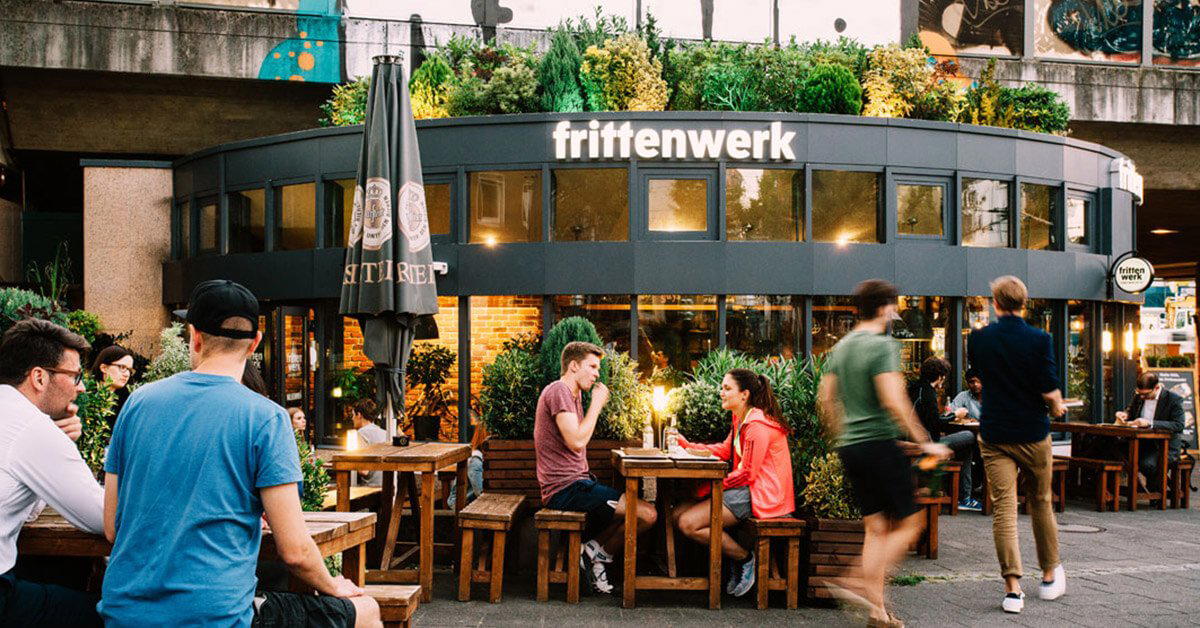
Friedrichstraße and the Case for Taking Fries Seriously
Düsseldorf's Bilk district has a habit of rewarding the visitor who moves past the Altstadt. Friedrichstraße 145 announces itself without fanfare: no valet stand, no curated playlist audible from the pavement, no architectural flourish designed to photograph well. What the address offers instead is a focused proposition, one that sits inside a wider German conversation about whether fast, affordable food can be sourced and prepared with the same attention given to a three-course dinner. Frittenwerk Bilk is one of the venues making that argument in real time.
Across Germany, a recognisable tier of fast-casual operators has moved away from the frozen-supply-chain model that defined the sector for decades. The logic is direct: if a Michelin-tracked restaurant like Schwarzwaldstube in Baiersbronn can build its identity around ingredient provenance, there is no structural reason why a frites counter cannot apply the same discipline to potato variety, frying medium, and sauce production. Frittenwerk operates inside that reasoning.
The Sourcing Argument on a Plate
German fast food has long been anchored by the Imbiss tradition, the standing counter, the paper cone, the unremarkable frozen fry. What has shifted in the past decade is the arrival of operators who treat the potato itself as a variable worth controlling. Variety selection, soil type, harvest timing, and moisture content all affect how a fry behaves in oil, and a kitchen that understands this produces a noticeably different result than one working from a standardised frozen input.
Frittenwerk's positioning in Bilk places it within a neighbourhood that skews residential and functional rather than destination-driven. This is not the Medienhafen, where a venue can rely on passing foot traffic from design firms and media companies. Bilk requires a reason to return, which means the product has to earn repeat visits on its own terms. That dynamic tends to filter out operators who rely on location alone, and it gives venues like Frittenwerk a credibility that tourist-area equivalents rarely achieve.
For context, the German market for premium fast-casual fries sits in a different competitive bracket than the burger-first chains that dominate high-street retail. A venue like 3h's burger & chicken in Düsseldorf occupies adjacent territory, affordable, quick, protein-centred, but the product logic is distinct. Frittenwerk's focus on the fry as the primary object, rather than a supporting element, places it closer to the Belgian and Dutch friture tradition than to American burger-bar conventions.
Bilk in the Wider Düsseldorf Dining Picture
Düsseldorf has built a dining culture with more range than its size suggests. At the formal end, the city supports a cluster of high-achievement kitchens, and Germany broadly punches above its weight in Michelin density, Vendôme in Bergisch Gladbach and Aqua in Wolfsburg represent the kind of three-star ambition that defines one end of the country's restaurant spectrum. Further afield, Victor's Fine Dining by Christian Bau in Perl and Waldhotel Sonnora in Dreis represent the type of serious regional commitment that Germany's fine dining culture sustains outside its major cities.
Below that tier, Düsseldorf's mid-range and casual segments are genuinely diverse. Along the Altstadt and spreading into districts like Bilk and Flingern, the city maintains a range of formats: Turkish grills such as Alanya Döner, wine and cheese bars including Amuni Wein- und Käsebar, Mediterranean tables like Anfora and Arca Alacati. Frittenwerk slots into this picture as a category-specific operator: not trying to span Mediterranean cuisine or build a cocktail program, but doing one thing with deliberate focus. That kind of specialisation tends to age better than format eclecticism.
The contrast with Germany's highest-concept dining is useful precisely because it maps the full range. The common thread is specificity of intention, a refusal to be generalist. Frittenwerk shares that instinct, even if the price point and formality sit at the opposite end of the register.
What to Expect on Friedrichstraße
Bilk is a district that functions on weekday rhythms as much as weekend ones. Friedrichstraße has the character of a working neighbourhood artery: pharmacies, small supermarkets, local bars, the occasional independent restaurant. Frittenwerk's address at number 145 puts it inside that fabric rather than outside it, which shapes the experience before the food arrives. This is not a venue designed around the arrival moment. The emphasis falls on the product.
Germany's fast-casual sector is overwhelmingly walk-in in format, and a frites-focused counter in a residential district operates on that model. Timing matters less here than at formal tasting counters, but lunch hours and early evening in a working neighbourhood can generate queue pressure. The practical intelligence is to avoid peak lunch slots on weekdays if turnover time matters.
Bilk is well connected by tram and on foot from central Düsseldorf. The neighbourhood does not have a parking culture, so arriving by public transport or on foot aligns with how Bilk residents use the area.
The contrast between what Frittenwerk represents and the ambition of, say, Schanz in Piesport or Le Bernardin in New York City is not a criticism of either end, it is a reminder that a city's dining culture depends on the full range, and that a well-run frites counter in a residential district contributes something different from a three-star tasting menu. Some comparisons only work at scale, like Lazy Bear in San Francisco, which built its reputation on communal format in a city comfortable with experimental dining. Frittenwerk's proposition is quieter, more local, and more useful for that.
Reputation Context
Comparable venues nearby, for context on price, style, and recognition.
| Venue | Cuisine | Price | Notes |
|---|---|---|---|
| Frittenwerk BilkThis venue — the venue you are viewing | Canadian Poutine & Fries | $ | Not listed |
| Schweine Janes | German Pork Barbecue | $ | Altstadt |
| Vegan Halal Döner & Pizza Selam Helal Restaurant | Vegan Halal Turkish Döner & Pizza | $ | Stadtmitte |
| Dauser | Traditional German Soups and Stews | $ | Derendorf |
| Pizza | Italian Pizza | $$ | Friedrichstadt |
| da noi | Authentic Italian Pizzeria & Trattoria | $$ | Stadtmitte |
Continue exploring
More in Düsseldorf
Restaurants in Düsseldorf
Browse all →
Bars in Düsseldorf
Browse all →
At a Glance
- Modern
- Cozy
- Trendy
- Casual Hangout
- Open Kitchen
Current opening hours
- Monday
- 11 AM–9 PM
- Tuesday
- 11 AM–9 PM
- Wednesday
- 11 AM–9 PM
- Thursday
- 11 AM–9 PM
- Friday
- 11 AM–10 PM
- Saturday
- 11 AM–10 PM
- Sunday
- 11:30 AM–9:30 PM
Hours can change for holidays and private events. Last verified .
Green, plant-filled, environmentally conscious, and relaxed atmosphere.