Franky's BBQ
Our verdict
Franky's BBQ sits on Unterdorfstrasse in the small Basel-Landschaft village of Blauen, bringing an open-fire, smoke-forward cooking tradition to a corner of Switzerland better known for its hiking trails than its restaurant scene. For a region where BBQ culture remains genuinely niche, it represents a specific and considered bet on wood and smoke as a culinary foundation.

Pearl is the En Primeur Club membership app — saves, bookings, and concierge access live there. Same editors, same standards.
- Address
- Unterdorfstrasse 7, 4223 Blauen, Switzerland
- Phone
- +41764332107
- Website
- frankysbbq.com
- Directions
- Get directions
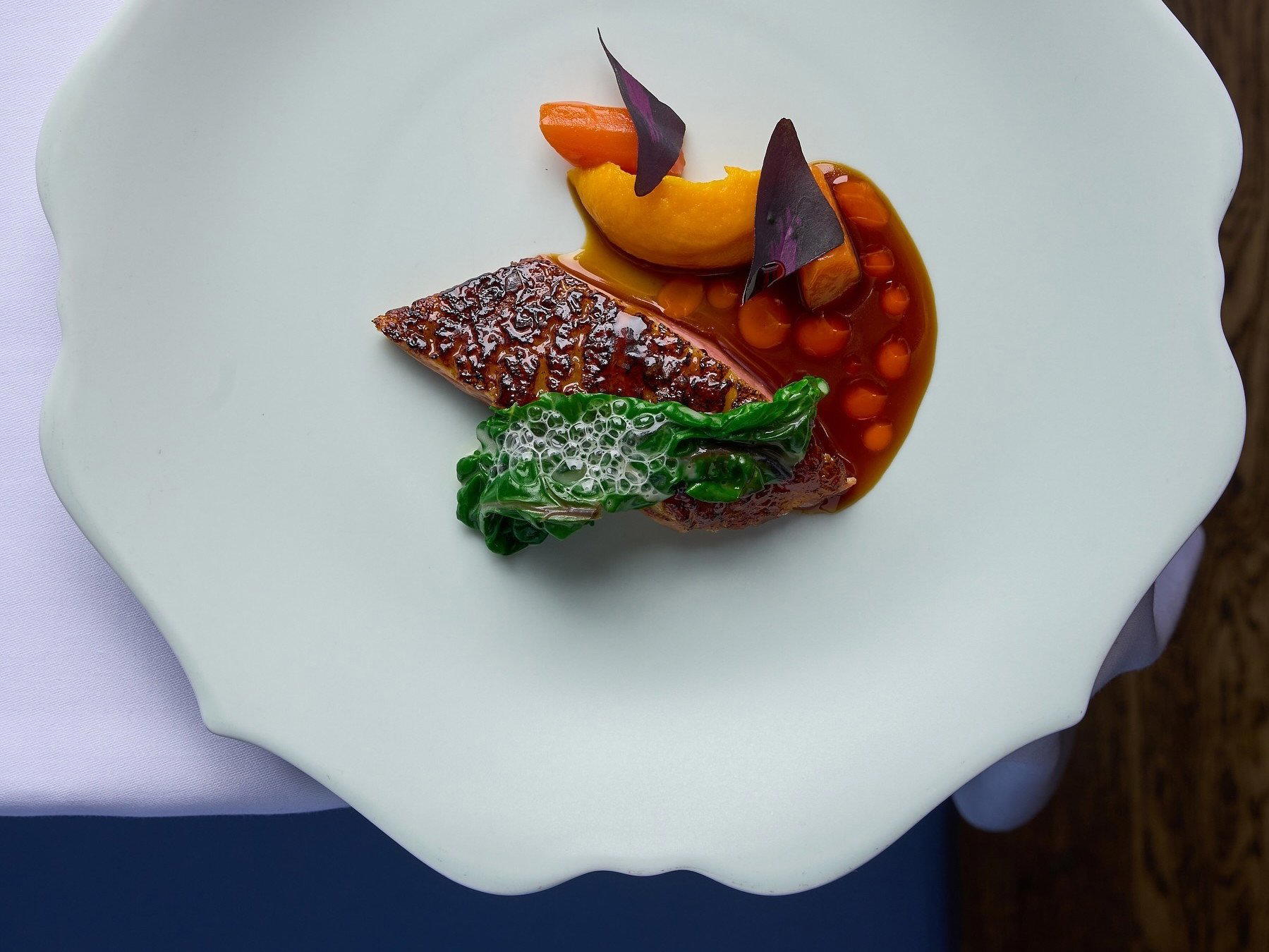
The menu
What to order
- BBQ burgers
- Beef sandwiches
- Veggie burger
Where the Smoke Rises in Blauen
Blauen is the kind of Swiss village that registers as a dot on the map between Basel and the Jura foothills — a place where the agricultural rhythm of Basel-Landschaft still shapes daily life, and where a restaurant built around open-fire cooking sits in deliberate contrast to the surrounding calm. Arriving at Unterdorfstrasse 7, the architecture is village-modest, the setting unhurried. What draws attention is not a marquee or a polished facade but the premise itself: a BBQ operation in a country whose high-end dining tradition runs almost entirely toward precision kitchens, refined Alpine produce, and tasting menus. In Switzerland, smoke is not a dominant dining language. Franky's BBQ uses it as a primary one.
That choice carries real editorial weight when you consider where Switzerland's restaurant attention tends to concentrate. The Michelin-recognised circuit runs through addresses like Schloss Schauenstein in Fürstenau, Memories in Bad Ragaz, and Cheval Blanc by Peter Knogl in Basel — all operating in the multi-course, white-tablecloth register. Franky's BBQ occupies a fundamentally different position: a casual, fire-led format in a village that most dining guides do not reach.
The Logic of Smoke and Sourcing
BBQ as a serious cooking tradition is built on two foundations: the fire management skill of the cook, and the quality of what goes into the smoker. In regions where this format has developed depth, the Central Texas belt, the Carolinas, parts of the American Midwest, the sourcing question matters enormously. Breed, feed, and the time an animal has had to develop muscle and fat structure determine what smoke can draw out. A well-managed fire applied to an underdeveloped cut produces little of note. Applied to a properly raised animal, the same fire produces something structurally different: bark, rendered collagen, fat that has migrated through the grain over hours.
In the Swiss context, that sourcing argument intersects with a genuine regional strength. Basel-Landschaft sits within reach of some of the better agricultural land in German-speaking Switzerland. The Jura foothills supply grass-fed beef from herds that work the slopes year-round. The question for any Swiss BBQ operation is whether it leans into that local supply chain or defaults to commodity imports. The leading BBQ operations anywhere, from the low-and-slow pits of Texas to community smoke houses in the American South, have always been expressions of local animal husbandry as much as cooking technique. Switzerland has the livestock heritage. A committed BBQ operation in Blauen is positioned to make that argument in wood and smoke.
For context on how ingredient sourcing shapes restaurant identity in Switzerland more broadly, the vegetable-forward programme at Magdalena in Schwyz and the hyper-regional sourcing at Mammertsberg in Freidorf show how seriously the country's better kitchens treat the supply chain question. BBQ is a different register, but the underlying logic, know where your ingredient comes from, build technique around its character, is the same.
Switzerland's BBQ Niche
Switzerland does not have a historical BBQ culture in the way the American South or the Argentine pampas do. The country's fire-cooking tradition runs through raclette and fondue, through rösti and braised mountain beef, through the communal Grilladen of summer holidays rather than purpose-built smokehouses with 12-hour cook times. That makes a dedicated BBQ restaurant here genuinely unusual, not as a novelty, but as a category that has to build its own audience and educate its own dining public about what slow-smoked meat actually is and why the cook time matters.
The Swiss casual dining scene has expanded over the past decade, with burger operations, American-style steakhouses, and fire-grill formats appearing in Basel, Zürich, and Bern. The village-level BBQ format, however, remains rare. An operation in Blauen is working at some distance from the urban restaurant density that would normally sustain a specialist format, which means its regulars are likely local, its word-of-mouth circuit runs through Basel-Landschaft rather than Basel's dining press, and its survival depends on consistent repeat business from a smaller geographic catchment than a city address would enjoy.
That dynamic shapes how to think about visiting. Our full Blauen restaurants guide covers the broader eating scene in the village, but Franky's BBQ is operating in a format with almost no direct local competition, which is both an opportunity and a constraint. It does not need to differentiate within a crowded BBQ market. It needs to make the category legible to a Swiss audience that may be encountering it seriously for the first time.
Placing It Against the Swiss Dining Spectrum
Switzerland's fine-dining circuit is dense with addresses that have earned international recognition: Hotel de Ville Crissier in Crissier, Maison Wenger in Le Noirmont, Einstein Gourmet in Sankt Gallen, focus ATELIER in Vitznau, and Da Vittorio in St. Moritz. These are tasting-menu operations with formal service, multi-decade reputations, and price points to match. Franky's BBQ does not occupy that tier and is not trying to. It operates in the casual segment, the part of the Swiss eating landscape where price accessibility, informality, and a single dominant cooking technique define the offer.
That segment has its own credibility markers, ones that have nothing to do with Michelin stars. Smoke ring consistency. Brisket that pulls without losing structural integrity. Ribs with the right resistance before they release from the bone. These are technical achievements, but they are evaluated by a different audience and through a different critical lens than the precision cooking at La Table du Valrose in Rougemont or the creative Alpine-vegetarian programme at Magdalena. Both registers demand skill. The skill just presents differently.
For readers who want to understand how casual formats build serious reputations in their category, the comparison is useful: Lazy Bear in San Francisco began as an informal pop-up before formalising into a destination address. The trajectory of casual formats is not predetermined, but it does depend on the kitchen's command of its core technique and its willingness to source with the same rigour that fine-dining operations apply to their ingredient lists. Closer to home, Skin's in Lenzburg and La Brezza in Ascona illustrate how Swiss restaurants across different formats are sharpening their identity through specific ingredient commitments.
Planning a Visit
Blauen sits in the Basel-Landschaft canton, reachable from Basel by car in roughly 30 minutes heading south toward the Jura ridge. Public transport options exist but are limited, as is typical for villages at this scale in the region, a car or bicycle gives more flexibility, particularly if you plan to combine the visit with hiking in the surrounding hills. The address at Unterdorfstrasse 7 is the village centre. No phone number or website is listed in EP Club's records at the time of writing, so confirming hours before visiting is advisable through local search or direct enquiry on arrival. The Japanese Restaurant in Andermatt and Taverne zum Schäfli in Wigoltingen show how specialist formats in non-urban Swiss settings build loyal audiences, Franky's BBQ is making a similar bet in its own corner of Basel-Landschaft. Le Bernardin in New York City demonstrates that sustained excellence in a single cooking mode, executed with sourcing rigour, is one of the most durable restaurant strategies available. The scale is different. The principle is not.
Frequently asked questions
Is Franky's BBQ suitable for children?
A village smokehouse in Blauen, running on the informal rhythms of fire-cooked food, tends to be a more relaxed setting than a city dining room. Nothing in the address or format at Unterdorfstrasse 7 suggests a formal environment that would feel unwelcoming to families.
How would you describe the vibe at Franky's BBQ?
Blauen is a small agricultural village in the Basel-Landschaft canton, and Franky's BBQ sits within that context at Unterdorfstrasse 7, well outside the urban dining circuit. The setting points toward something unpretentious and community-rooted rather than sceney, with the cooking itself doing the work that décor does elsewhere. Expect a counter or table format shaped around the smoke, not around spectacle.
Is Franky's BBQ in Blauen worth the drive from Basel for BBQ in Switzerland?
Switzerland has no deep historical BBQ tradition in the way the American South or Argentina do, which makes any address genuinely committed to fire-cooking and sourcing worth the 30-minute drive south from Basel toward the Jura ridge. Blauen itself sits in the Basel-Landschaft canton with limited competing restaurant options, so Franky's BBQ at Unterdorfstrasse 7 occupies a largely uncontested niche in its immediate area. For visitors already exploring the Jura foothills, it fits logically into a half-day route without requiring a detour.
What's the best thing to order at Franky's BBQ?
In a Swiss context, where fire-cooking tradition leans toward Alpine cuts and regional livestock rather than American-style brisket programs, the smoked proteins are the logical focal point of any visit to Franky's BBQ in Blauen.
Where exactly is Franky's BBQ?
Franky's BBQ is located at Unterdorfstrasse 7, 4223 Blauen, Switzerland, Blauen.
Do they take walk-ins at Franky's BBQ?
Village smokehouses with limited production capacity frequently operate on a reservation basis, since smoke-cooking is scheduled around batch output rather than à la minute service. Reaching out in advance is the practical approach, particularly on weekends when demand from Basel-area visitors is higher.
Quick Comparison
| Venue | Cuisine | Price | Awards | Notes |
|---|---|---|---|---|
| Franky's BBQThis venue — the venue you are viewing | Swiss BBQ & Burgers | $10–20 | Not listed | Not listed |
| Schloss Schauenstein | Creative Swiss Country Fine Dining | $300–500 | 3 Michelin Stars · World's 50 Best #52 | Modern European, Creative |
| Memories | Modern Swiss Alpine Cuisine | $300–500 | 3 Michelin Stars · La Liste Top Restaurants | Modern Swiss |
| focus ATELIER | Modern French Fine Dining | $200–300 | 2 Michelin Stars · La Liste Top Restaurants | Modern Swiss, Creative |
| Taverne zum Schäfli | Classic French Fine Dining with Creative Accents | $200–300 | 2 Michelin Stars · La Liste Top Restaurants | Swiss, Creative |
| Magdalena | Modern Vegetarian Fine Dining | $200–300 | 2 Michelin Stars · La Liste Top Restaurants | Alpine-Vegetarian, Modern Cuisine |
Continue exploring
More in Blauen
Restaurants in Blauen
Browse all →
Bars in Blauen
Browse all →


Hotels in Blauen
Browse all →

Details
- Casual
- Rustic
- Trendy
- Casual Hangout
- Group Dining
- After Work
- Standalone
- Local Sourcing
- Soft Drinks
- Coffee
- Vegetarian Friendly
Casual street food atmosphere with a modern, sustainable approach to traditional BBQ.