Frankie & Johnnie's Steakhouse
Frankie & Johnnie's Steakhouse on West 37th Street is one of Midtown Manhattan's longest-standing steakhouse addresses, operating in a city where the genre carries as much civic identity as culinary tradition. The restaurant sits in the Theatre District corridor, where the American chophouse format has been refined across generations. It represents the kind of institutional steakhouse that shaped New York's reputation for dry-aged beef and tableside service.
Pearl is the En Primeur Club membership app — saves, bookings, and concierge access live there. Same editors, same standards.
- Address
- 32 W 37th St, New York, NY 10018
- Phone
- +12129478940
- Website
- frankieandjohnnies.com
- Directions
- Get directions
 Saves & bookings on Pearl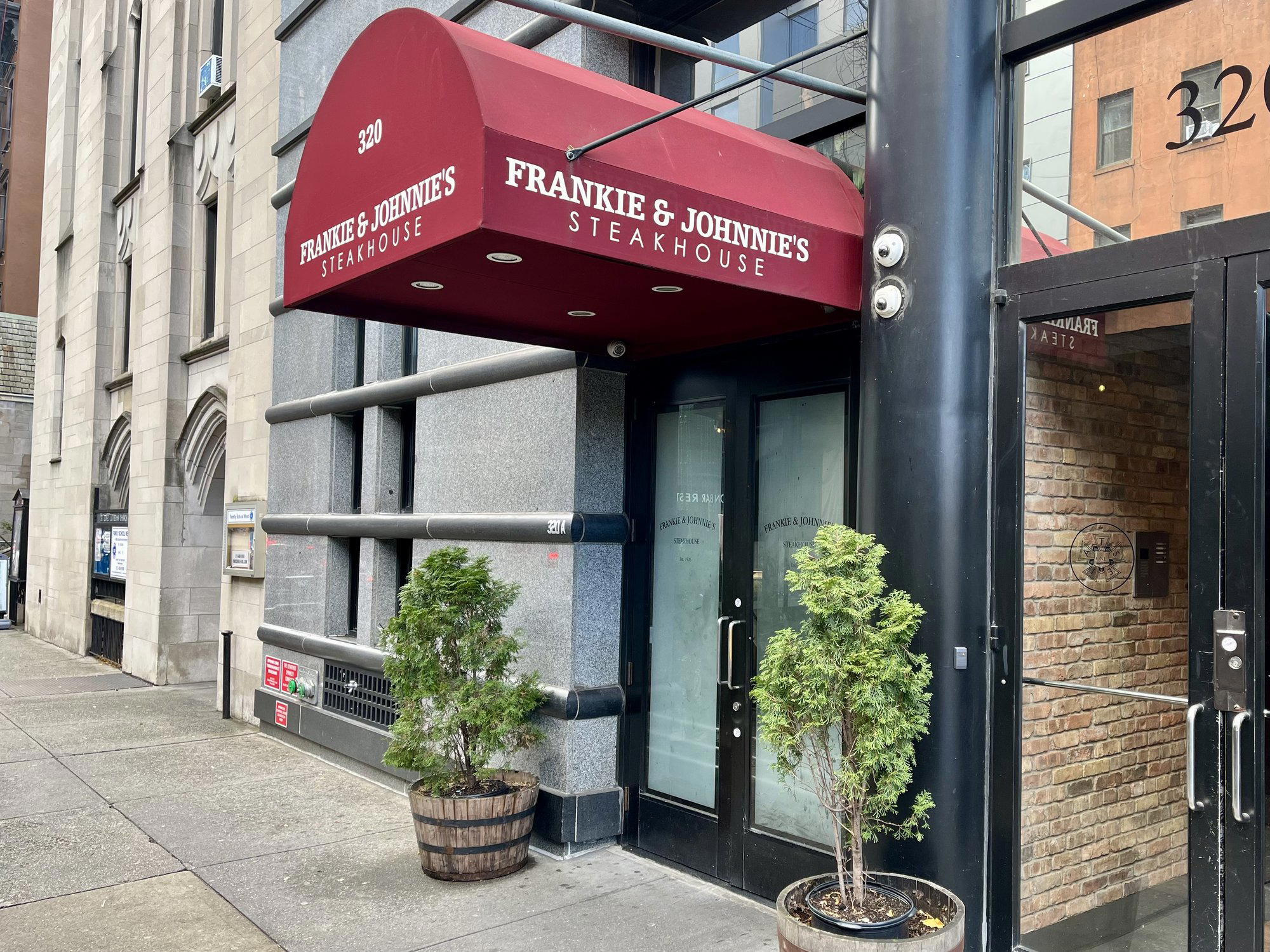
The American Steakhouse in Its Natural Habitat
No dining format is more inextricably tied to New York City's civic identity than the steakhouse. Long before omakase counters and tasting-menu temples like Eleven Madison Park or Per Se defined what fine dining meant in this city, the chophouse was the prestige format: dark wood paneling, thick-cut beef, a wine list weighted toward California Cabernet, and a room full of people who meant business. Frankie & Johnnie's Steakhouse is a Classic New York Steakhouse at 32 W 37th St, New York, NY 10018. The address alone tells you something. West 37th puts it squarely in the Theatre District and Garment District overlap, a corridor where expense-account lunches and pre-show dinners have sustained restaurants across decades. This is not a neighbourhood where novelty drives foot traffic. Longevity does.
What the American Chophouse Tradition Actually Means
The cultural roots of the New York steakhouse run deeper than the menu suggests. The format evolved from 19th-century chophouses that served working professionals near the financial and theatre districts, institutions where the ritual of the meal mattered as much as the food itself. Over time, the genre codified: prime-grade beef, dry aging as the default rather than the exception, sides served family-style, and a tableside manner that tilted toward formal without tipping into pretension. That template remains largely intact at the city's established steakhouses today. The format has proven resistant to the forces that reshaped almost every other dining category in New York, from the farm-to-table movement that built places like Blue Hill at Stone Barns to the tasting-menu arms race that produced counters comparable to Masa. The steakhouse simply kept doing what it had always done, and a significant portion of the dining public kept showing up for exactly that reason.
Across the country, the steakhouse tradition has branched into regional variants. In New Orleans, operators like Emeril's have absorbed Southern hospitality into a broader American fine-dining frame. In California, wine-country properties like The French Laundry in Napa redefined what an American special-occasion meal could look like. The New York steakhouse, by contrast, has largely resisted those regional inflections. Its identity is Midtown-specific, rooted in density, speed, and a particular kind of professional formality that the city's other neighbourhoods don't quite replicate.
Midtown's Steakhouse Tier and Where Frankie & Johnnie's Sits
Midtown Manhattan supports more steakhouses per square mile than almost any comparable urban district in the country, and those restaurants exist across a range of price points and formats. At the leading end, you have celebrity-chef-branded rooms and hotel flagship steakhouses that price their prime cuts at figures more associated with tasting menus. Below that sits a durable middle tier of established independent addresses with multi-decade histories, deep wine cellars, and regulars who book the same table every week. Frankie & Johnnie's operates in that second cohort. It is not a newcomer testing a concept. It is an address with institutional weight in a neighbourhood that values exactly that.
For context on how the broader New York dining scene is structured across categories, the EP Club New York City restaurants guide maps the city's major dining tiers from the likes of Le Bernardin and Atomix down through neighbourhood-level destinations. The steakhouse category occupies a distinct lane: it doesn't compete directly with the tasting-menu circuit, and it doesn't need to. Its competitive set is other steakhouses, judged on beef quality, aging program, and the consistency of service across hundreds of covers a week.
Beef, Aging, and the Technical Side of the Format
The steakhouse's claims to seriousness rest almost entirely on sourcing and process. USDA Prime grading covers roughly the leading two or three percent of beef produced in the United States, and dry aging, which concentrates flavor through controlled moisture loss, requires both the refrigeration infrastructure and the discipline to hold inventory off the market for weeks at a time. These are not small commitments. Establishments that cut corners on either dimension tend to fall out of the consideration set quickly in a city where diners have been eating prime beef their whole lives and can taste the difference. The kitchen format at a serious steakhouse is also less forgiving than it appears from the dining room. The margin for error on a dry-aged prime ribeye is narrow. Over by two minutes and you've lost the point entirely. The consistency required across a full service is significant, and it's the primary reason why restaurants with long track records in this category earn a different kind of trust than newer arrivals.
That commitment to process is what connects New York's steakhouse tradition to a wider American approach to beef-forward cooking. Across the country, producers and restaurateurs working in the premium beef space share a vocabulary with places like Smyth in Chicago and California operations like Single Thread Farm in Healdsburg, even if the format and scale differ significantly. The seriousness about sourcing is a common thread, even when the plate looks nothing alike.
The Theatre District Context
West 37th Street is a specific kind of Midtown address. The Theatre District pulls a mixed crowd: out-of-town visitors on a New York itinerary, local professionals meeting clients, and theatre-goers working around a curtain time. A steakhouse functions well in this context because the format is legible across all three groups. You don't need to explain the menu. The pacing is controlled enough to accommodate a pre-show reservation without anxiety. And the kitchen can execute volume without the precision-dependent fragility of, say, a tasting-menu kitchen working at the level of Providence in Los Angeles or Addison in San Diego.
That reliability is not a backhanded compliment. In a neighbourhood defined by transient traffic and high volume, the ability to deliver a consistent product night after night represents a genuine operational achievement. Steakhouses that have managed it across decades in New York occupy a category of their own, distinct from destination restaurants built around a singular creative vision, like The Inn at Little Washington or wine-driven formats like Frasca Food & Wine in Boulder. The steakhouse plays a different game, and Frankie & Johnnie's has been playing it long enough to have earned its place in the Midtown conversation.
Planning Your Visit
Address: 32 West 37th Street, New York, NY 10018. Reservations: Recommended for dinner, particularly on weekday evenings when the Theatre District fills; walk-ins are more viable at lunch. Dress: Smart casual is the baseline in this part of Midtown; the room skews business rather than formal. Budget: Steakhouse pricing in Midtown covers a wide range depending on cut selection and wine spend; expect this address to sit in the mid-to-upper range of the independent steakhouse tier. Getting there: West 37th Street is accessible from Penn Station and several Sixth Avenue subway lines, making it convenient from most Manhattan neighbourhoods and from New Jersey transit connections.
Cuisine Context
Comparable venues nearby, for context on price, style, and recognition.
| Venue | Cuisine | Price | Notes |
|---|---|---|---|
| Frankie & Johnnie's SteakhouseThis venue — the venue you are viewing | Classic New York Steakhouse | $$$$ | Not listed |
| CUT New York | Modern Steakhouse | $$$$ | Tribeca |
| Nusr-Et Steakhouse New York | Turkish-Inspired Steakhouse | $$$$ | Midtown-Times Square |
| Brooklyn Chop House | Asian-Steakhouse Fusion | $$$$ | Tribeca-Civic Center |
| Yakar Steakhouse | Kosher Steakhouse | $$$$ | Midwood |
| Brooklyn Chop House - Times Square | Asian Fusion Steakhouse | $$$$ | Midtown-Times Square |
Continue exploring
More in New York City
Restaurants in New York City
Browse all →
Bars in New York City
Browse all →
Hotels in New York City
Browse all →





At a Glance
- Classic
- Elegant
- Well Known
- Sophisticated
- Business Dinner
- Special Occasion
- Date Night
- Historic Building
- Private Dining
- Extensive Wine List
Sleek and uncluttered with inviting warmth, featuring dark mahogany walls, working fireplace, and stained glass ceiling panels evoking classic elegance.