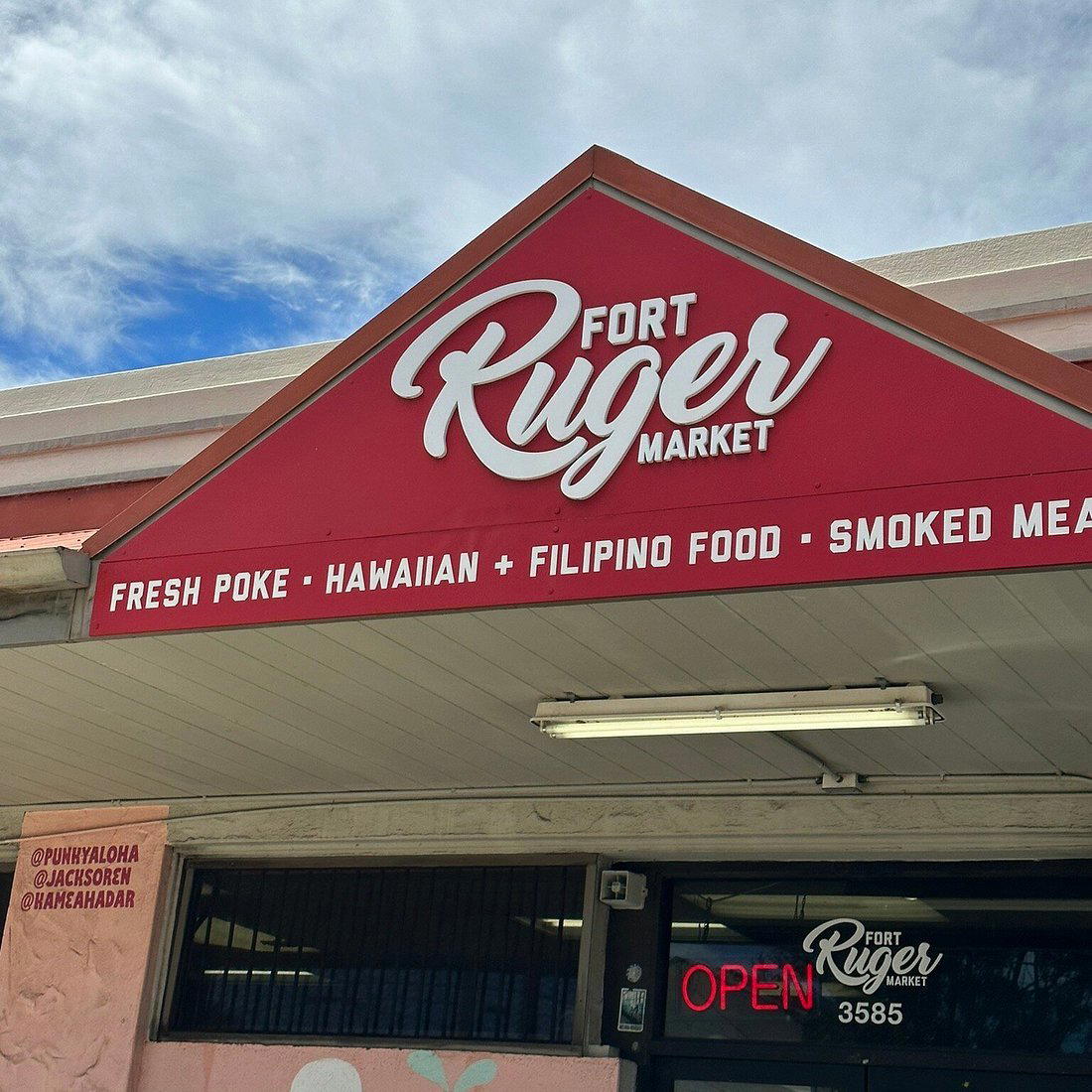
Fort Ruger Market
Our verdict
A neighborhood-oriented food stop in Honolulu's Diamond Head district, Fort Ruger Market operates within the residential community around Alohea Avenue rather than the visitor-facing dining corridors closer to Waikiki. Its position reflects the daytime-utility model that defines mid-island neighborhood eating in Honolulu, where local regulars set the standard. Visitors exploring beyond the resort zone will find it a grounded reference point for everyday island food culture.

Pearl is the En Primeur Club membership app — saves, bookings, and concierge access live there. Same editors, same standards.
- Address
- 3585 Alohea Ave, Honolulu, HI 96816
- Phone
- (808) 737-4531
- Hours
- Mon–Sat 6 AM–6 PMSun 7 AM–6 PM
- Website
- toasttab.com
- Directions
- Get directions
The menu
What to order
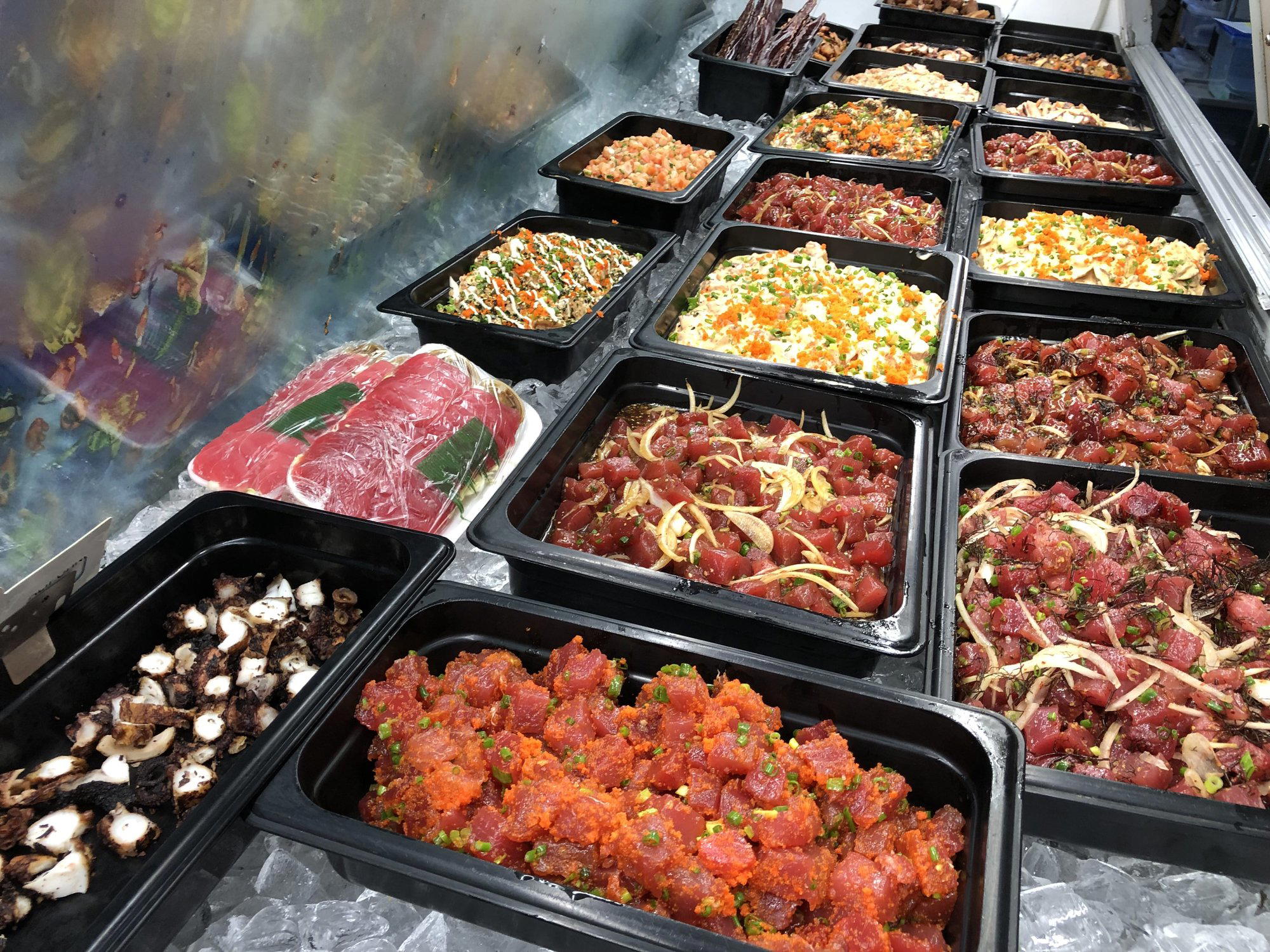
- Rugerlicious Poke
- Ruger Special Poke
- Pork Lau Lau
- Kalua Pig
- Lechon Kawali
- Spam Musubi
Diamond Head's Daytime Rhythm
The stretch of Alohea Avenue that runs through the Diamond Head neighborhood tells you a great deal about how Honolulu eats when it isn't performing for visitors. This is residential Oahu, where the trade winds cut through ironwood trees and the rhythm of the day is set by farmers' market schedules, school runs, and the particular logic of a community that has grown up eating across multiple culinary traditions at once. Fort Ruger Market sits within that fabric, drawing from the kind of mixed Hawaiian, Japanese, and local plate-lunch heritage that defines neighborhood eating across this part of the island rather than the resort corridors of Waikiki.
Daytime eating in Honolulu's residential neighborhoods operates on a different register than the dinner-focused venues that attract visitors from elsewhere. Lunch service in this part of the city is direct and purposeful: the food needs to work for people with somewhere to be afterward. That practical orientation shapes the midday offer more than any creative ambition, and venues in this tier tend to be judged against community standards of value, portion, and consistency rather than against award-season credentials. For comparison, the kind of tasting-menu ambition you find at The French Laundry in Napa or Le Bernardin in New York City represents a fundamentally different category of dining proposition, one calibrated for occasion spending rather than neighborhood regularity.
The Lunch Versus Evening Divide in Honolulu's Mid-Tier
Across Honolulu's neighborhood dining scene, the gap between daytime and evening service tends to be more pronounced than in mainland cities. Evening dining, particularly at destinations like 3660 On the Rise or 53 By The Sea, carries the weight of occasion, presentation, and a dining room atmosphere that is consciously constructed. Lunch, by contrast, belongs to a more utilitarian tradition that runs deep in Hawaiian food culture: the plate lunch, the bento counter, the quick-serve format that keeps a working neighborhood moving.
This daytime-evening split matters when thinking about a neighborhood market or hybrid food-retail space. The morning and midday hours are where these venues build their identity with the local community; evening footfall, when it comes at all, shifts toward a more deliberate destination visit rather than an incidental one. The distinction carries real implications for what a visitor should plan around. Coming at midday means experiencing the venue as its regular customers do, embedded in the ambient pace of a neighborhood that runs on its own schedule. That is often the more instructive version of any food stop.
Within Honolulu's broader dining conversation, Fête (New American) operates at a meaningfully different tier, with a dinner-focused program that positions it inside a more formal competitive set. The neighborhood market format that Fort Ruger represents is less about competing within that set and more about occupying a distinct position in the daily life of a specific community.
Diamond Head in the Wider Honolulu Food Context
The Diamond Head and Kapiolani area has historically functioned as a quieter counterpart to the density of Kaimuki, which holds a higher concentration of ambitious independent restaurants. Kaimuki's food reputation has built steadily over the past decade, making it the natural reference point for Honolulu's serious dining visitor, while Diamond Head retains a more residential character where local-service businesses predominate. A venue at 3585 Alohea Ave is operating within walking distance of one of Oahu's most-visited natural landmarks, which creates a particular kind of foot traffic: people finishing a hike, families after a morning at Kapiolani Park, residents running errands before the heat of the afternoon sets in.
That visitor-local mix is not unusual in Honolulu's mid-island neighborhoods, but it does produce a distinct commercial environment. Venues here tend to serve both audiences without fully calibrating to either, which can read as a strength (accessibility, no pretension) or a limitation (no single sharp identity) depending on what a visitor is specifically looking for. Compare that to something more precisely positioned, like the Korean tasting-menu discipline at Atomix in New York City or the farm-integrated format of Single Thread Farm in Healdsburg, and the category difference becomes immediately apparent. Fort Ruger Market belongs to a neighborhood-infrastructure category that those venues simply do not occupy, and the comparison is more useful as orientation than as judgment.
Other Honolulu venues with stronger editorial profiles include 855-ALOHA and Ahaaina Luau, both of which operate within more clearly defined experiential formats. For readers building a full Honolulu itinerary, the full Honolulu restaurants guide provides broader coverage across price points and neighborhoods.
Planning a Visit
For readers whose itinerary runs across multiple dining tiers, Honolulu offers a meaningful range from neighborhood-level daytime stops through to the more formal evening programs at venues like Smyth in Chicago-caliber ambition (a useful benchmark for understanding where Hawaii's most serious dining sits relative to comparable US cities). Within Hawaii specifically, the award-recognized tier represented by venues like Providence in Los Angeles or Addison in San Diego provides useful reference points for what the US West Coast defines as destination-level dining, against which Honolulu's own premium offer continues to develop.
Frequently asked questions
Where is Fort Ruger Market in Honolulu?
Fort Ruger Market is located at 3585 Alohea Ave, Honolulu, HI 96816, Honolulu.
Is Fort Ruger Market a good option for picking up food near Diamond Head State Monument in Honolulu?
Fort Ruger Market at 3585 Alohea Ave sits within the Diamond Head residential neighborhood, placing it in reasonable proximity to the Diamond Head State Monument area on Oahu. It operates as a community-oriented market rather than a tourist-facing venue, which means the pace and product range reflect local daytime needs. For visitors coming off the crater trail looking for provisions, it is worth checking current hours before planning around it.
What's the best thing to order at Fort Ruger Market?
Given its position as a community-oriented market in the Diamond Head neighborhood, the focus leans toward daytime provisions rather than a composed restaurant menu.
Is Fort Ruger Market reservation-only?
No reservation policy is documented for Fort Ruger Market. Markets in Honolulu's residential neighborhoods, including the Diamond Head area around Alohea Ave, generally operate on a walk-in basis during daytime hours. Confirming hours before visiting is advisable, as community-facing spots in this part of Honolulu often keep tighter schedules than restaurant-district counterparts.
What is Fort Ruger Market known for?
Fort Ruger Market is a neighborhood fixture in the Diamond Head residential corridor of Honolulu, situated at 3585 Alohea Ave in a stretch that reflects how the city eats outside its more tourist-facing districts. It occupies a quieter corner of the Honolulu food scene compared to the denser concentration of options in nearby Kaimuki. Its identity is rooted in serving the local community rather than drawing destination traffic.
Price Lens
| Venue | Cuisine | Price |
|---|---|---|
| Fort Ruger MarketThis venue — the venue you are viewing | Hawaiian & Filipino Plate Lunch with Fresh Poke | $10–20 |
| Fête | Modern American Farm-to-Table | $50–100 |
| Liliha Bakery | Not listed | $10–20 |
| Sushi Izakaya Gaku | Authentic Japanese Sushi & Izakaya | $50–100 |
| Miro Kaimuki | French-Japanese Fusion | $100–150 |
| Zigu | Japanese Izakaya with Local Hawaiian Fusion | $50–100 |