Foo-Chow Restaurant
Our verdict
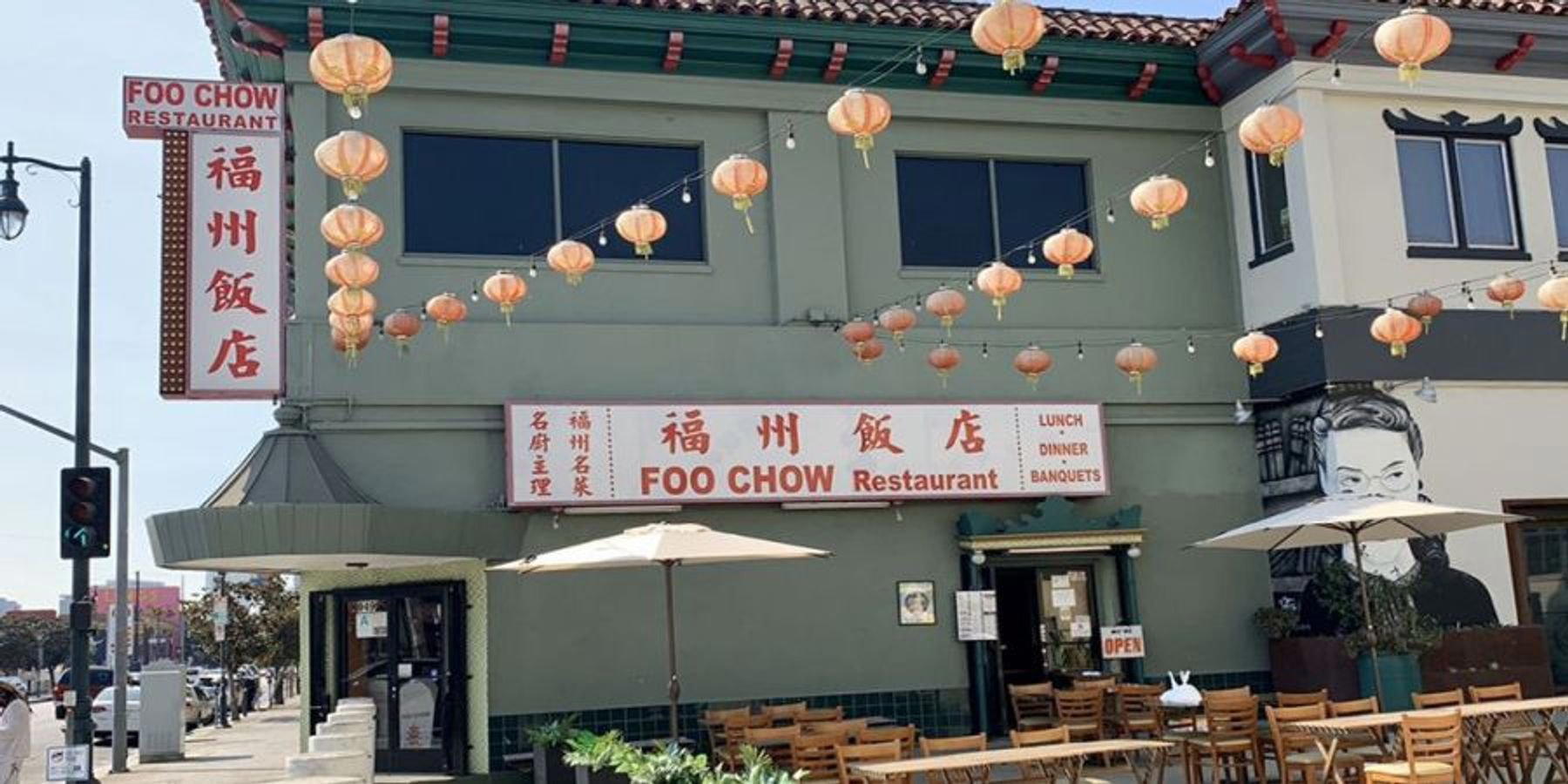
One of Chinatown's longest-standing Chinese restaurants, Foo-Chow at 949 N Hill Street occupies a specific tier in Los Angeles's immigrant dining history that newer regional Chinese concepts rarely address. Where much of the city's current Chinese restaurant conversation centers on Cantonese and Sichuan cooking, Fujianese cuisine holds a quieter but durable place in this corridor.

Pearl is the En Primeur Club membership app — saves, bookings, and concierge access live there. Same editors, same standards.
- Address
- 949 N Hill St, Los Angeles, CA 90012
- Phone
- (213) 485-1294
- Hours
- Daily 11 AM–9 PM
- Website
- foochowla.com
- Directions
- Get directions
The menu
What to order
- Kung Pao Chicken
- Sesame Chicken
- Lemon Chicken
Fujianese Cooking in Los Angeles: A Tradition That Predates the Current Conversation
Los Angeles's Chinese restaurant scene is frequently narrated through its most recent arrivals: the Sichuan hot-pot operators of the San Gabriel Valley, the Cantonese seafood palaces of Monterey Park, and the newer-wave Taiwanese tasting menus typified by Kato, which operates at the $$$$ tier and draws comparisons to the precision-driven Korean-American tasting format represented in New York by Atomix. What that narrative tends to flatten is the longer history of Fujianese immigration into California, a migration pattern that predates many of the restaurant categories currently dominating critical attention. Foo-Chow Restaurant, at 949 N Hill Street in Los Angeles's historic Chinatown district, sits inside that older history.
Fujianese cuisine, rooted in coastal Fujian Province, draws on a geography defined by access to the sea and a culinary tradition that treats fermentation, preserved ingredients, and long-cooked broths as structural rather than supplemental. The ingredient logic differs meaningfully from Cantonese cooking, which has shaped most Western understandings of Chinese food: where Cantonese technique often prizes freshness and restraint, Fujianese cooking incorporates dried seafood, fermented bean curd, and rice wine in ways that build depth through preservation rather than immediacy. This distinction matters for how the food arrives at the table and for how it should be read by anyone approaching it through a Cantonese or Mandarin-focused frame of reference.
Chinatown as a Culinary Address
Hill Street in Los Angeles Chinatown is not the address where the city's newest tasting-menu projects tend to open. That territory belongs increasingly to Arts District kitchens and West Side dining rooms, where formats like those at Hayato or Somni anchor a different kind of premium dining argument. Chinatown operates on a different logic: it is a neighborhood defined by immigrant continuity, where restaurants often serve communities rather than rotating audiences, and where longevity is the credential that matters most. A restaurant that has operated in this corridor for decades accumulates a different kind of authority than one that opens with a publicist and a Michelin submission.
That said, Chinatown is not static. The neighborhood has absorbed successive waves of Vietnamese, Thai, and other Southeast Asian food businesses alongside its Chinese core, and it has become one of the more culturally layered corridors in a city that has no shortage of them. The dining pattern here tends toward lunch and weekend family meals rather than dinner-first reservation culture, which shapes what restaurants at this address are built to do and how they perform across a week.
The Ingredient Argument for Fujianese Cooking
In an era when sourcing has become a primary editorial frame for fine-dining restaurants, from Single Thread Farm in Healdsburg, which runs its own farm operation, to Blue Hill at Stone Barns in Tarrytown, which treats agricultural sourcing as the point of the meal, it is worth noting that ingredient sourcing in immigrant Chinese cooking operates through a different but equally serious set of considerations. The dried seafood, preserved vegetables, and fermented condiments that anchor Fujianese cooking are themselves the product of specific production traditions, many of them tied to coastal Fujian suppliers or to Chinese-American importers who have maintained relationships with those producers across decades. These are not casual pantry decisions. The quality of dried shrimp, fermented red yeast rice, or aged black vinegar carries as much consequence for Fujianese cooking as the provenance of a heritage breed affects the tasting menu at The French Laundry in Napa or Smyth in Chicago.
This is not a frame that immigrant restaurants in the United States have traditionally been given credit for operating within, partly because the critical language around sourcing developed almost entirely inside European-descended fine-dining culture. The actual ingredient discipline in a restaurant serving Fujianese cooking is often invisible to reviewers who arrive expecting it to look like Providence's sustainable seafood sourcing statements or the farm provenance noted on menus at Addison in San Diego. It works differently, but it is not less considered.
Where Foo-Chow Sits in the Broader LA Picture
Positioning Foo-Chow against the current Los Angeles restaurant conversation requires acknowledging that the two conversations barely overlap. The critical attention in LA dining has concentrated on a handful of categories: the high-end Japanese counter (Hayato, Osteria Mozza occupying an equivalent Italian-American prestige tier), the New American tasting room, and the recent wave of regional Chinese cooking in the San Gabriel Valley. Fujianese cooking at the Chinatown address occupies none of those categories cleanly. It sits closer to the community-anchor model, a restaurant that is there because a community needed it to be and has remained because that community has continued to use it.
This is a different value proposition from what a reader might find at Lazy Bear in San Francisco or Emeril's in New Orleans or The Inn at Little Washington, all of which operate as destination restaurants built around a named chef's public identity. The value at a restaurant like Foo-Chow is durability, specificity of cuisine, and the absence of a mediated dining experience. You are not there for a narrative. You are there because the cooking represents a culinary tradition that has few other advocates at this address in this city. For a broader view of where Foo-Chow sits within the full Los Angeles dining picture, the EP Club Los Angeles restaurants guide maps the category landscape in more detail.
Planning a Visit
Foo-Chow Restaurant is located at 949 N Hill Street in Los Angeles's Chinatown, accessible from the 110 freeway and a short walk from the Chinatown Metro A Line station. Given the sparse publicly available data on current hours and booking policy, confirming current operating hours and any reservation requirements directly before visiting is advisable, particularly for larger groups or weekend midday service when Chinatown restaurants in this tier tend to run at capacity. The restaurant does not maintain a prominent web presence, which is consistent with the community-restaurant model at this address: the audience it serves has known where it is for a long time. Visitors approaching from other dining contexts, such as those who have read about the Fujianese food tradition through European comparisons like Atelier Moessmer Norbert Niederkofler in Brunico or through wine-country sourcing-focused restaurants like Frasca Food and Wine in Boulder, will find a meal that operates by a different set of premises entirely, one rooted in preserved and long-cooked ingredients rather than seasonal produce rotation, and that rewards approach with an open frame of reference rather than a fine-dining checklist.
Frequently asked questions
Where is Foo-Chow Restaurant in Los Angeles?
Foo-Chow Restaurant is located at 949 N Hill St, Los Angeles, CA 90012, Los Angeles.
Is Foo-Chow Restaurant one of the few places to eat authentic Fujianese food in Los Angeles?
Fujianese restaurants are a distinct minority in Los Angeles, where the Chinese dining conversation is shaped largely by Cantonese dim sum houses in Monterey Park and Sichuan operators in the San Gabriel Valley. Foo-Chow on Hill Street in Chinatown represents one of the city's sustained addresses for this regional cuisine, which traces its cooking traditions to China's southeastern coast. That alone separates it from the majority of Chinese restaurants operating in LA.
What's the must-try dish at Foo-Chow Restaurant?
Fujianese cooking is defined by its coastal pantry — fish-based stocks, red glutinous rice wine, and lighter sauces that contrast sharply with the Cantonese and Sichuan registers that dominate most LA menus. At Foo-Chow on Hill Street, the dishes rooted in that tradition are the reason to come. Specific menu items change, so arrive with an appetite for the regional rather than a checklist.
Is Foo-Chow Restaurant reservation-only?
For a restaurant operating in Los Angeles Chinatown's walk-in culture, calling ahead during peak weekend hours is advisable. No booking platform or phone number is currently listed in official sources.
What's the standout thing about Foo-Chow Restaurant?
Foo-Chow holds a position that few Los Angeles Chinese restaurants occupy: it represents Fujianese cooking, a regional tradition largely absent from the San Gabriel Valley's Cantonese and Sichuan-forward roster. Located in Chinatown at 949 N Hill Street, it addresses a gap in the city's Chinese regional coverage that the critical conversation rarely acknowledges.
What if I have allergies at Foo-Chow Restaurant?
Fujianese cooking frequently incorporates fermented sauces, fish-based broths, and shellfish, which are structurally significant to many dishes rather than optional garnishes. Diners with seafood or gluten sensitivities should communicate directly with staff at 949 N Hill Street before ordering. No allergen menu is publicly documented.
A Tight Comparison
| Venue | Cuisine | Price | Awards | Notes |
|---|---|---|---|---|
| Foo-Chow RestaurantThis venue — the venue you are viewing | Classic Chinese | $20–30 | Not listed | Not listed |
| Kato | Modern Taiwanese Fine Dining | $300–500 | 2 Michelin Stars · World's 50 Best #49 | New Taiwanese, Asian |
| Hayato | Traditional Japanese Kaiseki | $300–500 | 2 Michelin Stars · La Liste Top Restaurants | Japanese |
| Vespertine | Avant-Garde Tasting Menu | $200–300 | 2 Michelin Stars · La Liste Top Restaurants | Progressive, Contemporary |
| Holbox | Modern Mexican Seafood | $30–50 | 1 Michelin Star · World's 50 Best #26 | Mexican Seafood, Mexican |
| Sushi Kaneyoshi | Edomae Omakase | $300–500 | 1 Michelin Star · LA Times 101 Best Restaurants #24 | Sushi, Japanese |
Continue exploring
More in Los Angeles
Restaurants in Los Angeles
Browse all →
Bars in Los Angeles
Browse all →
Hotels in Los Angeles
Browse all →

Wineries in Los Angeles
Browse all →
Details
- Classic
- Cozy
- Well Known
- Casual Hangout
- Family
- Group Dining
- Courtyard
- A La Carte
- Vegetarian Friendly
Current opening hours
- Monday
- 11 AM–9 PM
- Tuesday
- 11 AM–9 PM
- Wednesday
- 11 AM–9 PM
- Thursday
- 11 AM–9 PM
- Friday
- 11 AM–9 PM
- Saturday
- 11 AM–9 PM
- Sunday
- 11 AM–9 PM
Hours can change for holidays and private events. Last verified .
Casual Chinatown spot with slightly outdated decor, now featuring an idyllic courtyard patio under swaying paper lanterns.