Firdaus occupies a considered position within Taj Krishna's dining offer in Banjara Hills, placing it among the more formally composed hotel restaurant experiences in Hyderabad. The room and its rituals sit within a city where Mughlai and Hyderabadi cooking traditions carry genuine historical weight, and where the hotel-restaurant tier continues to define the upper register of the dining scene.
Pearl is the En Primeur Club membership app — saves, bookings, and concierge access live there. Same editors, same standards.
- Address
- TAJ KRISHNA, Mada Manzil, Banjara Hills, Hyderabad, Telangana 500034, India
- Phone
- +91 40 6666 2323
- Website
- tajhotels.com
- Directions
- Get directions
 Saves & bookings on Pearl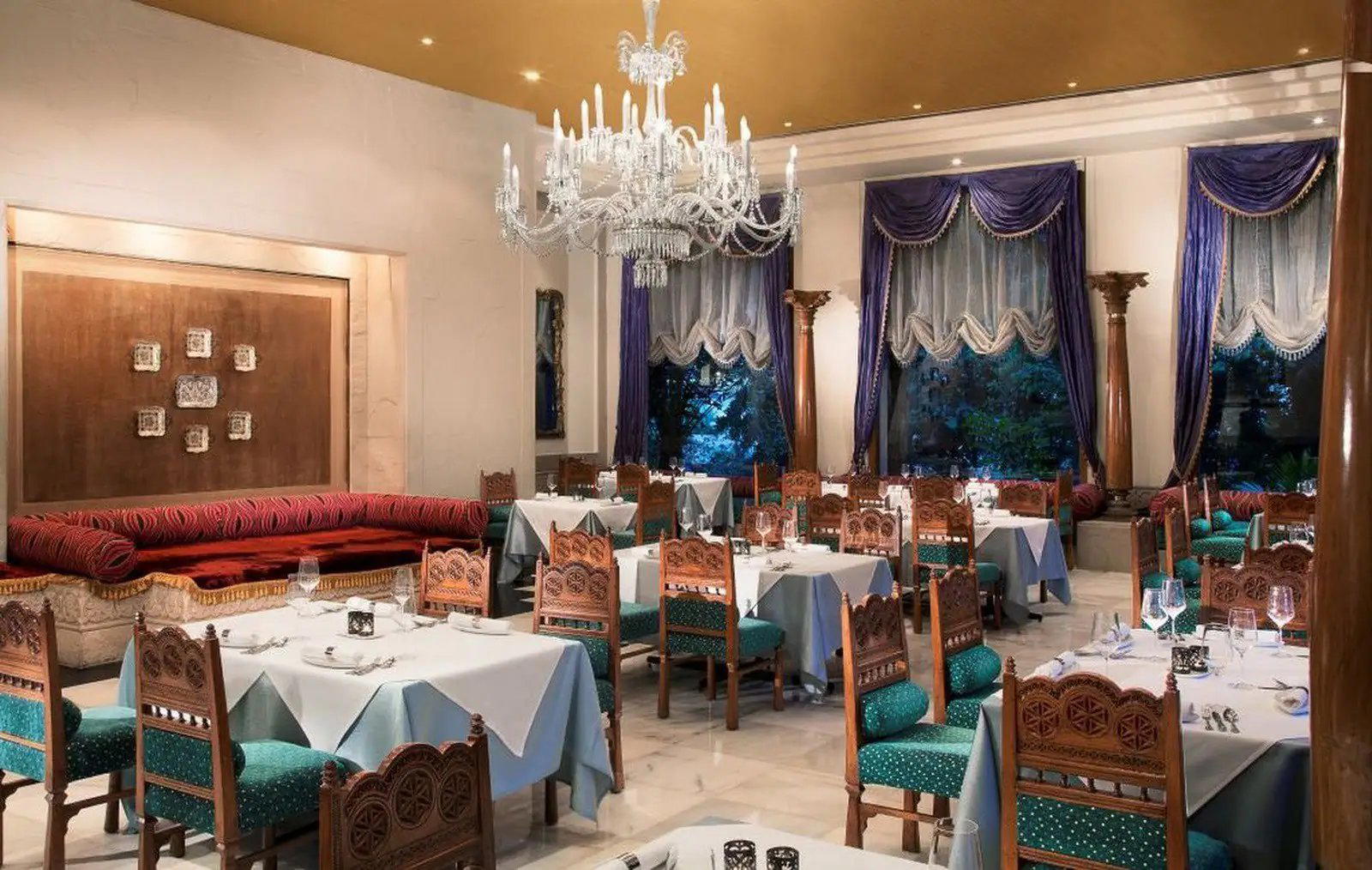
Where the Meal Has a Shape
Firdaus is a restaurant at Taj Krishna in Banjara Hills, Hyderabad, serving Classic Hyderabadi Cuisine. In Hyderabad's hotel dining rooms, the pacing of a meal is itself an argument. The city's culinary inheritance, drawn from the Nizamate's court kitchens and the long Persian and Central Asian trade routes that fed them, produced a cuisine built on patience: slow-cooked biryanis sealed under dough, kormas reduced over low heat for hours, kebabs rested before they ever meet the grill. A restaurant that takes this tradition seriously must, at some level, reflect that unhurried logic in how it structures the meal. Firdaus, operating within the Taj Krishna hotel in Banjara Hills, belongs to that category of hotel dining rooms where the architecture of the experience, its sequence, its tempo, its sense of occasion, carries as much meaning as what arrives on the plate.
Taj Krishna is a Hyderabad reference point in its own right. The Banjara Hills address places it in one of the city's established premium corridors. Hotel restaurants in this tier serve a different function from standalone neighbourhood places: they are expected to carry the weight of occasion dining, business hospitality, and the expectations of guests arriving from other cities or countries with a specific idea of what Hyderabadi cooking should deliver. That dual pressure, local credibility and visitor legibility, shapes how these rooms operate.
The Logic of the Hyderabadi Table
To understand what Firdaus is doing, it helps to understand what Hyderabadi cuisine asks of its practitioners. This is not a cuisine of improvisation or minimalism. The biryani alone, particularly the dum biryani in which rice and meat are layered raw and finished together under a sealed vessel, requires timing decisions made well before service begins. The process produces a dish that cannot be rushed at the pass and cannot be recovered if the seal breaks too early. A kitchen presenting this with any seriousness is committing to a production rhythm that begins hours before a guest orders.
The same logic applies to haleem, the slow-pounded meat and lentil preparation that in its leading versions takes the better part of a day to reach the right texture, and to the double ka meetha and other dessert preparations that depend on reduction and rest rather than last-minute assembly. These are dishes that reward kitchens willing to work on the cuisine's own schedule. Across India, a small number of hotel restaurants have maintained this discipline. Firdaus sits in this same conversation, its Taj Krishna address placing it within the city's premium hotel tier alongside Falaknuma Palace as one of the defining addresses for occasion dining in the city.
The Room as Signal
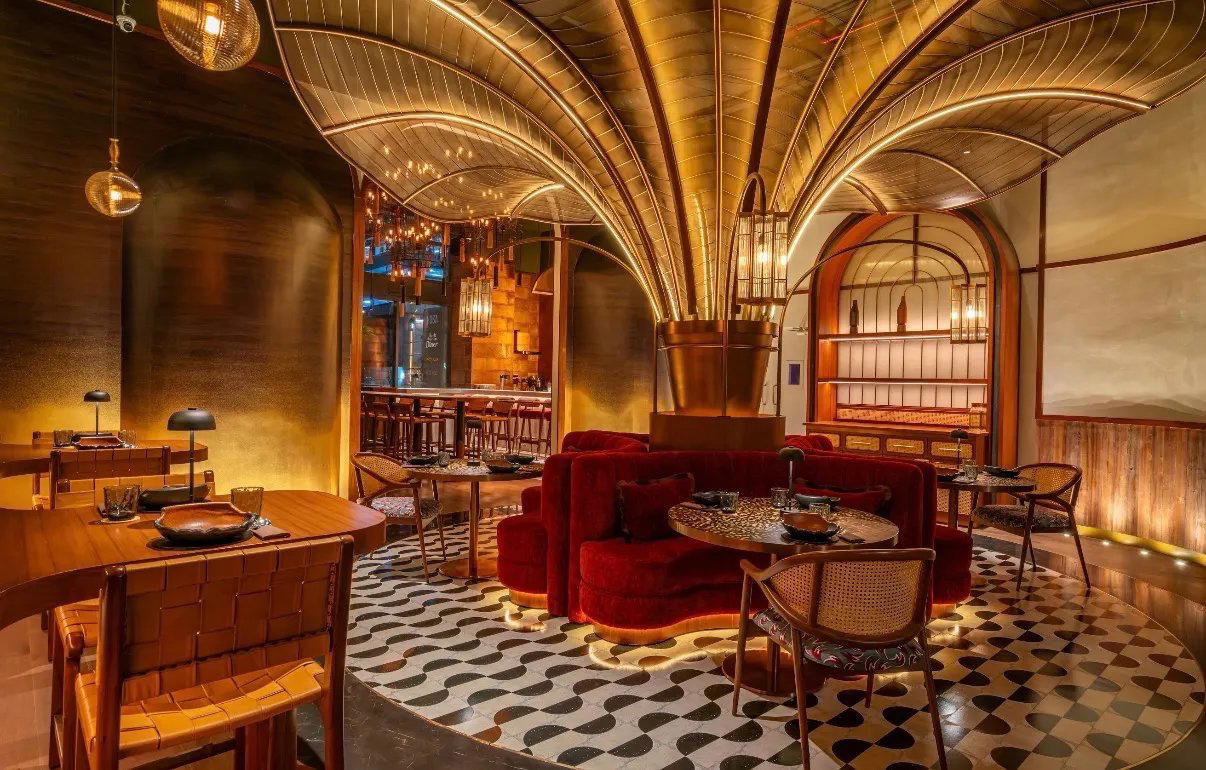
Hotel restaurants in the Taj group's upper properties tend toward a particular kind of formal composure: rooms designed to signal seriousness through scale and material rather than through the more contemporary language of exposed brickwork or counter seating. It signals something about who the restaurant is for and how it expects to be used. A room of this type is calibrated for extended meals, for tables occupied across two or three hours, for the kind of conversation that requires relative quiet rather than the ambient energy of a packed standalone. It is a different register from the more spontaneous dining culture that has grown around Hyderabad's newer neighbourhoods, and it makes no apology for that.
This matters when thinking about how to use the space. Firdaus is not a place to eat quickly before a show or to drink at the bar before heading elsewhere. The etiquette implied by the room, the staffing ratio, the pace at which courses are expected to follow each other, points toward a longer, more structured engagement with the meal. Bringing that expectation to the table makes the experience more coherent. Arriving in a hurry, or expecting the informality of a neighbourhood restaurant, would be to misread what the room is offering.
Placing Firdaus in the Wider Indian Hotel Dining Scene
The hotel restaurant remains a more serious proposition in Indian fine dining than in many other markets. While standalone restaurants have grown considerably in cities like Mumbai, where Americano represents a different kind of urban dining ambition, and Bangalore, where Farmlore has carved out a distinct identity around sourcing, the hotel dining room in Hyderabad continues to anchor the upper end of the market in a way that reflects the city's relationship with formal hospitality. Chennai's Avartana and Udaipur's Chandni suggest that Indian regional cuisines presented through a considered hotel format can achieve both critical and commercial traction. Firdaus operates in that same space, with Hyderabadi cooking as its subject matter.
Further afield, Indian restaurants of comparable ambition include Naar in Kasauli and Baan Thai in Kolkata, though both operate in different contexts. Bomras in Anjuna and da Susy in Gurugram illustrate how Indian premium dining has diversified beyond its traditional hotel base. Internationally, the structural parallels are closer to something like Atomix in New York City, where a specific culinary tradition is presented through a deliberately structured dining format, than to the more casual end of the market.
Planning Your Visit
Firdaus is located within the Taj Krishna at Mada Manzil, Banjara Hills, one of Hyderabad's most accessible upscale addresses by road. For those staying elsewhere in the city, Banjara Hills is well served by both app-based car hire and the city's growing metro network, making an evening visit logistically direct. Given the hotel context, reservations made through the Taj Krishna front desk or dining team are the standard approach, and for larger groups or occasion dinners, advance notice of any specific requirements is the practical expectation. The dress code implied by the room sits in the smart-casual to formal range, consistent with Taj group properties across this tier.
What It’s Closest To
Comparable venues nearby, for context on price, style, and recognition.
| Venue | Cuisine | Price | Notes |
|---|---|---|---|
| FirdausThis venue — the venue you are viewing | Classic Hyderabadi Cuisine | $$$$ | Not listed |
| Falaknuma Palace | Traditional Hyderabadi Fine Dining | $$$$ | Hyderabad District |
| Aish - The Park | Authentic Hyderabadi & Nizami Fine Dining | $$$$ | Somajiguda |
| Gol Banglow Unique Dining - Taj Falaknuma | Royal Hyderabadi & Mughlai Cuisine | $$$$ | Falaknuma |
| Adaa at Falaknuma Palace | Royal Hyderabadi Fine Dining | $$$$ | Falaknuma |
| Bukhara Restaurant | North West Frontier Indian | $$$ | Diplomatic Enclave |
Continue exploring
More in Hyderabad
Restaurants in Hyderabad
Browse all →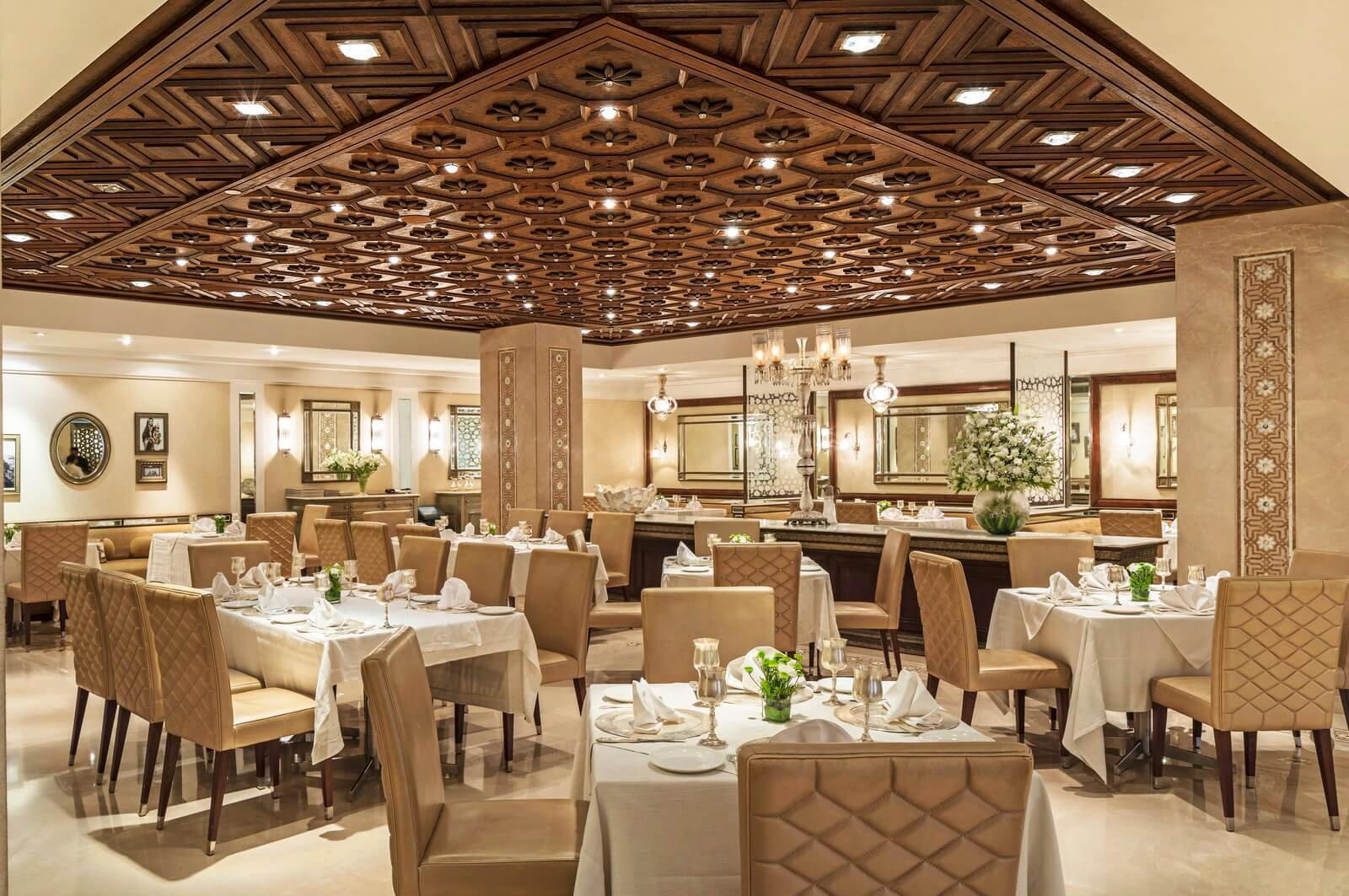
Hotels in Hyderabad
Browse all →
At a Glance
- Elegant
- Sophisticated
- Ornate
- Special Occasion
- Celebration
- Live Music
- Hotel Restaurant
- Extensive Wine List
Current opening hours
- Monday
- 12:30–3 PM, 7–11 PM
- Tuesday
- 12:30–3 PM, 7–11 PM
- Wednesday
- 12–3 PM, 7–11 PM
- Thursday
- 12:30–3 PM, 7–11 PM
- Friday
- 12:30–3 PM, 7–11 PM
- Saturday
- 12:30–3 PM, 7–11 PM
- Sunday
- 12:30–3 PM, 7–11 PM
Hours can change for holidays and private events. Last verified .
Ornate ambiance with refined service, warm lighting enhanced by live music, and poolside views.