Our verdict
Falaknuma Palace is a 19th-century Nizam-era palace hotel set on a hilltop above Hyderabad, now managed by Taj Hotels, where the architecture, ceremonial dining rooms, and Hyderabadi culinary heritage converge in one of India's most historically charged hospitality settings. The property operates as a full hotel with formal dining and heritage tours, placing it in a category distinct from any conventional luxury address in the city.

Pearl is the En Primeur Club membership app — saves, bookings, and concierge access live there. Same editors, same standards.
- Address
- Engine Bowli, Falaknuma, Hyderabad, Telangana 500053, India
- Phone
- +91 40 6629 8585
- Website
- tajhotels.com
- Directions
- Get directions
The menu
What to order
- 6-course tasting menu
- Lasooni tikka
- Dahi ke kabab
- Pathar ka ghosth
A Palace That Earned Its Status Before the Hotel Industry Existed
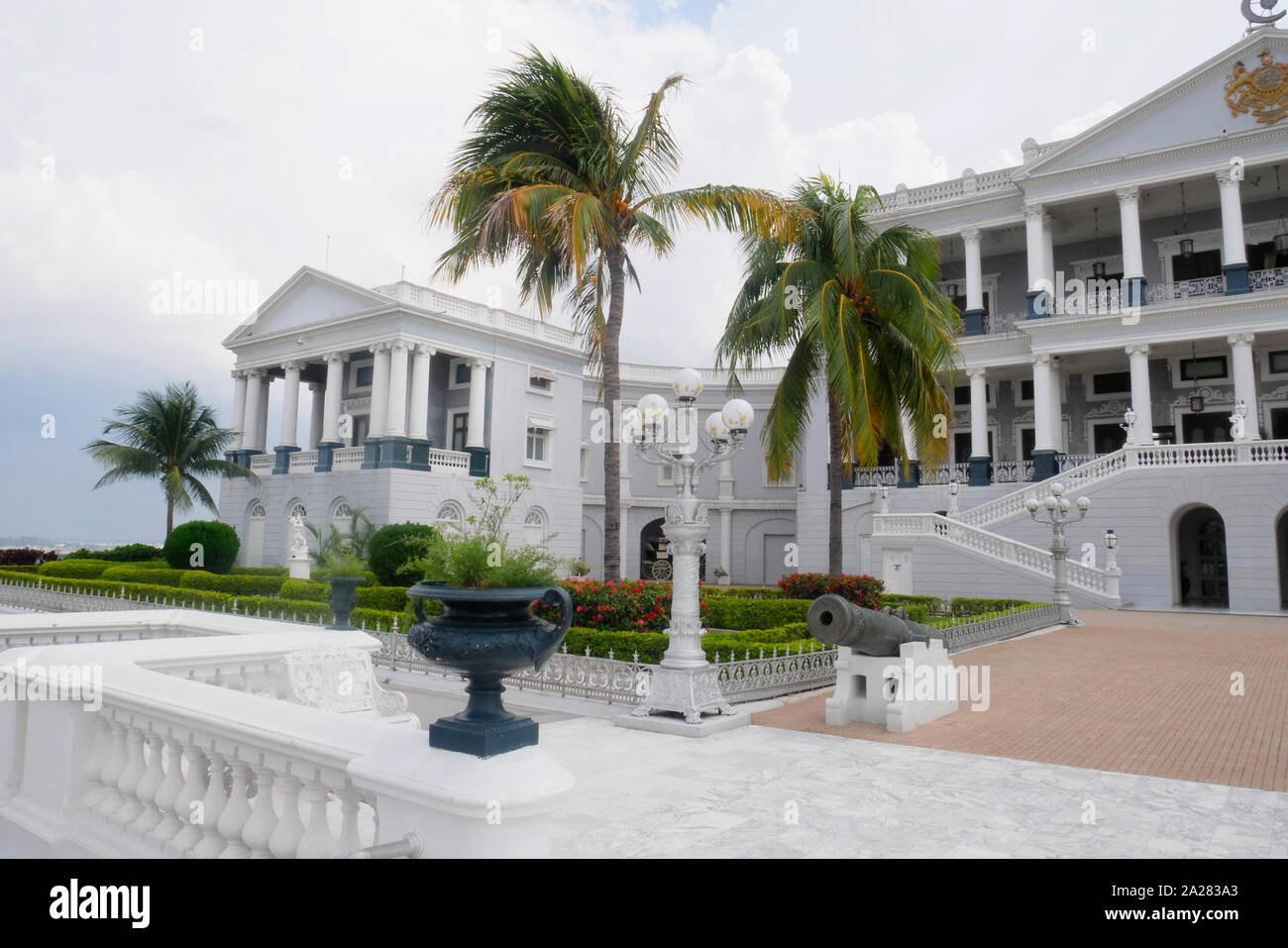
Hyderabad's position in Indian culinary and cultural history rests heavily on the Nizamate, the royal dynasty that governed the Deccan for two centuries and left behind an architectural and gastronomic legacy that still shapes the city's identity. Falaknuma Palace, completed in 1884 for the sixth Nizam and later used as a guesthouse for visiting royalty, sits at the physical and symbolic summit of that legacy. At roughly 2,000 feet above the city on a basalt hill in the Falaknuma neighbourhood, the Italian-Palladian and Tudor structure overlooks the old city in a way that makes its history legible from the outside before you ever step through the gates. When Taj Hotels restored and reopened it as a luxury hotel in 2010, after nearly a decade of conservation work, the decision set a precedent for how India's palace-hotel tier handles authentic heritage versus theatrical reconstruction.
The Nizamate's relationship with hospitality was not incidental. The court maintained formal protocols for receiving guests that influenced everything from seating hierarchies to food sequencing, and those protocols are part of what Falaknuma's dining culture consciously references. Hyderabadi cuisine itself, a register distinct from both North Indian Mughlai and the broader Deccani tradition, developed inside palace kitchens where Persian, Turkish, and local Andhra ingredients were layered into dishes that required significant time and technique. The biryani, the haleem, the slow-cooked kormas: these are court dishes first, restaurant dishes second, and understanding that order matters when you're eating in the palace where some of them were originally served.
What the Dining Experience Actually Represents
Across India's premium hotel-dining tier, the tension between heritage performance and genuine culinary depth is persistent. Properties that inherit grand rooms do not automatically inherit rigorous kitchens, and the visual spectacle of a palatial setting can mask mediocre food with relative ease. Falaknuma's dining operation, anchored by Adaa at Falaknuma Palace, operates within that tension and attempts to resolve it on the side of culinary seriousness. Adaa focuses on Hyderabadi cuisine with the kitchen working within court-era frameworks: dum cooking, long-marination techniques, and spice ratios calibrated to the Deccani palate rather than a generalized pan-Indian middle ground. The restaurant's reference point is the Nizam's own table, not the current restaurant market, and that distinction shows in how dishes are sequenced and presented.
This approach places Falaknuma in a small category of Indian heritage properties where the dining program makes an independent argument rather than simply serving as an amenity. Compare it to how Bukhara in New Delhi has maintained a singular identity around the tandoor for decades, or how Avartana in Chennai takes Southern Indian cuisine into a more experimental formal register. Falaknuma's pitch is different from both: it argues for preservation and historical fidelity over either nostalgia or innovation. For a city that produces some of India's most technically demanding cuisine, that is a credible and defensible position.
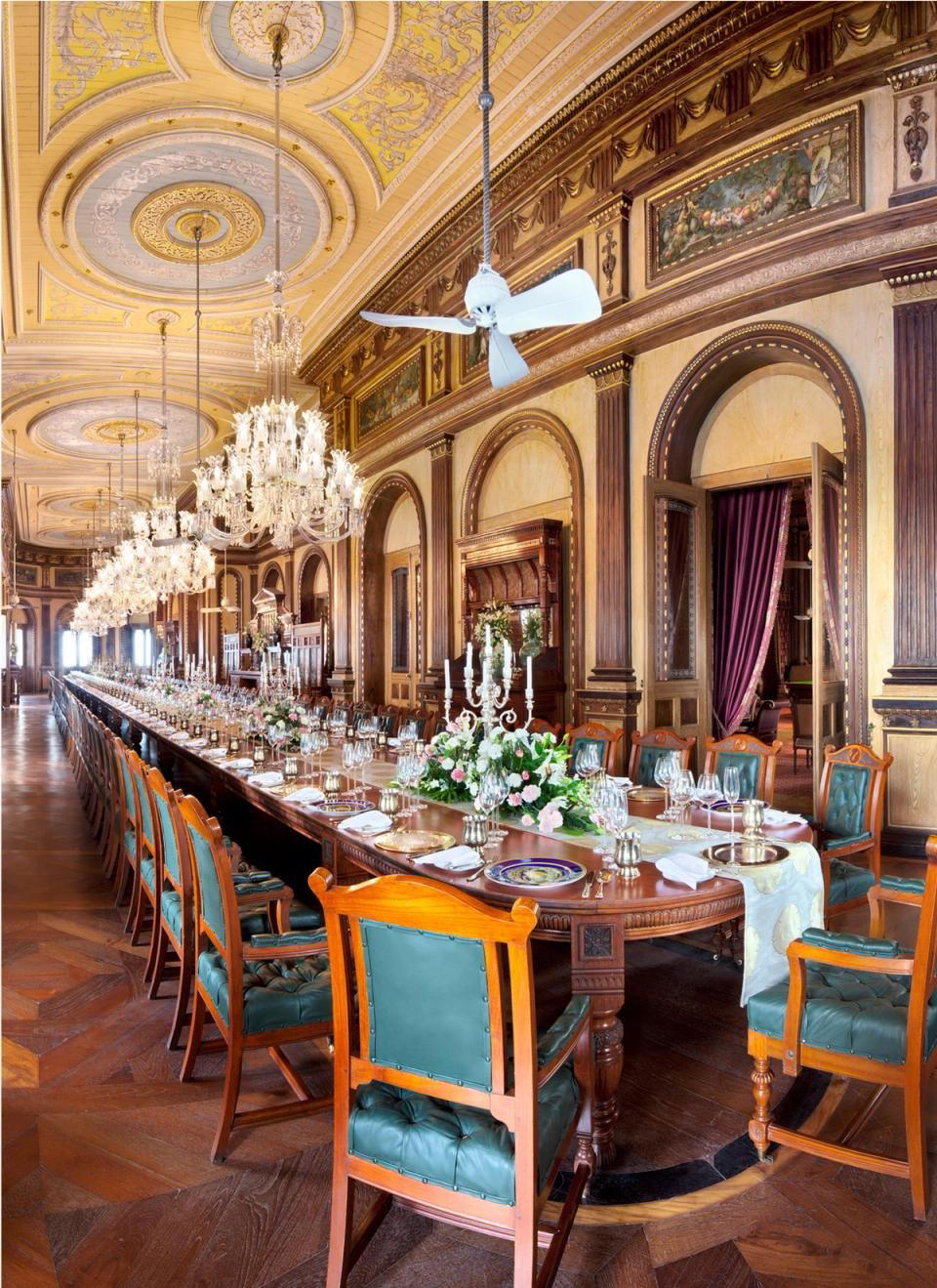
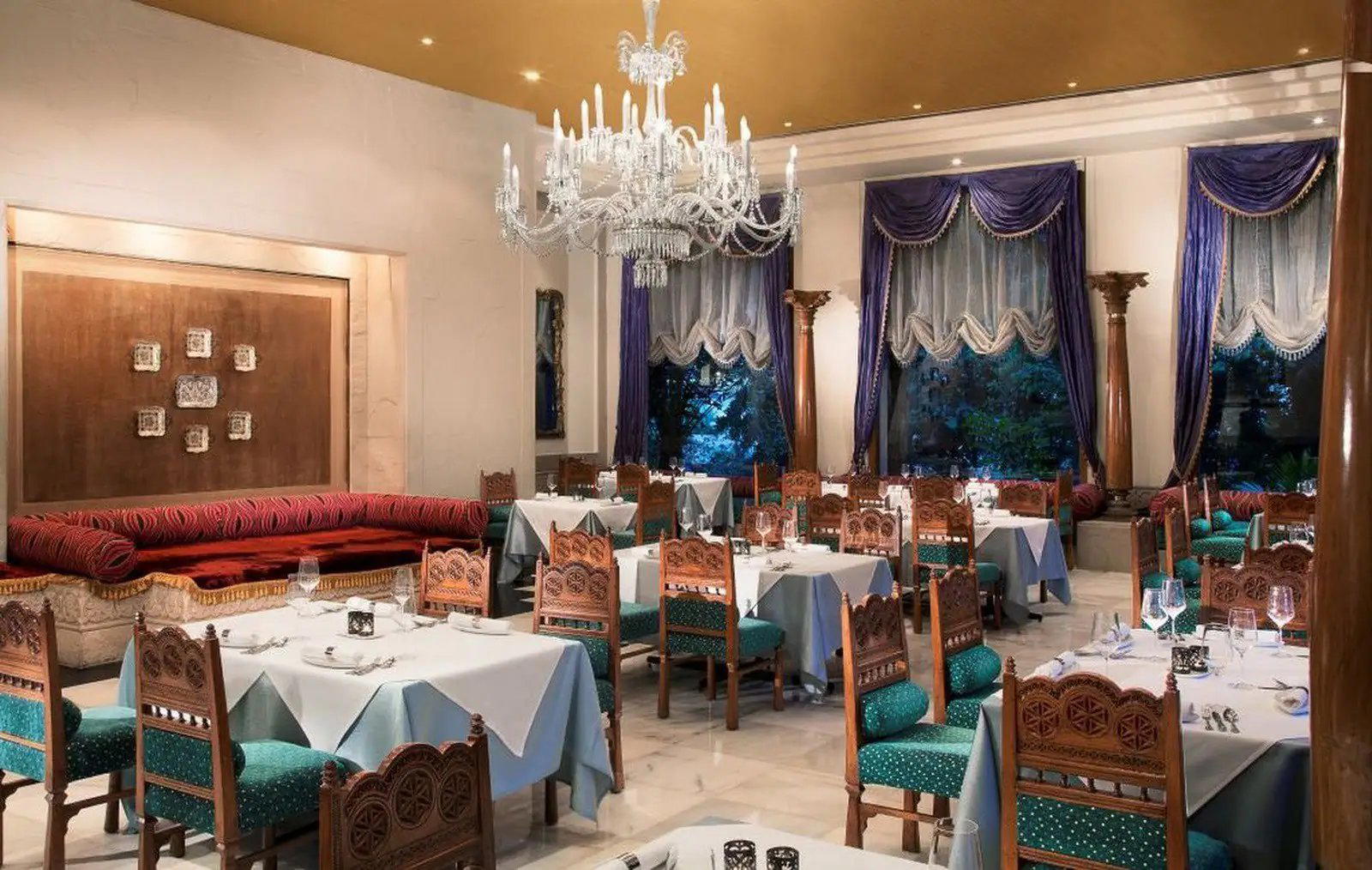
The property also holds a wider dining context that extends beyond Adaa alone. Guests access multiple dining settings across the palace, from formal banquet rooms with original Venetian chandeliers to outdoor spaces that frame the city below. For the broader Hyderabad restaurant scene, including venues like Firdaus, which takes its own angle on Hyderabadi and Mughlai cooking, see our full Hyderabad restaurants guide.
The Building as a Cultural Argument
The palace contains over 60 rooms and suites, 22 dining halls and reception rooms, a Rolls-Royce fleet for transfers, and a restoration scope that ran across roughly nine years before the 2010 reopening. That scale of conservation places it in a different category from India's smaller palace conversions, where the intervention is necessarily lighter. Here, Taj and the restoration teams were working with original furnishings, European commissions sourced by the Nizam in the late 19th century, and structural elements that needed international conservation expertise. The result is a hotel where the objects in a corridor have documented provenance, which changes the quality of the experience in a way that replica-heavy heritage properties cannot replicate.
Horse stable, converted into a formal dining venue for special events, illustrates the sensibility well. The building's original function is visible; the renovation respects the structure rather than papering over it. This kind of legibility, where you can read the palace's original purpose in its current form, is what distinguishes genuine heritage hospitality from themed environments. It is a point that applies equally to how the Falaknuma neighbourhood itself sits apart from Hyderabad's newer development corridors in Banjara Hills or HITEC City, retaining a density and texture that reflects the city's older geography.
Where This Sits in the Broader India Premium Scene
India's premium heritage hotel tier has expanded considerably over the past two decades, with palace conversions in Rajasthan, the Deccan, and Kerala each making distinct architectural and culinary arguments. Falaknuma occupies the Deccan position with a specificity that few competitors can match: a documented Nizam provenance, an urban hilltop setting that gives it a different relationship to its city than countryside havelis, and a culinary tradition, Hyderabadi cuisine, that carries international recognition in its own right. For reference, the Hyderabadi biryani and haleem both have protected geographical indication status in India, which places them in the same category of recognised regional specificity as wines and cheeses in European regulatory frameworks.
For visitors building an extended India itinerary, the property pairs naturally with experiences at formally ambitious restaurants across the country: Farmlore in Bangalore, where Indian ingredients are treated with a fine-dining precision, or Naar in Kasauli for high-altitude Himachali cooking. Both represent the wider contemporary argument that Indian regional cuisines, properly contextualized, belong in the same conversation as any other serious culinary tradition globally. Falaknuma makes that argument through preservation rather than reinvention, which is an equally valid methodology. For context on how formal dining structures compare internationally, venues like Le Bernardin in New York City or Atomix in New York City illustrate how the highest tier of restaurant hospitality elsewhere prioritizes rigour and intentionality, a standard Falaknuma engages from its own heritage-led logic.
Other points of comparison across India's regional restaurant scene include Americano in Mumbai, Baan Thai in Kolkata, Bomras in Anjuna, Chandni in Udaipur, and da Susy in Gurugram.
Planning a Visit
Falaknuma Palace operates as a full hotel under Taj Hotels' management, with the restaurant accessible to non-resident guests who book in advance. The property's hilltop location in the Falaknuma neighbourhood, approximately eight kilometres from the old city's Charminar district, places it outside the main tourist corridor, and the Taj manages dedicated vintage car transfers from the city for guests who arrange them. The palace makes its own strong case as a reason to stay in the older southern part of Hyderabad rather than the newer business districts to the north. For broader Hyderabad planning, the EP Club guides to hotels, bars, wineries, and experiences cover the full city picture.
Frequently asked questions
Where is Falaknuma Palace located?
Falaknuma Palace is located at Engine Bowli, Falaknuma, Hyderabad, Telangana 500053, India, Hyderabad.
Is Falaknuma Palace worth visiting just for the afternoon tea, and how does it compare to other palace tea experiences in India?
Afternoon tea at Falaknuma Palace is served in a building that predates the British-era ritual it performs, which gives it a different register than Rajasthan palace hotels where colonial and Mughal histories overlap more directly. The Hyderabadi Nizam tradition was distinct from both Rajput and British court culture, and that specificity carries into the setting across 22 dining and reception rooms managed by Taj Hotels. For travellers comparing palace tea experiences across India, Falaknuma's Deccan provenance and the Engine Bowli hilltop position above the old city makes it a different proposition from Udaipur or Jaipur equivalents.
What should I order at Falaknuma Palace?
The dining program draws directly from the Nizam culinary tradition of the Deccan, which historically centred on slow-cooked biryanis, rich kormas, and elaborate meat preparations developed in the Hyderabadi royal kitchens. Given that the palace operates 22 dining halls and reception rooms under Taj Hotels' management, the kitchen serves a broad repertoire across multiple settings. Specific current menu items are best confirmed directly with the property at the time of booking.
Can I walk in to Falaknuma Palace?
Falaknuma Palace operates as a functioning hotel under Taj Hotels, and non-resident guests can access the restaurant and public spaces, but advance booking is required rather than walk-in. The palace sits in the Falaknuma neighbourhood of Hyderabad at Engine Bowli, and the property arranges Rolls-Royce transfers for guests, which signals that arrivals are expected to be pre-planned. Contact Taj Hotels' reservations directly to arrange a dining visit.
What's the standout thing about Falaknuma Palace?
The scale and authenticity of the restoration is the detail that separates Falaknuma from most palace conversions in India: the property contains over 60 rooms and suites and 22 dining halls and reception rooms, all returned to operational use rather than preserved as museum spaces. The Rolls-Royce fleet used for guest transfers is a functioning remnant of Nizam-era hospitality, not a decorative gesture. Taj Hotels' stewardship has kept the property within the premium heritage tier rather than repositioning it as a contemporary luxury brand.
Is Falaknuma Palace allergy-friendly?
Traditional Hyderabadi cooking, which forms the culinary foundation at Falaknuma Palace, relies heavily on ghee, nuts (particularly cashews and almonds), and dairy-based gravies, which are common allergen categories. As a Taj Hotels property with high-spend guests from across the world, the kitchen is accustomed to dietary requests, but specific allergy protocols should be confirmed directly at the time of reservation.
Budget Reality Check
| Venue | Cuisine | Price | Awards |
|---|---|---|---|
| Falaknuma PalaceThis venue — the venue you are viewing | Traditional Hyderabadi Fine Dining | $150–200 | Not listed |
| Dum Pukht | Indian | Not listed | World's 50 Best |
| Bukhara | Modern Indian | Not listed | Tabelog 100 #61 |
| Indian Accent | Indian | Not listed | World's 50 Best |
| Karavalli | Indian | Not listed | Not listed |
| O Pedro | Goan | Not listed | Not listed |
Continue exploring
More in Hyderabad
Restaurants in Hyderabad
Browse all →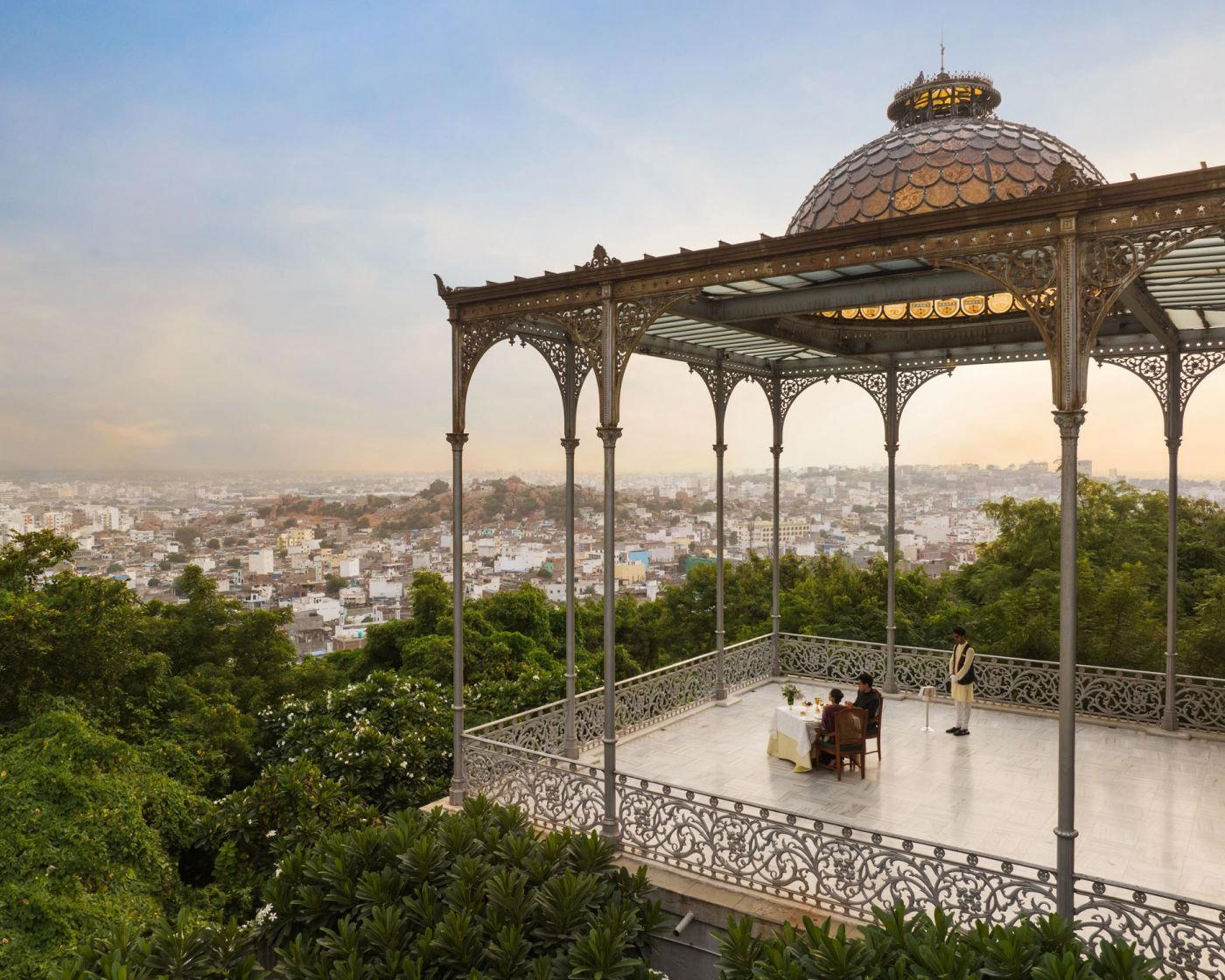
Bars in Hyderabad
Browse all →
Details
- Ornate
- Romantic
- Elegant
- Sophisticated
- Well Known
- Date Night
- Celebration
- Special Occasion
- Group Dining
- Business Dinner
- Live Music
- Panoramic View
- Historic Building
- Terrace
- Private Dining
- Hotel Restaurant
- Extensive Wine List
- Beer Program
- Skyline
- Set Menu
- A La Carte
- Wine
- Beer
- Vegetarian Friendly
- Allergy Accommodating
Grand and regal with candlelit elegance, ornate chandeliers, Italian marble, and stained-glass windows creating a luxurious atmosphere that evokes the lifestyle of the Nizam rulers.