Farmhouse at Rogers Gardens
Farmhouse at Rogers Gardens occupies a distinctive position in Corona Del Mar dining, drawing from the celebrated Rogers Gardens property to frame a farm-and-garden-driven approach to seasonal California cooking. The setting alone separates it from the village's other dining options, and the sourcing philosophy connects it to a broader national conversation about where ingredients come from and why that provenance shapes a plate.
Pearl is the En Primeur Club membership app — saves, bookings, and concierge access live there. Same editors, same standards.
- Address
- 2301 San Joaquin Hills Rd, Corona Del Mar, CA 92625
- Phone
- +19496401415
- Website
- farmhouse.rogersgardens.com
- Directions
- Get directions
 Saves & bookings on Pearl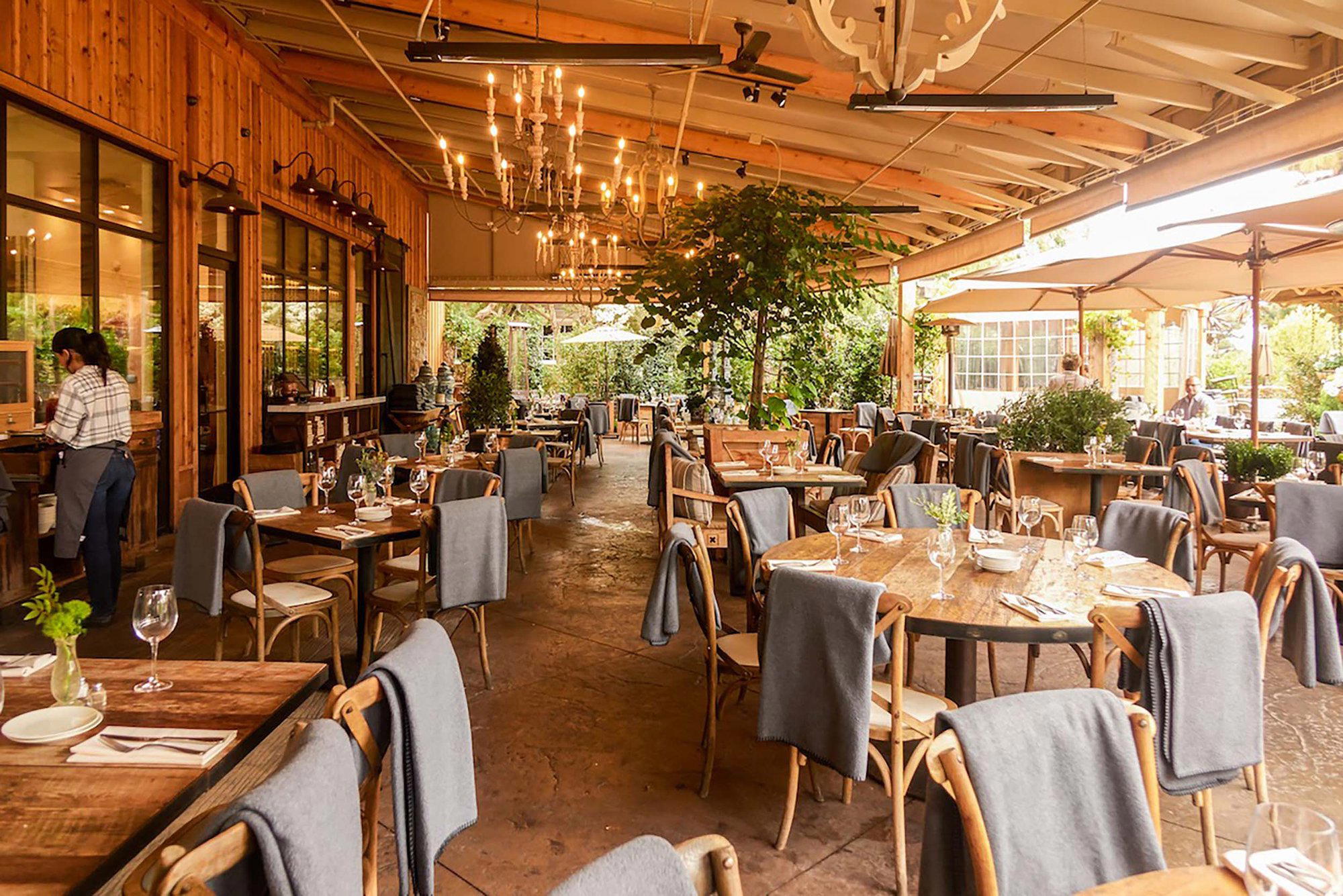
Where a Garden Becomes the Premise, Not the Backdrop
Corona Del Mar's dining scene sits in an interesting position along the Southern California coast. Farmhouse at Rogers Gardens draws its identity from its setting inside Rogers Gardens.
Rogers Gardens is a 7-acre retail nursery and garden at 2301 San Joaquin Hills Road. The Farmhouse restaurant sits within that property, which means the physical environment approaching the entrance reads less like a restaurant arrival and more like walking into a working landscape. Gravel paths, mature plantings, seasonal displays, and the ambient scent of living greenery precede the dining room. That context shapes the dining room experience.
The Sourcing Argument
Across American dining, the farm-to-table framing has evolved considerably. Particularly serious practitioners have moved past the label toward something more specific: kitchens that build menus around what is actually available from particular farms and gardens at a given moment, rather than sourcing conventionally and citing a farm relationship on the menu as a credential. At one end of the spectrum, you have operations like Blue Hill at Stone Barns in Tarrytown or Single Thread Farm in Healdsburg, where the farm is physically integrated with the restaurant and the kitchen program is inseparable from what the land produces. At the other end, you have restaurants that use farm sourcing as a signal without substantively reorganizing their menus around it.
Farmhouse at Rogers Gardens sits closer to the integrated end of that spectrum than most restaurants in its region. The Rogers Gardens property provides a direct horticultural context that few restaurant settings can match. It is a restaurant that exists inside a garden operation. That structural fact shapes what arrives on the plate and how the menu shifts across seasons.
Southern California's growing season and regional agricultural access give kitchens here a real advantage. Southern California's growing season and regional agricultural access give kitchens here a genuine advantage over cold-climate counterparts. Citrus from the inland valleys, avocados from the coastal slopes, early-season stone fruit, and year-round access to herbs and greens create a sourcing environment that operations elsewhere in the country cannot replicate. Restaurants like Providence in Los Angeles and Addison in San Diego have built nationally recognized programs around the depth of Southern California's ingredient access. Farmhouse works within that same regional abundance, but with the added specificity of a garden that is immediately adjacent.
The Room and the Experience
Restaurants that use their physical setting as a sourcing argument tend to fall into two formats: those that let the setting remain peripheral to the dining room experience, and those that fold the setting into the experience continuously. Farmhouse at Rogers Gardens takes the latter approach. The dining room and its surrounding space maintain a visual connection to the gardens. The seasonal shifts in the Rogers Gardens property, which moves through elaborate horticultural displays tied to the calendar, create a dining backdrop that changes across the year in ways that a conventional restaurant interior cannot.
This places Farmhouse in a peer conversation with experience-integrated dining formats rather than with standard casual-fine or garden-adjacent concepts. The integration of setting, sourcing, and season is a format that requires more operational coordination than a conventional restaurant. The kitchen cannot simply run a fixed menu for months; the visual and ingredient context shifts, and the dining room experience shifts with it.
For visitors to Corona Del Mar, the combination of Rogers Gardens and the Farmhouse dining room is distinctive in the immediate area. The village's other dining options, including the rooms listed in our full Corona Del Mar restaurants guide, operate on more conventional premises. The Farmhouse format asks more of the visitor in terms of planning but rewards the effort with a setting and sourcing context that a standard dining room cannot provide.
Regional and National Frame
The ingredient-provenance approach that Farmhouse represents connects it to a wider conversation about sourcing. That conversation has been most visible at the upper end of the dining tier, at operations like The French Laundry in Napa, Smyth in Chicago, and Le Bernardin in New York City, where sourcing credentials are part of the value proposition at price points that justify detailed provenance. At its price tier, genuine farm integration is harder to sustain because operational costs compete with margin pressure. Farmhouse's advantage is structural: the Rogers Gardens property already exists, and the restaurant's positioning within it removes the need to manufacture a farm relationship from scratch.
That structural advantage also connects Farmhouse to formats that have gained attention in other regions. Lazy Bear in San Francisco, Emeril's in New Orleans, Frasca Food and Wine in Boulder, Atomix in New York City, and internationally, Atelier Moessmer Norbert Niederkofler in Brunico and The Inn at Little Washington, all demonstrate how a strong physical or regional identity can anchor a dining program in ways that transcend any single menu or season. Farmhouse works within that logic at a more accessible scale.
Planning Your Visit
The restaurant is located at 2301 San Joaquin Hills Road, Corona Del Mar, within the Rogers Gardens property. Given the setting's connection to seasonal horticultural programming, the experience shifts across the calendar, and visiting during a seasonal transition, when the gardens are mid-installation, offers a different atmosphere than arriving during a peak display period. The Rogers Gardens property is a destination in its own right, so building time to walk the grounds before or after dining rewards the visit. Booking ahead is advisable. Dress codes are relaxed by the outdoor-adjacent atmosphere, but the dining format reads as a considered occasion rather than a casual drop-in.
At-a-Glance Comparison
Comparable venues nearby, for context on price, style, and recognition.
| Venue | Cuisine | Price | Notes |
|---|---|---|---|
| Farmhouse at Rogers GardensThis venue — the venue you are viewing | Seasonal Farm-to-Table American | $$$ | Not listed |
| The Quiet Woman | Classic American Steakhouse | $$$ | Corona del Mar |
| Five Crowns | Classic English-Inspired Steakhouse | $$$$ | Corona del Mar |
| Mayur Cuisine of India | Northern Indian | $$ | Corona Del Mar |
| Foretti's | Authentic Neapolitan Pizza & Italian Cuisine | $$$ | Corona del Mar |
| A Crystal Cove | New American Coastal | $$$ | Newport Coast |
Continue exploring
More in Corona Del Mar
Restaurants in Corona Del Mar
Browse all →
Bars in Corona Del Mar
Browse all →

Hotels in Corona Del Mar
Browse all →


Wineries in Corona Del Mar
Browse all →
At a Glance
- Rustic
- Cozy
- Scenic
- Elegant
- Date Night
- Brunch
- Special Occasion
- Garden
- Craft Cocktails
- Farm To Table
- Local Sourcing
- Garden
Current opening hours
- Monday
- 11:30 AM–9 PM
- Tuesday
- 11:30 AM–9 PM
- Wednesday
- 11:30 AM–9 PM
- Thursday
- 11:30 AM–9 PM
- Friday
- 11:30 AM–9 PM
- Saturday
- 11:30 AM–9 PM
- Sunday
- 11:30 AM–9 PM
Hours can change for holidays and private events. Last verified .
Warm and inviting garden-like setting with moderate noise, blending refined culinary art and natural surroundings for a romantic and memorable atmosphere.