An estaminet in the old Flemish tradition, Estaminet l'Ecole occupies a converted schoolhouse on Rue Jean Baptiste Lebas in the village of Phalempin, south of Lille. The format belongs to a regional dining culture that predates the brasserie, convivial, rooted in northern French produce, and largely unknown to visitors who stay within the city's ring road. For anyone tracking where French regional cooking still operates on its own terms, this is the address to know.
Pearl is the En Primeur Club membership app — saves, bookings, and concierge access live there. Same editors, same standards.
- Address
- 16 Rue Jean Baptiste Lebas, 59133 Phalempin, France
- Phone
- +33320971479
- Website
- estaminetlecole.fr
- Directions
- Get directions
 Saves & bookings on Pearl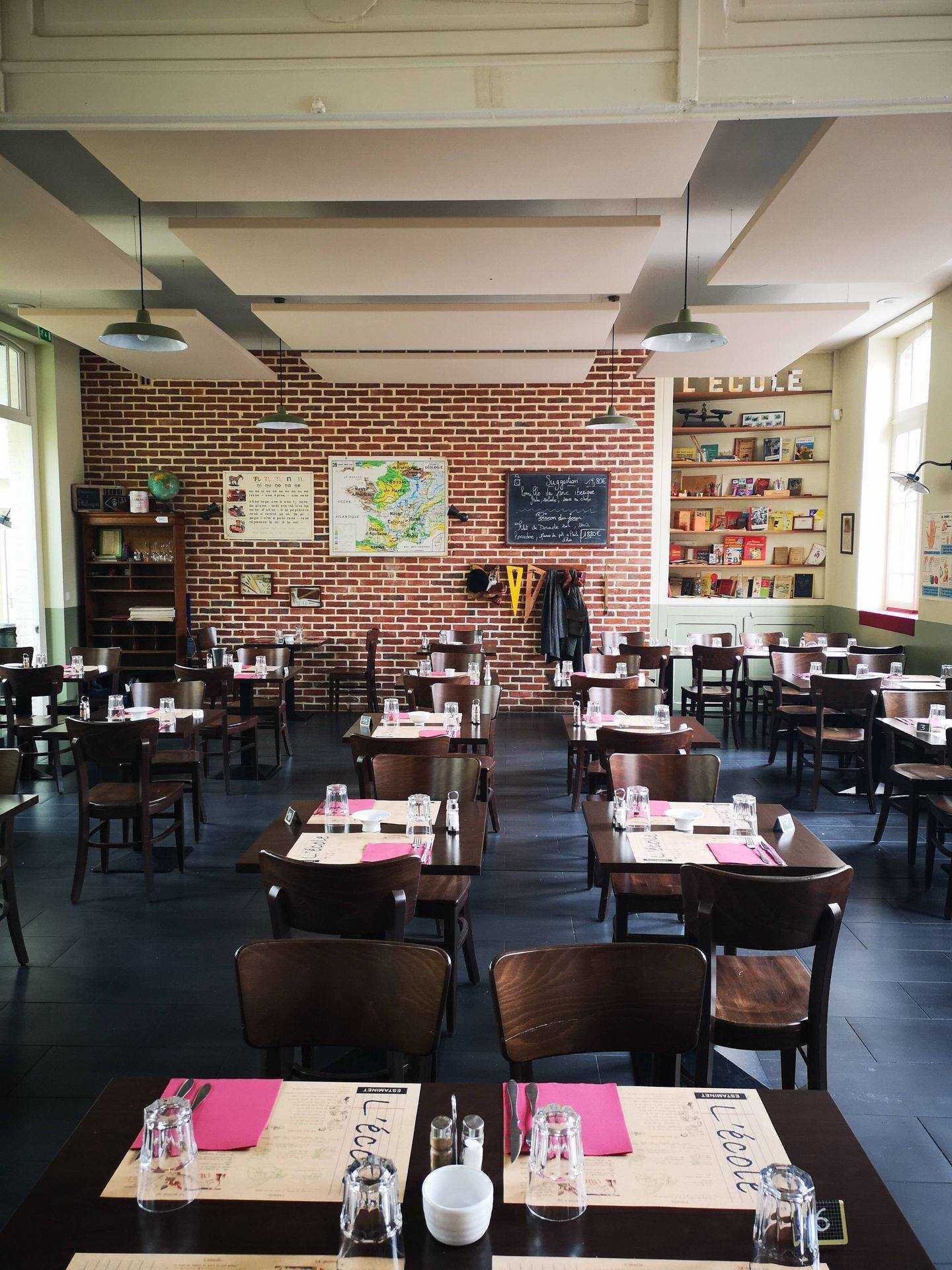
Where Northern France Still Eats on Its Own Terms
The estaminet is one of French gastronomy's least exported formats. While dining culture in Paris and Lyon has attracted global coverage, from the three-Michelin-star counters of Alléno Paris au Pavillon Ledoyen to the mountain temples of Flocons de Sel in Megève, the estaminets of the Nord-Pas-de-Calais region have remained local in their audience. They are, in the older sense, gathering places: rooms where food and drink serve a community function first, a culinary one second. Estaminet l'Ecole in Phalempin sits squarely in that tradition.
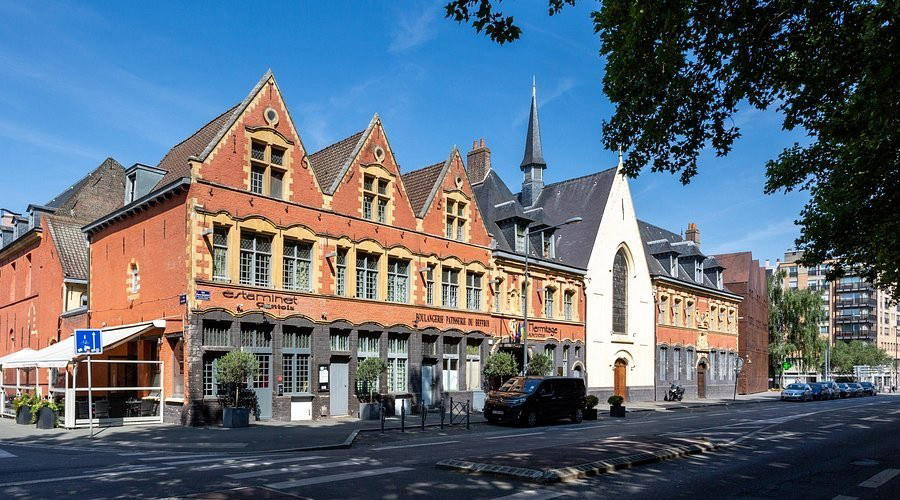
Phalempin is a commune of a few thousand residents in the Nord department, roughly midway between Lille and Lens, positioned in flat agricultural country that has fed this region for centuries. Arriving at 16 Rue Jean Baptiste Lebas, the converted schoolhouse that gives the estaminet its name announces itself quietly, no signage theatre, no valet, no architectural statement. The building's past life is part of the point. Estaminets have historically occupied repurposed civic spaces: farms, schools, old merchant houses. The format carries an implicit argument that eating well does not require a designed environment.
The Estaminet Format: What It Actually Means for the Plate
Understanding what ends up on the table at an estaminet requires understanding where the format sits in the French regional hierarchy. This is not bistro cooking, which tends toward Parisian informality with classical foundations. It is not the auberge model, which, as Auberge de l'Ill in Illhaeusern demonstrates at the highest level, often operates with formal service structures and wine programs of considerable depth. The estaminet sits closer to the Flemish tavern tradition than to either: hearty, seasonal, ingredient-driven in direct sense, because the ingredients are frequently sourced from the immediate agricultural zone.
The Nord-Pas-de-Calais produces chicory, endive, maroilles cheese, beer-braised meats, and a range of root vegetables that do not appear in most French fine-dining contexts. The region's cooking tradition is shaped by proximity to Belgium as much as by French culinary canon, and estaminets are where that cross-border influence is most visible on a menu. Carbonnade flamande, Welsh (the regional cheese-and-beer gratin), potjevleesch, and seasonal endive preparations belong to a repertoire that the region's starred restaurants, at the level of Mirazur in Menton or Bras in Laguiole, might reference but rarely centre. At an estaminet, these dishes are not heritage theatre. They are the menu.
Sourcing as Identity: How the Nord Feeds Itself
The ingredient sourcing logic of a northern French estaminet is worth examining on its own terms, because it differs structurally from the farm-to-table posture that has become standard positioning for urban restaurants across France and internationally. In cities, sourcing narratives are often constructed after the fact, a branding layer applied to menus that were already designed. In villages like Phalempin, geographic proximity to the supply chain is not a marketing choice. It is a condition of operating in a small commune where the distribution infrastructure of a major city does not apply.
Agricultural flatlands around Phalempin have historically supplied Lille's markets with chicory, potatoes, beets, and grain. Maroilles, the pungent washed-rind cheese that appears in tarts, gratins, and as a course on its own, comes from farms in the Avesnois, roughly 80 kilometres southeast. Local breweries, the Nord has one of the highest concentrations of artisan brasseries in France, supply beers that function as both beverage and cooking medium. This is a regional larder with its own logic, and the estaminet format is built to express it without translation.
Contrast this with the sourcing strategies of destination restaurants operating at the other end of the French dining spectrum: Les Prés d'Eugénie in Eugénie-les-Bains or L'Oustau de Baumanière in Les Baux operate with kitchen gardens and supplier networks that are carefully documented and often presented as part of the dining experience. At Estaminet l'Ecole, the equivalent information lives in what the region produces and has always produced, less curated, more structural.
The comparable set in Context
Placing Estaminet l'Ecole in a comparable set requires switching reference frames. It does not compete with the multi-starred maisons of provincial France, Maison Lameloise in Chagny, Georges Blanc in Vonnas, or Auberge du Vieux Puits in Fontjoncouse. Nor does it belong in the same conversation as hotel dining rooms like Le 1947 à Cheval Blanc in Courchevel or La Vague d'Or in Saint-Tropez. The relevant comparison set is other functioning estaminets in the Nord.
What survives in villages like Phalempin represents a different kind of dining value than anything assessed by the Michelin guide's starred categories. The metric is authenticity of format: does the estaminet still function as a gathering place, still draw a local clientele, still cook from the regional larder without performing it? By those measures, the address on Rue Jean Baptiste Lebas carries weight that a star count cannot capture. For comparison, consider that the internationally recognised restaurants in our full Phalempin restaurants guide draw visitors from outside the region specifically; an estaminet draws from within it.
Planning Your Visit
Phalempin is accessible from Lille in under 30 minutes by car, and the commune sits just off the A1 autoroute, making it a practical stop for travellers moving between Lille and Paris. Weekday lunches tend to be quieter, and lunch is the format's natural register, not late dinner.
Comparable Spots, Quickly
Comparable venues nearby, for context on price, style, and recognition.
| Venue | Cuisine | Price | Notes |
|---|---|---|---|
| Estaminet l'EcoleThis venue — the venue you are viewing | Traditional Northern French Regional Cuisine | $$ | Not listed |
| Le Quai | French Gourmet Brasserie | $$ | Lambersart |
| Le Pain de la Bouche | Traditional Northern French Estaminet | $$ | near the train station |
| L'œuf ou la poule | Creative French Poultry and Egg Bistro | $$ | centre-ville |
| Alex'ception | Regional French Bistro | $$ | Raismes |
| Le Roye Gourmet | Traditional French Regional Picardie | $$ | centre-ville |
Continue exploring
More in Phalempin
Restaurants in Phalempin
Browse all →
Bars in Phalempin
Browse all →

At a Glance
- Rustic
- Cozy
- Classic
- Family
- Group Dining
- Celebration
- Casual Hangout
- Historic Building
- Terrace
- Beer Program
- Local Sourcing
Current opening hours
- Monday
- Closed
- Tuesday
- 11:45 AM–2 PM
- Wednesday
- 11:45 AM–2 PM
- Thursday
- 11:45 AM–2 PM, 7–10 PM
- Friday
- 11:45 AM–2 PM, 7–10 PM
- Saturday
- 7–10 PM
- Sunday
- 11:45 AM–2 PM
Hours can change for holidays and private events. Last verified .
Warm and welcoming with nostalgic schoolhouse charm; well-lit dining spaces with class photos and period details creating a convivial, family-friendly atmosphere.