

Elora Mill occupies a restored 19th-century grist mill on the banks of the Grand River in Elora, Ontario, roughly 90 minutes from Toronto. The property operates as both a hotel and dining destination, drawing guests who want serious Canadian cooking set against limestone architecture and gorge-side landscape. It sits in a small but growing tier of destination restaurants outside Ontario's major cities.
Pearl is the En Primeur Club membership app — saves, bookings, and concierge access live there. Same editors, same standards.
- Address
- 77 Mill St W, Elora, ON N0B 1S0, Canada
- Phone
- +1 519-846-8464
- Website
- eloramill.ca
- Directions
- Get directions
 Saves & bookings on Pearl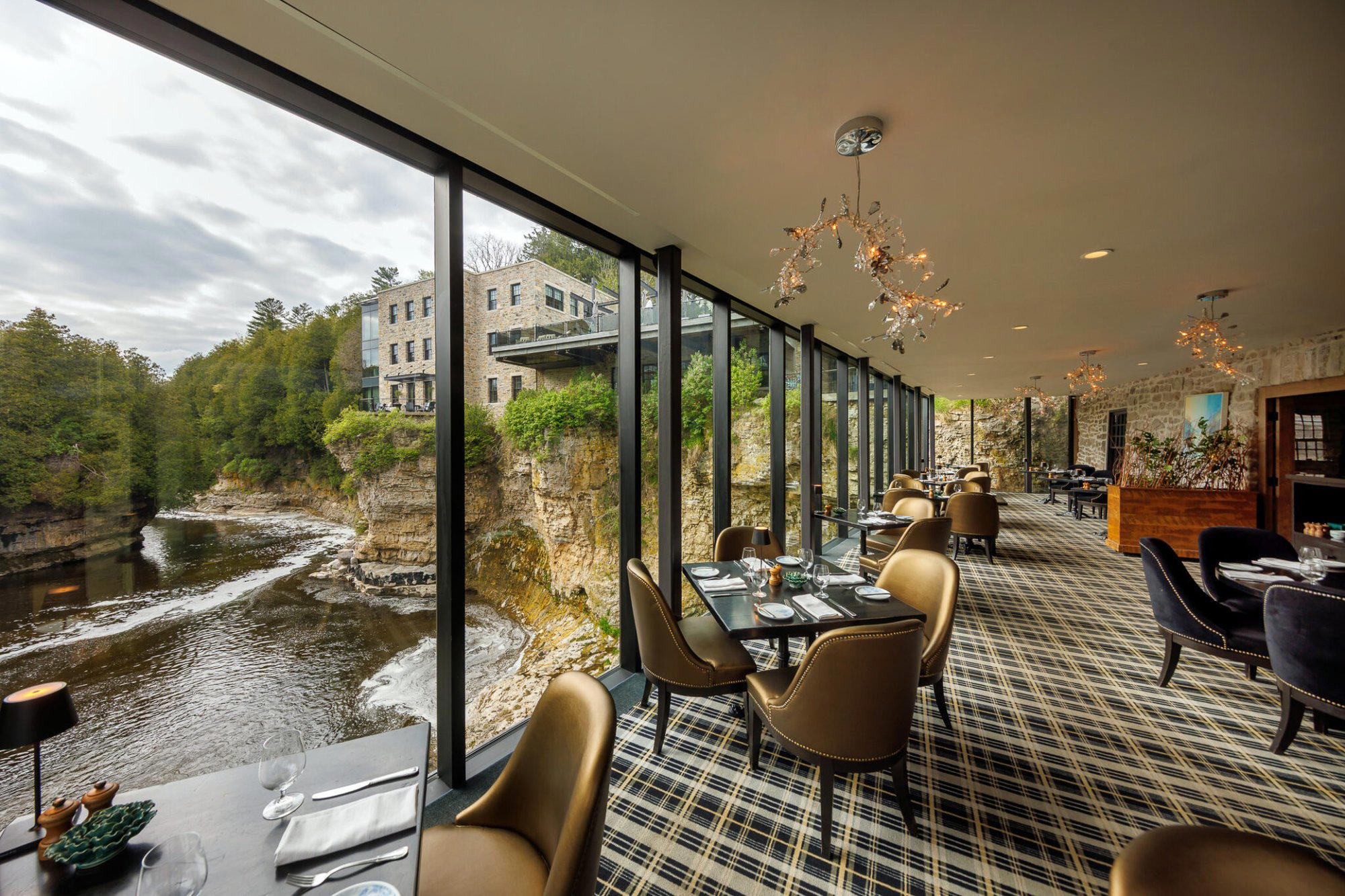
Stone, Water, and the Case for Leaving the City
There is a particular kind of dining experience that Ontario does quietly well: the destination property anchored by a historic structure, positioned close enough to Toronto to be a weekend decision but far enough that it requires real intent to visit. Elora Mill, at 77 Mill St W in the village of Elora, belongs to that category. The building itself is a restored 1832 grist mill, its limestone walls rising from the edge of the Grand River Gorge, and the physical context shapes every meal served inside it. Elora Mill is a fine dining restaurant in Elora, Ontario, with a local seasonal focus and an estimated price of about US$100 per person. Approaching the property, you move through a village of under 3,000 residents, cross a heritage bridge, and arrive at a structure that has been grinding grain, hosting travelers, and quietly accumulating history for nearly two centuries. That weight of place is not incidental to what the kitchen does, it is the premise.
This is not a Toronto restaurant that happens to have a picturesque address. It is a destination property in the older Canadian tradition of the grand country inn, updated for a dining culture that now expects provenance-led menus, considered wine programs, and accommodation that justifies the drive rather than apologizing for the distance. The comparison set here is not Alo or Sushi Masaki Saito or the tasting-counter format that defines Toronto's highest tier. It is closer to Restaurant Pearl Morissette in Lincoln or The Pine in Creemore, properties where the building and the surrounding land are as much a part of the offer as anything on the plate.
Ontario's Country Dining Tradition and Where Elora Fits
The country inn dining tradition in English Canada has historically been uneven: grand surroundings frequently outpaced the kitchen, and guests arrived for the scenery and tolerated the food. That dynamic has shifted noticeably over the past decade. Properties in smaller Ontario towns, supported in part by a regional food-media culture increasingly interested in producers and local sourcing, have started attracting kitchen talent willing to work outside Toronto in exchange for closer relationships with the land their menus reference. Elora Mill sits inside this shift. The Grand River watershed is agriculturally productive: grain, livestock, and market gardens are all within the immediate radius. A mill building, by its original function, was the processing node of exactly that kind of rural economy. The symbolic connection between the structure and what a provenance-led kitchen does is unusually coherent.
Across Canada, one interesting work in this category tends to happen at properties that treat their geography as a constraint rather than a backdrop. Tanière³ in Quebec City operates on similar logic, hyper-regional sourcing inside a heritage setting, and AnnaLena in Vancouver applies comparable seasonal discipline to an urban format. Elora Mill works the rural version of that argument, where remoteness from supply chains is itself a curatorial tool. The properties that do this well communicate a coherent point of view through every element: the building, the sourcing, the service register, and the accommodation. The ones that do it poorly feel like a themed restaurant in a pretty room.
The Mill Building as Dining Context
Limestone construction, the specific weight and texture of it, does something to interior acoustics and temperature that modern builds rarely replicate. The restaurant dining rooms sit inside walls that are, in places, several feet thick. The gorge is audible, the Grand River runs directly below, and the light through older windows at that latitude shifts meaningfully over the course of an evening. These are not decorative details; they affect how long guests stay at the table, how the service pace feels, and what register of cooking lands well in the space. Heavy, architectural rooms suit food with equivalent structural ambition: long-braised proteins, aged dairy, preparations that take time seriously. A kitchen that understood this relationship between room and plate would have a clear brief. Whether that brief is fully realized on any given evening is a question that belongs to the individual visit, but the conditions for it are present in the building itself.
The accommodation side of the property matters to the dining proposition. Elora is not a commutable dinner destination in the way that a Toronto restaurant is; it rewards a two-day visit. Guests who stay on property eat differently, they order more deliberately, sit longer, and engage with a wine program in a way that a table driving back to the city that night cannot. The hotel format, with its mix of rooms in the mill building and adjacent structures, is part of what makes the dining experience legible at full scale. For comparable Canadian properties that calibrate their dining to an overnight guest, see also Jérôme Ferrer's Europea in Montreal, which occupies a different category but shares the logic of a destination that earns the trip.
Regional Competition and the Niagara Comparison
Ontario has developed two competing models for destination dining outside Toronto. The Niagara Peninsula model, anchored by the wine industry, hotel infrastructure, and a concentrated tourist economy, has the deeper institutional support: restaurants at wineries, culinary tourism marketing, and a dining density that allows visitors to move between properties over several days. The Wellington County model, of which Elora is one prominent example, operates with fewer pieces on the board. There is no wine appellation anchoring the regional identity, and the visitor economy is thinner. What Wellington County has is its own agricultural character, a more intact small-town fabric, and a relative absence of the Niagara circuit's familiarity. For a certain kind of traveler, one who reads Narval in Rimouski as an interesting data point rather than an obscure footnote, that thinness is part of the appeal.
For Toronto-based diners, the restaurant decision is as much about the drive as about the meal. The route north and west from Toronto runs through Guelph before turning toward Fergus and Elora, a sequence of towns with their own food culture. It is not a difficult 90 minutes, but it requires a kind of deliberateness that urban dining does not. That deliberateness is, the opening condition for the meal to land. Restaurants that ask you to travel to them are making a claim about what that travel is worth. The restaurant makes that claim against a building with nearly 200 years of continuous use and a gorge that has been drawing visitors since the 19th century. Whether the kitchen matches the room is the only remaining editorial question, and one that dining at the property will answer faster than any review.
Planning Your Visit
Elora is approximately 90 minutes from central Toronto by car. The village is compact and walkable once you arrive; the mill property sits directly on the Grand River, adjacent to the gorge that gives the town its particular character. For guests treating this as a destination stay rather than a dinner outing, booking accommodation and a dinner reservation together as early as possible is advisable, particularly for summer and early autumn when the gorge is at its most active and the region draws visitors from across southern Ontario.
Cost Snapshot
Comparable venues nearby, for context on price, style, and recognition.
| Venue | Cuisine | Price | Notes |
|---|---|---|---|
| Elora MillThis venue — the venue you are viewing | Not listed | $$$$ | Not listed |
| Marron Bistro | Not listed | $$$$ | Forest Hill North, Kosher Fine Dining Bistro |
| Opus Restaurant | Annex, Contemporary Fine Dining | $$$$ | Not listed |
| Hexagon | Oakville, Modern Fine Dining Fusion | $$$$ | Not listed |
| Soho House Toronto | Not listed | $$$$ | Entertainment District, Canadian-Inspired House Kitchen |
| Maxime's | Not listed | $$$$ | Fashion District, French-Inspired Steakhouse |
Recognition history
Dated appearances from independent guides and award organizations, with the underlying list record or original source where available.
Star Wine List
Star Wine List
Wine Spectator Best of Award of Excellence
Wine Spectator
Continue exploring
More in Toronto
Restaurants in Toronto
Browse all →


Bars in Toronto
Browse all →
Hotels in Toronto
Browse all →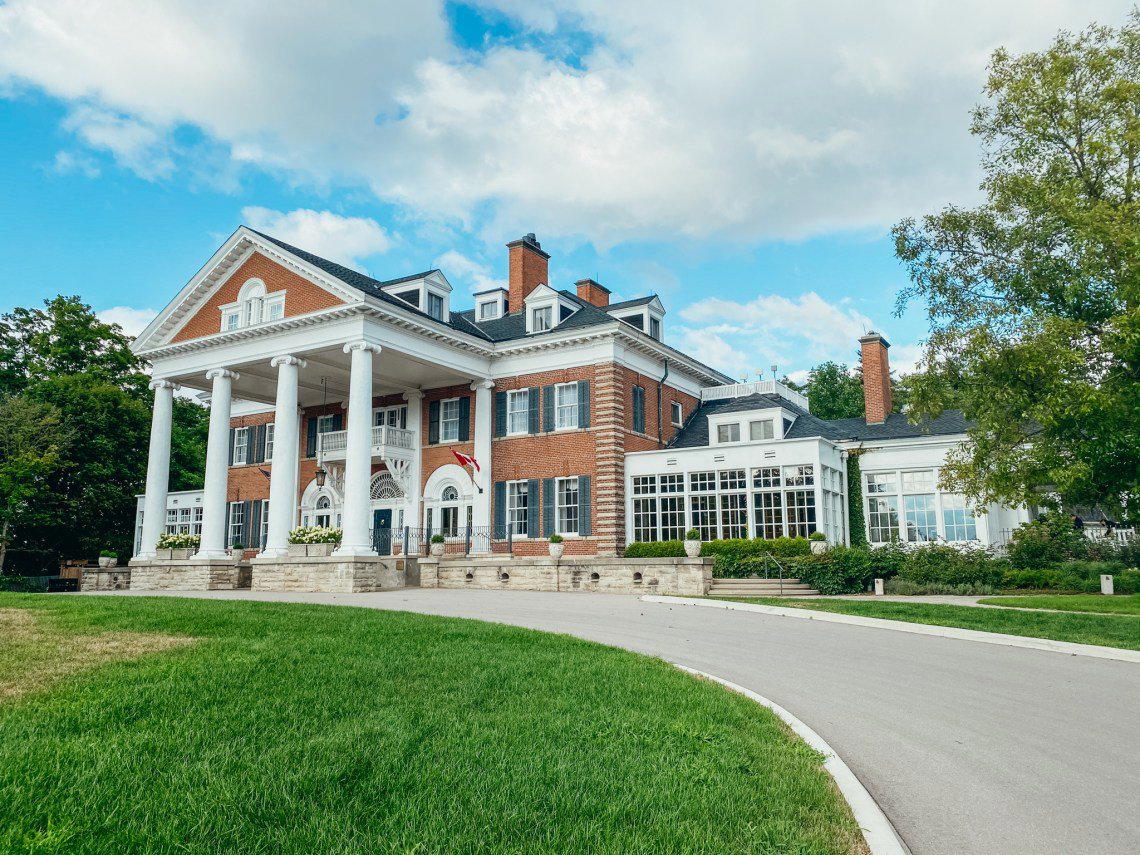
At a Glance
- Scenic
- Elegant
- Rustic
- Romantic
- Sophisticated
- Date Night
- Special Occasion
- Celebration
- Waterfront
- Historic Building
- Hotel Restaurant
- Extensive Wine List
- Sommelier Led
- Local Sourcing
- Waterfront
Elegant historic setting with warm lighting, wooden beams, and serene gorge views creating a romantic and sophisticated atmosphere.