El Palancar

A family-run restaurant beside what locals call the 'conventico', reputedly the smallest monastery in the world, El Palancar earns its 2025 Michelin Plate through an updated approach to Extremaduran traditional cooking. The open grill is the centrepiece, while roasted goat and suckling pig (both pre-order only) speak to the region's pastoral supply chain. At €€, it sits well below the price tier of Spain's multi-starred rooms.
Pearl is the En Primeur Club membership app — saves, bookings, and concierge access live there. Same editors, same standards.
- Address
- S-N, Lugar Convento Palancar, 0, 10829 Pedroso de Acim, Cáceres, Spain
- Phone
- +34 927 19 20 33
- Website
- restauranteelpalancar.es
- Directions
- Get directions
 Saves & bookings on Pearl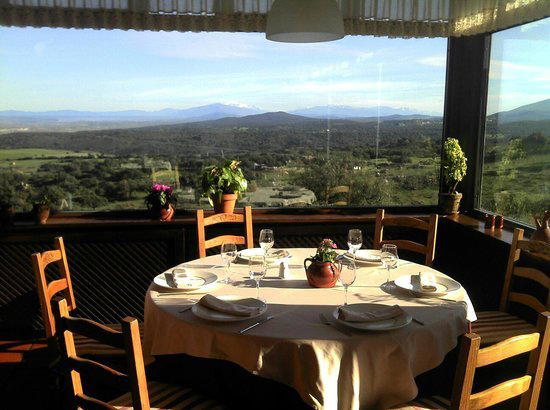
Where Countryside and Kitchen Share the Same Source
The drive into Pedroso de Acim sets expectations before you arrive. The road narrows through cork oak and cistus scrub, the air carrying that dry Extremaduran mix of resin and dust that characterises the interior meseta at altitude. By the time the stone outline of the El Palancar monastery comes into view, you understand something about what this restaurant is doing: the food and the landscape are drawing from the same well. The 'conventico', as the local area calls it, a diminutive that reflects both affection and the structure's genuinely miniature scale, reputedly the smallest monastery in the world, sits just beside the restaurant, and the proximity is not incidental. This is a place where context and cuisine are inseparable.
The Extremaduran Supply Chain on the Plate
Extremadura occupies a specific position in Spain's food geography. Sandwiched between Castile and Portugal, it is a region where large-scale ranching, free-range pig farming, and open pasture have shaped cooking traditions for centuries. The province of Cáceres in particular is associated with Iberian pork, lamb, and kid goat raised on dehesa land, the mixed woodland-pasture system that also produces acorn-fed jamón ibérico. Grilled and roasted meats are not nostalgic gestures here; they are a direct expression of what the land produces efficiently and in volume.
El Palancar's menu is built around this supply logic. The open grill is the kitchen's defining feature, used for the grilled meats that form the backbone of the menu. Roasted goat and suckling pig are also available, but both require advance ordering, a practical detail that reflects the reality of sourcing whole animals from local producers rather than portioning from cold storage. When a restaurant asks you to pre-order a dish, it is usually telling you something honest about its supply chain. Here, that honesty reads as a feature rather than an inconvenience.
This is not a kitchen chasing Extremaduran heritage as a concept. It is one that works within it pragmatically, applying what the venue's Michelin Plate recognition (awarded 2025) describes as an updated approach to traditional cooking. The distinction matters: the techniques and the sourcing remain rooted in the region, while the execution and presentation have moved beyond the purely rustic. Spain's Michelin Plate designation, which recognises restaurants producing good food without the formal complexity required for star candidacy, positions El Palancar within a broad national cohort of serious regional kitchens, a different tier from the multi-starred urban rooms such as DiverXO in Madrid, El Celler de Can Roca in Girona, or Arzak in San Sebastián, but no less purposeful in its own register.
The Room, the Terrace, and the View
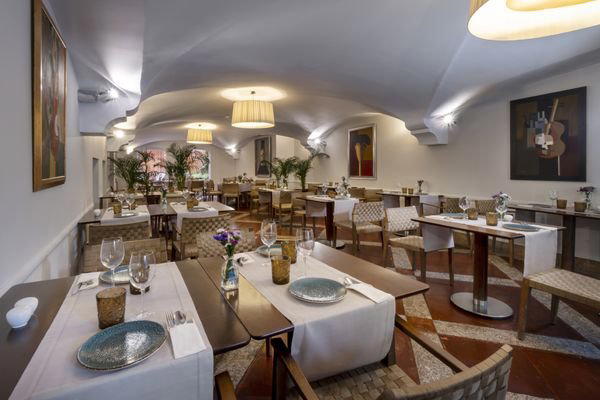
The physical setting of El Palancar is part of its argument. A glass-fronted dining room looks directly onto the surrounding countryside, the glazing acting less as a design statement than as a practical frame for what is already there. On clear days, the dehesa stretches out in the middle distance, the same ecosystem that supplies the kitchen. The terrace extends this further, placing diners directly within the landscape rather than simply beside it. For a restaurant whose cooking is inseparable from its regional context, eating outside with the monastery and the oak scrubland as a backdrop is the more coherent choice, at least in the warmer months.
The service is family-run and attentive, with a register that sits closer to welcoming than formal. For visitors arriving from the more structured atmosphere of, say, Atrio in Cáceres, the provincial capital's starred room with its substantial wine cellar and hotel, the restaurant represents a different kind of seriousness: one measured in ingredient provenance and regional fidelity rather than tasting menu architecture. The two restaurants serve the same province from entirely different positions, and both positions are worth understanding.
El Palancar in the Context of Spain's Regional Dining
Spain's Michelin-recognised restaurant map has historically concentrated its highest recognition in the Basque Country, Catalonia, and the Valencian Community. Extremadura receives far less coverage, despite having a food culture of genuine depth. The province's contributions to the national pantry, jamón ibérico de bellota, Torta del Casar cheese, pimentón de la Vera, are foundational ingredients in Spanish cooking at every level, yet the region's own restaurants remain underrepresented in the editorial conversation.
Restaurants such as the restaurant occupy a structurally important role in that context. They are the kitchens turning those primary ingredients into finished dishes in the landscape that produced them, for a price point (€€) that does not require advance planning beyond the pre-order dishes. This is where the supply chain closes: the dehesa feeds the pig, the pig goes to the open grill, the dining room looks out at the dehesa. Three-starred kitchens like Aponiente in El Puerto de Santa María, Azurmendi in Larrabetzu, or Martin Berasategui in Lasarte-Oria work with similar regional-sourcing principles but at a level of technical ambition and price that is categorically different. The restaurant's comparison set is closer to other Michelin Plate regional kitchens: Auga in Gijón and Auberge Grand'Maison in Mûr-de-Bretagne are both recognised for grounding their menus in immediate geography at accessible price points, and all three occupy a similar position in the Michelin framework.
Planning Your Visit
Pedroso de Acim sits in the province of Cáceres, and getting there requires a car, this is not a destination with useful public transport connections. The village is small enough that arriving without a reservation in peak season would be a risk worth avoiding, and for the roasted goat or suckling pig specifically, advance contact is necessary to arrange the pre-order. The restaurant operates at a €€ price point, making it accessible relative to the regional context and well below the investment required for starred dining in Extremadura. Given the drive involved, building a full day around the visit makes practical sense: the restaurant monastery itself merits time, and the surrounding countryside rewards an unhurried approach. For those planning a wider Extremaduran trip, our full Pedroso de Acim restaurants guide maps the broader dining picture, while guides to hotels, bars, wineries, and experiences in the area cover the wider stay.
Comparable Venues
Comparable venues nearby, for context on price, style, and recognition.
| Venue | Cuisine | Price | Awards | Notes |
|---|---|---|---|---|
| El PalancarThis venue — the venue you are viewing | Traditional Spanish Steakhouse | $$ | Michelin Plate | Not listed |
| I+T | Spanish Tapas | $$ | Michelin Plate | Gran Via |
| Al Norte | Contemporary Spanish Fusion | $$ | Michelin Plate | Jarandilla de la Vera |
| Mirasierra | Traditional Castilian Spanish | $$$ | Michelin Plate | Mogarraz |
| Agustina | Contemporary Andalusian | $$ | Michelin Plate | Cazalla de la Sierra |
| El Albero | Modern Spanish Regional | $$ | Michelin Plate | near historic center |
Recognition history
Dated appearances from independent guides and award organizations, with the underlying list record or original source where available.
Michelin Plate
Michelin
Michelin Plate
Michelin
Continue exploring
More in Pedroso de Acim
Restaurants in Pedroso de Acim
Browse all →
Hotels in Pedroso de Acim
Browse all →
At a Glance
- Rustic
- Scenic
- Cozy
- Family
- Special Occasion
- Terrace
- Open Kitchen
- Extensive Wine List
- Local Sourcing
- Mountain
- Garden
Current opening hours
- Monday
- Closed
- Tuesday
- 1:30–5 PM
- Wednesday
- 1:30–5 PM
- Thursday
- 1:30–5 PM
- Friday
- 1:30–6 PM
- Saturday
- 1:30–6 PM
- Sunday
- 1:30–6 PM
Hours can change for holidays and private events. Last verified .
Inviting rustic decor with glass-fronted dining room offering far-reaching views of Extremadura's natural landscape and warm, hospitable atmosphere.