Agustina

Agustina holds consecutive Michelin Plate recognition (2024 and 2025) in Cazalla de la Sierra, a mountain town in the Sierra Norte de Sevilla that rarely appears on destination dining lists. The kitchen works in a contemporary register at prices that sit well below Andalusia's starred circuit. For visitors making the drive from Seville, it is the clearest argument that the region's serious cooking extends beyond the capital.
Pearl is the En Primeur Club membership app — saves, bookings, and concierge access live there. Same editors, same standards.
- Address
- plaza del concejo, 2, 41370 Cazalla de la Sierra, Sevilla, Spain
- Phone
- +34 954 88 32 55
 Saves & bookings on Pearl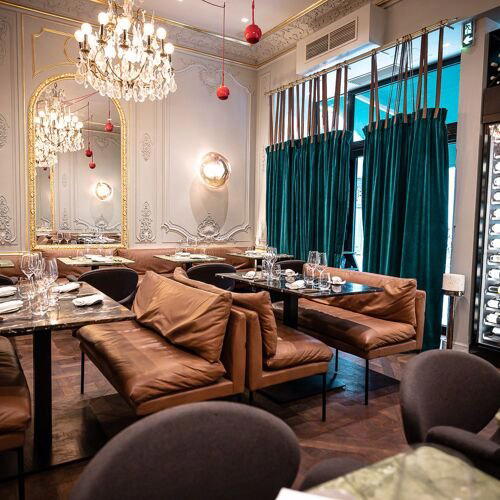
A Mountain Town Square, a Michelin Plate, and a Question About Where Spanish Cooking Is Heading
Plaza del Concejo in Cazalla de la Sierra is the kind of town square that organises life rather than performs it. The market, the local bar, the slow rhythm of a Thursday morning: these are not curated for visitors. Agustina sits on this square at number 2, and the setting frames everything that follows. This is not a restaurant that arrived to serve a tourist circuit; it belongs to a town of fewer than 3,000 people in the Sierra Norte de Sevilla, roughly 90 kilometres north of the Andalusian capital across a range of cork oak and cistus scrub. That geography is not incidental to the cooking. It is, in many ways, the point.
What the Sierra Norte Puts on the Table
The Sierra Norte de Sevilla is a natural park and a Slow Food-adjacent territory long before either label became a marketing device. The area produces Iberian pork under rigorous dehesa conditions, wild game, foraged mushrooms, and a herb vocabulary, thyme, rosemary, rockrose, that differs markedly from coastal Andalusia. Restaurants operating at this altitude and in this ecosystem have access to a pantry that chefs in Seville or Jerez have to source deliberately; here, it is the local infrastructure. Contemporary kitchens in rural Spain increasingly build their identity around this kind of provenance specificity rather than technique as a primary differentiator, and Agustina operates within that current.
Spain's broader fine-dining conversation is dominated by the coastal and urban arc: the three-starred operations at Aponiente in El Puerto de Santa María, the decades-long institutional weight of Arzak in San Sebastián, and the maximalist register of DiverXO in Madrid. That circuit is expensive, requires advance planning, and centres on cities. What Agustina represents is a different tier: Michelin-recognised contemporary cooking in a provincial town, drawing its authority from place rather than from accumulated awards. The comparison set is less El Celler de Can Roca in Girona or Azurmendi in Larrabetzu and more the quiet, serious kitchens that serious eaters seek out when they want cooking that has something to say about a specific territory.
The Michelin Plate and What It Signals
Michelin awarded Agustina its Plate designation in both 2024 and 2025. The Plate is not a star, it indicates that the inspectors found food prepared to a good standard, not food that meets the threshold for starred consideration. In Michelin's own language, a Plate signals cooking worth knowing about. In a town the size of Cazalla de la Sierra, that recognition carries a different weight than it would in Madrid or Barcelona. It means the kitchen is operating at a register that inspectors found worth travelling to assess, which, given the Sierra Norte's distance from any major dining circuit, is a meaningful data point.4 across 65 reviews suggests the local and visitor consensus tracks the inspector's judgement.
For context within Andalusia's contemporary dining scene, restaurants like Atrio in Cáceres demonstrate that Extremadura and its neighbouring territories can sustain serious cooking built around the inland pantry. The Sierra Norte sits in an analogous position: close enough to Seville to draw visitors, remote enough that its produce has not been over-commodified.
Contemporary Format in a Rural Frame
Agustina works in a contemporary register, which in this context means a kitchen willing to apply technique to local ingredients rather than defaulting to regional tradition alone. This is the model being developed across rural Spain with increasing frequency. Kitchens in small towns from the Pyrenean foothills to the Extremaduran dehesa are finding that contemporary methodology and hyper-local sourcing are not opposites, they amplify each other. At Agustina, the price point positions this as a restaurant for repeat visits rather than special occasions, which is its own editorial statement about how serious cooking can function outside major urban markets.
The contemporary Spanish restaurant circuit has a well-documented tendency toward vertical pricing: tasting menus at Martin Berasategui in Lasarte-Oria, Mugaritz in Errenteria, or Quique Dacosta in Dénia operate at price points that make them quarterly events at leading tables. Agustina's pricing structure inverts that logic, which raises an interesting question about sustainability models for recognised contemporary cooking in rural contexts. Whether the kitchen can sustain its current trajectory depends on factors outside any single review cycle, but the two consecutive Plate designations suggest a consistency that is not incidental.
Getting Here and Planning Your Visit
Cazalla de la Sierra sits in the Sierra Norte de Sevilla, and one practical approach is by road from Seville, a drive of roughly an hour to an hour and a half depending on the route taken through the park. Public transport exists but is infrequent; this is emphatically a car-trip destination. The town itself rewards more than a meal stop: the Sierra Norte is walking and cycling terrain, the local aniseed spirit production (Cazalla's anís has denominación de origen status) merits attention, and the architecture of the town centre is largely untouched by tourism development.
For readers with an appetite for contemporary cooking in less-obvious settings, it is also worth noting that the global conversation about ingredient-led urban restaurants, documented at venues like Ricard Camarena in València, Cocina Hermanos Torres in Barcelona, or internationally at Jungsik in Seoul and César in New York City, has a rural chapter that is less frequently written about. Agustina is a useful reference point for that chapter.
How It Stacks Up
Comparable venues nearby, for context on price, style, and recognition.
| Venue | Cuisine | Price | Awards | Notes |
|---|---|---|---|---|
| AgustinaThis venue — the venue you are viewing | Contemporary Andalusian | $$ | Michelin Plate | Not listed |
| Montecruz | Traditional Spanish Mountain Cuisine | $$ | Michelin Plate | Aracena |
| 12 Tapas | Modern Andalusian Tapas | $$ | Bib Gourmand | Castilleja de la Cuesta |
| Al Norte | Contemporary Spanish Fusion | $$ | Michelin Plate | Jarandilla de la Vera |
| Celia Jiménez | Modern Andalusian Fine Dining | $$$ | Michelin Plate | Poniente Sur |
| Casa Rubio | Traditional Andalusian Tapas & Regional Spanish Cuisine | $$$ | Michelin Plate | Judería (Jewish Quarter) |
Recognition history
Dated appearances from independent guides and award organizations, with the underlying list record or original source where available.
Michelin Plate
Michelin
Michelin Plate
Michelin
Continue exploring
More in Cazalla de la Sierra
Restaurants in Cazalla de la Sierra
Browse all →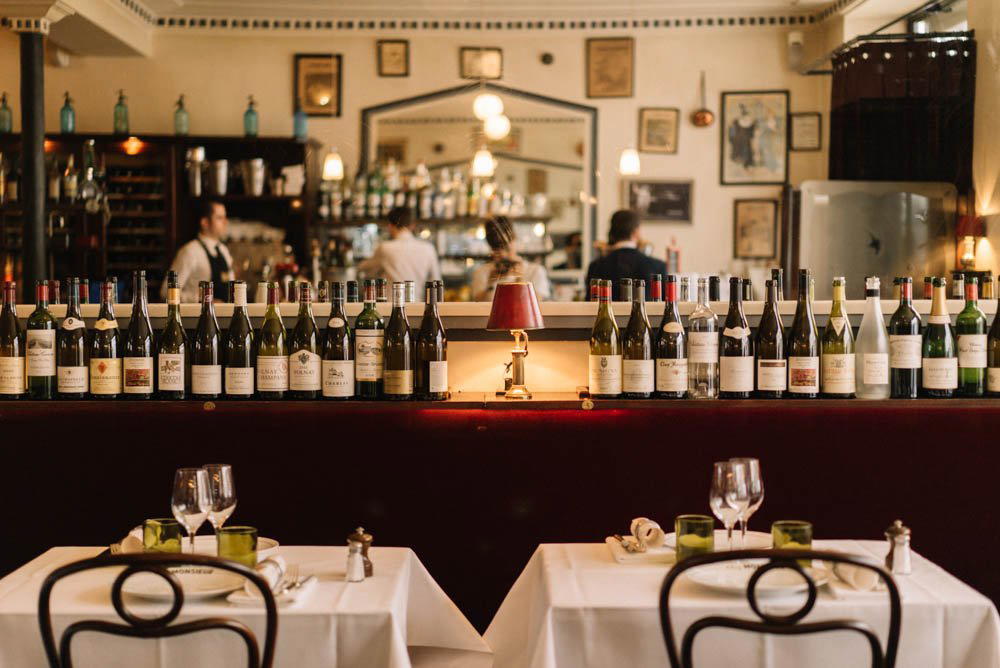
Hotels in Cazalla de la Sierra
Browse all →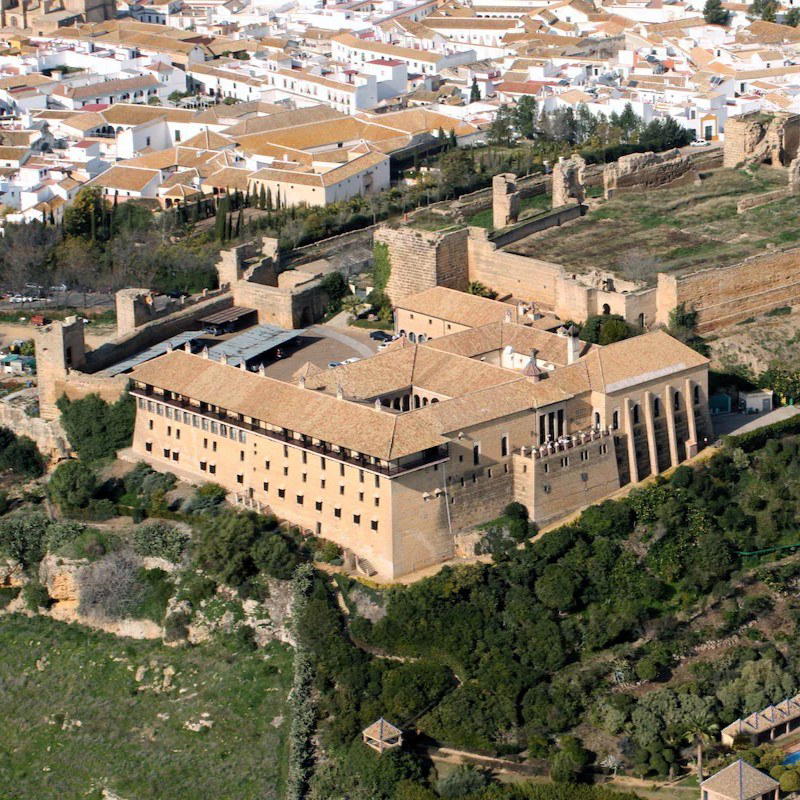
At a Glance
- Rustic
- Cozy
- Elegant
- Intimate
- Date Night
- Special Occasion
- Terrace
- Extensive Wine List
- Local Sourcing
- Street Scene
Current opening hours
- Monday
- 12:30–5 PM, 8 PM–12 AM
- Tuesday
- 12:30–5 PM, 8 PM–12 AM
- Wednesday
- 12:30–5 PM, 8 PM–12 AM
- Thursday
- 12:30–5 PM
- Friday
- 12:30–5 PM, 8 PM–12 AM
- Saturday
- 12:30–5 PM, 8 PM–12 AM
- Sunday
- 12:30–5 PM, 8 PM–12 AM
Hours can change for holidays and private events. Last verified .
Warm terracotta floors, chalk-white walls, and wood accents create a hushed, elegant atmosphere; terrace offers charming street views on temperate evenings.