El Molino
Our verdict
El Molino occupies a quiet address in Dallas's Snider Plaza neighbourhood, drawing a loyal local following that returns not for novelty but for consistency. The kind of place where regulars arrive knowing what they want before they sit down, it operates in a tier of Dallas dining defined more by repeat custom than by awards cycles or chef-driven press.

Pearl is the En Primeur Club membership app, where members save venues, book tables and use the concierge.
The menu
What to order
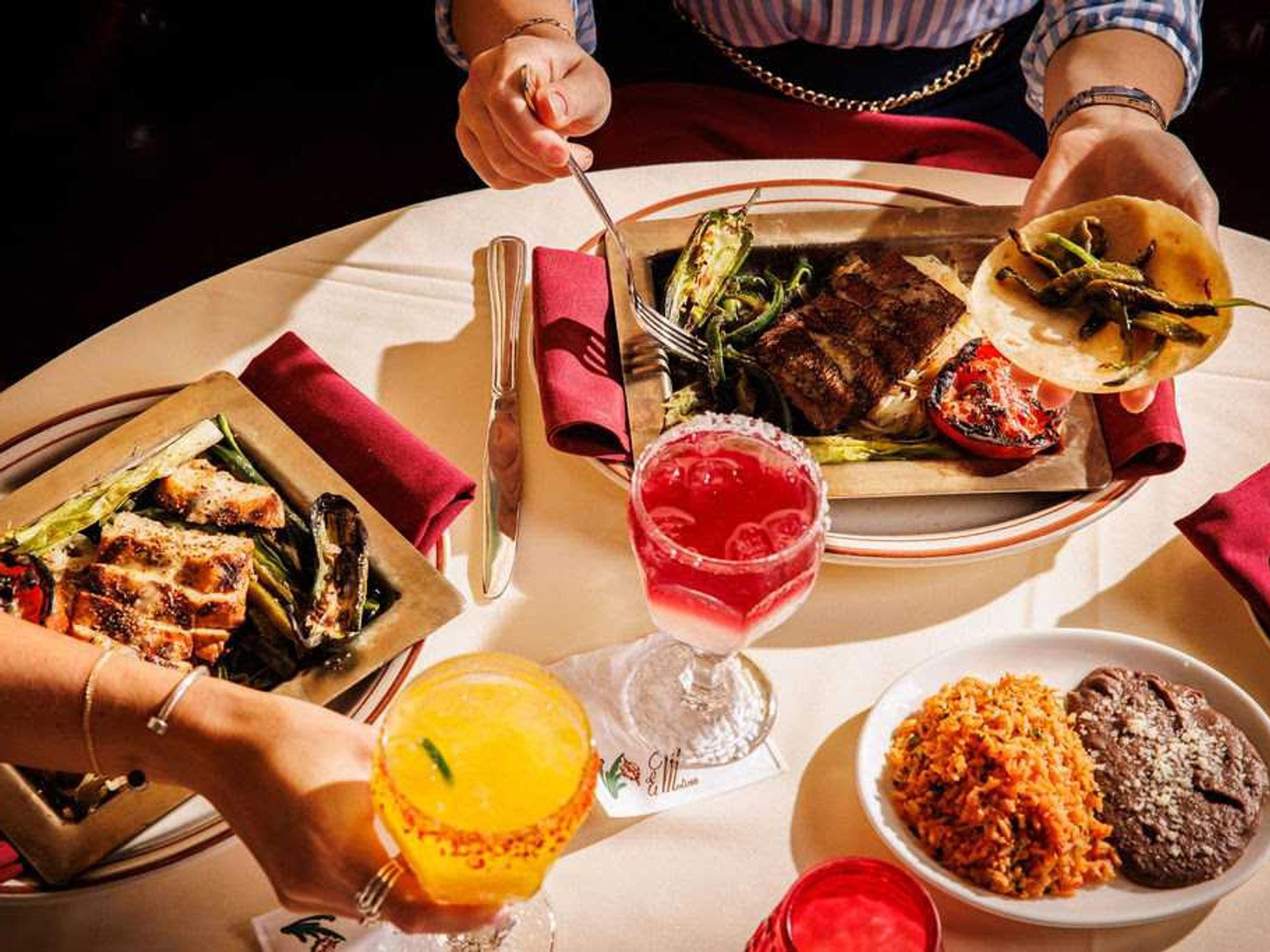
- Wood-fired Fajitas
- Smoked Chicken Verde
- Brisket Taco Plate
- Las Vegas Ribeye
- Branzino Diamanté
The Corner That Earns Repeat Business
Snider Plaza sits a few blocks north of Southern Methodist University in the Park Cities, one of Dallas's most settled residential pockets. The streets here are shaded and unhurried, and the dining along Snider Plaza tends to reflect that character: neighbourhood-scale places that earn their clientele through consistency rather than spectacle. El Molino at 6818 Snider Plaza operates within that framework, occupying a stretch that functions less like a dining district and more like an extension of the surrounding residential life. The approach on foot tells you something before you arrive at the door, this is a place shaped by the people who return to it, not by those passing through.
In a city where the restaurant conversation often centres on Uptown addresses, new chef announcements, and high-profile openings, the Park Cities retain a quieter dining culture. Spots here survive on a different logic: the family that books the same table on Friday evenings, the group that has been ordering the same items for years, the solo diner who is recognised when they walk in. That regulars-first dynamic is the frame through which El Molino is leading understood.
What Keeps the Regulars Coming Back
Across Dallas dining, the venues that build deep regular bases tend to share a few structural qualities. The menu offers enough consistency that loyal guests have their order settled before they sit down, while leaving room for enough variation to give those guests a reason to keep paying attention. The room is sized to recognise faces rather than process volume. The pacing is controlled by the kitchen's rhythm, not by turnover pressure. These patterns describe a specific tier of neighbourhood dining that operates largely outside the awards cycle, its reputation built neighbourhood-by-neighbourhood, year over year, rather than through a single Michelin visit or a press cycle.
El Molino fits that pattern. The Snider Plaza address has been part of the Park Cities fabric long enough to have accumulated the kind of institutional familiarity that newer openings take years to develop. For the regulars, the unwritten menu, the dish they always order, the timing they prefer, the staff who know their name, is as important as anything printed on the card. That accumulated knowledge, passed laterally between regulars rather than advertised outward, is the actual product at this tier of neighbourhood dining.
For comparison, the upper tier of Dallas dining includes places like Mamani and Tatsu Dallas, where destination appeal and higher price points draw a broader, less geographically rooted crowd. 12 Cuts Brazilian Steakhouse and 360 Brunch House operate on a different register again, anchored to specific formats that drive first-time traffic. El Molino sits in neither category, its audience is neither destination-driven nor format-curious, but locally rooted.
Snider Plaza in the Wider Dallas Context
Dallas dining is frequently mapped around its more visible corridors: Knox-Henderson for the chef-driven independents, Uptown for the expense-account circuit, Deep Ellum for the more experimental end of the market. Snider Plaza and the Park Cities rarely feature in those conversations, but the neighbourhood has maintained a consistent dining culture for decades. The clientele is largely residential, affluent, and attentive to quality without requiring the theatre that characterises dining in higher-visibility parts of the city.
That context matters for understanding what El Molino is and is not. It is not trying to compete with the destinations that draw diners from across the metro area. Its competitive set is local: the handful of places within a few minutes of the same households that have been eating here for years. Within that set, longevity and reliability are the key metrics, and El Molino has sustained both.
For visitors to Dallas who want to understand the city's full dining range, it is worth knowing that the Park Cities tier exists alongside the louder, more press-saturated parts of the city. The contrast says something real about how Dallas eats, not just at the level of 3Eleven Kitchen and Cocktails or the Southwestern ambition of Fearing's, but in the quieter corners where the regulars have already decided. Our full Dallas restaurants guide maps all of these tiers.
How El Molino Fits the Broader Neighbourhood-Dining Argument
The neighbourhood restaurant as a category has received serious critical attention in recent years. At the high end of American dining, places like Blue Hill at Stone Barns in Tarrytown and Single Thread Farm in Healdsburg have argued that place-rootedness is itself a fine-dining value. The French Laundry in Napa and Le Bernardin in New York City operate on a different scale entirely, with destination status that pulls international traffic. Alinea in Chicago, Lazy Bear in San Francisco, Providence in Los Angeles, Addison in San Diego, Atomix in New York City, The Inn at Little Washington, Emeril's in New Orleans, and 8 1/2 Otto e Mezzo Bombana in Hong Kong all sit at the destination end of the spectrum, places where the journey to the table is part of the proposition.
El Molino makes no argument at that scale. Its case is quieter and more local: a reliable presence in a neighbourhood that values exactly that quality. In a dining culture saturated with openings designed for immediate press coverage and social amplification, the venues that build genuine repeat custom over years occupy a distinct and arguably more durable position.
Know Before You Go
- Address: 6818 Snider Plaza, Dallas, TX 75205
- Neighbourhood: Snider Plaza, Park Cities, primarily residential, low foot-traffic from visitors
- Getting There: The Park Cities are most easily reached by car; street parking is generally available along Snider Plaza
- Phone / Website: Not publicly listed at time of writing, check current directories for contact details
- Booking: Booking details not confirmed; walk-in capacity and reservation policy should be verified directly with the venue
Frequently asked questions
What part of town is El Molino in?
El Molino is located at 6818 Snider Plaza, Dallas, TX 75205, Dallas.
Is El Molino in Dallas a good option for a casual dinner near SMU?
El Molino sits at 6818 Snider Plaza, roughly a few blocks north of Southern Methodist University, which puts it squarely in range for Park Cities residents and anyone based near campus. The Snider Plaza strip functions as a genuine neighbourhood commercial block rather than a dining destination corridor, so the crowd skews local and the pace is unhurried. It is a practical choice for a low-key dinner without the noise levels or reservation competition of Uptown.
What do regulars order at El Molino?
The venue data on file does not specify signature dishes, and inventing menu details would misrepresent what El Molino actually serves. Regulars at Snider Plaza neighbourhood spots like this typically anchor on a handful of consistent menu staples, the safest approach is to ask staff which dishes have been on the longest. That longevity on a menu is usually the tell.
How far ahead should I plan for El Molino?
Park Cities neighbourhood restaurants that draw a strong local repeat base can fill quickly on weekends, so contacting the venue directly before planning a Friday or Saturday visit is the practical move.
What is El Molino known for?
El Molino holds a position on Snider Plaza in the Park Cities, one of Dallas's more settled residential corridors north of SMU. In that context, its reputation rests on neighbourhood consistency rather than the chef-driven headlines that dominate Knox-Henderson or Uptown coverage. That positioning, reliable, local, repeat-worthy, is its own distinct category in the Dallas dining map.
Recognition, Side-by-Side
A quick snapshot of similar venues for side-by-side context.
| Venue | Cuisine | Price | Awards | Notes |
|---|---|---|---|---|
| El MolinoThis venue (the venue you are viewing) | Modern Mexican Fajitas | Not listed | Not listed | Not listed |
| Fearing's | Southwestern American Steakhouse | $100–150 | Michelin Plate · Wine Spectator Award of Excellence | Southwestern, American |
| Lucia | Contemporary Italian | $50–100 | Michelin Bib Gourmand · James Beard Award Semi Finalist | Italian |
| Tei-An | Japanese Soba House | $100–150 | Michelin Plate | Izakaya, Japanese |
| Tatsu Dallas | Traditional Edomae Omakase | $150–200 | 1 Michelin Star | Japanese |
| Cattleack Barbeque | Texas Barbecue | $20–30 | Michelin Bib Gourmand | Barbecue |