Our verdict
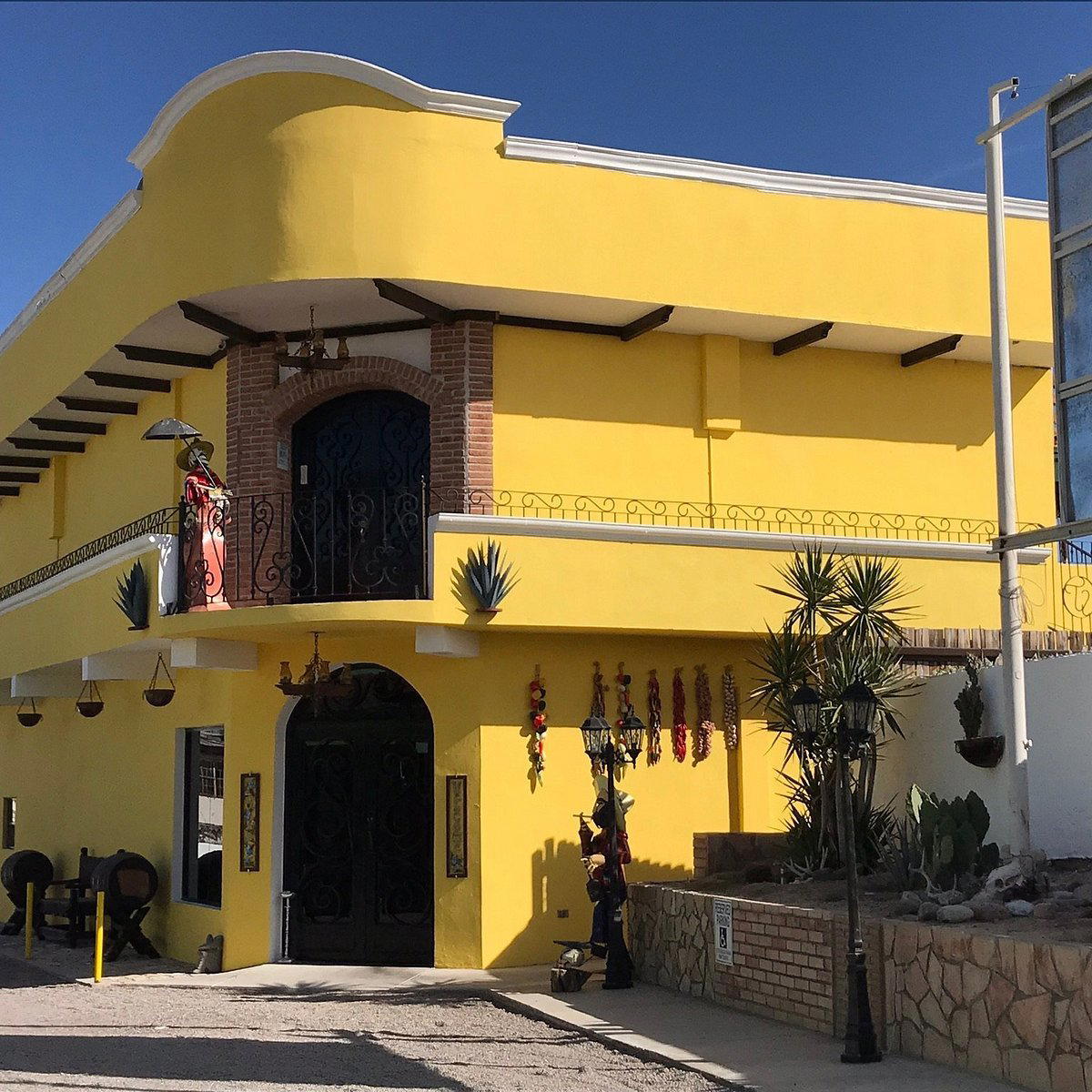
El Mexico de Ayer sits on Calle Sexta in Ojinaga, a border town in Chihuahua where the cooking tradition draws from the high desert larder of northern Mexico rather than the tourist-facing menus that dominate more visited cities. The kitchen works within a regional register that prioritizes local sourcing and old-school technique, making it a reference point for understanding what Chihuahuan home cooking actually tastes like away from the main circuits.

Pearl is the En Primeur Club membership app — saves, bookings, and concierge access live there. Same editors, same standards.
- Address
- C. Sexta #1711, Col. Central, 32882 Manuel Ojinaga, Chih., Mexico
- Phone
- +52 626 453 6040
- Hours
- Mon–Thu ClosedFri–Sun 12:30 PM–12 AM
- Directions
- Get directions
The menu
What to order
- Carne asada
- Fajitas
- Chicken mole
Where Northern Mexico's Pantry Comes Into Focus
Ojinaga sits at the edge of the Chihuahuan Desert, across the Rio Grande from Presidio, Texas, in a stretch of borderland that most Mexico-focused travelers never reach. The town is not on the route to colonial centers or beach resorts. What it has, in abundance, is proximity to one of Mexico's most distinctive regional food cultures: the high-desert cooking of Chihuahua, built around dried chiles, grass-fed beef, goat, pinole, and the kind of long-simmered preparations that predate any restaurant trend by several generations. In that context, a place like El Mexico de Ayer, on Calle Sexta in the Col. Central neighborhood, becomes less a dining room and more a document of where this food comes from.
The name translates loosely as "the Mexico of yesterday," which signals something about editorial intent before you even sit down. This is cooking framed around continuity rather than reinvention — a position that puts it in an entirely different conversation from the modernist Mexican kitchens at Pujol in Mexico City or Le Chique in Puerto Morelos, which use regional sourcing as a platform for technical transformation. Here the sourcing and the tradition are the point, not the raw material for something else.
The Chihuahuan Larder and Why It Matters
Northern Mexican cooking is consistently underrepresented in the conversations that dominate Mexican gastronomy internationally. The discussion tends to center on Oaxacan moles, Yucatecan recados, or the coastal seafood traditions that places like HA' in Playa del Carmen and Tuna Blanca in Punta de Mita translate for wider audiences. Chihuahua's contribution is different in character: it is a meat-forward, chile-driven, grain-rooted tradition shaped by the Mennonite communities that brought dairy culture to the state, the ranching economy that spread across the sierra and the desert basin, and the Indigenous culinary memory of the Rarámuri people.
The ingredients that define this regional pantry are not exotic in the way that coastal or tropical products often are. Dried red chiles — ancho, pasilla, and the Chihuahuan-specific colorado, form the base of most slow-cooked meat preparations. Queso menonita, the mild, semi-firm cheese produced in the Cuauhtémoc valley, appears in everything from quesadillas to soups. Machaca, dried and shredded beef that travels well in desert heat, represents one of the most practical and historically grounded preservation techniques in Mexican cooking. These are pantry items rooted in scarcity, climate, and geography rather than abundance, which gives the cuisine a directness that more lush regional traditions sometimes lack.
Kitchens in Ojinaga that work within this tradition source from the surrounding area almost by default: the supply chains that connect smaller border towns to national distributors are less developed than in Monterrey or Guadalajara, which means local product is often the most available product. This is different from the intentional farm-to-table positioning that characterizes places like Olivea in Ensenada or Animalón in Valle de Guadalupe, where sourcing is a stated philosophy with named producers. In Ojinaga, local sourcing is more often structural than rhetorical, the result of where the town sits rather than a branding decision.
How This Fits the Broader Mexican Restaurant Conversation
The current wave of celebrated Mexican restaurants, from Alcalde in Guadalajara to KOLI Cocina de Origen in Monterrey to Levadura de Olla in Oaxaca, shares a commitment to regional specificity, but nearly all of them operate within a metropolitan or gastronomic-tourism context that gives them access to press, awards infrastructure, and the kind of clientele that travels specifically to eat. A restaurant in Ojinaga operates outside that infrastructure almost entirely. There are no Michelin inspectors passing through, no Latin America's 50 Best consideration, no food-media coverage that would put it on the same shortlist as Arca in Tulum or Huniik in Merida.
That absence of external validation cuts both ways. It means the kitchen has no performance pressure oriented toward critics or tourists, which tends to produce food that is calibrated for the people who actually live there. It also means that the quality is harder to assess from a distance. What the name and location suggest is a regional restaurant working in the tradition of Chihuahuan home cooking, positioned for a local clientele in a town where that tradition is still the baseline rather than a revival.
For comparison, the premium Mexican restaurants that draw international visitors, Gaia at Maykana in Riviera Maya, Pangea in San Pedro Garza Garcia, Lunario in El Porvenir, operate in a different economic register entirely. Internationally benchmarked tasting menus in Mexico run from the $$$$ tier at Pujol down to $$$ at some regional fine-dining formats. The point is not that one tier is better than the other, but that they are serving entirely different functions within the broader Mexican restaurant ecosystem.
Planning a Visit
El Mexico de Ayer is at Calle Sexta #1711, Colonia Central, in Manuel Ojinaga, Chihuahua. Ojinaga is accessible by road from Chihuahua city, roughly 225 kilometers to the southwest, and sits directly across the border from Presidio, Texas, making it reachable for travelers coming from the American side via the Presidio-Ojinaga international crossing. For those incorporating it into a broader Chihuahua itinerary alongside the Copper Canyon or Ciudad Chihuahua, it represents a detour that few organized tours include, which is precisely what makes the food culture here worth documenting. No website or phone number is publicly listed for the restaurant, so visiting in person or asking locally is the practical approach. See our full Ojinaga restaurants guide for additional context on eating in the area.
Frequently asked questions
Is El Mexico de Ayer a family-friendly restaurant?
El Mexico de Ayer is in Colonia Central, Ojinaga, a working-class neighbourhood where dining out is a communal, cross-generational activity. Northern Chihuahuan restaurants at this address type typically seat families as a matter of course. Without confirmed seating or menu specifics, the safest approach is to call ahead or arrive early on a weekend, when local families tend to dine together.
What is the atmosphere like at El Mexico de Ayer?
The name translates roughly to 'The Mexico of Yesterday,' which signals the register: a room oriented toward regional memory rather than trend-chasing. Ojinaga itself is a small desert border city of around 25,000 people across the Rio Grande from Presidio, Texas, which keeps the dining culture local and unpretentious. Expect a pace and tone shaped by the community it serves rather than by tourist traffic.
What makes El Mexico de Ayer worth visiting from the Presidio, Texas side of the border?
Ojinaga is the designated crossing point opposite Presidio, Texas, making El Mexico de Ayer at Calle Sexta #1711 one of the most geographically accessible northern Chihuahuan kitchens for US-side visitors. The cooking tradition here draws on ingredients and techniques from the Chihuahuan Desert that rarely appear in Mexican restaurants north of the border or in Mexico's larger cities, where the conversation tends to default to Oaxacan or Mexico City-centric references. For anyone crossing at Presidio, this is a direct route into a regional cuisine that gets little international attention.
What do regulars order at El Mexico de Ayer?
The Chihuahuan pantry runs on dried chiles, beef raised on high-desert ranches, and corn preparations distinct from central and southern Mexico, so those ingredients form the backbone of what northern Mexican regulars return for. The practical move is to ask what the kitchen prepared that morning, a standard exchange in regional Mexican restaurants of this type.
What's El Mexico de Ayer's location?
El Mexico de Ayer is located at C. Sexta #1711, Col. Central, 32882 Manuel Ojinaga, Chih. Mexico, Ojinaga.
Do they take walk-ins at El Mexico de Ayer?
No reservation policy or booking platform is listed for El Mexico de Ayer, which is consistent with the walk-in model common to neighbourhood restaurants in smaller Chihuahuan cities like Ojinaga. Peak hours on weekends are the likeliest pressure point.
At-a-Glance Comparison
Comparable venues nearby, for context on price, style, and recognition.
| Venue | Cuisine | Price | Notes |
|---|---|---|---|
| El Mexico de AyerThis venue — the venue you are viewing | Traditional Mexican Grill | Not listed | Not listed |
| Tacun | Authentic Mexican & Yucatán Specialties | $10–20 | Hotel Zone |
| Las Guacamayas | Authentic Mexican Taqueria | $10–20 | San José del Cabo |
| Taqueria El Arbolito | Authentic Mexican Taqueria | $1–10 | Puerto Aventuras |
| Taqueria "El Moreno" | Authentic Mexican Taqueria | $1–10 | Zona Romántica |
| Antojitos La Chiapaneca | Traditional Mexican Taqueria | $1–10 | Tulum Pueblo |
Details
- Scenic
- Rustic
- Date Night
- Special Occasion
- Terrace
- Extensive Wine List
- Mountain
- Street Scene
- A La Carte
- Mezcal
- Tequila
Current opening hours
- Monday
- Closed
- Tuesday
- Closed
- Wednesday
- Closed
- Thursday
- Closed
- Friday
- 12:30 PM–12 AM
- Saturday
- 12:30 PM–12 AM
- Sunday
- 12:30 PM–12 AM
Hours can change for holidays and private events. Last verified .
Atmospheric terrace dining with beautiful night views, refined presentation, and a massive collection of over 600 tequilas and 300+ mezcals.