Taqueria El Arbolito
Our verdict
On the federal highway between Cancún and Tulum, Taqueria El Arbolito occupies the kind of position that roadside taco stands in Quintana Roo have held for generations: close to the source, unpretentious in format, and oriented toward the kind of cooking that depends more on where the ingredients come from than on who is standing behind the grill. For visitors staying in Puerto Aventuras, it offers a grounded alternative to the resort corridor's more curated dining options.

Pearl is the En Primeur Club membership app — saves, bookings, and concierge access live there. Same editors, same standards.
- Address
- Carretera Federal Cancún - Tulúm, 77733 Puerto Aventuras, Quintana Roo
- Directions
- Get directions
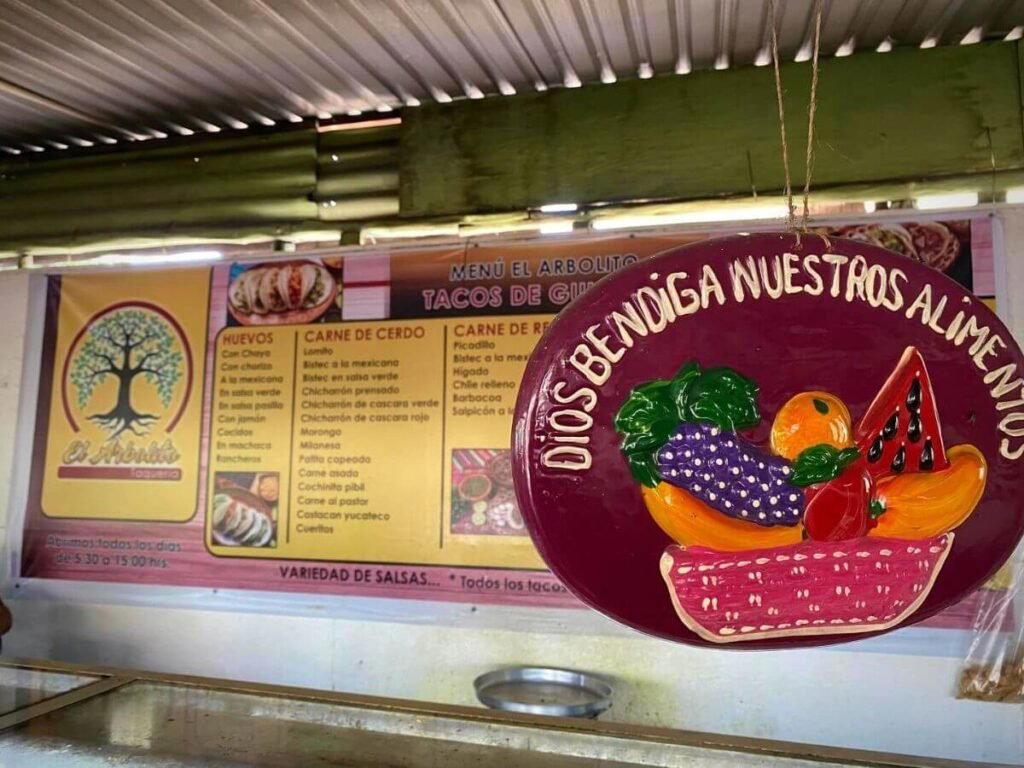
The Roadside Tradition That Runs Through the Yucatán
Along the Carretera Federal between Cancún and Tulum, taqueria culture follows a logic that fine-dining corridors rarely replicate. Proximity to supply chains matters here in ways that are immediately legible on the plate: fresh masa from local mills, proteins sourced from nearby ranches and coastal suppliers, and a cooking tempo tied to what arrived that morning rather than what a printed menu promises year-round. Taqueria El Arbolito, positioned on that federal highway at kilometer marker territory in Puerto Aventuras, Quintana Roo, sits squarely inside this tradition. The address places it on one of Mexico's most transited coastal roads, which means the clientele skews local and transit-oriented rather than tourist-destination-focused. That distinction, in Quintana Roo's dining culture, carries real significance.
The Yucatán Peninsula has developed one of Mexico's most distinct regional ingredient vocabularies: annatto-rubbed proteins, citrus marinades built on Seville orange rather than lime, slow-cooked preparations that trace back to pit-roasting traditions predating the highway itself. A taqueria operating in this geography does not need to reach far to connect its food to something meaningful. The sourcing story is embedded in the regional pantry.
What the Yucatán Peninsula Puts on the Table
Understanding what makes a taqueria on this corridor worth noting requires some context about what the Quintana Roo supply chain actually looks like. The peninsula's protein traditions lean toward pork preparations, particularly those involving achiote paste, slow heat, and acidic balancing agents. Cochinita pibil, the region's most exported dish internationally, is cooked underground in banana leaves in its traditional form, though roadside kitchens along this corridor interpret the method through open grills, vertical spits, and stove-leading braises depending on the operator. Alongside pork, the proximity to the Caribbean coast means that fish tacos in this region carry a different source profile than those found in Baja or Mexico City: the catch is shorter in travel time, and the treatment tends toward simpler preparations that defer to the ingredient rather than masking it.
This is the sourcing context that gives a taqueria on the Carretera Federal its editorial relevance. The further you get from the supply chain, the more preparation technique has to compensate. Here, it does not need to. For a sense of how this ingredient-forward tradition plays out at the higher end of Mexican cooking, Le Chique in Puerto Morelos provides a useful reference point: the same coastal ingredient geography, applied at a different price tier and with a more technical format. At the other end of the spectrum, a taqueria like El Arbolito works with the same raw material logic but without the tasting-menu architecture around it.
Puerto Aventuras as a Dining Context
Puerto Aventuras is a gated marina community roughly 88 kilometers south of Cancún, a development that grew around yacht access and resort infrastructure rather than an organic town center. Its dining scene reflects this origin: a concentration of hotel-adjacent restaurants, marina-view terraces, and a handful of local spots that serve the working population connected to the resort economy. The federal highway that runs past the community's edge is where the town's more functional food culture operates, away from the marina's pricing assumptions.
A taqueria on that highway corridor reads differently depending on who is sitting down. For day-trippers moving between Cancún and Tulum, it is a logical stop on a well-traveled route. For residents of the broader Quintana Roo corridor, it is a neighborhood fixture. For visitors based in the marina itself, it represents a short departure from the resort loop into something closer to how the surrounding region actually eats. Our full Puerto Aventuras restaurants guide maps the broader dining options across these different registers.
Mexico's more formally recognized dining addresses in this part of the country, including HA' in Playa del Carmen and Arca in Tulum, have drawn international attention by framing Yucatán ingredients through tasting-menu formats and design-led spaces. That critical attention has sharpened the conversation around what this region's food traditions actually contain. A taqueria on the federal highway does not participate in that conversation directly, but it draws from the same source material. The broader Mexican restaurant scene, from Pujol in Mexico City to Levadura de Olla Restaurante in Oaxaca, has spent years arguing for the legitimacy of regional Mexican cooking as a serious culinary category. That argument has made places like El Arbolito easier to read with the attention they deserve.
Planning a Visit
The address on the Carretera Federal Cancún-Tulúm places the taqueria directly on the main highway route, making it accessible whether you are arriving by rental car, colectivo, or taxi from the marina. No phone or website information is available in the public record, which is consistent with the walk-in, cash-oriented format that most highway taquerías in this region operate under. Arriving in the late morning or around midday aligns with the production cycle of most traditional preparations in this category, when slow-cooked proteins reach their peak and freshly made tortillas are turned most frequently. Specific hours have not been confirmed, so checking availability on arrival or through local inquiry is the practical approach.
For visitors building a broader itinerary across this coast, Carnitas Don Vasco in Cancún offers another reference point for the region's carnivore-forward taco tradition at the northern end of the corridor. Those interested in how ingredient-sourcing principles operate at more formally structured restaurants in Mexico might also look at Animalón in Valle de Guadalupe, Olivea Farm to Table in Ensenada, or KOLI Cocina de Origen in Monterrey, all of which build their programs around sourcing transparency in ways that illuminate why the ingredient geography of a place matters. Further afield, Alcalde in Guadalajara, Pangea in San Pedro Garza Garcia, Huniik in Merida, Lunario in El Porvenir, and Casa Barroca in Puebla each demonstrate how Mexico's regional ingredient traditions translate across different formats and price tiers. For contrast at the international level, Le Bernardin in New York City and Atomix in New York City show how sourcing-led arguments play out in a global fine-dining context, while California Prime - Rib Sucursal Los Angeles in Celaya illustrates a different point on the Mexican protein-focused dining spectrum.
Frequently asked questions
Is Taqueria El Arbolito child-friendly?
Roadside taquerías on the Carretera Federal Cancún–Tulum are generally informal, counter-style operations where families eat standing or at open-air tables — a format that travels well with children. The highway address in Puerto Aventuras, Quintana Roo, puts it within reach of the marina community's resident and tourist family base. No specific children's menu is documented for El Arbolito, but the casual format typical of this corridor is inherently low-pressure for families.
What kind of setting is Taqueria El Arbolito?
El Arbolito sits directly on the Carretera Federal Cancún–Tulum at the Puerto Aventuras interchange, placing it in the tradition of highway taquerías that serve passing traffic as much as local residents. Expect an open-air or semi-open roadside format rather than a sit-down restaurant environment. The surrounding context is the marina community of Puerto Aventuras, roughly 88 kilometres south of Cancún, where dining infrastructure runs from resort hotels to informal street-level stops like this one.
Is Taqueria El Arbolito a good food stop when driving between Cancún and Tulum?
El Arbolito sits directly on the Carretera Federal 307 in Puerto Aventuras, Quintana Roo, which is the primary overland route connecting Cancún to Tulum — a stretch that takes most drivers through without obvious reason to stop. Puerto Aventuras marks roughly the midpoint of that 130-kilometre corridor, making the taqueria a practical refuelling point. Roadside taquerías at this latitude on the 307 draw from the same Yucatán Peninsula supply lines that stock resort kitchens, giving the food on this highway more regional grounding than the tourist-facing menus inside the marina gates.
What do regulars order at Taqueria El Arbolito?
The Yucatán supply chain gives roadside spots on this corridor access to achiote-marinated proteins and locally grown chiles that distinguish regional tacos from central Mexican versions. Ordering based on what is visibly prepared on arrival is standard practice at counters of this type.
How do I find Taqueria El Arbolito?
Taqueria El Arbolito is located at Carretera Federal Cancún - Tulúm, 77733 Puerto Aventuras, Quintana Roo, Puerto Aventuras.
Can I walk in to Taqueria El Arbolito?
The highway address on the Carretera Federal Cancún–Tulum in Puerto Aventuras is designed for passing traffic, and walk-in access is the standard model for taquerías of this format — no reservation infrastructure is documented for El Arbolito. Arrival by car is practical given the highway location, though the Puerto Aventuras marina community is accessible on foot from the adjacent resort zone. No phone or booking platform is currently listed for the venue.
At-a-Glance Comparison
Comparable venues nearby, for context on price, style, and recognition.
| Venue | Cuisine | Price | Notes |
|---|---|---|---|
| Taqueria El ArbolitoThis venue — the venue you are viewing | Authentic Mexican Taqueria | $1–10 | Not listed |
| Tacos Guss | Authentic Mexican Taqueria | $10–20 | Cabo San Lucas |
| Taquería "La Hormiga | Authentic Mexican Taqueria | Not listed | Zona Romántica |
| Los Chupacabras | Authentic Mexican Street Tacos | $10–20 | Coyoacán |
| El Pastorcito | Traditional Mexican Taqueria | $10–20 | Merced Balbuena |
| Taqueria Gabriel | Traditional Mexican Taqueria | $10–20 | Cuauhtemoc |
Continue exploring
More in Puerto Aventuras
Restaurants in Puerto Aventuras
Browse all →
Bars in Puerto Aventuras
Browse all →





Details
- Rustic
- Casual Hangout
- Family
- Standalone
- A La Carte
- Vegetarian Friendly