Our verdict
El Libanés brings Lebanese dining to Calle Córdoba in Getafe, sitting within a local restaurant scene that spans grilled meats, modern Spanish cuisine, and international formats. As one of the few Middle Eastern addresses in a city dominated by Castilian and contemporary Spanish options, it occupies a distinct position in the neighbourhood eating pattern. Visitors looking for a change of register from the surrounding options will find it here.

Pearl is the En Primeur Club membership app — saves, bookings, and concierge access live there. Same editors, same standards.
- Address
- C. Córdoba, 6, 28903 Getafe, Madrid, Spain
- Phone
- +34 641 31 33 03
- Hours
- Mon–Tue 1–5 PM, 8 PM–12 AMWed ClosedThu–Sat 1–5 PM, 8 PM–12 AMSun 1–5 PM
- Website
- restauranteellibanesmd.com
- Directions
- Get directions
- Booking
- Book on CoverManager
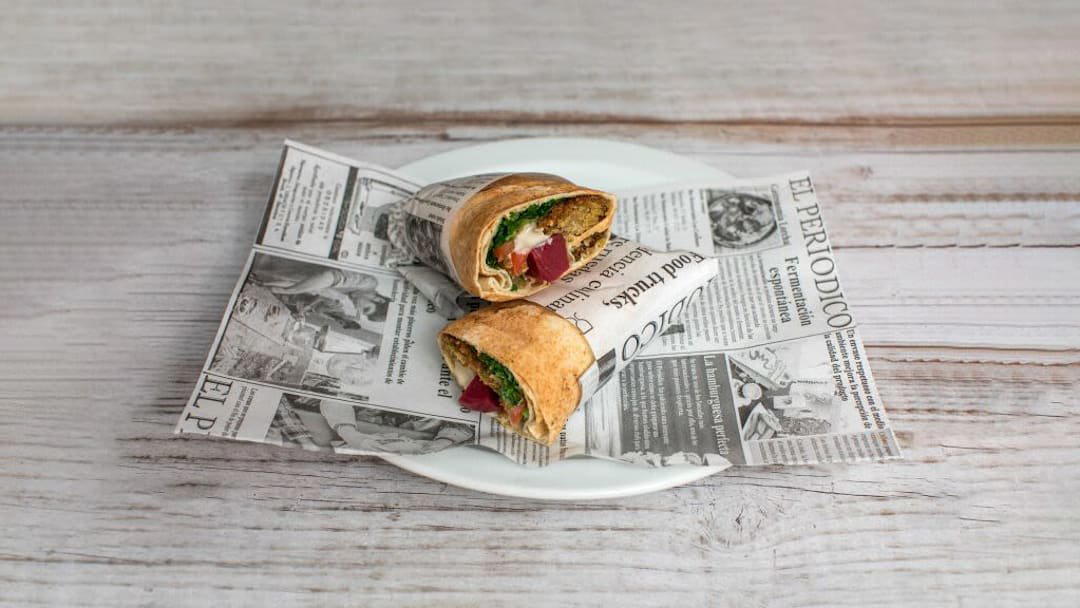
The menu
What to order
- Hummus
- Pita wrap de shawarma
- Pita wrap de pollo
- Empanadillas
- Kafta
A Different Rhythm on Calle Córdoba
Getafe's dining streets follow a familiar southern Madrid cadence: grills firing early, tables filling by 2pm, and a menu structure anchored in Castilian tradition. Calle Córdoba sits within that pattern, a residential address where the pace of eating is unhurried and the clientele is largely local. El Libanés arrives in that setting as a counterpoint, introducing a meal structure and table ritual that operates on different principles than the roast lamb and grilled cuts that define much of the surrounding offer.
Lebanese dining, at its core, is a format built on sharing and sequencing. The meal does not arrive in a single arc from starter to main; it spreads laterally across the table, with cold dishes, warm dishes, and bread arriving in overlapping waves. That approach to pacing sits at the heart of what Middle Eastern restaurants in southern European cities tend to offer, and it resets expectations for diners accustomed to a more linear Spanish service rhythm. At El Libanés, that ritual is the experience, not an accompaniment to it.
The Mezze Tradition as a Dining Framework
The shared-plate format of Lebanese cuisine has a long lineage and a clear internal logic. Cold mezze, including preparations built on chickpeas, aubergine, fresh herbs, and yoghurt, establish the table before anything hot arrives. Flatbread, always present, is both a utensil and a food in its own right. Warm dishes, whether grilled meats or slow-cooked preparations, follow at a pace set more by kitchen rhythm than by rigid coursing. That sequence gives the table a texture and density that single-plate formats do not, and it rewards groups who eat slowly and return to dishes throughout the meal.
In the Madrid metropolitan area, Lebanese restaurants occupy a specific niche. The capital itself has a handful of addresses running from casual to mid-range, concentrated largely in the Lavapiés, Chueca, and Tetuán districts, where international dining has deeper roots. Getafe, by contrast, sits further south, with a dining culture more oriented toward neighbourhood staples than international formats. That positioning gives El Libanés a practical relevance it might not carry in a more internationally saturated neighbourhood: it is, for much of its local catchment, the primary point of contact with this cuisine and its table customs.
Getafe's Dining Mix and Where El Libanés Sits
Getafe's restaurant offer has broadened in recent years, and the current mix spans a range of formats and price tiers. Asador Errazki represents the grilled meat tradition that runs deep in Madrid's southern suburbs. Casa de Pías operates in the modern cuisine register at the €€ tier, bringing a more composed, contemporary approach to the local offer. Celestial Burger and Restaurante El Tostadero. occupy more casual positions, while La Venganza De Malinche adds a Mexican accent to a scene that is otherwise largely European in its reference points.
El Libanés adds a Middle Eastern register to that mix, one that functions differently from both the grill-focused and modern Spanish options nearby. It is not a fine dining destination in the way that DiverXO in Madrid or El Celler de Can Roca in Girona operate at the top of Spain's restaurant hierarchy, nor does it belong to the regional produce-driven category occupied by Quique Dacosta in Dénia or Arzak in San Sebastián. That is a meaningful category in a suburb where the default dining option remains the menú del día.
How to Eat Here
The Lebanese meal rewards a specific approach. Groups of three or more can make the leading use of the shared format, ordering across cold and warm sections and allowing dishes to accumulate on the table before working through them. Bread should be treated as a first-order item, not an afterthought, as it underpins most of the cold preparations. Ordering too selectively, treating the menu as a single-dish-per-person exercise, reduces the format to something closer to a standard European meal and misses the point of the structure.
Getafe sits on the southern edge of the Madrid metropolitan area, accessible via the Cercanías C-4 line from Madrid Atocha, with a journey time of roughly 20 minutes. The Calle Córdoba address is within reasonable walking distance of Getafe Central station. For those driving from Madrid's south, the A-4 corridor provides direct access.
For broader context on eating in the city, the full Getafe restaurants guide maps the current offer across cuisines and price points.
Spain's Wider Restaurant Frame
Placing El Libanés against Spain's broader dining conversation requires some proportional thinking. The country's leading table tier, represented by addresses such as Azurmendi in Larrabetzu, Martin Berasategui in Lasarte-Oria, Aponiente in El Puerto de Santa María, Cocina Hermanos Torres in Barcelona, Ricard Camarena in València, and Mugaritz in Errenteria, operates in a different category entirely, shaped by research kitchens, tasting menus, and sustained critical infrastructure. Internationally, destinations like Le Bernardin in New York City and Lazy Bear in San Francisco define what the upper register of the dining-as-event format looks like outside Spain.
Neighbourhood restaurants like El Libanés operate outside that conversation, and that is precisely their value. They answer a different question: not what the most technically ambitious kitchen in a region can do, but what the daily eating life of a place looks like and how it absorbs influences from beyond its own culinary tradition. In a suburb whose default dining grammar is Spanish, a Lebanese address that runs a proper mezze format is doing something worth paying attention to.
Frequently asked questions
Where is El Libanés in Getafe?
El Libanés is located at C. Córdoba, 6, 28903 Getafe, Madrid, Spain, Getafe.
Is El Libanés in Getafe a good option for groups visiting from central Madrid?
El Libanés on Calle Córdoba, 6 in Getafe sits within the southern Madrid commuter belt, making it accessible from the city centre without the competition for tables that characterises Madrid's more prominent Lebanese addresses. The shared mezze format is particularly practical for groups, where ordering across cold and warm sections distributes the meal across the table without requiring a fixed tasting structure. Getafe's dining offer has widened in recent years, and El Libanés occupies a Lebanese niche that currently has little direct competition in the immediate area.
What's the signature dish at El Libanés?
That structural approach, rather than a single headline plate, defines how the kitchen is best experienced. Groups ordering across multiple sections get the clearest picture of what the kitchen does.
Should I book El Libanés in advance?
Córdoba, 6, Getafe. Given that southern Madrid dining rooms at this local tier tend to fill quickly around the 2pm service window, arriving early or making direct contact with the venue before a weekend visit is the practical approach.
What do critics highlight about El Libanés?
Its significance in Getafe's dining mix is contextual: the restaurant represents a Lebanese format in a neighbourhood where grills and Castilian-rooted menus dominate, which gives it a clear functional position rather than a critical profile.
Do they accommodate allergies at El Libanés?
No allergy or dietary accommodation policy is documented for El Libanés. Lebanese mezze menus inherently include dishes built on chickpeas, sesame, and dairy, so guests with relevant sensitivities should contact the restaurant at C. Córdoba, 6, Getafe before visiting to confirm what adjustments are possible.
Is eating at El Libanés worth the cost?
Within Getafe's broader restaurant mix, which spans grills like Asador Errazki at one end and more casual local formats at the other, a Lebanese mezze operation typically sits at a mid-range price point where the shared format spreads cost across a table naturally.
What It’s Closest To
Comparable venues nearby, for context on price, style, and recognition.
| Venue | Cuisine | Price | Awards | Notes |
|---|---|---|---|---|
| El LibanésThis venue — the venue you are viewing | Lebanese | $10–20 | Not listed | Not listed |
| Celestial Burger | Modern American Burgers | Not listed | Not listed | Getafe |
| La Venganza De Malinche | Authentic Mexican Taqueria | $20–30 | Not listed | Getafe centro |
| Restaurante Molcajete & Tejolote GETAFE | Authentic Mexican | $20–30 | Not listed | Getafe |
| Casa de Pías | Modern Spanish | Not listed | Michelin Plate · Macarfi 7.1 Food Rating | Centro |
| Restaurante El Tostadero. | Spanish Gastrobar | Not listed | Not listed | La Cibelina |
Continue exploring
More in Getafe
Restaurants in Getafe
Browse all →
Bars in Getafe
Browse all →
Hotels in Getafe
Browse all →

Details
- Cozy
- Casual Hangout
- Family
- A La Carte
- Vegetarian Friendly
- Gluten Free Options
Current opening hours
- Monday
- 1–5 PM, 8 PM–12 AM
- Tuesday
- 1–5 PM, 8 PM–12 AM
- Wednesday
- Closed
- Thursday
- 1–5 PM, 8 PM–12 AM
- Friday
- 1–5 PM, 8 PM–12 AM
- Saturday
- 1–5 PM, 8 PM–12 AM
- Sunday
- 1–5 PM
Hours can change for holidays and private events. Last verified .
Cozy atmosphere with tables inside and outside, friendly service and welcoming vibe.