Restaurant & Cafe Passhöhe
Our verdict
Perched at the Hohentauern pass in the Styrian highlands, Restaurant & Cafe Passhöhe occupies one of the most geographically distinctive dining positions in Austria's mountain interior. The address itself tells the story: a high-altitude stop where the surrounding terrain sets the terms for what ends up on the plate. For travellers crossing between Judenburg and the Enns valley, it anchors the pass as a place worth stopping for.

Pearl is the En Primeur Club membership app, where members save venues, book tables and use the concierge.
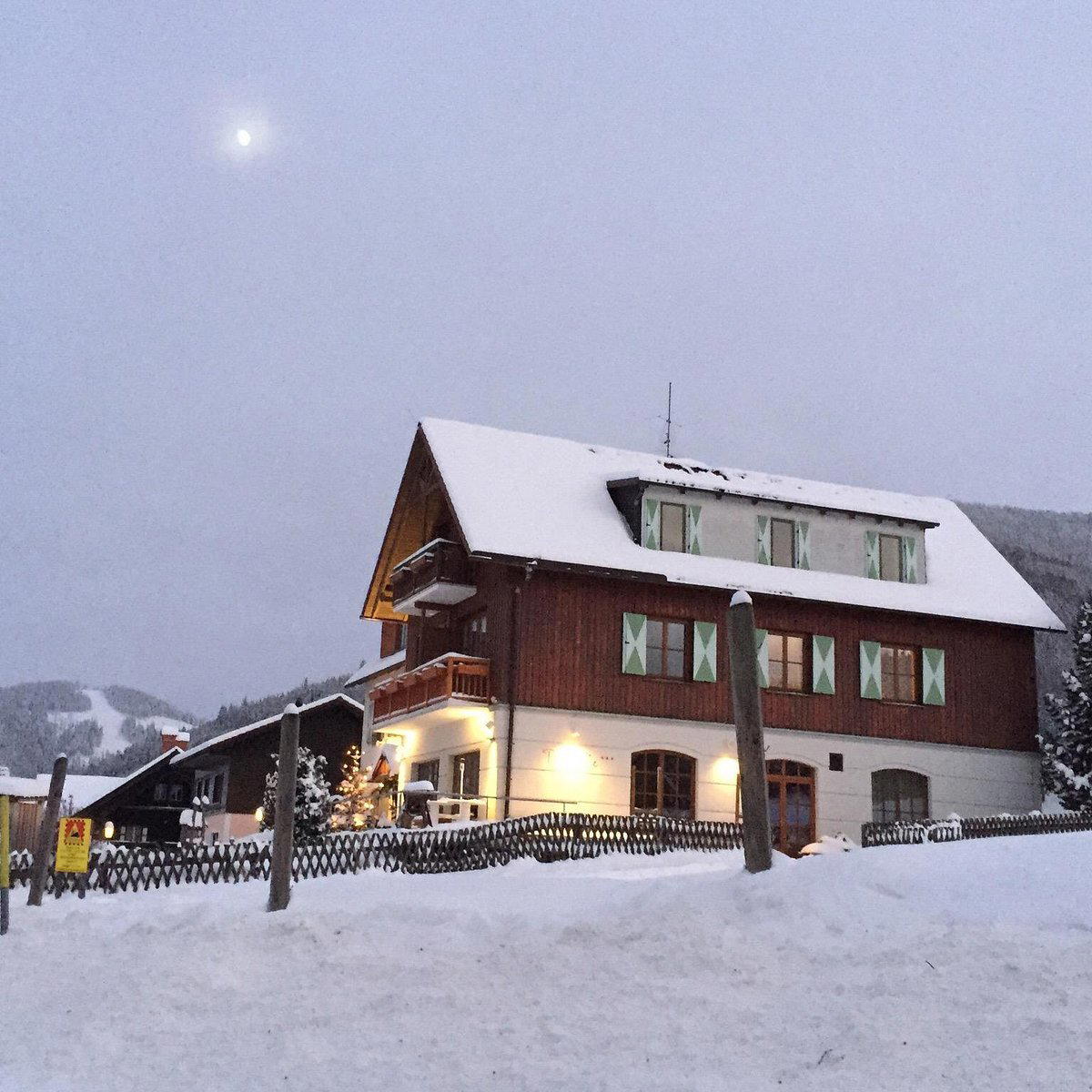
Where the Road and the Larder Meet
High-altitude pass restaurants in the Alpine interior operate under a logic that urban dining rooms rarely face: the terrain defines the menu before the kitchen does. At the Hohentauern pass in Styria, the surrounding range of sub-alpine meadows, conifer forest, and seasonal grazing land shapes what local kitchens can credibly source, and what they can credibly cook. Restaurant & Cafe Passhöhe sits at that junction, positioned not as a destination restaurant in the tasting-menu sense, but as the kind of place that earns its authority from geographic specificity rather than from awards infrastructure.
The pass itself sits in Styria's mountain interior, a region that has historically supplied some of Austria's most characterful produce: Murau-area beef, wild game from the surrounding forests, and the dairy culture that persists across the upper Mur valley. Restaurants at this altitude, across the Austrian Alps more broadly, tend to fall into two categories: those that lean into regional sourcing because geography demands it, and those that default to a generic alpine-tourist formula. The distinction matters. The former produces cooking that reads as a direct expression of place; the latter produces cooking that could exist anywhere between Innsbruck and Klagenfurt.
The Ingredient Logic of the Styrian Highlands
Styria punches significantly above its weight as a food-producing region relative to its international profile. While the Styrian south is recognised for pumpkin seed oil and white wine, the highland interior works with a different set of ingredients: venison, wild boar, mountain trout, and the root vegetables and preserved preparations that define alpine winter cooking. For a pass restaurant at Hohentauern's elevation, this is the natural sourcing radius. Proximity to game forests makes autumn a particularly coherent season, when the kitchen's options align most closely with what the surrounding terrain is producing.
This sourcing logic connects Passhöhe to a broader tradition in Austrian mountain dining, one that distinguishes the leading regional operators from the generic alpine offering. Properties like Döllerer in Golling an der Salzach have built international recognition precisely by treating regional Alpine ingredients as the premise rather than the garnish. Kräuterreich by Vitus Winkler in Sankt Veit im Pongau works a similar angle through the lens of mountain herbs and foraged material. Passhöhe operates in a different price bracket and with a different format, but the underlying geographic argument, that the highlands produce ingredients worth eating on their own terms, runs through all of them.
Austria's ambitious regional dining scene has repeatedly demonstrated that distance from Vienna does not mean distance from quality. Obauer in Werfen and Landhaus Bacher in Mautern an der Donau are among the places that have made the case for serious regional cooking outside the capital, a case that Steirereck im Stadtpark in Vienna consistently reinforces from the other direction by centring Austrian produce at the highest end of the market.
The Pass as Setting
Approaching Hohentauern from either the Trieben side or the Judenburg valley, the road rises through farmland before the tree line closes in and the pass itself comes into view. Pass restaurants in the Alps have a particular atmosphere that indoor-only dining rooms cannot replicate: the sense of arrival after ascent, the shift in air temperature, the way the horizon opens or closes depending on weather. These are environmental conditions that frame a meal before a single dish arrives.
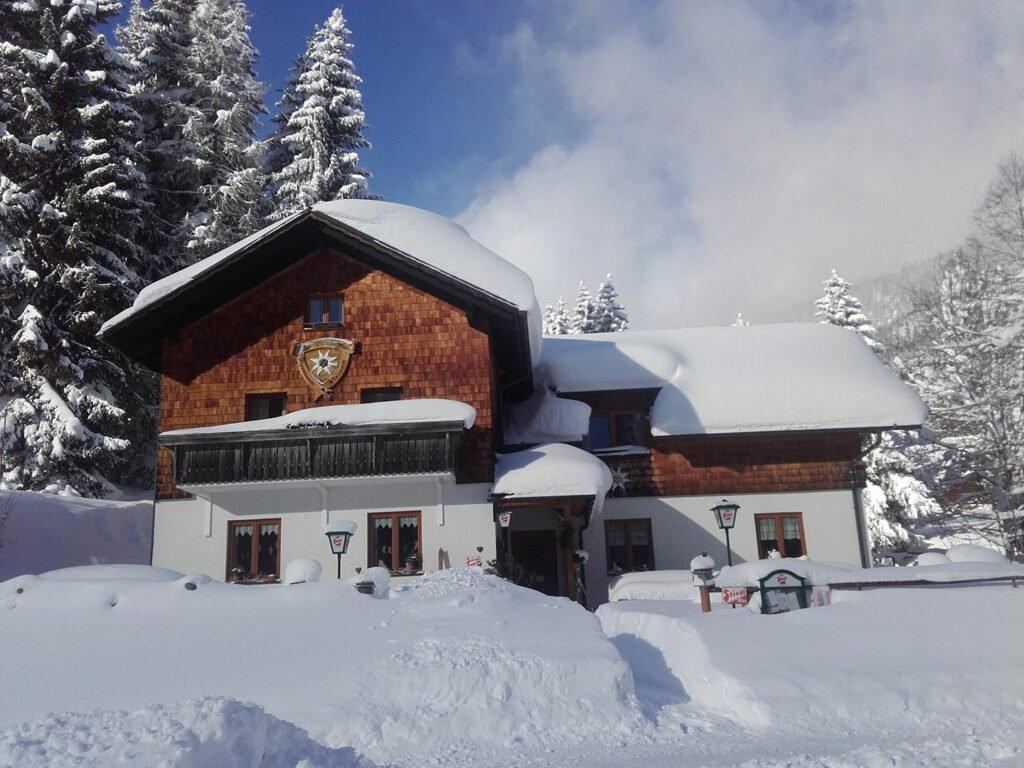
At an elevation that experiences genuine seasonal shifts, the character of a stop at Passhöhe changes significantly between summer, when the surrounding meadows are at full height, and winter, when the pass becomes a threshold between snow conditions on either side. For travellers using the pass as a route rather than a destination, the cafe and restaurant format serves a practical function. For those who plan a stop deliberately, the geographic position becomes part of the experience itself.
This kind of altitude dining occupies a different register from the high-concept mountain restaurants found at major ski resorts. Places like Griggeler Stuba in Lech or Stüva in Ischgl operate within the infrastructure of destination ski villages, with the pricing and format expectations that come with that context. A pass restaurant in the Styrian interior works with a different set of assumptions: the clientele is more varied, the format more flexible, and the relationship to place more incidental but arguably more authentic.
Hohentauern in the Wider Austrian Dining Picture
Hohentauern is not a name that appears frequently in Austrian dining coverage, which places Passhöhe in an interesting position relative to the country's broader restaurant geography. The route through the pass connects the industrial valley towns of Upper Styria with the more tourist-oriented corridors to the north, making it a genuine transit point rather than a constructed destination. That transit identity gives the restaurant a different kind of relevance: it serves locals, through-travellers, and the occasional visitor making a deliberate detour.
For context on what regional Austrian dining can achieve, the EP Club's coverage of comparable scenes is worth consulting: Ikarus in Salzburg, Gourmetrestaurant Tannenhof in Sankt Anton am Arlberg, and Schwarzer Adler in Hall in Tirol each represent different points on the regional fine-dining spectrum. At the other end of the formality scale, Ois in Neufelden and Artis in Graz show how Austrian regional kitchens are working across multiple formats and price points. Restaurant 141 by Joachim Jaud in Mieming and Taubenkobel in Schützen am Gebirge round out a picture of a national dining scene with genuine geographic range. For international comparison points at the highest end of the format spectrum, Le Bernardin in New York City and Atomix in New York City illustrate how ingredient-sourcing philosophy plays out in entirely different cultural and urban contexts.
For visitors specifically exploring what the Hohentauern area offers beyond the pass itself, the Edelrautehütte provides a second reference point in the same municipality. Our full Hohentauern restaurants guide maps both options against the wider context of dining in this part of Styria.
Planning a Stop
The address listed for Passhöhe points to GPS navigation as the primary wayfinding tool, which is accurate for a pass location where street address conventions work differently than in town centres. The route up to Hohentauern from either direction is manageable in a standard vehicle outside of winter conditions, though the pass road warrants attention in snow season. Given the cafe-and-restaurant format, the venue likely accommodates walk-in visitors during operating hours, though confirming current hours before a dedicated trip is advisable for anyone travelling specifically to dine rather than passing through.
Frequently asked questions
Does Restaurant & Cafe Passhöhe work for a family meal?
A pass-road cafe in Hohentauern typically draws a cross-section of travellers, cyclists, motorists, and hikers, which tends to produce an inclusive, informal atmosphere suited to mixed groups. The format of alpine road stops in this part of Styria generally accommodates varying appetites and schedules rather than enforcing a fixed dining ritual. Without a listed price tier, specific pricing can change, but pass cafes in the Styrian highlands typically offer accessible midday eating rather than formal set menus. Check the venue's official channels for the latest details.
What is the atmosphere like at Restaurant & Cafe Passhöhe?
Passhöhe sits on the Hohentauern pass, and the setting does the atmospheric work that interior design cannot replicate in a lowland room, the altitude, the exposed ridge, and the transit character of the location all shape the feel. Alpine pass restaurants in this region carry a functional honesty: they exist because the road demands a stop, not because a hospitality group selected the postcode. Expect a room oriented toward the practical comfort of people arriving cold or wet from either the Trieben or Judenburg approaches.
Is Restaurant & Cafe Passhöhe open year-round, and does the pass road affect access in winter?
The Hohentauern pass road is subject to seasonal and weather-dependent closures typical of high Alpine routes in Styria, which directly affects access to any venue at the summit. The listing for Passhöhe uses GPS navigation as the primary wayfinding method, standard for a pass address without a conventional street number, so checking current road conditions before travelling from Trieben or Judenburg is advisable in winter months.
What's the must-try dish at Restaurant & Cafe Passhöhe?
What can be stated is that Styrian highland restaurants at this elevation draw on a regional larder with genuine depth, pumpkin seed oil, cured meats, and dairy from local farms are fixtures of the broader Styrian table. Ordering along those regional lines at a pass stop in Hohentauern is a reasonable orientation.
At-a-Glance Comparison
Comparable venues nearby, for context on price, style, and recognition.
| Venue | Cuisine | Price | Notes |
|---|---|---|---|
| Restaurant & Cafe PasshöheThis venue (the venue you are viewing) | Authentic Austrian | $20–30 | Not listed |
| Edelrautehütte | Traditional Austrian Mountain Hut Cuisine | $20–30 | Hohentauern |
| Jedermann's | Austrian | $20–30 | Innsbruck city center |
| Grabneralm | Traditional Austrian Alpine Cuisine | $20–30 | Admont |
| Stoxi's Mostschänke | Traditional Austrian | $10–20 | Fohnsdorf |
| Gasthof zur Kanne | Traditional Austrian Gast Haus | $20–30 | Markt Sankt Florian |

Continue exploring
More in Hohentauern
Restaurants in Hohentauern
All restaurants in Hohentauern →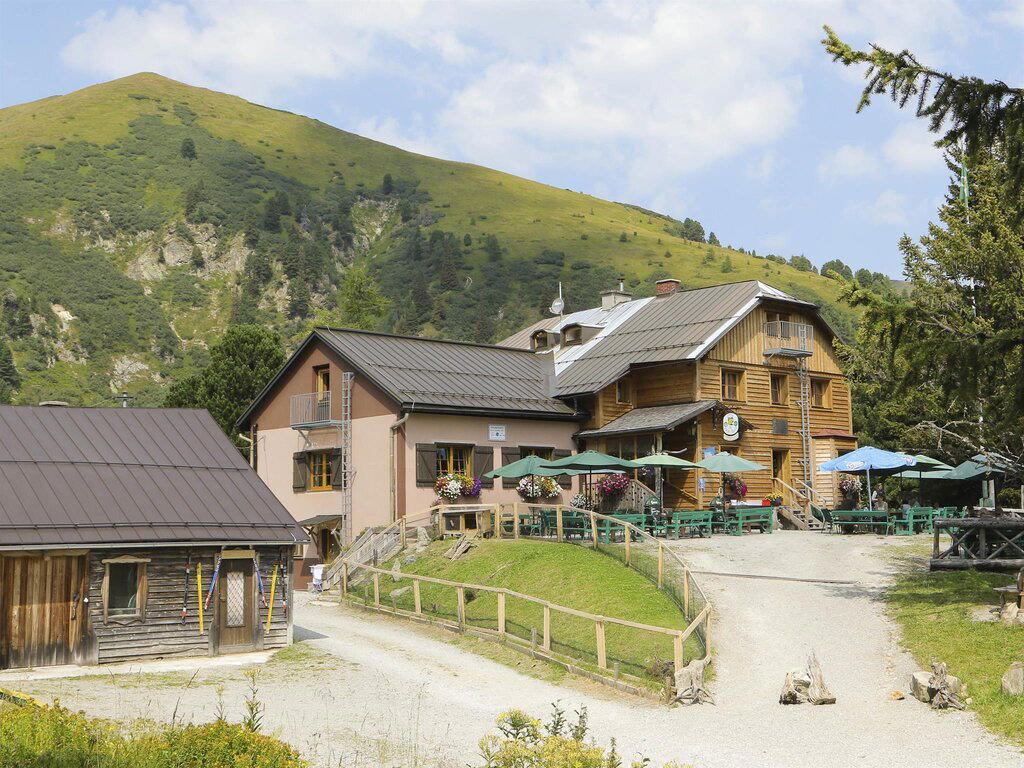
Hotels in Hohentauern
Browse all →
Details
- Cozy
- Scenic
- Rustic
- Family
- Casual Hangout
- Hotel Restaurant
- Panoramic View
- Local Sourcing
- Mountain
- A La Carte
Current opening hours
- Monday
- Closed
- Tuesday
- 10 AM–9 PM
- Wednesday
- 10 AM–9 PM
- Thursday
- 10 AM–9 PM
- Friday
- 10 AM–9 PM
- Saturday
- Closed
- Sunday
- Closed
Hours can change for holidays and private events. Hours as of .
Relaxed and memorable atmosphere enhanced by dramatic alpine scenery.