Our verdict
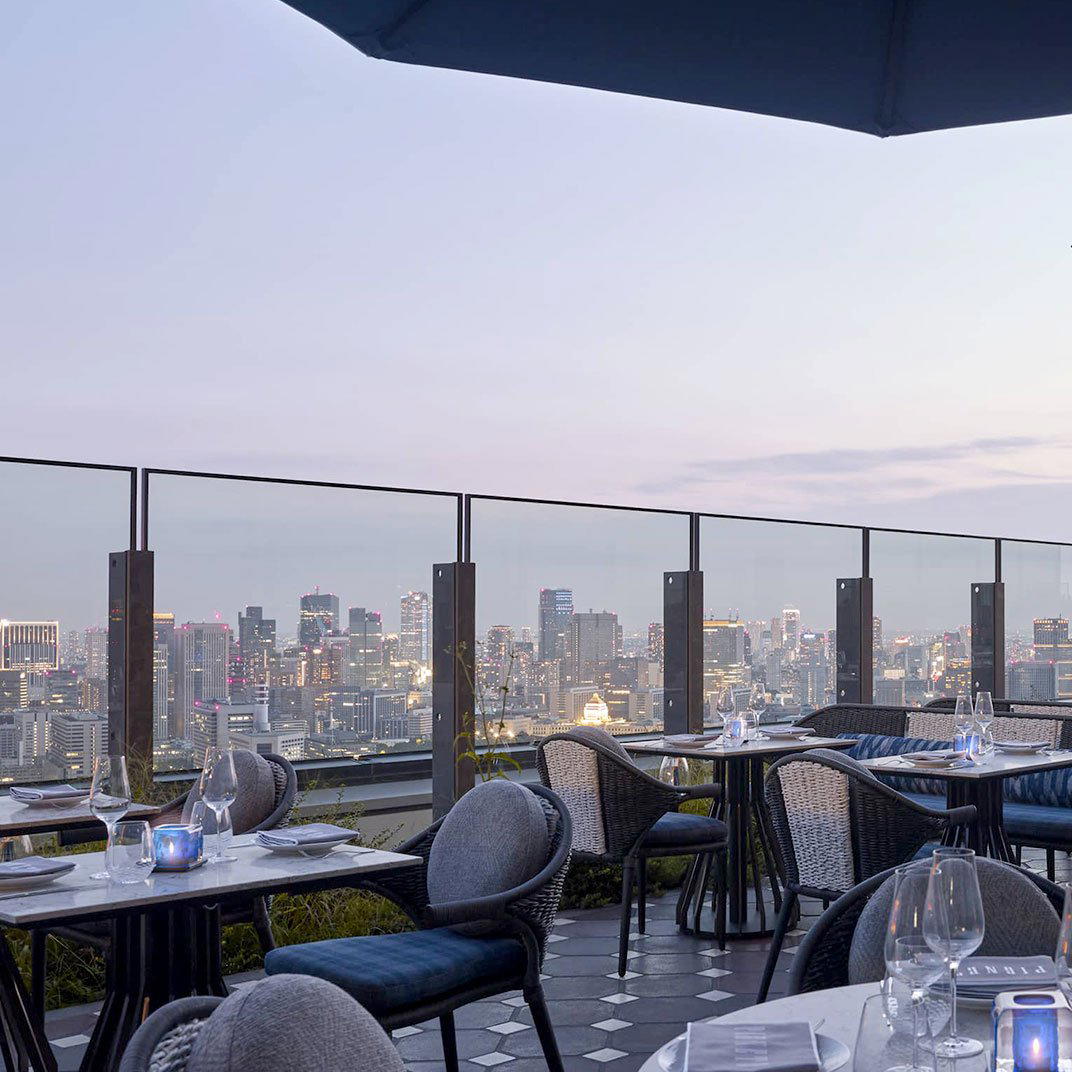
On the 36th floor of Marunouchi Building, 瑞穂楼 occupies one of central Tokyo's more considered dining positions, with Chiyoda's financial district spread below. The setting frames a style of Japanese hospitality that connects high-altitude city dining with questions of sourcing, seasonality, and what premium dining in Tokyo owes to the land beneath it.

Pearl is the En Primeur Club membership app, where members save venues, book tables and use the concierge.
High Floors, Grounded Principles: Tokyo's Vertical Dining and What It Means for the Plate
Tokyo has spent two decades stacking its most ambitious restaurants into the upper floors of its commercial towers. The logic is partly real estate, partly theatre: panoramic views justify premium pricing, and the drama of arrival, a dedicated lift bank, a corridor of brushed metal, the sudden reveal of city grid far below, functions as an appetiser before any food arrives. What has changed, more recently, is the conversation happening inside those rooms about where the ingredients on the plate actually come from.
瑞穂楼 sits on the 36th floor of Marunouchi Building in Chiyoda City, one of the most logistically central addresses in Japan. The Imperial Palace grounds lie directly to the west; Tokyo Station sits a short walk east. The building is a hub for finance and commerce, which means the dining rooms above it have historically served a clientele more concerned with entertainment budgets than provenance. That context makes any serious engagement with sourcing, seasonality, or waste reduction a more pointed editorial choice than it would be in, say, a neighbourhood restaurant in Yanaka or Shimokitazawa.
The Sustainability Question at Altitude
Across Tokyo's fine dining tier, the bracket that includes RyuGin in Roppongi Hills and L'Effervescence in Nishi-Azabu, the past several years have seen a structural shift in how kitchens talk about their supply chains. Where once a menu might note a fish came from Tsukiji, now the conversation reaches further: which prefecture, which fishing method, which farm, and in some cases which individual producer. This granularity is not purely marketing. It reflects a genuine renegotiation of what a luxury restaurant owes its ingredients and, by extension, the systems that produce them.
Tower restaurants face a specific version of this pressure. Their central-city locations place them at maximum distance from the rural and coastal producers who supply premium Japanese kitchens. The logistics of moving aged soy from Kagawa, or line-caught fish from Nagasaki, into a 36th-floor prep kitchen in Marunouchi require deliberate relationships and planning. Restaurants at this address either engage with that complexity or they do not, and the gap between those that do and those that rely on standard-grade commercial supply is legible on the plate.
The kaiseki tradition, as practised at venues like Gion Sasaki in Kyoto, has always built seasonal structure into its logic: the calendar dictates the menu, and the menu dictates the sourcing. Contemporary Japanese fine dining in Tokyo, the tier that includes French-inflected houses like Sézanne and Crony alongside traditional formats, is applying the same seasonal discipline to questions of waste and whole-ingredient use. Bones become dashi. Vegetable trim enters ferments. The logic is both ecological and culinary: reducing waste forces creativity, and creativity at this level is what separates a premium kitchen from a capable one.
The Marunouchi Setting and What It Demands
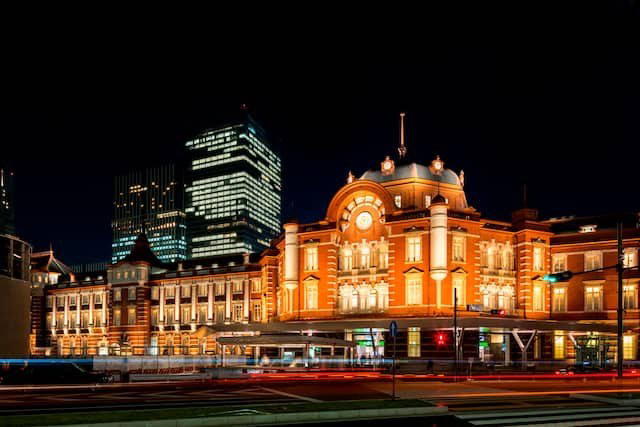
Approaching the upper floors of Marunouchi Building from Tokyo Station's Marunouchi exit, the transition from street-level commuter traffic to high-floor dining is abrupt and total. The building's architecture belongs to the 2002 redevelopment wave that reshaped central Tokyo's commercial core, a project that brought European retail and high-end dining into a district that had previously been defined by corporate monofunctionality. The 36th floor sits at the top of that development, and the city visible through its windows is a consequence of the same economic forces that made the building possible.
That kind of dining address, high, central, commercially embedded, tends to attract a specific clientele: corporate entertainment, occasion dining for domestic and visiting professionals, international travellers staying in adjacent hotels. It is a different room from the counter-format specialists. Harutaka in Ginza operates from a sushi counter where the interaction between chef and guest is the entire format. At altitude in Marunouchi, the room itself carries weight, and the kitchen must work against the risk of the view becoming the point.
Situating 瑞穂楼 in Tokyo's Premium Tier
Tokyo's premium dining map has several distinct nodes. Ginza concentrates the city's sushi counters at the upper price tier. Roppongi hosts high-profile tasting menu formats, including the kaiseki-led rooms. Marunouchi and the surrounding Chiyoda district represent the corporate entertainment segment, where room quality and service consistency matter as much as culinary ambition. Within that segment, there is meaningful range: from large-format hotel dining to smaller, more considered rooms that use their tower addresses as context rather than identity.
The same structural question plays out across Japan's second cities. HAJIME in Osaka operates from a position of pronounced ecological commitment at the top of Kansai's fine dining tier. akordu in Nara brings Spanish-inflected technique to a heritage city context. Goh in Fukuoka works within Kyushu's ingredient abundance. In each case, the restaurant's relationship to its source landscape shapes the dining experience as directly as any single technique or format choice. The question for a Marunouchi room is whether the same depth of sourcing intention is achievable from a position of maximum urban remove.
Further afield, venues like affetto akita in Akita and Ajidocoro in Yubari District demonstrate that proximity to the source is itself a form of culinary credibility. The contrast with central Tokyo tower dining is direct. International comparisons are instructive too: Lazy Bear in San Francisco and Le Bernardin in New York City both operate in dense urban cores while maintaining explicit commitments to sourcing integrity, which suggests the logistics challenge is solvable, but requires active investment rather than passive assumption.
For the full range of Tokyo dining at this tier, the EP Club Tokyo restaurants guide maps the city's premium rooms by neighbourhood, format, and price position.
Know Before You Go
Address: 36F, Marunouchi Building, 2-4-1 Marunouchi, Chiyoda City, Tokyo 100-6336
Access: Direct connection to Tokyo Station Marunouchi exit; the building is accessible within a short walk of the station concourse.
Booking: Contact details not confirmed at time of publication; check current reservation channels directly.
Dress code: Not stated; tower dining at this address typically expects smart attire.
Hours: Not confirmed; verify before visiting.
Frequently Asked Questions
Frequently asked questions
Is 瑞穂楼 good for families?
At 36 floors above central Tokyo in Marunouchi Building, 瑞穂楼 occupies the kind of address that skews toward formal dining rather than casual family meals. Tokyo's upper-floor restaurant tier in this district is structured around controlled, often quiet service formats that don't suit young children well. Families with older teenagers who are comfortable in a refined setting may find it workable, but it is not the format the address is built for.
What's the address for 招福楼?
招福楼 is located at Japan, 〒100-6336 Tokyo, Chiyoda City, Marunouchi, 2 Chome−4−1 Marunouchi Building, 36F, Tokyo.
What's the best way to book 招福楼?
Reservations are recommended for 招福楼 in Tokyo. Confirm current policy via the venue's official channels.
How would you describe the vibe at 瑞穂楼?
The defining characteristic is geography: the 36th floor of Marunouchi Building places you directly above Tokyo Station and the city's financial core, with sightlines that shift the room's atmosphere entirely. Marunouchi draws a business and professional crowd, so the tone in this district's upper-floor rooms tends toward composed and purposeful rather than convivial. Expect the room to work in sync with that setting.
In Context: Similar Options
| Venue | Cuisine | Price | Awards | Notes |
|---|---|---|---|---|
| æç¦æ¥¼This venue (the venue you are viewing) | null, | Not listed | Not listed | Not listed |
| Harutaka | Edo-Style Omakase Sushi | $200–300 | 3 Michelin Stars · World's 50 Best #76 | Sushi |
| L'Effervescence | Modern French with Japanese Influences | $200–300 | 3 Michelin Stars · World's 50 Best #69 | French |
| RyuGin | Modern Kaiseki | $500+ | 3 Michelin Stars · World's 50 Best #41 | Kaiseki, Japanese |
| Crony | Modern French with Japanese Influences | $150–200 | 2 Michelin Stars · World's 50 Best #34 | Innovative, French |
| Den | Modern Japanese Kaiseki | $150–200 | 2 Michelin Stars · World's 50 Best #51 | Innovative, Japanese |
Continue exploring