Dumpling Kingdom
Our verdict
On Harvard Avenue in Allston, Dumpling Kingdom operates within one of Greater Boston's most concentrated corridors of Chinese and pan-Asian casual dining. The format follows a familiar regional template: shared plates, folded dough in multiple preparations, and a pace determined by the table rather than the kitchen. It sits alongside neighbors like Bloome Fruit Tea and Soul Fire in a stretch that rewards repeat visits over single-occasion dining.

Pearl is the En Primeur Club membership app — saves, bookings, and concierge access live there. Same editors, same standards.
- Address
- 137 Harvard Ave, Allston, MA 02134
- Phone
- (617) 562-8888
- Hours
- Mon–Thu 11:30 AM–12:30 AMFri–Sat 11:30 AM–1:30 AMSun 11:30 AM–12:30 AM
- Website
- ordering.chownow.com
- Directions
- Get directions
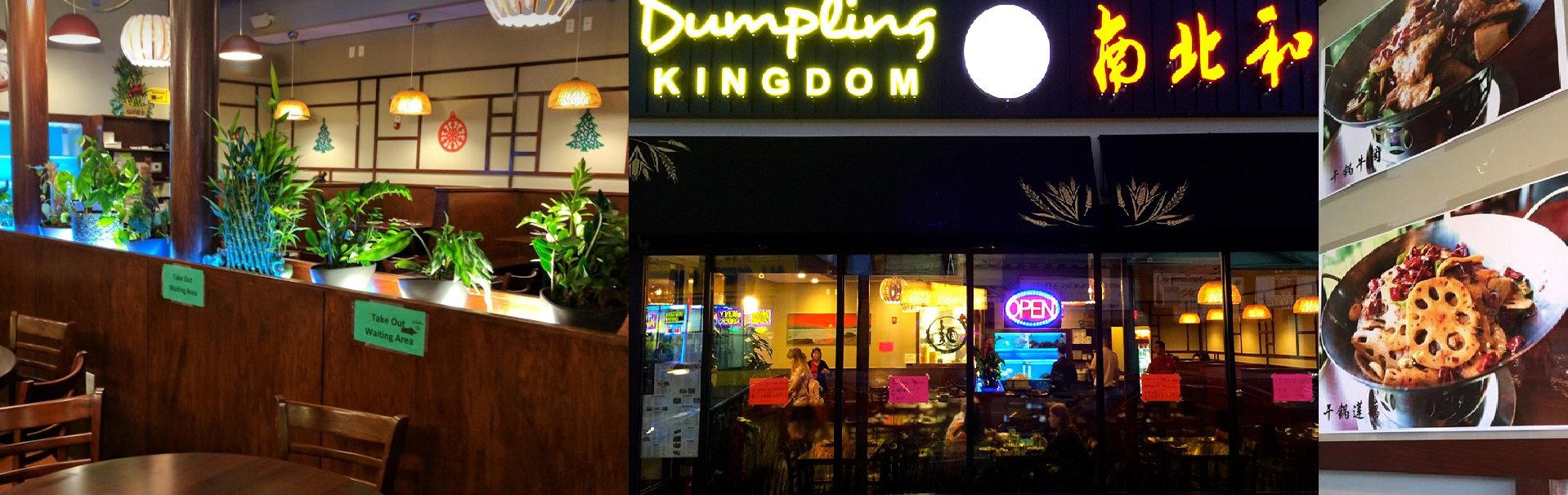
The menu
What to order
- Pan Fried Pork Buns Shanghai Style
- Steamed Shrimp Dumpling (Har Gau)
- Seafood & Tofu Hot Pot
Harvard Avenue and the Ritual of the Shared Table
Allston's Harvard Avenue runs a particular kind of gauntlet. Within a few blocks, you pass bubble tea counters, Korean barbecue vents, late-night pizza windows, and the kind of steam-fogged dumpling houses that fill up before 7 p.m. on a Tuesday. Dumpling Kingdom sits at 137 Harvard Ave inside that corridor, occupying a position that makes sense only when you understand the neighborhood: this is a street where the dining transaction is fast, communal, and priced for students and regulars rather than occasion dining. The room tends toward noise and close quarters, which is less a liability than a feature — the physical environment reinforces the social logic of the meal.
That social logic matters. Dumpling-format dining in Chinese culinary tradition is not built around individual plates or sequential courses. It is built around the center of the table. Dishes arrive when they are ready, the group reaches, conversations overlap with ordering, and the meal expands or contracts based on appetite rather than a predetermined tasting arc. This is the opposite of the paced omakase model you find at a counter like Atomix in New York City, where the kitchen controls timing entirely. Here, the table controls the rhythm, and knowing that going in changes how you eat.
The Dumpling as Structural Unit
Across Chinese regional cooking, folded dough preparations carry enormous variation. The difference between a Shanghainese soup dumpling, a pan-fried guotie, a boiled jiaozi, and a steamed har gow is not merely technique — it is texture, temperature, and how the filling interacts with the wrapper under heat. Each preparation style rewards a different eating approach. Soup dumplings require patience and a specific bite sequence to avoid losing the broth. Pan-fried dumplings should be eaten hot enough that the bottom crust still holds its char. Boiled versions often benefit from a dipping sauce calibrated by the diner rather than pre-applied.
In Allston's Chinese restaurant cluster, this diversity of preparation is common currency. The neighborhood draws heavily from the Boston-area Chinese student population, which has shaped both the range of regional styles available and the expectation that kitchens will execute them with accuracy rather than approximation. The result is a local dining norm closer to what you might find in Flushing or the San Gabriel Valley than in downtown Boston's more tourist-facing Chinatown.
How the Meal Tends to Move
The dining ritual at a dumpling-format restaurant like this one follows a recognizable grammar. The ordering phase is usually dense and fast: multiple dishes chosen simultaneously, often with duplication across preparation styles. The arrival phase is staggered rather than synchronized. A plate of pan-fried arrives while the steamed basket is still in the kitchen; the noodle dish comes when it is ready, not when the table is clear. First-time visitors sometimes find this disorienting. Regulars use it as permission to pace themselves, eating in passes rather than courses.
The comparison to a tightly orchestrated tasting menu experience, the kind you would find at The French Laundry in Napa or Blue Hill at Stone Barns in Tarrytown, is instructive precisely because the models are inverted. Those kitchens build sequences that move the diner through a predetermined arc. A dumpling house places the editorial authority at the table. Both models require a form of attention, but the skills are different. At a place like this, the skill is in ordering composition: covering preparation methods, balancing heavier fillings with lighter ones, and knowing when to stop before the table is overwhelmed.
Allston's broader dining scene reflects a similar mix of tempos. Carlo's Cucina Italiana operates on a slower, more traditional Italian cadence a short distance away, while Soul Fire runs a counter-service model calibrated for efficiency. The Harvard Avenue strip accommodates all three rhythms within a few blocks, which is part of what makes it one of the more genuinely plural eating streets in Greater Boston. See our full Allston restaurants guide for a mapped overview of how the neighborhood's dining options cluster by type and price point.
Price Point and the Neighborhood Tier
Casual dumpling dining in this kind of urban student neighborhood typically prices at the lower end of full-service restaurant ranges, well below the mid-range prix fixe territory of a Frasca Food and Wine in Boulder or the tasting menu commitment of Smyth in Chicago. In Allston specifically, the competitive pressure from nearby options keeps prices in check. The value proposition is volume and preparation range rather than ingredient sourcing or tableside service. This is appropriate to the format. A 12-piece basket of dumplings is not competing against a composed tasting plate at Le Bernardin in New York City; it is competing against the other dumpling options on the same block, and the calculus for the diner is different accordingly.
For a broader sense of how this neighborhood category fits into the American dining spectrum, contrast with mission-driven destination restaurants like Single Thread Farm in Healdsburg, Providence in Los Angeles, or Addison in San Diego. Those venues ask for significant advance planning, multi-hour commitments, and formal booking. Dumpling Kingdom operates on the opposite end of that planning spectrum.
Planning Your Visit
Dumpling Kingdom is located at 137 Harvard Ave, Allston, MA 02134, in a dense pedestrian block served by the MBTA Green Line B branch. The area is walkable from Boston University's west campus and draws a consistent crowd in the early evening through late night. For those coming from further afield, the Harvard Avenue strip is navigable without a car. Given the format and neighborhood norm, walk-in dining is the standard approach rather than advance reservations; arrival before peak dinner hours on weekdays typically offers easier seating. Bloome Fruit Tea nearby makes a logical pairing for post-meal drinks, continuing the street's tradition of modular, mix-and-match dining across multiple stops.
Frequently asked questions
Where exactly is Dumpling Kingdom?
Dumpling Kingdom is located at 137 Harvard Ave, Allston, MA 02134, Allston.
Is Dumpling Kingdom in Allston good for groups?
The shared-table format that defines dumpling dining makes Dumpling Kingdom at 137 Harvard Ave, Allston a practical choice for groups of four or more. Ordering spreads across multiple plate types — a structural advantage of the dumpling format in Chinese regional cooking — means a table can sample widely without the per-person commitment of a prix-fixe. The Allston neighborhood's price tier keeps group meals accessible well below Boston's full-service restaurant average.
What do regulars order at Dumpling Kingdom?
Without a published menu on record, the ordering pattern at dumpling-format restaurants on Harvard Ave tends to favor multiple plate rotations rather than a single anchor dish. At a venue like Dumpling Kingdom, located at 137 Harvard Ave, the shared-table format encourages ordering across dumpling styles — pan-fried, steamed, and soup-style preparations — to cover regional variation in a single sitting. Ask staff what came in fresh that day.
Can I walk in to Dumpling Kingdom?
Dumpling Kingdom at 137 Harvard Ave, Allston sits on a pedestrian-heavy block of the MBTA Green Line B corridor, and the surrounding neighborhood runs on walk-in traffic by default. No reservations system is documented which aligns with the casual, high-turnover model typical of dumpling houses in dense student areas. Peak hours on weekends will see a wait; arriving before 6 p.m. or after 8:30 p.m. tends to ease entry at comparable spots in Allston.
Cuisine and Awards Snapshot
Comparable venues nearby, for context on price, style, and recognition.
| Venue | Cuisine | Price | Notes |
|---|---|---|---|
| Dumpling KingdomThis venue — the venue you are viewing | Taiwanese-Chinese Dumpling House | $20–30 | Not listed |
| Bloome Fruit Tea | Taiwanese Fruit Tea & Boba | $1–10 | Allston |
| Soul Fire | Southern BBQ | Not listed | Allston |
| Carlo's Cucina Italiana | Authentic Italian Trattoria | $20–30 | Allston |
| Golden Temple | Contemporary Cantonese Chinese | Not listed | Washington Square |
| Jumbo Seafood 珍寶軒 | Traditional Cantonese Seafood | $20–30 | Chinatown |
Continue exploring
More in Allston
Restaurants in Allston
Browse all →
Bars in Allston
Browse all →
Hotels in Allston
Browse all →
Wineries in Allston
Browse all →
Details
- Lively
- Trendy
- Casual Hangout
- Late Night
- Open Kitchen
- A La Carte
- Vegetarian Friendly
Current opening hours
- Monday
- 11:30 AM–12:30 AM
- Tuesday
- 11:30 AM–12:30 AM
- Wednesday
- 11:30 AM–12:30 AM
- Thursday
- 11:30 AM–12:30 AM
- Friday
- 11:30 AM–1:30 AM
- Saturday
- 11:30 AM–1:30 AM
- Sunday
- 11:30 AM–12:30 AM
Hours can change for holidays and private events. Last verified .
Casual and bustling atmosphere suited for affordable lunches and late-night snacks.