Drift
Our verdict
Drift occupies a quieter address at 980 Cipriana Drive in Myrtle Beach's northern stretch, positioning itself apart from the main strip's volume-driven dining scene. Against a local market that trends toward casual seafood and chain formats, Drift signals a more deliberate approach to space and experience. For visitors cross-referencing the broader Myrtle Beach dining tier, it belongs in the same conversation as the area's more considered independent options.

Pearl is the En Primeur Club membership app, where members save venues, book tables and use the concierge.
The menu
What to order
- Shrimp & Grits
- Chicken & Waffles
- Comprehensive Trio
- Pork Belly Benedict
- Avocado Toast
Space Before Everything Else
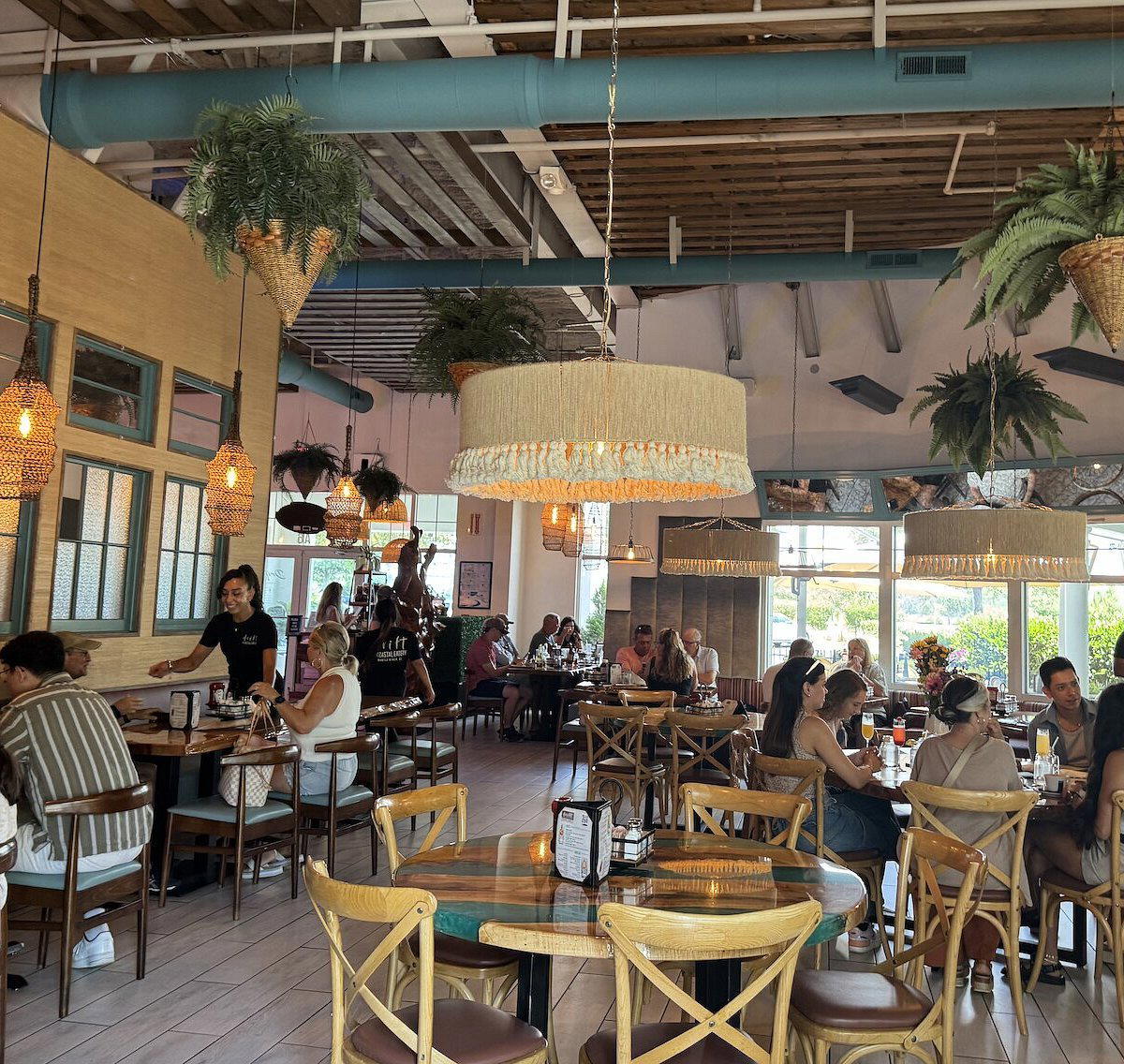
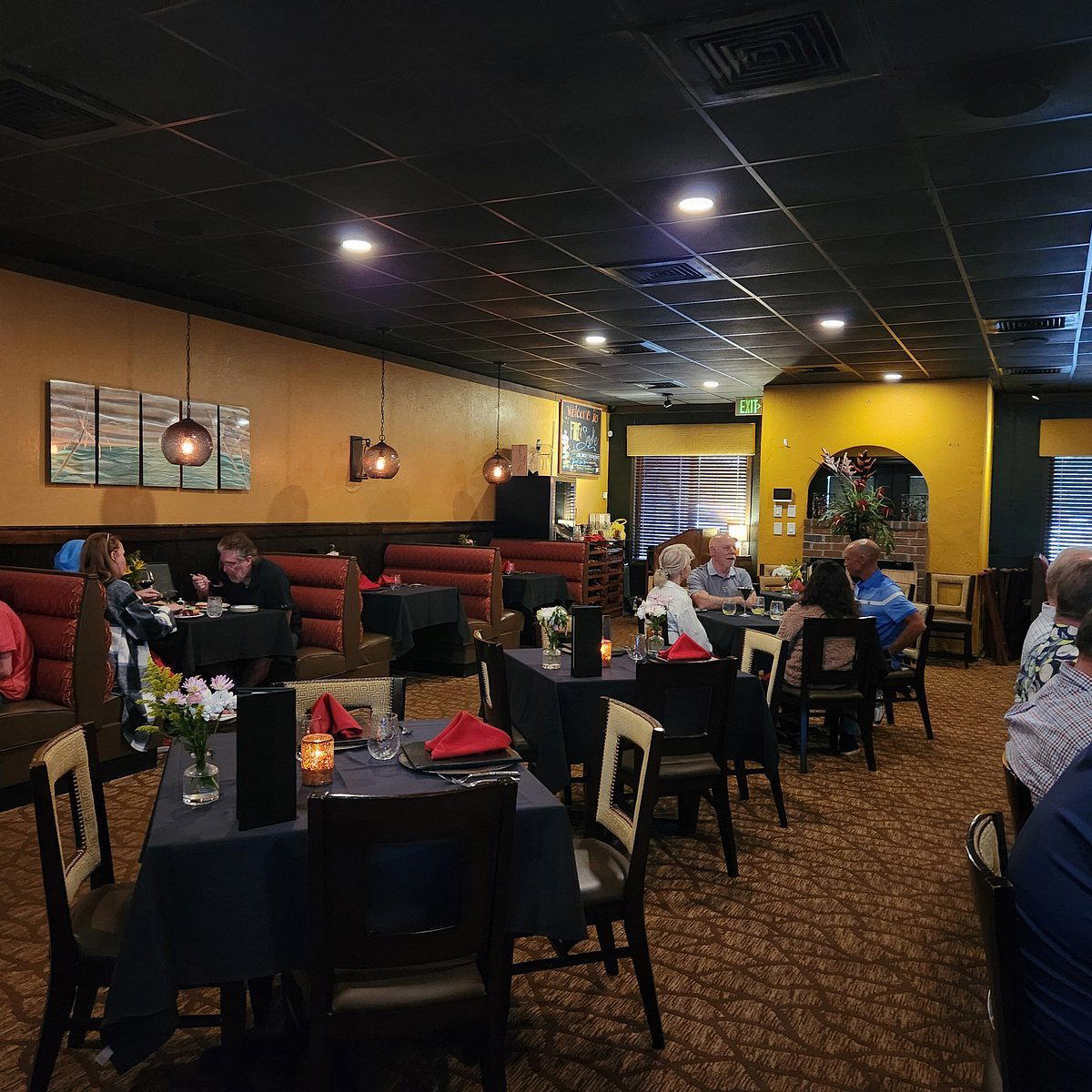
In a beach resort city, the physical container of a dining room does a lot of argumentative work. Most of Myrtle Beach's restaurants pitch their interiors toward the broadest possible audience: open floors, high ceilings engineered to absorb noise from large parties, décor that signals "coastal" without committing to anything specific. The address at 980 Cipriana Drive places Drift in the quieter northern corridor of Myrtle Beach, away from the concentrated density of Broadway at the Beach and the strip's loudest blocks. That geography alone changes the register before a guest sits down.
The Cipriana Drive location puts Drift in a low-traffic pocket that rewards the kind of visitor who cross-references an address before booking rather than walking in off the main drag. Proximity to the shoreline without the surrounding noise of the tourist core is a design choice as much as a practical one. Coastal dining destinations from Providence in Los Angeles to Addison in San Diego have long understood that where a room sits in a city's spatial logic shapes what a guest expects before the first course arrives. The same principle applies at a smaller scale in Myrtle Beach.
Where Drift Sits in the Local Tier
Myrtle Beach's dining scene has historically split between large-format tourist operations and a smaller number of independently minded restaurants that cultivate a local and repeat-visitor following. The latter group includes spots like Aspen Grille, Atmosphera Restaurant, Bistro B, Black Drum, and Cafe Old Vienna. Drift belongs in that conversation rather than in the volume-driven mainstream. Its Cipriana Drive setting reinforces the separation: this is not a restaurant angling for walk-in foot traffic from the beachfront hotels.
For a broader frame, consider how American coastal dining at the independent level has evolved over the past decade. Properties like Single Thread Farm in Healdsburg and Blue Hill at Stone Barns in Tarrytown helped establish a template in which the spatial and agricultural philosophy of a property becomes inseparable from the food itself. That ambition operates at a different scale than anything in Myrtle Beach, but the underlying logic, that the design of an experience communicates as loudly as the menu, filters down to mid-market independent restaurants in resort cities too. Drift's positioning off the main corridors reads as a version of that thinking applied locally.
The Design Argument
Resort-market dining spaces tend to default to one of two formats. The first is high-volume casual: open kitchens, communal or picnic-style seating, menus built around shareability and throughput. The second is the legacy fine-dining room: carpeted floors, upholstered chairs, tableside service choreography borrowed from an earlier era. Neither format is particularly suited to the kind of deliberate, lower-key experience that a location like Cipriana Drive implies.
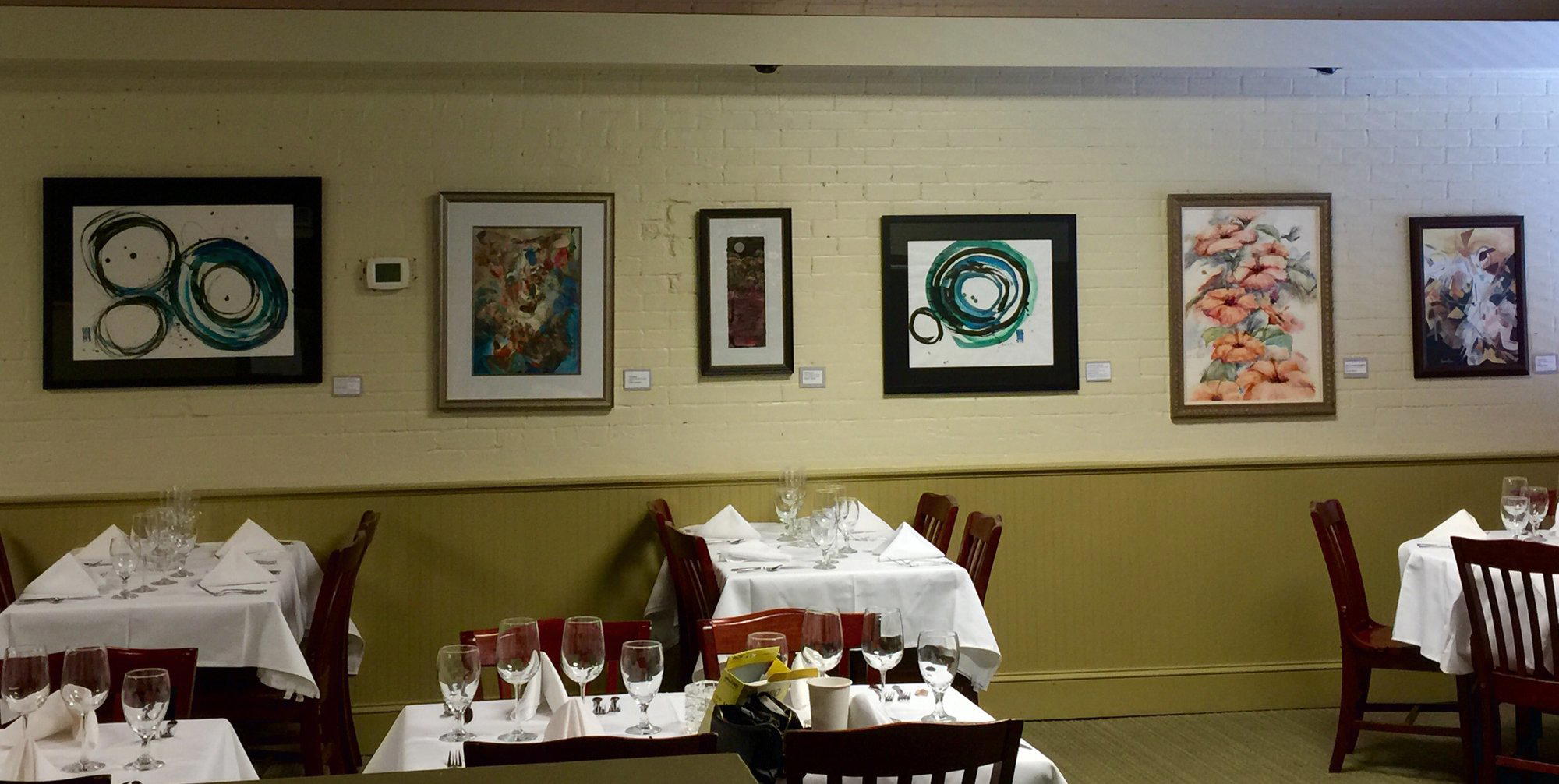
The A-6 suite designation at Drift's address suggests a commercial mixed-use setting rather than a freestanding building, which is an increasingly common format for independent restaurants in beach resort markets where standalone real estate carries a premium. That format works when the interior design compensates for the building's neutrality, creating an environment that reads as curated rather than incidental. The restaurants that have handled this format most effectively in American dining tend to invest in material specificity: lighting that changes the quality of the air in the room, seating arrangements that create a sense of intimacy at smaller scales, surface materials that age rather than wear. Those choices distinguish a room that has been designed from one that has merely been furnished.
Compared to the institutional investment behind something like Le Bernardin in New York City or the converted-warehouse scale of Lazy Bear in San Francisco, the design stakes at a Myrtle Beach independent are modest. But the question of whether a room supports the food and the conversation happening in it matters at every price point. At its most effective, a well-considered dining room in a resort market operates as a counterargument to the surrounding visual noise, giving guests a reason to settle in rather than move on.
Planning a Visit
Myrtle Beach's dining scene is most competitive for reservations between late May and August, when the coastal resort market peaks. Independent restaurants in the northern corridor, away from the main strip concentration, typically see slightly less walk-in pressure than those adjacent to the major hotel blocks, but advance planning remains advisable during peak season. For visitors building a longer itinerary across the city's independent dining tier, our full Myrtle Beach restaurants guide maps the broader field.
The Cipriana Drive address is accessible by car and sits in proximity to the northern Grand Strand residential and mixed-use corridor rather than the tourist core. For those arriving from outside the area, the practical assumption is that a rental car or rideshare is the standard mode of access, as the northern stretch of Myrtle Beach is not oriented around pedestrian transit the way the oceanfront blocks are.
Given the limited publicly available data on current hours and booking policy, direct contact with the venue before visiting is the practical baseline. That applies equally to any of the area's independent operations: Atmosphera and Bistro B both benefit from the same advance-confirmation approach, particularly on weekends during the summer window.
Context Beyond Myrtle Beach
For visitors who use Myrtle Beach as a stopping point on a longer East Coast or Southern circuit, the independent dining tier here connects to a broader pattern of resort-market restaurants that have graduated from purely seasonal operations to year-round presences with a clearer culinary identity. That shift has happened at various scales across American coastal markets, from the mid-Atlantic shore to the Gulf Coast. Restaurants like Emeril's in New Orleans and The Inn at Little Washington represent an older wave of American regional fine dining that anchored itself to a specific place and grew outward from there. The independent restaurants now establishing themselves in Myrtle Beach's quieter corridors are operating on a smaller scale but within a recognizable tradition.
The broader American dining reference points, Smyth in Chicago, Atomix in New York City, The French Laundry in Napa, Atelier Moessmer Norbert Niederkofler in Brunico, exist in a different category entirely, but they set the terms by which serious independent dining anywhere gets evaluated. The question a venue like Drift faces is not whether it competes with that tier, but whether it takes the underlying discipline seriously: a considered room, a coherent food identity, and a service posture that treats the guest as someone worth the effort.
Frequently asked questions
Where exactly is Drift?
Drift is located at 980 Cipriana Dr A-6, Myrtle Beach, SC 29572, Myrtle Beach.
Is Drift a good option for dining away from Myrtle Beach's main tourist strip?
The address at 980 Cipriana Drive places Drift well north of the concentrated tourist blocks around Broadway at the Beach and Ocean Boulevard. That physical separation from the resort core is one of the clearest things the public record tells us about Drift's identity in Myrtle Beach. For visitors looking for a meal outside the Grand Strand's highest-traffic corridors, the north Strand location is a concrete differentiator.
What do people recommend at Drift?
Specific dish-level recommendations for Drift are thin on the ground publicly, which often signals a room where the experience is shaped more by the space and setting than by a single signature plate. Drift's Cipriana Drive address in Myrtle Beach's northern corridor puts it among a smaller group of independently minded operations rather than the high-volume tourist tier. The practical advice: go without a fixed agenda around one dish and let the menu guide the visit.
How far ahead should I plan for Drift?
Myrtle Beach's resort season runs hard from late May through August, and the Grand Strand's independent restaurants feel that pressure more acutely than large tourist operations with the capacity to absorb walk-ins. For a summer visit to Drift at 980 Cipriana Drive, reaching out a week or two in advance is a reasonable baseline. Outside peak season, the north corridor of Myrtle Beach tends to be considerably less contested.
What's the defining dish or idea at Drift?
Without a documented signature dish or published cuisine type, Drift's clearest public identity at this point is spatial and positional: it operates in a market segment distinct from the boardwalk-adjacent, high-turnover format that dominates Myrtle Beach. That positioning alone tells you something about the intent. The Cipriana Drive address in the north Strand places it closer to a neighborhood-restaurant model than a resort-strip operation.
Just the Basics
Comparable venues nearby, for context on price, style, and recognition.
| Venue | Cuisine | Price | Notes |
|---|---|---|---|
| DriftThis venue (the venue you are viewing) | Modern American Breakfast & Brunch | $20–30 | Not listed |
| Tupelo Honey - Myrtle Beach | Southern Comfort Food | $20–30 | Market Common, Southern Comfort Food |
| Black Drum | Carolina BBQ & Seafood | $30–50 | Kingston Plantation, Carolina BBQ & Seafood |
| Toasty | American Breakfast & Brunch | $10–20 | Arcadia, American Breakfast & Brunch |
| Fire & Smoke | Modern American Steakhouse & Gastropub | $50–100 | North Myrtle Beach, Modern American Steakhouse & Gastropub |
| Koi | Modern Japanese Sushi & Wagyu | Not listed | Grande Dunes, Modern Japanese Sushi & Wagyu |
Continue exploring
More in Myrtle Beach
Details
- Trendy
- Modern
- Casual
- Brunch
- Casual Hangout
- Family
- Terrace
- Standalone
- Local Sourcing
- Organic
- A La Carte
- Coffee
- Juice
- Mimosas
- Vegetarian Friendly
- Organic Focus
Current opening hours
- Monday
- 7 AM–3 PM
- Tuesday
- 7 AM–3 PM
- Wednesday
- 7 AM–3 PM
- Thursday
- 7 AM–3 PM
- Friday
- 7 AM–3 PM
- Saturday
- 7 AM–3 PM
- Sunday
- 7 AM–3 PM
Hours can change for holidays and private events. Hours as of .
Relaxing terrace vibe with bright, fresh coastal aesthetic; modern and welcoming atmosphere ideal for leisurely morning meals.