Cafe Old Vienna
Our verdict
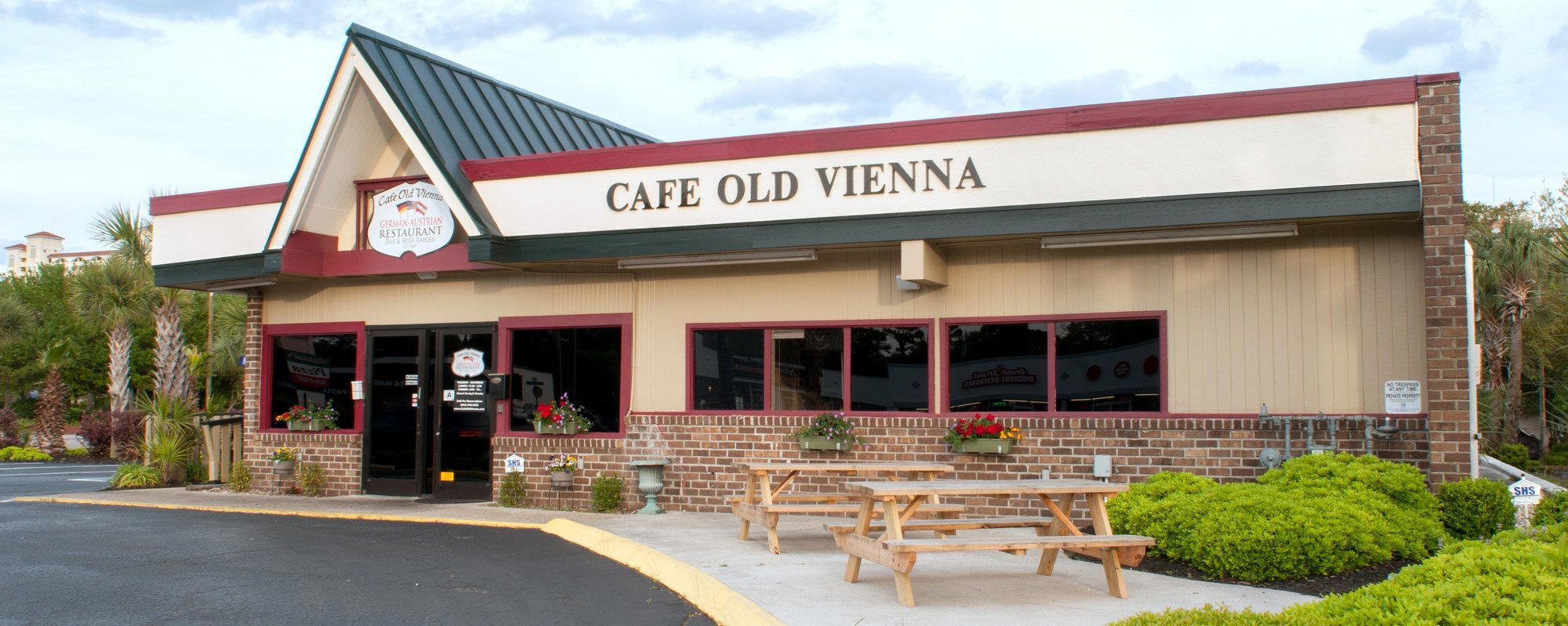
Cafe Old Vienna occupies a familiar address on North Kings Highway in Myrtle Beach, where the Viennese tradition of long, unhurried dining has found an unlikely home on the South Carolina coast. The setting evokes Central European café culture, a counterpoint to the seafood-forward mainstream of the Grand Strand. For visitors looking beyond the beachfront norm, it offers a distinct register of hospitality.

Pearl is the En Primeur Club membership app, where members save venues, book tables and use the concierge.
The menu
What to order
- Veal Wiener Schnitzel
- Sauerbraten
- Jager-Schnitzel
A Different Frequency on the Grand Strand
North Kings Highway in Myrtle Beach is not a street that invites lingering. The stretch runs through a corridor of chain restaurants, souvenir shops, and mini-golf courses that define the resort city's commercial spine. Against that backdrop, Cafe Old Vienna at 1604 N Kings Hwy operates on a noticeably different frequency. The name itself signals a deliberate orientation toward Central European café tradition, a world of dark wood, unhurried service, and rooms designed for conversation rather than turnover. In a dining market where seafood shacks and beachfront grills set the dominant tone, that positioning is a considered act of resistance.
The Viennese café as a cultural institution carries specific weight. Vienna's coffeehouse tradition was recognized by UNESCO as an Intangible Cultural Heritage, a place where time moves differently, where a single coffee can anchor an afternoon, and where the line between restaurant and social salon blurs deliberately. Whether Cafe Old Vienna fully inhabits that tradition or simply borrows its atmosphere is the operative question for any visitor, but the reference point matters: it places the venue in a lineage that runs through Café Central, Café Hawelka, and the broader Central European idea that dining is a civic act, not just a transaction.
What the Setting Implies
Myrtle Beach's dining character has historically split between high-volume tourist operations and a smaller tier of independently owned restaurants that serve the year-round local population. Venues like Atmosphera Restaurant and Bistro B occupy that independent middle ground, as does Aspen Grille, which draws on American steakhouse conventions. Black Drum and Café Amalfi anchor the coastal and Italian ends of the local spectrum respectively. Cafe Old Vienna sits apart from all of these reference points, not competing on seafood freshness or Italian regional authenticity, but staking a claim on a mode of dining that the Grand Strand rarely accommodates.
The sensory expectation that name and address create is specific. A venue invoking Vienna telegraphs warmth over brightness, accumulated detail over minimal design, and a menu likely to include Central European staples, schnitzel, goulash, strudel, perhaps a short list of Austrian and German wines, rather than the fried seafood platters and shrimp and grits that anchor most local menus. That sensory contract, the implicit promise made by the name and the address on a secondary highway rather than the beachfront, is part of what makes the venue legible within Myrtle Beach's broader dining map. It is not trying to be Le Bernardin in New York City or The French Laundry in Napa. It is trying to be something specific and European in a city that rarely asks for either.
The Atmosphere as the Argument
In the editorial tradition of café culture criticism, atmosphere is not decoration, it is the primary product. The café that gets the light right, that manages the sound level so voices carry without competing, that furnishes a room for both solitary readers and large parties, is doing the harder technical work. American restaurants that import European café formats often stumble on exactly these points: the acoustics are tuned for energy rather than intimacy, the lighting erases shadow in ways that flatten the room, and the service tempo accelerates toward the American norm of efficient turnover.
Cafe Old Vienna's North Kings Highway location places it in a building stock typical of mid-century Myrtle Beach commercial development, not the kind of architecture that naturally lends itself to the dimly lit, richly furnished European café ideal. How the interior handles that structural constraint is the central atmospheric variable. The degree to which the room generates the particular warmth that Central European café tradition promises, the sense that you have stepped out of the resort city's ambient noise and into something slower and more considered, determines the experience's coherence.
This is the standard against which the venue should be measured, and it is a harder standard than simple food quality. Restaurants can be good across many formats. A café that successfully transplants a specific cultural mood to an improbable location is a more difficult achievement, and rarer.
Placing Myrtle Beach in a Wider Frame
Myrtle Beach rarely appears in the same conversation as America's most formally ambitious dining cities. Venues like Smyth in Chicago, Lazy Bear in San Francisco, Atomix in New York City, or Addison in San Diego operate in markets with deep culinary infrastructure, dense critical coverage, and populations that treat dining out as a form of cultural participation. Blue Hill at Stone Barns in Tarrytown, Single Thread Farm in Healdsburg, Providence in Los Angeles, and The Inn at Little Washington represent the upper tier of American dining ambition, defined by awards infrastructure and critical consensus. Closer to the European reference point Cafe Old Vienna invokes, venues like Atelier Moessmer Norbert Niederkofler in Brunico show what serious engagement with Central European culinary tradition looks like at its most refined.
Cafe Old Vienna is not in that conversation, nor does its Kings Highway address suggest it aims to be. What it does represent is something arguably more interesting for a resort city: an independent operator running a specific format that the local market does not otherwise provide. In cities like Myrtle Beach, where dining diversity is constrained by the economics of seasonal tourism, a venue that holds to a distinct identity across years earns a different kind of recognition than awards infrastructure provides. See our full Myrtle Beach restaurants guide for how Cafe Old Vienna fits within the city's broader dining range.
Planning a Visit
Myrtle Beach's tourism calendar peaks between Memorial Day and Labor Day, when the Grand Strand absorbs millions of visitors and wait times at popular independent restaurants extend considerably. Visiting Cafe Old Vienna outside peak summer season, spring or fall, aligns better with the unhurried atmosphere that Central European café tradition requires. The venue's address on North Kings Highway rather than Ocean Boulevard means parking is generally less fraught than at beachfront locations, a practical detail that matters in a city where summer traffic and lot congestion add friction to any dining plan. Given that Emeril's in New Orleans and comparable independently operated American venues with specific format identities often benefit from advance reservations during high season, the same logic applies here during Myrtle Beach's summer peak.
Frequently asked questions
Where is Cafe Old Vienna in Myrtle Beach?
Cafe Old Vienna is located at 1604 N Kings Hwy, Myrtle Beach, SC 29577, Myrtle Beach.
Is Cafe Old Vienna suitable for a meal away from the beachfront tourist strip in Myrtle Beach?
Its address at 1604 N Kings Hwy places it outside the oceanfront commercial corridor that absorbs the bulk of Myrtle Beach's summer foot traffic. North Kings Highway runs parallel to the beachfront but operates at a lower density of tourist-oriented venues, making it a practical choice for those looking to step outside the highest-volume dining blocks. Confirm current hours directly before visiting, particularly during peak season.
What should I eat at Cafe Old Vienna?
The Viennese café tradition centers on a core repertoire: schnitzel, goulash, strudel, and coffee preparations treated as slow rituals rather than quick service items. Myrtle Beach's dining market offers few venues operating within this Central European format, so the menu itself is the differentiator. Specific current dishes should be confirmed directly with the venue at 1604 N Kings Hwy.
What's the best way to book Cafe Old Vienna?
Visiting in person or arriving early in the day to make same-day arrangements is a practical approach, particularly between Memorial Day and Labor Day when Myrtle Beach's independent restaurant tier fills faster than chain alternatives. Check for updated contact details before traveling.
What's the standout thing about Cafe Old Vienna?
Format differentiation is the defining factor. Central European café culture, built around unhurried service, coffee as a ritual, and a kitchen repertoire distinct from American coastal dining defaults, has almost no representation in Myrtle Beach. That scarcity, on a stretch of North Kings Highway otherwise dominated by chain operations, is the primary reason the venue draws attention.
Do they accommodate allergies at Cafe Old Vienna?
Given that traditional Viennese cooking relies heavily on dairy, gluten, and egg-based preparations, anyone with specific dietary requirements should contact Cafe Old Vienna directly at 1604 N Kings Hwy before visiting.
Does Cafe Old Vienna justify its prices?
The value case for a Central European café in a market like Myrtle Beach is typically built on format and atmosphere rather than competitive pricing alone, contact the venue to confirm current pricing before planning your visit.
Similar Picks
Comparable venues nearby, for context on price, style, and recognition.
| Venue | Cuisine | Price | Notes |
|---|---|---|---|
| Cafe Old ViennaThis venue (the venue you are viewing) | Authentic German-Austrian | $20–30 | Not listed |
| Ducatis Pizzeria & Trattoria | Italian Pizzeria & Trattoria | $20–30 | Myrtle Beach |
| Black Drum | Carolina BBQ & Seafood | $30–50 | Kingston Plantation |
| Gios Italian Kitchen Myrtle Beach | Classic Italian Trattoria | $30–50 | Myrtle Beach |
| Crabby George's Calabash Seafood Buffet | Calabash Seafood Buffet | $50–100 | North Myrtle Beach |
| Drift | Modern American Breakfast & Brunch | $20–30 | Grande Dunes |
Continue exploring
More in Myrtle Beach
Details
- Cozy
- Classic
- Rustic
- Family
- Casual Hangout
- Open Kitchen
- Beer Garden
- Live Music
- Beer Program
- A La Carte
- Beer Program
- Vegetarian Friendly
- Gluten Free Options
Current opening hours
- Monday
- Closed
- Tuesday
- 2–8 PM
- Wednesday
- 2–8 PM
- Thursday
- 2–8 PM
- Friday
- 2–8:30 PM
- Saturday
- 2–8:30 PM
- Sunday
- Closed
Hours can change for holidays and private events. Hours as of .
Charming alpine lodge atmosphere with warmth, friendliness, and good cheer known as 'Gemuetlichkeit'.