Donaji

Michelin Plate
Our verdict
A Michelin Plate-recognized Oaxacan kitchen on 24th Street in the Mission, Donaji built its following at farmer's markets before taking root as a brick-and-mortar. Chef Isai Cuevas centers masa in nearly every dish, from tamales and taquitos to handmade-tortilla enchiladas draped in mole negro. The price point sits at $$, making it one of the Mission's more accessible serious kitchens.

Pearl is the En Primeur Club membership app — saves, bookings, and concierge access live there. Same editors, same standards.
- Address
- 3161 24th St, San Francisco, CA 94110
- Phone
- (415) 829-3569
- Hours
- Mon–Tue ClosedWed–Thu 5–9:30 PMFri–Sat 5–10 PMSun Closed
- Website
- donajisf.com
- Directions
- Get directions
- Booking
- Book on the venue's website
The menu
What to order
- Mole negro enchiladas
- Tlayuda
- Tamales
- Rotisserie chicken
Masa, Market Roots, and the Mission's Oaxacan Thread
The stretch of 24th Street running through San Francisco's Mission District is one of the more instructive blocks for understanding how Mexican regional cooking actually travels. Taquerias sit alongside panaderías, produce vendors spill onto the pavement, and the customer base is mixed enough that kitchens here answer to people who know what the food is supposed to taste like. It is precisely the kind of street where a vendor who built a reputation at farmer's markets across the city would eventually open a proper room. That market-to-brick-and-mortar trajectory, common among serious cooks who need community proof-of-concept before committing to a lease, is the story behind Donaji. The name references a Zapotec princess, a deliberate signal of Oaxacan lineage before a single dish arrives at the table.
Donaji holds a 2024 Michelin Plate, placing it in the inspector's recommended tier and situating it within a San Francisco dining map dominated at its upper end by $$$$ tasting-menu rooms like Alinea in Chicago-caliber ambition in miniature or the $$$$ heights of The French Laundry in Napa. Donaji operates at $$, which makes the recognition more pointed: the Michelin Plate is not reserved for white tablecloths. It follows quality of cooking wherever it appears, and on 24th Street it has appeared in a cheerful neighborhood room built on masa and mole.
The Market-to-Kitchen Philosophy
In Oaxacan cooking, the mercado is not a backdrop — it is the methodology. Seasonal chiles, fresh herbs, and handpicked corn varieties move from market stalls into family kitchens and regional restaurants as a matter of daily practice, not as a sourcing philosophy to be announced on a menu card. Chef Isai Cuevas spent years operating within that same logic at farmer's markets around San Francisco, which meant sourcing to order, reading what was actually available, and cooking to the produce rather than the other way around. That background shapes what Donaji does with its ingredients at a structural level, not just an aesthetic one.
Masa is the clearest expression of this. It functions as the kitchen's central technical argument: tamales, taquitos, sopes, and handmade tortillas are all variations on a commitment to working with masa seriously. In a city where Bombera and El Buen Comer represent other interpretations of Mexican cooking done with care, Donaji's specific focus on Oaxacan technique and masa craftsmanship carves a distinct position. The tamales in particular carry the weight of the kitchen's reputation, having been the original product that built the chef's following before a storefront existed.
What the Menu Communicates
Antojitos in the Oaxacan tradition are not minor starters. Taquitos and sopes at their most considered are precision objects: the masa thickness matters, the filling-to-shell ratio matters, and the temperature at which they arrive matters. Donaji's kitchen applies that level of attention across its antojito section. These are not filler dishes bridging a gap to a main course — they are the main argument.
The mole negro deserves specific attention as a marker of technical credibility. A properly constructed mole negro involves anywhere from twenty to thirty ingredients, multiple stages of charring and grinding, and fermentation variables that affect the final depth. It is one of the more time-intensive preparations in Mexican cooking and one of the easiest to shortcut. When the kitchen routes it through enchiladas built on handmade tortillas, it is essentially stacking multiple labor-intensive processes into a single plate. The result, according to Michelin's inspectors, reflects the kitchen team's care and attention to detail, phrasing that in Michelin's language signals consistent execution, not a lucky-night dish.
House-made agua fresca rounds out the beverage program as a thoughtful pairing anchor for savory, earthy plates. The choice to make it in-house rather than pour from bottles is consistent with the kitchen's broader orientation: make the things that matter, and make them properly.
Where Donaji Sits in the Wider Scene
Mexican cooking in the Bay Area occupies a broader range than most cities. At the higher price tier, Flores and Fonda San Francisco approach the cuisine with different regional frames and price structures. Further afield, Comal represents another serious take on the tradition. The reference point that arguably sets the international benchmark for this style of cooking is Pujol in Mexico City, where Enrique Olvera's kitchen has spent years interrogating mole as a living, evolving preparation. Donaji is not operating at that scale or ambition, but the comparison is useful because it establishes what a serious engagement with Oaxacan flavors actually looks like, and where the kitchen's commitment to mole negro, masa, and handmade tortillas places it on that spectrum.
Elsewhere in the United States, Alma Fonda Fina in Denver represents the kind of regional Mexican cooking that earns Michelin attention in mid-tier price ranges. The pattern is consistent: inspectors are increasingly willing to recognize technically serious kitchens regardless of format or price point. Donaji fits that pattern in San Francisco, a city where Le Bernardin in New York City-caliber service standards are expected at the leading end but where the more interesting story is often what's happening at street level.
Planning Your Visit
Donaji is located at 3161 24th Street in the Mission, a neighborhood that rewards arriving early or with some time to walk the block. The $$ price point means a full meal sits well within reach without advance financial planning, this is a kitchen where the cost-to-quality ratio reflects the market-vendor origin story: serious food at accessible prices.
Demand at this price point and recognition level can move faster than published availability suggests, particularly on weekends when the Mission draws foot traffic from across the city. For the full picture of where Donaji sits among San Francisco's dining options, see our full San Francisco restaurants guide. For everything else the city offers, our full San Francisco hotels guide, our full San Francisco bars guide, our full San Francisco wineries guide, and our full San Francisco experiences guide cover the wider picture. If the Mission's serious cooking is the draw, Providence in Los Angeles and Emeril's in New Orleans offer useful comparison points for understanding how regional American cities handle neighborhood-anchored cooking with credentials. And for those moving through Northern California more broadly, Single Thread Farm in Healdsburg represents the opposite end of the format spectrum: proof that the Bay Area's range is as wide as any in the country.
Frequently asked questions
What do regulars order at Donaji?
How far ahead should I plan for Donaji?
What is Donaji leading at?
Peers Worth Knowing
A quick peer check to anchor this venue’s price and recognition.
| Venue | Cuisine | Price | Awards | Notes |
|---|---|---|---|---|
| DonajiThis venue — the venue you are viewing | Oaxacan Mexican | $30–50 | Michelin Plate | Not listed |
| Lazy Bear | Modern American Tasting Menu | Not listed | 2 Michelin Stars · World's 50 Best #25 | Progressive American, Contemporary |
| Benu | Modern Asian Fusion Fine Dining | $150–200 | 3 Michelin Stars · World's 50 Best #33 | French - Chinese, Asian |
| Atelier Crenn | Contemporary French Fine Dining | $300–500 | 3 Michelin Stars · World's 50 Best #44 | Modern French, Contemporary |
| Quince | Modern French Fine Dining | $300–500 | 3 Michelin Stars · World's 50 Best #48 | Italian, Contemporary |
| Saison | Modern French-Italian | Not listed | Michelin Plate | Progressive American, Californian |
Recognition history
Dated appearances from independent guides and award organizations, with the underlying list record or original source where available.
Michelin Plate
Michelin · 2026 Michelin Plate
Full recognition history (3 entries)
Michelin Plate
Michelin
Michelin Plate
Michelin
Continue exploring
More in San Francisco
Restaurants in San Francisco
Browse all →
Bars in San Francisco
Browse all →
Hotels in San Francisco
Browse all →


Details
- Cozy
- Trendy
- Lively
- Casual Hangout
- Date Night
- Group Dining
- Open Kitchen
- Craft Cocktails
- Local Sourcing
- A La Carte
- Small Plates
- Mezcal
- Wine And Beer
- Vegetarian Friendly
- Vegan Options
Current opening hours
- Monday
- Closed
- Tuesday
- Closed
- Wednesday
- 5–9:30 PM
- Thursday
- 5–9:30 PM
- Friday
- 5–10 PM
- Saturday
- 5–10 PM
- Sunday
- Closed
Hours can change for holidays and private events. Last verified .
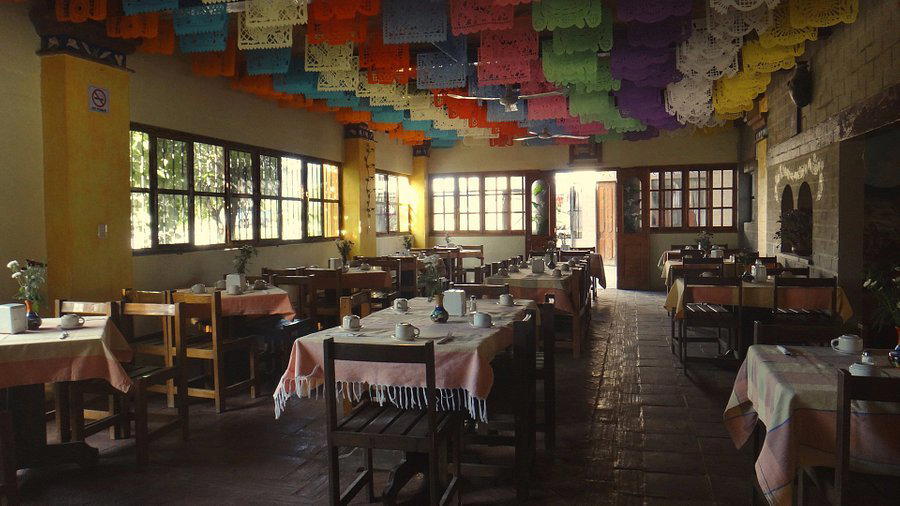
Cheerful neighborhood spot with bright blue walls, hummingbird mural, papel picado, and casual community vibe.