Don Felix
Our verdict
Don Felix sits on Virgil Avenue in the heart of Los Feliz, representing the kind of neighborhood Mexican dining that Los Angeles does quietly and without ceremony. The address places it at the intersection of everyday and considered, where the cooking tends to be more rooted in regional Mexican tradition than the city's more visible, high-concept operators. For visitors looking beyond the established fine-dining circuit, it warrants attention.

Pearl is the En Primeur Club membership app — saves, bookings, and concierge access live there. Same editors, same standards.
- Address
- 305 Virgil Ave, Los Angeles, CA 90004
- Phone
- (323) 663-1088
- Hours
- Mon–Thu 11 AM–8 PMFri–Sat 11 AM–9 PMSun 11 AM–8 PM
- Website
- donfelixrestaurant.com
- Directions
- Get directions
The menu
What to order
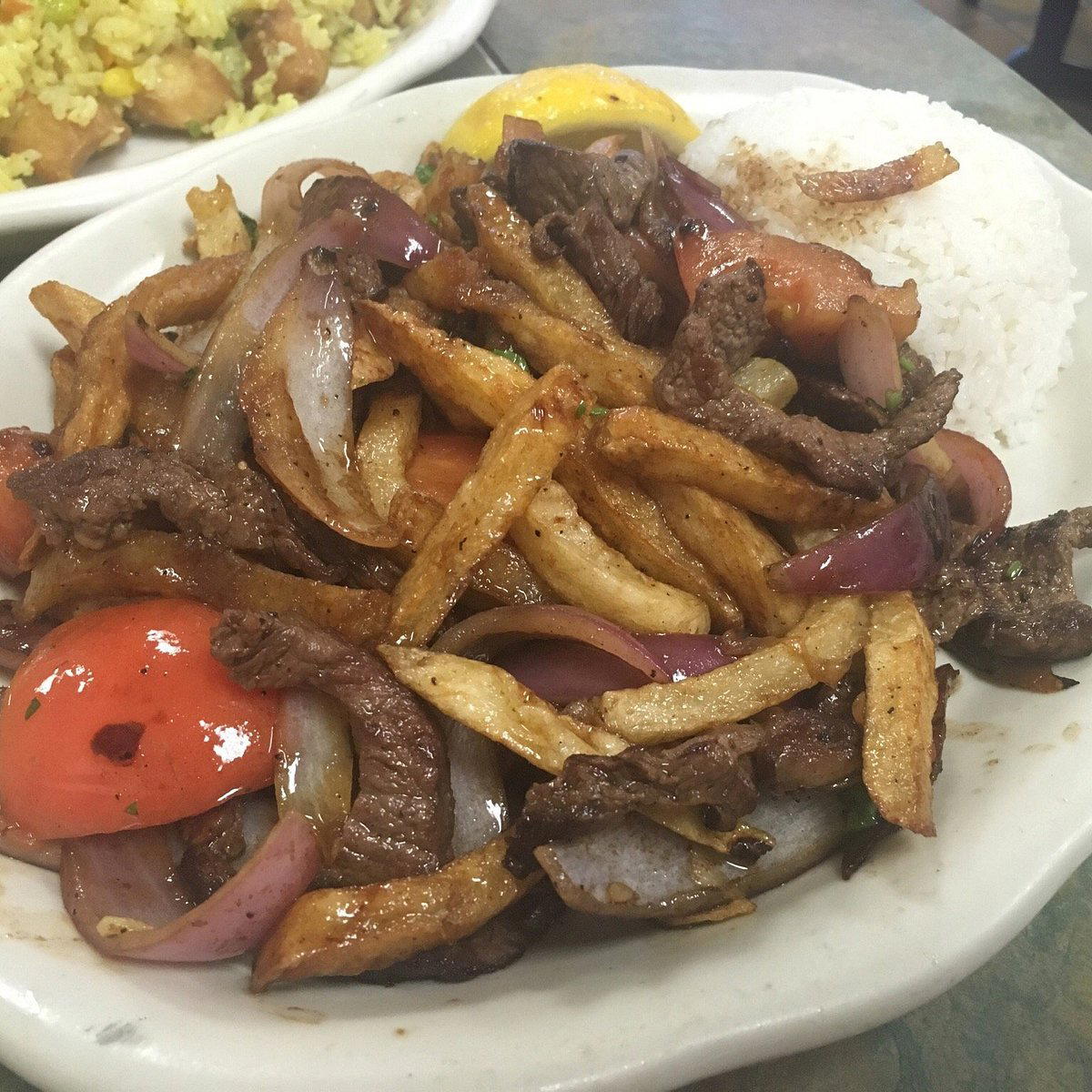
- Lomo Saltado
- Ceviche Mixto
- Tallarín Verde con Milanesa
Virgil Avenue and the Mexican Dining Tradition That Doesn't Announce Itself
Los Angeles has a long-established habit of placing some of its most serious regional Mexican cooking in storefronts that do not perform for the camera. The stretch of Virgil Avenue in the 90004 zip code sits in that tradition: a corridor where the surrounding blocks are working-class and the signage is modest, but where the cooking can be more technically grounded than venues commanding three times the price in more photographed neighborhoods. Don Felix, at 305 Virgil Ave, occupies this kind of position in the city's dining geography.
To understand where Don Felix fits, it helps to read Los Angeles Mexican dining in tiers. At one end sit the haute-Mexican operators, places that draw direct comparisons to what Somni or Kato do for their respective cuisines — refined tasting formats, significant price points, national press attention. At the other end sits the vast, informal taqueria culture that defines much of the city's daily eating. Don Felix, based on its address and neighborhood context, occupies the middle register: a sit-down operator in a walkable residential district, where the expectation is honest, regionally informed cooking rather than theatrical presentation.
This middle register is arguably the most instructive place to read Mexican cuisine in any American city. It is where the cooking closest to home-kitchen tradition tends to survive without the pressure to simplify for a tourist audience or complicate for a tasting-menu clientele. Los Angeles, compared to cities like Chicago (Smyth represents a very different culinary register) or New York (Le Bernardin, Atomix), has a particular geographic and demographic advantage: a Mexican-American community large enough to sustain the full spectrum of regional traditions, from Oaxacan to Jalisco to Yucatecan, without any single register dominating the identity of the cuisine.
The Meal as It Tends to Unfold at This Kind of Address
In a neighborhood Mexican dining room of this type, the progression of a meal follows a rhythm that owes more to Mexican domestic eating than to the coursed formats that define places like The French Laundry in Napa or Blue Hill at Stone Barns in Tarrytown. The meal typically begins with something to anchor the appetite: chips and salsa, or a small antojito — a masa-based snack that signals what region or tradition the kitchen is working from. This opening moment, often dismissed as preamble, is in practice a declaration of intent. The texture of the tortilla (pressed fresh or produced commercially), the heat and acidity of the salsa, and the fat ratio of any accompanying guacamole collectively tell you how close to the source the kitchen is operating.
The middle of the meal, in this format, is where the kitchen shows its range. Proteins braised low and long, carnitas, barbacoa, birria, are the benchmark dishes against which any Mexican dining room in this price register is implicitly measured. They are time-intensive preparations that cannot be faked on a weeknight line, and the difference between a kitchen that starts its process the evening before and one that works with pre-cooked batch is immediately readable in texture and depth of flavor. For comparison, consider how Single Thread Farm in Healdsburg or Frasca Food and Wine in Boulder use produce provenance as their primary signal of kitchen seriousness; in a Mexican dining room, the equivalent signal is the braised preparation and the hand-pressed tortilla.
The closing of the meal, desserts, if present, tends to skew traditional in venues of this type: flan, tres leches, or churros served without irony. These are not the architectural plated desserts that close a meal at Addison in San Diego or The Inn at Little Washington. Their value is continuity with the cuisine's actual register, and the leading examples are made in-house rather than sourced from a wholesaler.
The Los Angeles Context: Why This Neighborhood Matters
Area immediately around Virgil Avenue has historically functioned as a transition zone between Silver Lake and East Hollywood, close enough to the former's design-conscious dining scene to attract a younger, food-literate clientele, but retaining the demographic character that makes genuine regional Mexican cooking economically viable here. This is not an incidental detail. Neighborhood composition shapes what a kitchen can charge, what it must make from scratch to satisfy a local regular, and how much pressure it faces to perform for an out-of-neighborhood audience.
By contrast, Los Angeles venues that have migrated into the city's recognized fine-dining circuit, Providence for contemporary seafood, Hayato for kaiseki, operate under a different set of pressures, with Michelin attention and a primarily destination clientele. Venues like Holbox in the Mercado La Paloma have established that Mexican seafood in Los Angeles can operate at a serious technical level for a modest price point. Don Felix's Virgil Avenue address places it in a different but related tradition: the neighborhood anchor that earns loyalty through consistency rather than through critical-cycle attention.
For visitors spending time in Los Angeles, this geographic register is often the most rewarding precisely because it operates outside the circuits tracked by national food media. The dining rooms are smaller, the regulars more present, and the cooking less likely to have been modulated for a photographable aesthetic. Lazy Bear in San Francisco or Emeril's in New Orleans occupy the kind of civic visibility that comes with decades of press attention; this stretch of Virgil Avenue operates at a quieter register, where the audience is local and the cooking is accountable to that fact.
For a broader orientation to what the city's dining scene offers across price points and cuisines, the full Los Angeles restaurants guide maps the competitive field in more detail. For those with a specific interest in how tasting-format dining has developed on the West Coast, venues like Osteria Mozza and the comparative model offered by Atelier Moessmer Norbert Niederkofler in Brunico illustrate how regional identity can anchor even highly formal dining formats.
Quick reference: Don Felix, 305 Virgil Ave, Los Angeles, CA 90004. No booking, hours, or pricing data currently confirmed, visit or check locally before planning.
Frequently asked questions
Where exactly is Don Felix?
Don Felix is located at 305 Virgil Ave, Los Angeles, CA 90004, Los Angeles.
Is Don Felix the kind of Los Angeles Mexican restaurant that draws customers from outside the immediate neighbourhood?
Virgil Avenue sits at the edge of Silver Lake and East Hollywood, two areas that pull diners from across Los Angeles looking for Mexican cooking that operates outside the fast-casual or chef-driven fine dining formats. Restaurants at addresses like 305 Virgil Ave tend to draw a cross-neighbourhood audience precisely because they are not designed for it — the draw is the food, not the room or the profile.
What do people recommend at Don Felix?
Don Felix sits on Virgil Avenue in the transition zone between Silver Lake and East Hollywood, a corridor with a long history of Mexican home-cooking traditions translated into dining room format. Regulars at addresses like this tend to gravitate toward the dishes that reflect regional Mexican domestic eating rather than adapted or Americanized versions. Without a confirmed current menu on record, the safest approach is to ask staff what arrived that day or what the kitchen is running as a special.
Should I book Don Felix in advance?
No reservations contact or booking system is publicly documented for Don Felix at 305 Virgil Ave, Los Angeles. Neighborhood Mexican dining rooms of this type in the Silver Lake and East Hollywood area often operate on a walk-in basis, with peak hours on weekends moving quickly. Arriving early in a service period is the practical way to avoid a wait.
What has Don Felix built its reputation on?
Don Felix occupies Virgil Avenue, a street that has historically connected working-class Mexican dining traditions with a neighbourhood audience that expects substance over presentation. Storefronts in this corridor earn standing through consistency and regional specificity rather than through awards cycles or press coverage.
How does Don Felix handle allergies?
The practical step is to call ahead or ask directly when seated, particularly for common allergens like gluten, dairy, or shellfish, which appear across many regional Mexican preparations. Staff at neighborhood dining rooms in this part of Los Angeles are generally accustomed to direct questions about ingredients.
Just the Basics
| Venue | Cuisine | Price | Awards | Notes |
|---|---|---|---|---|
| Don FelixThis venue — the venue you are viewing | Traditional Peruvian | $20–30 | Not listed | Not listed |
| Kato | Modern Taiwanese Fine Dining | $300–500 | 2 Michelin Stars · World's 50 Best #49 | New Taiwanese, Asian |
| Hayato | Traditional Japanese Kaiseki | $300–500 | 2 Michelin Stars · La Liste Top Restaurants | Japanese |
| Vespertine | Avant-Garde Tasting Menu | $200–300 | 2 Michelin Stars · La Liste Top Restaurants | Progressive, Contemporary |
| Holbox | Modern Mexican Seafood | $30–50 | 1 Michelin Star · World's 50 Best #26 | Mexican Seafood, Mexican |
| Sushi Kaneyoshi | Edomae Omakase | $300–500 | 1 Michelin Star · LA Times 101 Best Restaurants #24 | Sushi, Japanese |