Dio Mio

Michelin Plate
Our verdict
A fast-casual Italian spot on Larimer Street where fine-dining technique meets an accessible format. The menu is small and seasonal, built around house-made pasta produced at a visible kitchen table — Michelin Plate recognized in 2024. Cacio e pepe with pink peppercorn and shrimp casarecce with dill signal a kitchen comfortable bending tradition without losing its grip on flavor.

Pearl is the En Primeur Club membership app — saves, bookings, and concierge access live there. Same editors, same standards.
- Address
- 3264 Larimer St, Denver, CO 80205
- Phone
- (303) 562-1965
- Hours
- Mon–Thu 4–9 PMFri–Sat 4–10 PMSun 4–9 PM
- Website
- diomiopasta.com
- Directions
- Get directions
- Booking
- Book on Tock
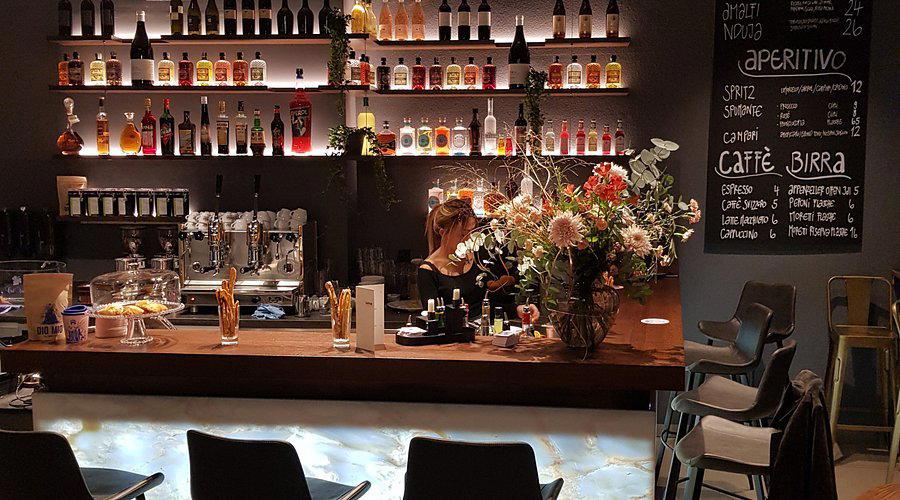
The menu
What to order
- Rigatoni with fennel sausage
- Chicken Parm
- Radiatori with basil pistachio pesto
The Counter, the Kitchen, the Pasta
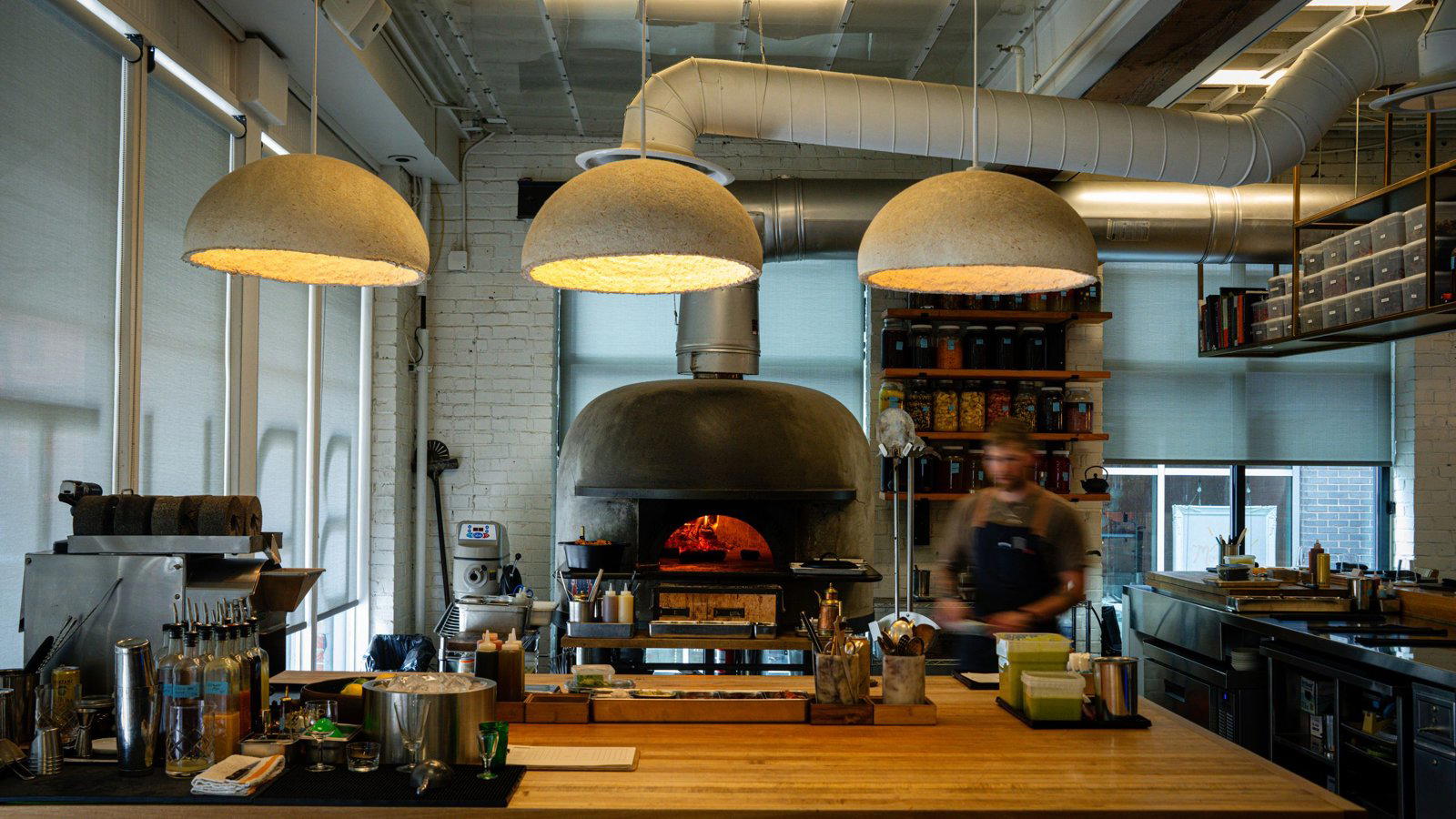
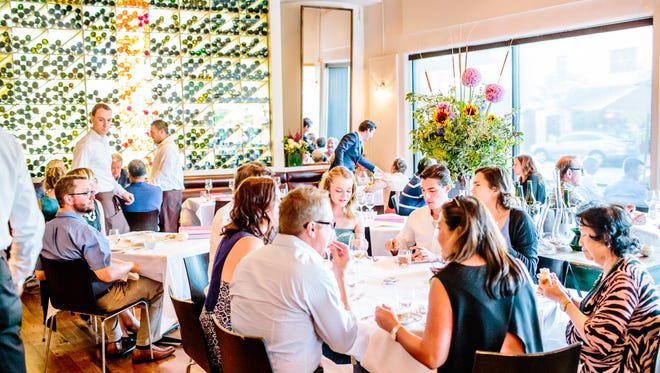
On Larimer Street in the RiNo district, the relationship between kitchen and dining room at Dio Mio is unusually transparent. A pasta production table sits at the center of the operation, visible to anyone in the room, framing the meal before a single dish arrives. In a city where fast-casual formats often disguise their shortcuts, this placement is a statement of intent: the pasta is the point, and it is made here.
That kind of structural candor shapes the dining ritual at Dio Mio in ways that distinguish it from both ends of the Denver Italian spectrum. It does not ask for the ceremony of a white-tablecloth room, nor does it offer the anonymity of a counter-service queue. You order, you settle in, and the kitchen performs within eyeline. The pacing is relaxed but purposeful — the rhythm of a place confident in what it is doing.
Where Dio Mio Sits in Denver’s Italian Scene
Denver’s Italian dining has historically clustered in two tiers: the long-established fine-dining rooms on one side, and the neighborhood trattorias and fast-casual operations on the other. Barolo Grill and Tavernetta represent the more formal bracket, where service structure and wine programming are part of the offering. Dio Mio operates at the opposite end of the price register — the $$ range, without operating at the opposite end of ambition.
That positioning is not accidental. Spencer White and Alex Figura, the chefs behind the concept, carry fine-dining experience into a format designed for accessibility. The Michelin Plate recognition in 2024 confirms what the pasta production table implies: this is not a kitchen coasting on a casual wrapper.
For context on how fine-dining credentials translate into accessible formats elsewhere, the pattern shows up across American cities, from Lazy Bear in San Francisco to the ingredient-led precision of Single Thread Farm in Healdsburg, though Dio Mio’s specific achievement is compressing that technical seriousness into a lower price point rather than a higher-ceremony one. The contrast with maximalist tasting-menu formats at places like Alinea in Chicago is instructive: different philosophy, different price tier, same underlying commitment to the craft.
The Menu Logic: Seasonal, Small, and House-Made
The menu at Dio Mio is deliberately compact and rotates with the season. That constraint is a feature rather than a limitation, it keeps the kitchen focused and prevents the drift toward safe crowd-pleasers that can blunt a small operation’s identity over time.
The pasta is made in-house, and the menu reflects a kitchen fluent in tradition but willing to push against it when the flavor case is strong. The mafaldine cacio e pepe is a useful reference point: the format is classic Roman, but pink peppercorn introduced alongside the standard black shifts the aromatic profile without undermining the dish’s structural integrity. That kind of calibrated adjustment, tradition-adjacent rather than tradition-departing, signals a kitchen that understands the source material well enough to modify it purposefully.
On the more iconoclastic end, casarecce with shrimp, dill, and toasted parmesan combines ingredients that Italian purists would likely reject outright. The combination works because the underlying pasta quality holds the composition together. Dill’s anise-like brightness against the shrimp and the nuttiness of toasted parmesan is a flavor logic borrowed from Nordic and Eastern European pantries, applied to a southern Italian pasta shape. It is the kind of move that only lands when the cook has both technical confidence and genuine curiosity.
For comparison, the approach to Italian cooking in cities with strong regional orthodoxy, as at 8 1/2 Otto e Mezzo Bombana in Hong Kong or the Japanese-inflected Italian precision of cenci in Kyoto, tends to treat the source cuisine with a reverence that constrains improvisation. Dio Mio operates in a different register, where the traditions are acknowledged and then used as a foundation for something less fixed. Denver’s dining culture, less bound by Italian regional dogma than cities with large Italian-American communities, gives the kitchen room to move.
The Dining Ritual: What to Expect
The fast-casual format means the ritual here is self-directed in ways that a tasting menu or prix-fixe room is not. There is no orchestrated progression imposed by the kitchen, no pacing set by a captain. You choose the order, you choose the pace. That freedom works in the venue’s favor: a small menu rewards attention rather than demanding it, and a room with a visible pasta production table gives you something to watch while you make decisions.
At the higher end of Denver’s contemporary scene, the $$$$ tier occupied by Brutø and The Wolf’s Tailor, both Michelin one-star, a similar rating is supported by tasting menus, wine pairings, and full service infrastructure. At Dio Mio, it is sustained by pasta quality and flavor accuracy alone, which is a narrower margin for error.
The address at 3264 Larimer St places the restaurant in a section of RiNo that has become one of Denver’s more active dining corridors over the past decade. The neighborhood rewards walkers, there is genuine density of options in close proximity, and Dio Mio fits the area’s character: serious about the craft, unpretentious about the format.
Planning Your Visit
Dio Mio sits at the $$ price range, making it accessible for a weeknight dinner without the advance planning required at Denver’s tasting-menu rooms. That said, the combination of Michelin Plate recognition and a compact dining room means demand on weekends regularly outpaces supply. Arriving early or on a weeknight is the practical hedge. Given the seasonal menu, checking current offerings before you go is worth the effort, a dish that informed your decision to visit may not be on the menu on a given night.
For those building a broader Denver itinerary, the EP Club guides cover the full picture: our full Denver restaurants guide, Denver hotels guide, Denver bars guide, Denver wineries guide, and Denver experiences guide map the city across categories. For reference points at the fine-dining end of the Italian spectrum more broadly, Le Bernardin in New York City and Emeril’s in New Orleans illustrate what credentials translate into at higher price tiers and ceremony levels.
Frequently asked questions
Should I book Dio Mio in advance?
The $$ price point and fast-casual format mean turnover is quicker than a tasting-menu room, but arriving at peak hours without a plan risks a wait. Checking current reservation availability before a weekend visit is advisable.
What makes Dio Mio worth seeking out?
Spencer White and Alex Figura bring fine-dining technique to a deliberately accessible format — a combination that earned Michelin Plate recognition in 2024. The menu stays small and seasonal, which means the kitchen focuses depth over breadth, and the in-house pasta production is the operational core rather than a talking point. At the $$ price range on Larimer Street in RiNo, that level of technical investment is rare.
Standing Among Peers
| Venue | Cuisine | Price | Awards | Notes |
|---|---|---|---|---|
| Dio MioThis venue — the venue you are viewing | Modern Italian Pasta | $20–30 | Michelin Plate | Not listed |
| The Wolf's Tailor | Modern Fusion Tasting Menu | $150–200 | 2 Michelin Stars · La Liste Top Restaurants | New American, Contemporary |
| Tavernetta | Contemporary Italian | $50–100 | Michelin Bib Gourmand · Star Wine List | Italian |
| Brutø | Contemporary American Tasting Menu | $150–200 | 1 Michelin Star · Star Wine List | Contemporary |
| Alma Fonda Fina | Modern Mexican Fine Dining | $50–100 | 1 Michelin Star · World's 50 Best #45 | Mexican |
| Safta | Modern Israeli & Mediterranean Small Plates | $50–100 | Michelin Plate · Star Wine List | Israeli Cuisine |
Recognition history
Dated appearances from independent guides and award organizations, with the underlying list record or original source where available.
Michelin Plate
Michelin
Full recognition history (3 entries)
Michelin Plate
Michelin
Michelin Plate
Michelin
Continue exploring
More in Denver
Restaurants in Denver
Browse all →
Bars in Denver
Browse all →
Hotels in Denver
Browse all →



Details
- Trendy
- Modern
- Lively
- Minimalist
- Casual Hangout
- Date Night
- Open Kitchen
- Local Sourcing
- A La Carte
- Small Plates
- Gluten Free Options
Current opening hours
- Monday
- 4–9 PM
- Tuesday
- 4–9 PM
- Wednesday
- 4–9 PM
- Thursday
- 4–9 PM
- Friday
- 4–10 PM
- Saturday
- 4–10 PM
- Sunday
- 4–9 PM
Hours can change for holidays and private events. Last verified .
Minimalist decoration with white paper chandelier from reused pasta containers, bustling countertop tables focusing attention on the open kitchen action.