
Michelin Plate
Our verdict
Ding Te Le Zhou Mian Guan sits in the Middle Huaihai Road orbit, where Shanghai’s everyday noodle-and-porridge culture is read through speed, repetition, and a tight menu rather than ceremony. The appeal is not luxury theatre; it is the city’s compact grammar of bowls, staple dishes, and neighborhood dining habits in one of Huangpu’s busiest commercial corridors.

Pearl is the En Primeur Club membership app, where members save venues, book tables and use the concierge.
The menu
What to order
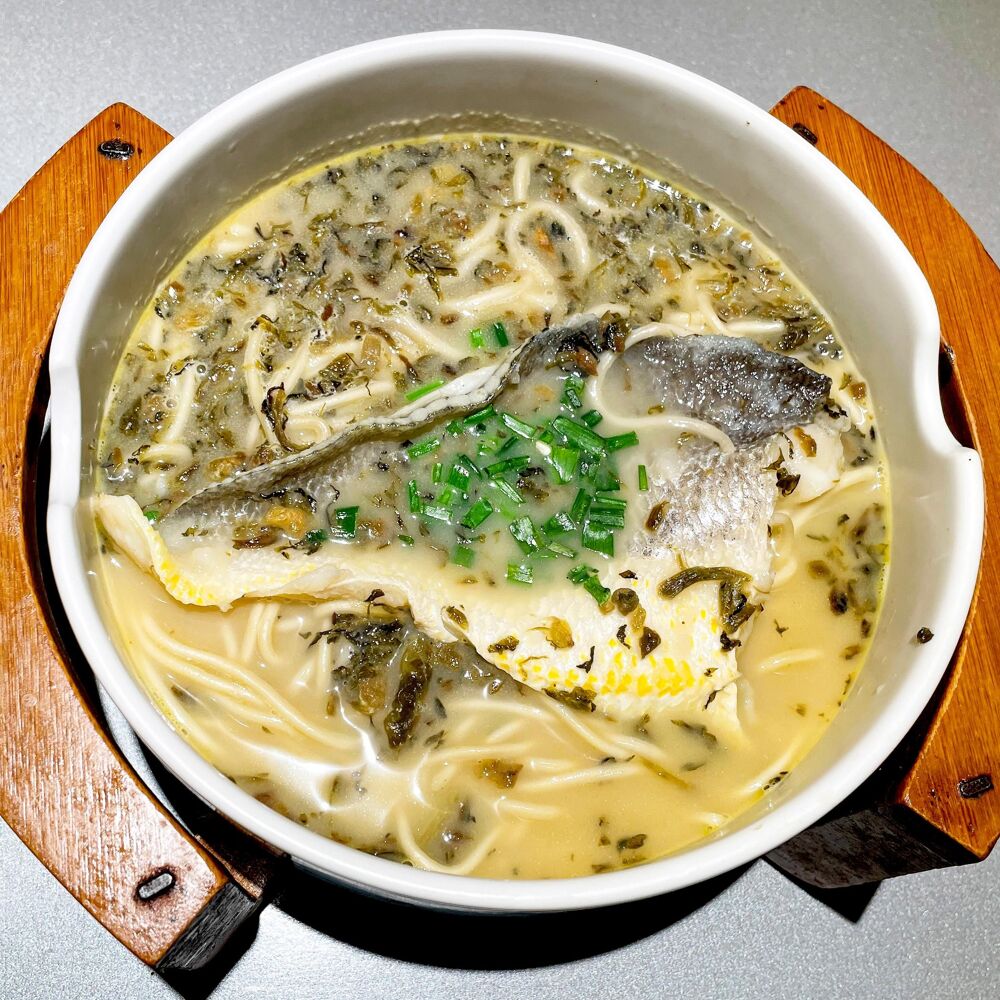
- Yellow croaker noodles with pickled vegetables
- Shredded pork noodles with scallions
- Deep-fried pork chops
- Congee
Approach Shanghai and the restaurant rhythm changes before the room does: retail frontage, lane entrances, quick decisions, plates and bowls moving faster than conversation. This is Shanghai dining at street level, where the proposition has to explain itself without a long preamble. Ding Te Le Zhou Mian Guan belongs to that practical genre, built around direct meal formats that carry much of the city’s daily eating culture.
That matters because Shanghai’s restaurant identity is often flattened into banquet rooms, queues, or high-design tasting menus. The smaller counter-service and neighborhood-shop tier works by a different logic. A compact menu tells the reader how locals eat between meetings, errands, and late shifts. It is less about a chef’s authorship than about repetition: meals that survive because they can be ordered quickly, understood quickly, and returned to often.
Everyday menu architecture in Shanghai
The name itself suggests a straightforward structure. Rather than a long-form tasting-menu proposition, Ding Te Le Zhou Mian Guan reads as a direct, compact address. In Shanghai, that kind of format can cut across the day. It offers speed, substance, and an easy way into the city’s everyday restaurant culture, with the surrounding meal usually kept simple. The format is economical, but it is not simplistic. It rewards kitchens that can keep preparations consistent while allowing customers to build a meal by appetite rather than by course sequence.
This is also why the category remains useful for travelers who have already eaten the city’s more formal canon. A compact local shop shows how local dining works when ceremony is stripped away. Compared with a polished room such as Easeful Cuisine (Jingan), or another Shanghai address such as Chun, the point is not breadth. The point is concentration. A narrow menu architecture gives the restaurant its identity, and that identity is legible even before a specific dish list is considered.
Shanghai’s premium dining scene now runs on parallel tracks. On one side are polished dining rooms and business-meal formats built around occasion and setting. On the other side are compact local formats where the meal is defined less by room design than by directness. Ding Te Le Zhou Mian Guan reads clearly in the second camp, with its value coming from clarity rather than ceremony.
Why the Shanghai setting changes the meal
Shanghai is not a quiet village pocket; it is a dense commercial city where older urban textures sit beside shopping frontage and daily traffic. That context shapes how a compact local shop functions. Meals here tend to be short, direct, and woven into the day. The restaurant does not need a theatrical dining room to make sense. Its setting supplies the pressure: office traffic, shoppers, residents, and visitors all moving through the same urban channel.
For a traveler, that makes the address a useful counterweight to destination dining. A meal here can sit between museum time, retail time, or a longer restaurant itinerary without demanding the commitment of a tasting menu. The useful comparison is not with luxury hotels or cocktail bars, but with the city’s broader ecology: quick local meals by day, more formal dining by night, and bars after that. For the wider map, Our full Shanghai restaurants guide, Our full Shanghai hotels guide, and Our full Shanghai bars guide show how those categories sit beside one another.
The absence of a public chef narrative is not a weakness in this genre. In compact local restaurants, authorship is usually expressed through format discipline rather than biography. The test is whether the categories make sense together, whether a diner can build a complete meal without friction, and whether the room serves the pace of the city. In that respect, the restaurant is better read as part of Shanghai’s working dining tradition than as a personality-led project.
How to place it in a broader China itinerary
China’s regional dining map is too varied for one Shanghai address to carry the whole argument. The value of a place like this is narrower and more precise: it shows how a major commercial city absorbs humble, everyday restaurant forms without turning them into spectacle. That is a different lesson from more formal regional dining elsewhere in China, where a single meal may be framed around ceremony, specialist technique, or a longer occasion.
It also differs from capital-city set pieces, where one tradition can become the frame for a full occasion. Here, the frame is modular. A compact meal does not ask for the same choreography as a banquet table. It asks whether the diner understands the pleasure of a meal that is complete without being elaborate.
That is the editorial reason to keep this address on a Shanghai list. Ding Te Le Zhou Mian Guan gives texture to the city’s restaurant range: not a trophy booking, not a hotel dining room, not a bar-led night out, but a compact reading of what everyday Shanghai eating can look like in a high-traffic city. For travelers building a fuller city circuit, the adjacent categories matter too: Our full Shanghai wineries guide and Our full Shanghai experiences guide fill in the drinking and cultural sides of the itinerary, while international contrasts underline how diaspora and export formats differ from eating a compact everyday format in its home city.
Frequently asked questions
How do I find Ding Te Le Zhou Mian Guan?
Ding Te Le Zhou Mian Guan is located in Shanghai.
What's Ding Te Le Zhou Mian Guan known for in terms of accolades?
Ding Te Le Zhou Mian Guan is listed in the Michelin Guide with a MICHELIN Plate distinction.
Do they take walk-ins at Ding Te Le Zhou Mian Guan?
The public record provided here does not include phone, website, or booking details. Treat it as a straightforward Shanghai dining stop and check the venue's official channels for the latest details.
What is Ding Te Le Zhou Mian Guan known for?
Ding Te Le Zhou Mian Guan is best understood as a compact Shanghai restaurant with a practical, everyday meal format rather than a formal chef-driven menu.
Credentials Lens
Comparable venues by cuisine and price in the same metro.
| Venue | Cuisine | Price | Awards | Notes |
|---|---|---|---|---|
| Ding Te Le Zhou Mian Guan | Shanghainese Noodle Shop | $10–20 | Michelin Plate | Not listed |
| Easeful Cuisine (Jingan) | Jiangzhe Cuisine | Not listed | Michelin Bib Gourmand | Jiangzhe |
| Beans and Grapes | Modern hotel café & bakery | Not listed | Not listed | Not listed |
| URBAN Café | Authentic Thai | Not listed | Not listed | Not listed |
| WuXieJu | Modern Vegetarian Chinese | $50–100 | Black Pearl 1 Diamond | Not listed |
| Chun | Authentic Shanghainese Home-Style Cooking | $20–30 | Michelin Bib Gourmand · Wine Spectator Best of Award of Excellence | Shanghainese |
Recognition history
Dated appearances from independent guides and award organizations, with the underlying list record or original source where available.
Michelin Plate
Michelin
Continue exploring
More in Shanghai
Restaurants in Shanghai
All restaurants in Shanghai →
Bars in Shanghai
All bars in Shanghai →
Details
- Lively
- Classic
- Solo
- Casual Hangout
- Family
- Late Night
- Group Dining
- Standalone
- A La Carte
- Pescatarian Friendly
A simple, no-frills noodle and congee shop hidden in a narrow alley, with a slightly retro, canteen-like interior that is usually busy and energetic, more about quick, comforting bowls than décor or formality.