The Basaveshwar Nagar branch of the Dindigul Thalappakatti chain brings Tamil Nadu's most recognised biryani tradition to west Bengaluru. Positioned on Modi Hospital Road, it serves the same spice-forward Dindigul-style biryani that built the brand's reputation across South India, drawing a loyal weekday lunch crowd and longer weekend queues from the surrounding residential neighbourhoods.
Pearl is the En Primeur Club membership app — saves, bookings, and concierge access live there. Same editors, same standards.
- Address
- No 729, First Floor, Modi hospital Junction, Modi Hospital Rd, Manjunath Nagar, Basaveshwar Nagar, Bengaluru, Karnataka 560010, India
- Phone
- +917825890003
- Website
- thalappakatti.com
- Directions
- Get directions
 Saves & bookings on Pearl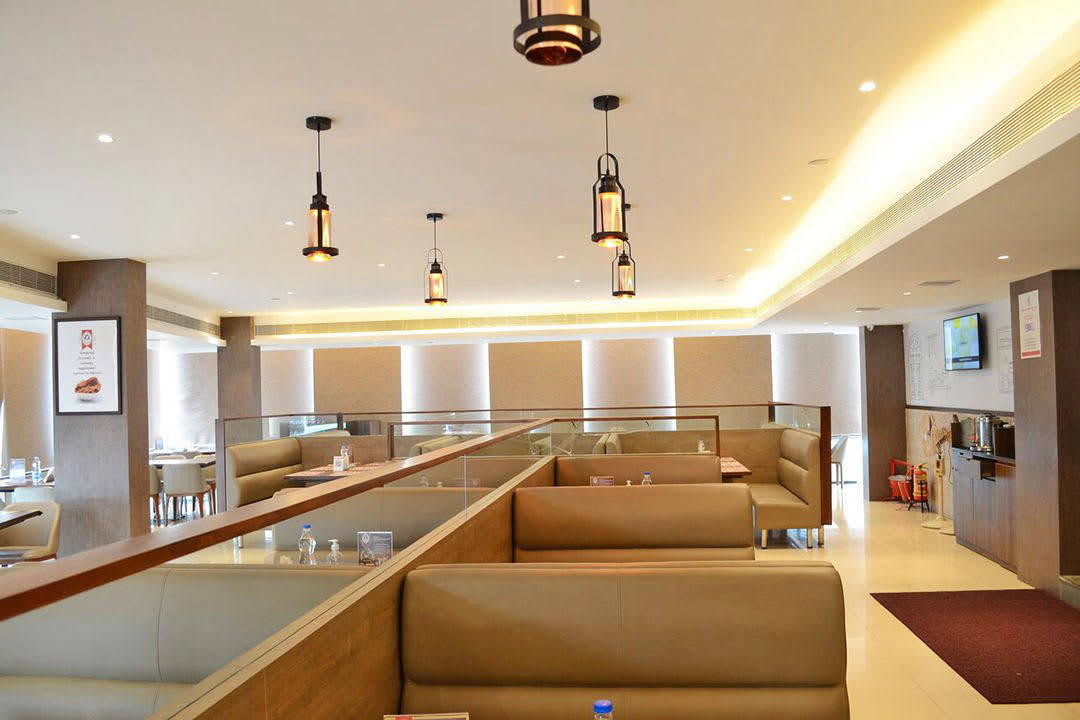
A Tamil Nadu Biryani Tradition in West Bengaluru
Bengaluru's relationship with South Indian biryani is layered and contested. The city has long absorbed multiple regional traditions, Hyderabadi dum, Ambur, Vaniyambadi, and the shorter-grained Thalassery school, but few have arrived with the institutional weight that Dindigul Thalappakatti carries. The brand originated in Dindigul, a small city in Tamil Nadu, where the combination of locally sourced Seeraga Samba rice, a specific ratio of spicing, and a preference for smaller, more flavourful cuts of Jeera Samba-fed goat established a biryani grammar that is genuinely distinct from the longer-grained, more fragrant Hyderabadi model most north Indian visitors default to.
This branch on Modi Hospital Road in Basaveshwar Nagar sits on the first floor of a building at the Modi Hospital Junction, serving a residential and transit-heavy pocket of west Bengaluru that has fewer sit-down dining options than the more saturated corridors of Indiranagar or Koramangala. For the wider picture of where this fits in Bengaluru's dining hierarchy, our full Bengaluru restaurants guide maps the city's range from heritage South Indian formats to newer international arrivals.
How the Menu Is Structured
The Thalappakatti menu is built around a single, clearly defined centrepiece: the biryani. This is not a menu that hedges toward multiple cuisines or broadens itself into a pan-Indian all-rounder. The architecture is spare by design. Biryani in various protein configurations, goat being the reference point, with chicken as the wider-access option, sits at the core, supported by a short list of accompaniments: raita, salan, and curries that function as satellites rather than independent attractions.
This structure tells you something about how the brand thinks about its product. In a competitive casual-dining market where many South Indian chains expand their menus to catch more spending occasions, Thalappakatti has largely resisted that drift. The Seeraga Samba rice, which is shorter and more aromatic than basmati, absorbs the spicing differently, the result is a denser, more tightly integrated plate than the layered, strand-by-strand Hyderabadi style. The decision to anchor the menu on that specific rice variety rather than substituting the more readily available basmati is an operational commitment that shapes every other element of what arrives at the table.
The sides and accompaniments are not afterthoughts. Raita here functions as a cooling counterpoint to a spice profile that sits noticeably higher than most Bengaluru-local biryanis. Ordered alongside the goat biryani, it recalibrates the heat rather than simply adding textural contrast. The curry accompaniments, typically a bone-in preparation, extend the meal for those who want more protein surface area relative to rice volume.
Placing Thalappakatti in Bengaluru's Biryani Tier
Bengaluru's biryani scene splits roughly into three tiers: the informal streetside and box-delivery segment, the established mid-market sit-down chains, and a thinner layer of destination-format restaurants where provenance and premium ingredients are front and centre. Thalappakatti operates in the mid-market sit-down tier, where the competitive set includes both local Bengaluru chains and Tamil Nadu imports. The brand's advantage is not price position, there are cheaper options across the city, but a clarity of regional identity that most competitors cannot credibly claim.
Within Bengaluru's broader restaurant picture, the contrast with places like Bombay Brasserie - Orion Mall or Burma Burma Restaurant & Tea Room is instructive: those venues operate on experiential breadth, building menus around discovery and theatre. Thalappakatti's proposition is the opposite, depth over breadth, execution over concept. The Bengaluru Restaurant and Highland Nectar - ITC Gardenia represent still different positions in the city's dining range, underscoring how segmented the market has become.
For those tracking the Thalappakatti format across the city, the original Dindigul Thalappakatti Restaurant location in Bengaluru provides a reference point against which the Basaveshwar Nagar branch can be measured. Multi-location chains in this category often show meaningful variation between branches in spice calibration and rice texture, and that is worth factoring into expectations.
The Broader Context: South India's Biryani Geography
South Indian biryani is more geographically fragmented than most diners from outside the region realise. The Dindigul style, built on Seeraga Samba rice and a spice blend that emphasises warmth over florality, is one of several distinct Tamil Nadu traditions. Ambur biryani uses a different rice-to-meat ratio and a heavier hand with raw onion as a garnish. The Chettinad tradition brings its own spicing hierarchy. Across the border in Telangana, the Hyderabadi dum model operates with basmati and a layering technique that produces a different texture entirely.
Understanding that geography helps explain why Thalappakatti's menu clarity works as a signal of confidence rather than limitation. Compare this regional specificity with the approach taken at Kappa Chakka Kandhari in Chennai, which anchors itself equally firmly in a single regional tradition, Kerala's toddy shop cooking, and achieves similar credibility through that commitment. The same principle applies to Farmlore in Bangalore, which takes an ingredient-provenance position rather than a regional-cuisine position but operates with the same refusal to dilute its central premise.
For reference across India's wider restaurant range, platforms like Adaa at Falaknuma Palace in Hyderabad show how Hyderabadi biryani sits at its most formal and highest-price expression, while Inja in New Delhi represents a modernist South Indian approach altogether different in intent. Naar in Kasauli, Americano in Mumbai, Bomras in Anjuna, Dining Tent in Jaisalmer, Leela Kerala Terrace in Trivandrum, Neel in Patiala, Le Bernardin in New York City, and Lazy Bear in San Francisco each demonstrate how menu architecture, the decision about what to include and what to refuse, shapes a restaurant's identity across different formats and price tiers.
Planning Your Visit
The Basaveshwar Nagar branch is located on the first floor at Modi Hospital Junction on Modi Hospital Road, within Manjunath Nagar. It serves a primarily residential catchment, which means lunch hours on weekdays tend to move quickly, while weekends draw longer queues from the surrounding area. The branch accepts walk-ins, and the standard hours are Monday through Sunday, 11 AM to 1 AM. Arriving early in the lunch or dinner service window is the practical hedge against waiting.
Recognition, Side-by-Side
Comparable venues nearby, for context on price, style, and recognition.
| Venue | Cuisine | Price | Notes |
|---|---|---|---|
| Dindigul Thalappakatti Restaurant Basaveshwara NagarThis venue — the venue you are viewing | Thalappakatti Biryani | $$ | Not listed |
| Bengaluru Restaurant | Well-known South Indian Dosa House | $ | Basavanagudi |
| The Ritz-Carlton, Bangalore | Progressive Indian & Global Fine Dining | $$$$ | Residency Road |
| Dindigul Thalappakatti Restaurant | Traditional South Indian Biryani | $$ | Indiranagar, Marathahalli, Jayanagar, HSR Layout, Brigade Road, Kalyan Nagar, Madiwala |
| House of Commons | Indian Pub Fare | $$ | Koramangala |
| Burma Burma Restaurant & Tea Room | Authentic Burmese Vegetarian | $$$ | Indiranagar |
Continue exploring
More in Bengaluru
Restaurants in Bengaluru
Browse all →
Bars in Bengaluru
Browse all →
Hotels in Bengaluru
Browse all →
Wineries in Bengaluru
Browse all →
At a Glance
- Lively
- Classic
- Family
- Group Dining
- Casual Hangout
- Standalone
Current opening hours
- Monday
- 11 AM–1 AM
- Tuesday
- 11 AM–1 AM
- Wednesday
- 11 AM–1 AM
- Thursday
- 11 AM–1 AM
- Friday
- 11 AM–1 AM
- Saturday
- 11 AM–1 AM
- Sunday
- 11 AM–1 AM
Hours can change for holidays and private events. Last verified .
Casual and relaxed atmosphere focused on home-style Indian comfort food with a lively dining vibe.