Dergi Praha

One of the few dedicated Georgian restaurants in Prague, Dergi Praha occupies a spacious room near the Vltava in Staré Město, where live music, traditional décor, and khinkali dumplings in multiple fillings draw a crowd that extends well beyond the city's Georgian diaspora. The format sits outside Prague's Central European mainstream, offering something the Old Town's restaurant grid rarely provides.
Pearl is the En Primeur Club membership app — saves, bookings, and concierge access live there. Same editors, same standards.
- Address
- Revoluční 25, 110 00 Staré Město, Czechia
- Phone
- +420 725 888 919
- Website
- dergipraha.cz
- Directions
- Get directions
 Saves & bookings on Pearl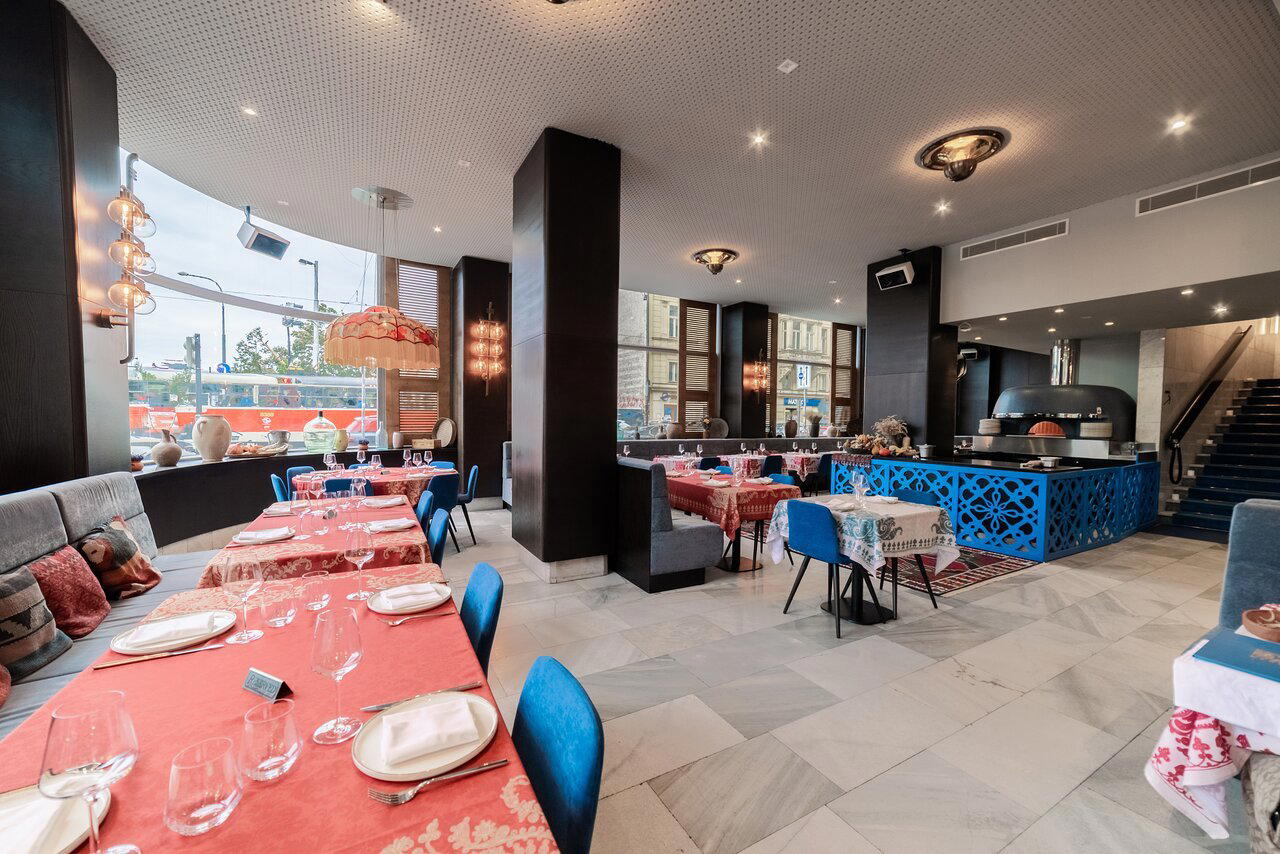
Georgian cuisine in Central Europe: a context worth understanding
Prague's restaurant offer has broadened considerably over the past decade, but the Caucasus remains one of the least-represented culinary regions in the city. Georgian food, built around wood-fired meats, walnut-heavy sauces, dumplings that require a specific technique to eat correctly, and bread baked against the walls of clay ovens, operates on principles almost entirely distinct from the Czech or pan-European cooking that dominates menus within walking distance. At Revoluční 25, a commercial building a few metres from the Vltava River, that cuisine has found a dedicated home in central Prague.
For diners familiar with the Georgian table through travel to Tbilisi or the wine regions of Kakheti, the format here will read as recognisable. For those coming to it fresh, the menu represents a substantial departure from what the Old Town typically offers. That novelty factor is a feature, not a complication, Georgian food has a logic and a generosity that tends to reward first-time diners immediately, without requiring prior study.
The room: what you encounter on arrival
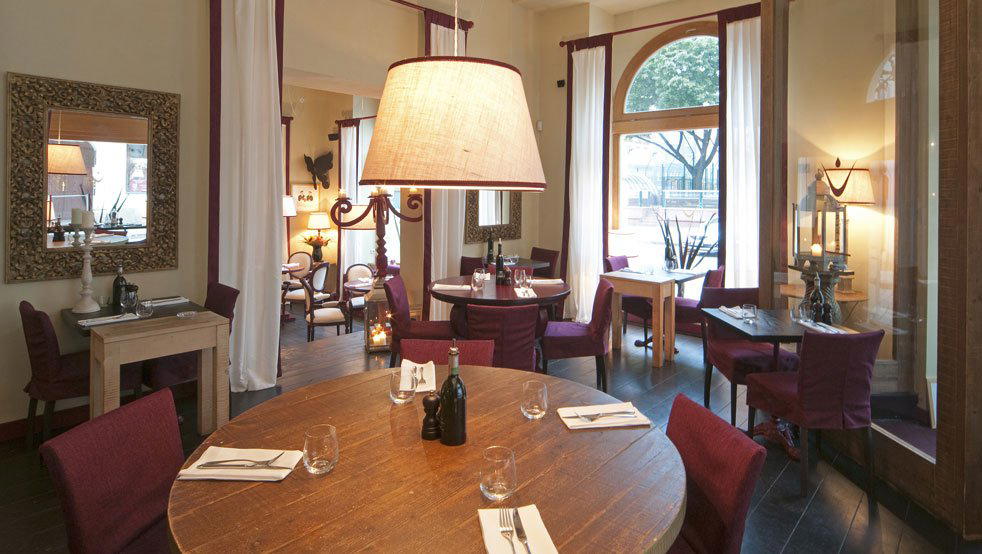
The interior at Dergi Praha signals its identity before food arrives. Colourful pendant lamps in traditional Georgian patterns hang overhead, and patterned fabrics punctuate the walls, creating an environment that reads as considered rather than generic in its cultural referencing. The room itself is spacious and open, which allows for live Georgian music to function as atmosphere rather than intrusion, a balance that smaller venues often struggle to achieve with live performance. The setting positions Dergi Praha within a category of Central European diaspora restaurants where authenticity is communicated through environmental totality: sound, décor, and menu working in alignment.
This matters because Prague has many restaurants with decorative ambitions that stop at the surface. Here, the visual and acoustic choices correspond to what's happening in the kitchen, giving the experience a coherence that is easy to take for granted but less common than it should be. Compared to the stripped-back modernism of venues like Alma or the formal European register of Alcron, Dergi Praha operates in a different register entirely, warmer, louder, and deliberately festive.
The food: khinkali, barbecue, and the Georgian table
Khinkali are the dish most associated with Georgian cuisine internationally, and at Dergi Praha they are available in multiple fillings. The dumpling's architecture demands attention: the dough is thick and pleated at the leading, the interior holds both meat and broth, and the correct approach involves holding the dumpling by its knotted crown, biting a small hole, and consuming the liquid before the filling. Eating khinkali incorrectly is how you lose the broth, and losing the broth is the point where the dish fails to deliver its full intention. That the menu here centres them speaks to a kitchen working from the standard Georgian repertoire rather than adapting it for assumed European preferences.
The barbecued dishes extend the offer into the register where Georgian cooking intersects most directly with its Caucasian neighbours. These preparations come with typical sauces, walnut-based, tart, herb-forward, that are central to the cuisine's identity and distinguishable from anything in the Czech or broader Central European tradition. The flavour logic here is layered and confident rather than mild or accommodating. Prague's dining mainstream skews toward French-Czech refinement at the leading end, represented by venues like La Degustation Bohême Bourgeoise, or contemporary European formats. Georgian food operates on different terms: communal, meat-forward, sauce-driven, and built for tables that order widely.
Wine: the Georgian context and what it means for the glass
The editorial angle here matters. Georgia is one of the world's oldest wine-producing regions, archaeological evidence dates winemaking in the South Caucasus to approximately 6,000 BCE, and the country's signature amber wines, made by fermenting white grapes with extended skin contact in clay vessels called qvevri, have moved from regional obscurity to serious collector interest over the past fifteen years. Natural wine communities in London, Paris, and New York now treat Rkatsiteli and Mtsvane from producers like Pheasant's Tears or Iago's Wine as reference points for the amber category. The context that this brings to a Georgian restaurant's wine program is substantial.
What can be said is that a restaurant of this identity and positioning, dedicated to authentic Georgian cuisine in a Central European capital, sits within a category where the wine offer is often as central as the food. Prague is not a city with deep Georgian wine distribution in its broader restaurant market; venues like Amano or 420 Restaurant draw from European and New World lists that reflect the city's mainstream wine culture. A dedicated Georgian table is a different proposition, and visiting with that question in mind is the right approach for wine-attentive diners.
Placing Dergi Praha in Prague's wider picture
Prague's Old Town operates at a range of price points and culinary ambitions. The concentration of visitors in Staré Město has historically driven a restaurant market that can be uneven, high volume, variable quality, and menus designed for tourists with limited repeat business. The restaurant occupies a specific position within that environment: a specialist venue with a defined culinary identity that does not depend on novelty or tourism alone. The live music, the detailed décor, and the menu's fidelity to Georgian convention suggest a kitchen and a room designed with a particular audience in mind.
For travellers building a wider picture of Prague's dining options, the EP Club guide to Prague restaurants maps the full range of cuisines and formats across the city. Those travelling with specific interests in hospitality, drinking, or local wine culture will find the Prague hotels guide, Prague bars guide, and Prague wineries guide useful companions. For broader Czech Republic context, venues like ARRIGŌ in Děčín, ATELIER bar and bistro in Brno, Babiččina zahrada in Průhonice, Bohém in Litomyšl, Cattaleya in Čeladná, and Chapelle in Písek offer reference points outside the capital. For international framing, Le Bernardin in New York City and Atomix in New York City represent the kind of specialist culinary conviction at the upper end of the global market that restaurant, at a different scale and price level, shares in orientation if not in category. And the Prague experiences guide covers what the city offers beyond the table.
Planning your visit
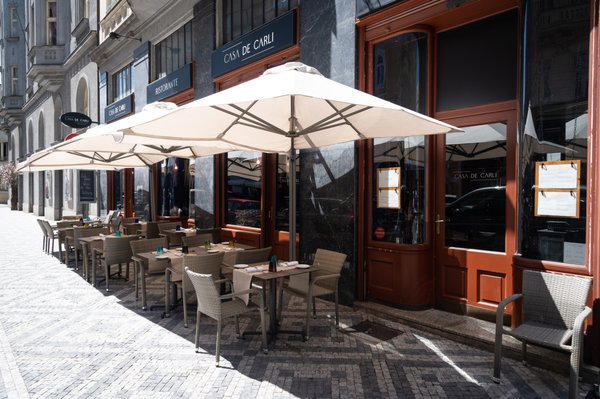
The restaurant is located at Revoluční 25 in Staré Město, within easy reach of the Náměstí Republiky metro station and a short walk from the Vltava embankment. The address sits in a commercial building rather than a historic restaurant street. For a table, particularly on evenings when live music is scheduled, contacting the venue in advance is advisable.
Price Lens
Comparable venues nearby, for context on price, style, and recognition.
| Venue | Cuisine | Price | Awards | Notes |
|---|---|---|---|---|
| Dergi PrahaThis venue — the venue you are viewing | Pelc Tyrolka, Authentic Georgian | $$ | Michelin Plate | Not listed |
| Eska | Not listed | $$$ | Not listed | Karlin, Modern Czech with Neo-Nordic Influences |
| Café Imperial | Pelc Tyrolka, Classic Czech Brasserie | $$$ | Michelin Plate | Not listed |
| Apelace21 | Not listed | $$$ | Michelin Plate | Praha 2, Contemporary Czech Fine Dining |
| U Matěje | Lysolaje, Modern Czech Cuisine | $$$ | Bib Gourmand | Not listed |
| The Eatery | Holesovice, Contemporary Czech Cuisine | $$ | Bib Gourmand | Not listed |
Recognition history
Dated appearances from independent guides and award organizations, with the underlying list record or original source where available.
Michelin Plate
Michelin
At a Glance
- Cozy
- Lively
- Modern
- Business Dinner
- Group Dining
- Family
- Late Night
- Live Music
- Open Kitchen
- Craft Cocktails
- Street Scene
Current opening hours
- Monday
- 3 PM–12 AM
- Tuesday
- 11 AM–12 AM
- Wednesday
- 11 AM–12 AM
- Thursday
- 11 AM–12 AM
- Friday
- 12 PM–12 AM
- Saturday
- 12 PM–12 AM
- Sunday
- 12–11 PM
Hours can change for holidays and private events. Last verified .
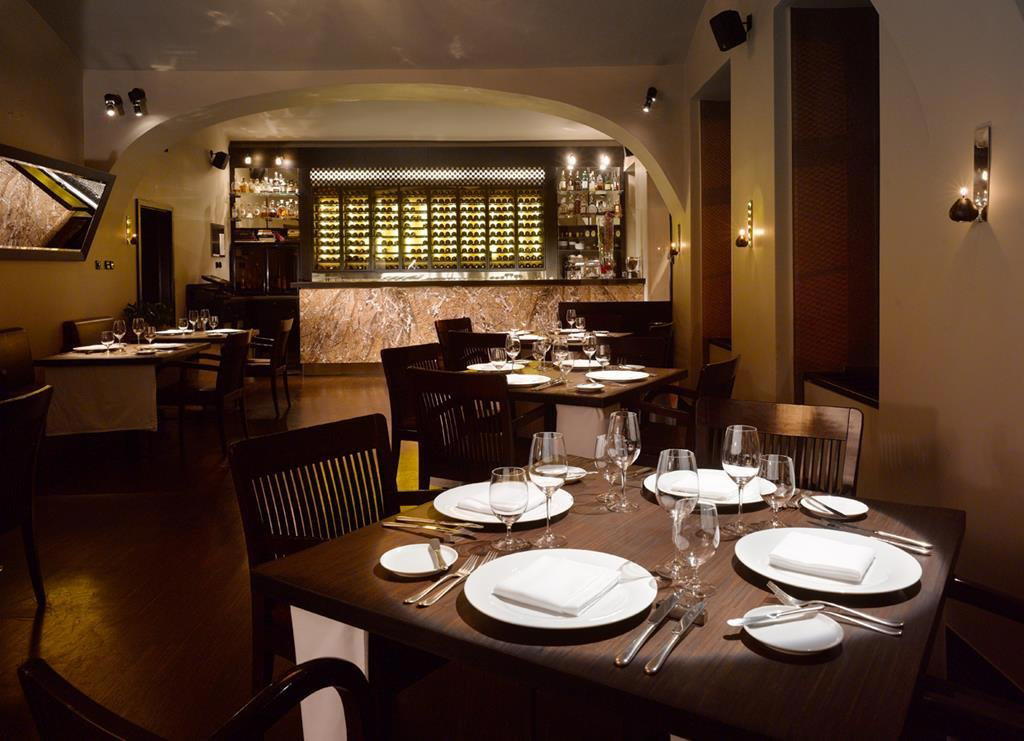
Cozy and cheerful with colorful pendant lamps, patterned fabrics, spacious setting, and live music creating an animated, welcoming atmosphere.