Chapelle

Michelin Plate
Our verdict
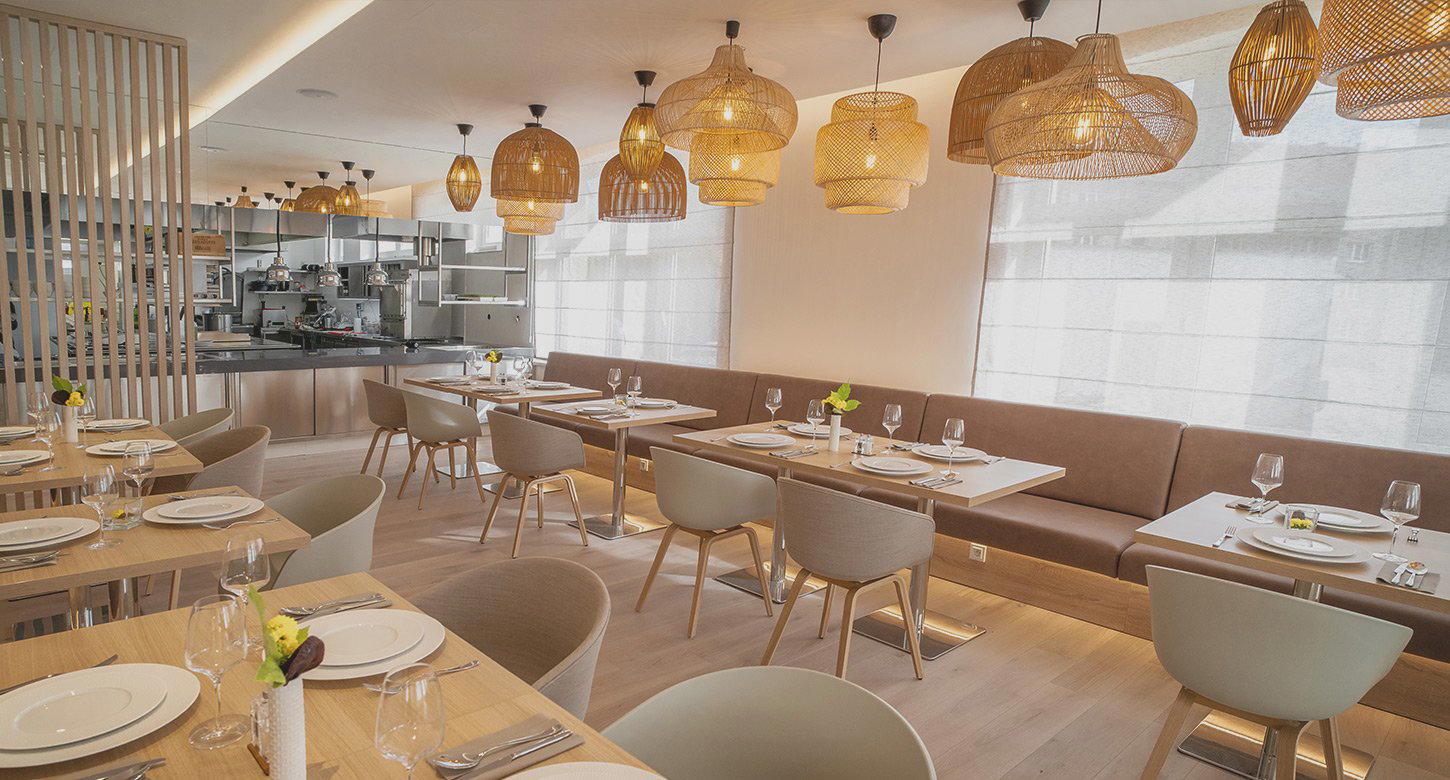
In a mid-sized South Bohemian city with few dining destinations that reward a detour, Chapelle occupies a different register. The restaurant pairs clean-lined, light-wood design with an open kitchen and a menu that draws on both Czech and international influences. Hotel U Kapličky shares the same building, making it a practical base for exploring Písek and the surrounding region.

Pearl is the En Primeur Club membership app — saves, bookings, and concierge access live there. Same editors, same standards.
- Address
- Budějovická 2440/42, Budějovické Předměstí, 397 01 Písek-Písek 1, Czechia
- Phone
- +420 606 040 045
- Website
- chapelle.cz
- Directions
- Get directions
The menu
What to order
- Poultry pâté with raspberry gel and mustard caviar
- Beef steak with truffle sauce and potato gratin
- Cream puff dessert
A Different Register in South Bohemia
South Bohemian dining rarely makes the itineraries of travelers moving between Prague and the Austrian border, and Písek — a mid-sized city on the Otava River — has historically been a transit point rather than a destination in its own right. That is precisely the context in which a restaurant like Chapelle carries weight. The city offers limited options at the upper end of the casual-to-considered dining spectrum, which means the few places that take design, sourcing, and service seriously operate with a different kind of visibility than they would in Brno or Prague. For those planning a stop in the region, [our full Písek restaurants guide]() maps what the city currently offers.
Chapelle sits on Budějovická, the main artery running south through the city's Budějovické Předměstí district. The approach is direct: a building that carries architectural restraint into its interior, where clean lines, light wood, and a palette of natural tones set the room apart from the heavier Central European dining rooms that still define much of the region's mid-market. The design reads as intentional rather than incidental, and that intention extends to the kitchen.
The Room and What It Tells You
In Czech regional dining, open kitchens remain less common than in Prague or the larger Moravian cities. When a restaurant in a city the size of Písek commits to one, it signals something about the kitchen's confidence and the management's understanding of how food and atmosphere reinforce each other. At Chapelle, the open kitchen is visible from certain tables, and if you secure one of those positions, the preparation of dishes becomes part of the meal rather than something happening behind closed doors.
The design vocabulary, light wood, natural hues, clean geometry, places Chapelle in a cohort of Central European restaurants that have moved away from the dark-paneled, heavy-curtained tradition. That shift is more advanced in Prague (where venues like La Degustation Bohême Bourgeoise and others have pushed formal dining into modernist territory) and in Moravia, where places like ATELIER bar & bistro in Brno and Entrée in Olomouc represent a generation of operators redefining what regional Czech dining can look like. Chapelle's visual language belongs to that broader pattern, applied at the Písek scale.
Czech and International Influences on the Plate
The menu works across both Czech and international reference points, which is a more deliberate editorial choice than it might appear. Czech cuisine has a specific product logic: game from southern Bohemian forests, freshwater fish from the region's historic pond network (South Bohemia holds one of Europe's densest concentrations of man-made fish ponds, a medieval aquaculture system still producing carp, pike, and perch), root vegetables, and foraged ingredients that shift with the season. A kitchen that draws on Czech influences in this part of the country has access to a distinct raw material tradition.
International influence, in this context, functions as a framing device rather than a departure from local sourcing. The same carp that would appear in a traditional Czech Christmas dish can be prepared with technique and presentation borrowed from French or broader European cooking. That kind of translation is what distinguishes modern Czech regional cooking from both conservative Czech tradition and generic international hotel food. Comparable approaches can be seen at Bohém in Litomyšl and Goldie in Tábor, where regional ingredients are handled with a more contemporary technical register. Further afield, the combination of local sourcing and international technique defines the ambition at places like Cattaleya in Čeladná and ESSENS in Hlohovec.
The sourcing logic of South Bohemia is worth understanding before you arrive. The region's agricultural character, dairy farming, grain cultivation, the pond system, game forests, gives a kitchen here a different pantry than Prague or Brno. When that pantry is taken seriously, the distance from the capital becomes an asset rather than a limitation. It is the same argument that applies to Babiččina zahrada in Průhonice and Dvůr Perlová voda in Budyně nad Ohří: the further you move from the urban center, the more the food reflects a specific geography rather than a generalized European menu.
Service and the Hotel Connection
The service at Chapelle is described as attentive and cordial, which in a regional Czech context represents a meaningful distinction. Service culture in mid-size Czech cities has historically lagged behind Prague's more internationally exposed restaurant scene, and the gap between a kitchen's ambition and its front-of-house execution has undermined more than a few otherwise serious regional restaurants. A room that combines considered design, an open kitchen, and service that actually reads the table is a less common combination than it should be outside the major cities.
Hotel U Kapličky occupies the same building, which changes the practical calculus for anyone visiting from outside Písek. The combination of a dinner reservation and a room in the same address is common in more formally organized wine and food destinations, think the restaurant-hotel pairings that define places like Grandrestaurant Pupp in Karlovy Vary, but it remains relatively rare at Chapelle's scale and register in South Bohemia. If you are arriving from Prague or continuing south toward the Austrian or German border, it removes the logistics problem of where to stay while giving you the option to linger over dinner without watching the clock. The guestrooms are described as attractive, which is to say they are worth considering on their own terms rather than simply as an overflow facility for the restaurant. The [Písek hotels guide]() covers the city's accommodation options more fully.
Planning Your Visit
Písek is roughly 90 kilometers south of Prague, accessible by car or regional train. The city sits on the main route toward České Budějovice and the South Bohemian wine and pond country, making a stop here a natural break in a longer itinerary rather than a dedicated journey. For those building a broader program around the region, the Písek experiences guide, [Písek bars guide](), and [Písek wineries guide]() provide context for what else the city and its surroundings support.
Given Chapelle's position as one of the more considered dining options in a city without a deep restaurant bench, reservations ahead of weekends are advisable, particularly if you want to secure a table with a direct view of the kitchen. The same logic applies to anyone comparing the experience to more internationally recognized Czech fine dining: ARRIGŌ in Děčín or, at the far end of the formality spectrum, La Degustation Bohême Bourgeoise in Prague each occupy a different tier, but Chapelle's version of considered regional cooking is the argument for staying outside the capital rather than returning to it for dinner.
Frequently asked questions
Does Chapelle work for a family meal?
Chapelle reads as a considered dinner destination rather than a casual family venue. The chic design, clean lines, and open kitchen set a tone closer to a date night or a business dinner than a relaxed family outing. Families with older children who are comfortable in a designed, attentive-service environment will find it more suitable than those looking for something informal.
What is the atmosphere like at Chapelle?
The room uses light wood, clean lines, and a palette of natural hues — a contemporary Central European register that feels considered without being cold. Request a table with a view of the open kitchen and the room takes on a different dynamic: the kitchen becomes part of the dining experience rather than something hidden behind closed doors.
What's Chapelle known for in terms of accolades?
Chapelle has received recognition including: With its chic design, clean lines, light wood and palette of natural hues, this restaurant is blessed with good looks. If you are lucky, you will be seated at a table with a front-row view of the chefs preparing the dishes in the open kitch….
What do people recommend at Chapelle?
Recognition of Chapelle consistently points to the kitchen's modern cuisine, which draws on both Czech and international reference points. The open kitchen setup and the quality of service are cited alongside the food itself, suggesting the experience holds together across multiple dimensions rather than resting on a single standout dish.
What's the address for Chapelle?
Chapelle is located at Budějovická 2440/42, Budějovické Předměstí, 397 01 Písek-Písek 1, Czechia, Písek.
What's the best way to book Chapelle?
Phone and confirmed online booking details are not publicly listed at this time, so contacting the restaurant directly on arrival or through Hotel U Kapličky — which occupies the same building at Budějovická 2440/42 — is the most practical approach. The hotel connection suggests front-desk staff can assist with dining reservations.
What's the signature at Chapelle?
The defining characteristic is the kitchen's editorial position: modern technique applied equally to Czech regional references and international influences, presented in a designed room with an open kitchen. In South Bohemia, where that combination is uncommon, it gives Chapelle a specific identity rather than a generic one.
At-a-Glance Comparison
Comparable venues nearby, for context on price, style, and recognition.
| Venue | Cuisine | Price | Awards | Notes |
|---|---|---|---|---|
| ChapelleThis venue — the venue you are viewing | Modern French-Czech Bistro | $30–50 | Michelin Plate | Not listed |
| Sůl a Řepa | Modern Regional Czech | $20–30 | Michelin Plate | Strakonice |
| Na Kopci | Czech and French Classics | $30–50 | Michelin Bib Gourmand | Radlice |
| Pizzeria Da Pietro | Neapolitan Pizza | $10–20 | Not listed | Pilsen |
| Hosarowa | Korean BBQ & Shabu Shabu | $20–30 | Not listed | Stare Mesto (Old Town) |
| Taro | Modern Vietnamese Contemporary | $50–100 | Michelin Plate | Praha 1 |
Recognition history
Dated appearances from independent guides and award organizations, with the underlying list record or original source where available.
Michelin Plate
Michelin
Continue exploring
More in Písek
Restaurants in Písek
Browse all →
Chapelle
The wine
- Wine program
- Curated wine list
- Extensive wine list
- Sommelier-led
Details
- Modern
- Elegant
- Sophisticated
- Date Night
- Business Dinner
- Group Dining
- Family
- Celebration
- Special Occasion
- Open Kitchen
- Private Dining
- Terrace
- Hotel Restaurant
- Extensive Wine List
- Sommelier Led
- Farm To Table
- Organic
- Local Sourcing
- A La Carte
- Set Menu
- Wine
- Craft Lemonades
- Spirits
- Vegetarian Friendly
- Allergy Accommodating
Bright, chic modern interior with clean lines, light wood, natural color palette, and wicker chandeliers; open kitchen creates an engaging dining atmosphere with attentive service.