Dan Sung Sa
Dan Sung Sa on Telegraph Avenue is one of Oakland's established Korean drinking-and-eating destinations, where the format centers on late-night sociability, shared plates, and the kind of repeat-visit loyalty that accumulates over years rather than seasons. The atmosphere runs warm and deliberately unpretentious, placing it within a tradition of Korean pojangmacha-style hospitality transplanted to the East Bay.
Pearl is the En Primeur Club membership app — saves, bookings, and concierge access live there. Same editors, same standards.
- Address
- 2775 Telegraph Ave, Oakland, CA 94612
- Phone
- (510) 663-5927
- Website
- dansungsa.menu11.com
- Directions
- Get directions
 Saves & bookings on Pearl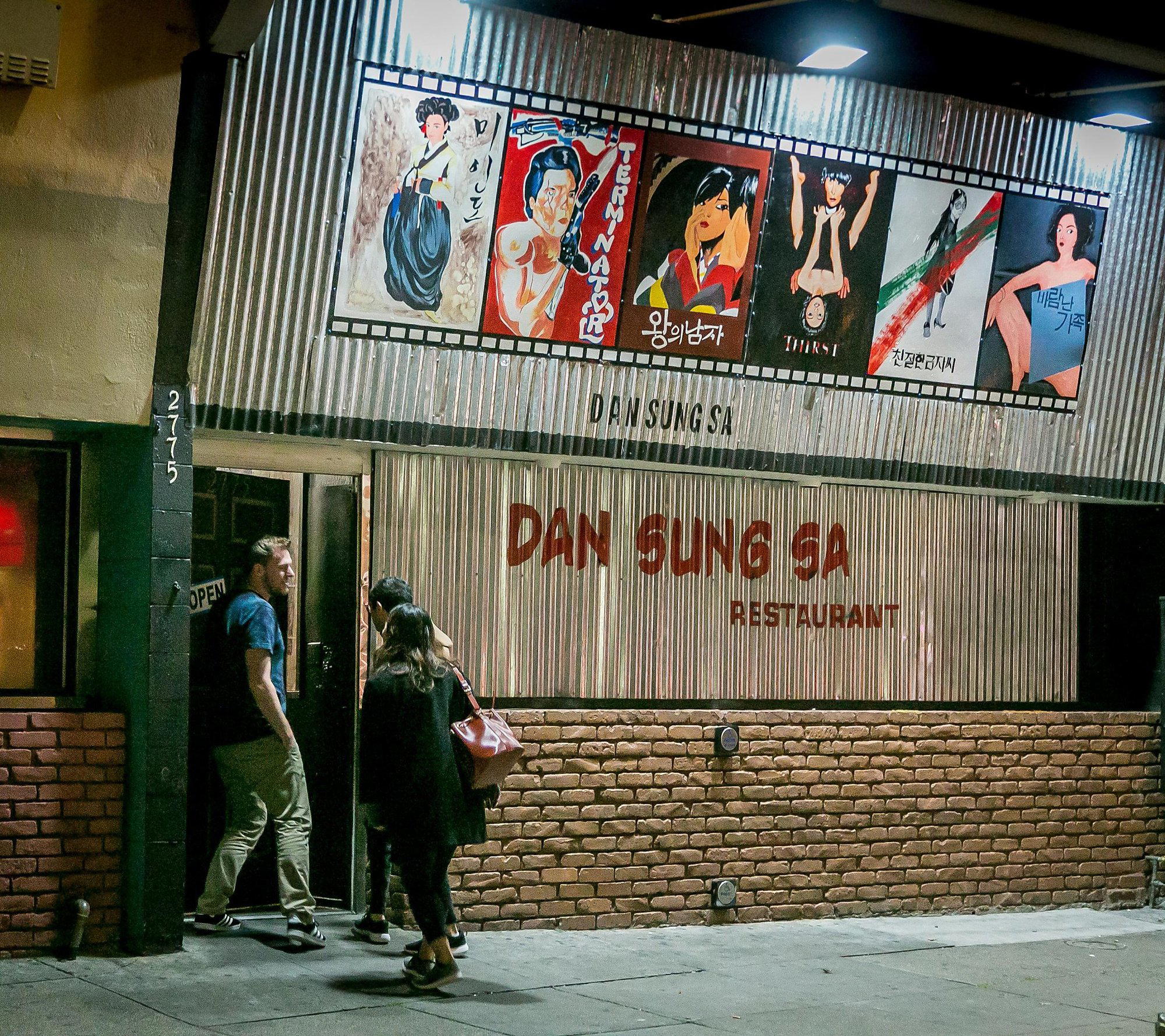
Telegraph After Dark: The Korean Drinking-House Tradition in Oakland
There is a category of restaurant that functions less as a destination and more as a social institution. In Seoul, the pojangmacha model, where drinking and eating are inseparable and the food exists to pace the alcohol rather than the other way around, has produced a distinct hospitality culture. Oakland's Telegraph Avenue corridor, which runs through a stretch of the city that has long absorbed immigrant food traditions alongside its DIY bar scene, holds a few places that operate on a similar logic. Dan Sung Sa at 2775 Telegraph Ave is a Korean street food restaurant in Oakland, with.
The character of the room matters here before anything on the menu does. Korean hof-style venues are built around a particular kind of dimness, communal noise, and the understanding that the table belongs to you for the duration of the evening rather than a timed slot. That format, which has driven decades of loyal clientele at similar addresses in Los Angeles's Koreatown and in Flushing, translates with some friction to American dining culture, which tends to privilege either efficiency or formality. The regulars at Telegraph Ave establishments like this one have already resolved that friction: they return because the format suits them, not despite it.
What Keeps People Coming Back
In Korean drinking-house culture, the unwritten menu is often more reliable than the printed one. Regulars learn what to order not from a server's recommendation but from repetition, from watching what arrives at neighboring tables, from the logic of what pairs leading with a round of soju or beer. The food at venues operating in this format tends to run toward anju, the Korean catch-all for food eaten while drinking: fried items, spiced small plates, dishes with enough salt and fat to slow the pace of an evening. These are not dishes that read well in a photo or translate into a single descriptive sentence, which is partly why this kind of restaurant rarely earns the same editorial coverage as tasting-menu operations.
The Korean hof tradition in American cities has produced particularly durable neighborhood institutions in urban dining, places that outlast trend cycles precisely because they are not built around them. Oakland has enough food press scrutiny on its higher-profile openings that a venue running a consistent late-night format for a loyal base can operate largely outside the review cycle. That is not obscurity; it is a different kind of relevance.
Oakland's Telegraph Corridor and Where Dan Sung Sa Fits
Telegraph Avenue between Grand Avenue and the Temescal district contains a layered set of food and drink operations. On the same corridor you find establishments like Agave Uptown, which pulls from a different tradition entirely, and operations like alaMar Dominican Kitchen and Alem's Coffee that represent the East Bay's broader immigrant food presence. The avenue functions as a working cross-section of Oakland's dining culture rather than a curated restaurant row, which means venues are sorted by function and loyal base rather than by cuisine category alone.
Dan Sung Sa occupies the late-night social-eating tier on that strip, a category distinct from both the destination-dining end, which in the Bay Area runs toward places like Lazy Bear in San Francisco or further afield to Single Thread Farm in Healdsburg, and from the daytime cafe and lunch trade represented by spots like 8th St Cafe nearby. The relevant comparable set for a Korean hof venue is not fine dining; it is the collection of late-night neighborhood anchors where the crowd already knows the format and the evening has its own internal rhythm.
Oakland's dining culture has long included Korean and Korean-adjacent operations, though the city's Korean food scene is smaller in scale than Los Angeles or Koreatown-adjacent corridors. In that context, a venue running a consistent hof format serves a specific gap: the audience that wants the Seoul drinking-house model without a drive to the South Bay. Venues like 3 Bottled Fish and Alem's Coffee nearby speak to how Telegraph functions as a zone where different food communities overlap rather than compete.
The Regulars' Logic
The audience that sustains a Korean drinking house is not primarily chasing novelty. The value proposition is reliability: the same dishes, the same atmosphere, the same social permission to occupy a table across multiple rounds of drinks without the transactional pressure that affects faster-turnover operations. This is structurally different from what makes someone book Atomix in New York City months in advance or plan a trip around The French Laundry in Napa. The regulars at a hof venue are building a habit.
That habit-formation dynamic also explains why word-of-mouth functions differently here than in tasting-menu or celebrity-chef contexts. Recommendations at this tier travel through existing social networks, through Korean-American community circles, through the East Bay nightlife crowd that has already filtered through the neighborhood and settled on a handful of trusted stops. The result is a stable, repeat-visit base that does not need external validation to sustain the operation.
Visitors from outside that base, including those who arrive having found the address through a guide or a map search rather than a personal recommendation, tend to have a better experience once they understand the format. Ordering for the table, drinking alongside eating rather than sequentially, and extending the evening past the first course are all part of the logic the regulars already carry in.
Planning Your Visit
Know Before You Go
- Address: 2775 Telegraph Ave, Oakland, CA 94612
- Format: Korean hof-style drinking and eating venue; food is designed to accompany drinks over an extended sitting
- Timing: The format suits later evenings; arriving at peak dining hours may mean a wait during busier periods
- Booking: Walk-ins are welcome and typical here.
- Nearby: Agave Uptown and alaMar Dominican Kitchen are on the same Telegraph corridor
Nearby-ish Comparables
Comparable venues nearby, for context on price, style, and recognition.
| Venue | Cuisine | Price | Notes |
|---|---|---|---|
| Dan Sung SaThis venue — the venue you are viewing | Korean Street Food | $$ | Not listed |
| Casserole House | Korean Jeongol Hot Pots | $$ | Temescal |
| Hancook | Korean Shabu Shabu and BBQ | $$ | Temescal |
| FuseBOX | Korean-Japanese Fusion Izakaya | $$ | West Oakland |
| Jong Ga House | Authentic Korean Barbecue | $$ | Adams Point |
| Don Blanc | Korean BBQ | $$$ | Temescal |
Continue exploring
More in Oakland
Restaurants in Oakland
Browse all →
Bars in Oakland
Browse all →
Hotels in Oakland
Browse all →

At a Glance
- Lively
- Cozy
- Trendy
- Casual Hangout
- Late Night
- Group Dining
- Open Kitchen
- Sake Program
Current opening hours
- Monday
- 6 PM–1 AM
- Tuesday
- 6 PM–1 AM
- Wednesday
- 6 PM–1 AM
- Thursday
- 6 PM–2 AM
- Friday
- 6 PM–2 AM
- Saturday
- 6 PM–2 AM
- Sunday
- 6 PM–1 AM
Hours can change for holidays and private events. Last verified .
Casual and chill atmosphere well-suited for late-night hangs with friends.