In the Mouraria quarter of Lisbon, Damas occupies a former working-class social club on Rua da Voz do Operário, where the room's worn edges and neighbourhood character set the tone before the food arrives. The kitchen works within a natural-wine and small-plates format that has made the address a reference point for the city's less formal but seriously considered dining scene.
Pearl is the En Primeur Club membership app — saves, bookings, and concierge access live there. Same editors, same standards.
- Address
- R. da Voz do Operário 60, 1170-039 Lisboa, Portugal
- Phone
- +351 964 964 416
- Website
- viralagenda.com
- Directions
- Get directions
 Saves & bookings on Pearl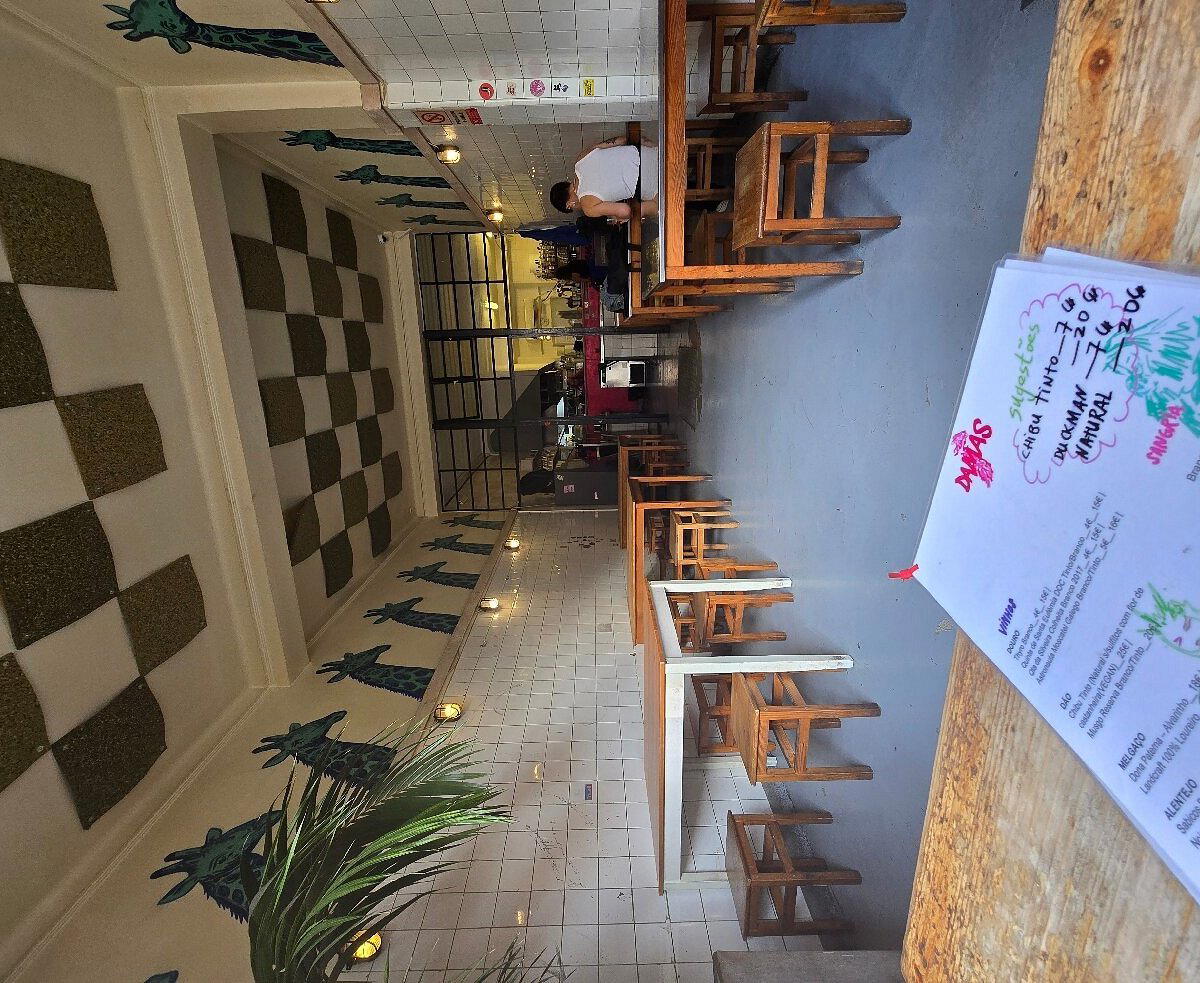
Where Mouraria Meets the Table
Lisbon's dining scene divides more sharply than most European capitals. On one side sit the Michelin-decorated rooms: Belcanto, CURA, and Eleven anchor a formal, tasting-menu tier that competes on precision and pedigree. On the other side, a quieter but no less serious current runs through the older neighbourhoods, where the ambition is harder to categorise but no less deliberate. Damas belongs to this second current. Situated at Rua da Voz do Operário 60 in Mouraria, one of the city's oldest and most historically layered districts, the address operates in a former social club whose bones — high ceilings, scuffed floors, the faint architecture of a room built for community rather than commerce — remain visible and intentional.
Mouraria is not a neighbourhood that performs. It sits behind the Intendente square and below the Graça hill, a mixed residential area that has seen significant change in the past decade without losing its functional street life. That context matters when reading what Damas does: the room does not soften its surroundings or dress them up. The physicality of the space is the opening note.
The Arc of the Meal
What defines Damas's reputation in the city is less any single dish than the way an evening there tends to accumulate. The format sits closer to the European wine-bar-with-serious-kitchen model than to a conventional restaurant sequence, which means the progression of a meal is partly guest-directed. Small plates arrive in an order that rewards attentiveness to what is already on the table, how flavours sit against each other, and how the natural-wine list threads through the food rather than running parallel to it.
This approach to sequencing has become a recognisable format across a number of cities, from the natural-wine dining rooms of Paris's 11th arrondissement to the izakaya-influenced small-plates rooms in London's east, but Lisbon's version carries a particular character. Portuguese ingredient traditions (the use of preserved fish, seasonal vegetables from the interior, house-made ferments) are woven through what is otherwise a cosmopolitan kitchen vocabulary. The result is a meal that reads as local without being folkloric.
Early plates at Damas tend to be sharp-edged and acidic, calibrated to open appetite rather than satisfy it. As the meal moves forward, textures and weights shift, and the room's noise level, which starts high and conversational, tends to compress into something more focused around the table. For dining formats elsewhere in Portugal, the contrast is instructive: the sequenced formality of Vila Joya in Albufeira or Casa de Chá da Boa Nova in Leça da Palmeira operates at the opposite end of the register. Damas works without that scaffolding, which places more pressure on the kitchen's moment-to-moment judgment.
Natural Wine as Structural Argument
The natural-wine list at Damas is not decorative. In the same way that a wine programme at a place like The Yeatman in Vila Nova de Gaia functions as an argument for the depth and range of Portuguese viticulture in a formal register, Damas's list makes a different but equally considered argument: that lower-intervention wines from Portugal and neighbouring regions carry as much interest as conventionally produced bottles, and that they sequence particularly well against acidic, fermented, and umami-forward food. The list rotates, and the staff engage with it as participants rather than recitors.
Portugal's wine scene has been moving in this direction for several years, with producers in the Alentejo, Douro, and increasingly the Beiras working with reduced sulphites and ambient yeasts. Damas is positioned inside that shift rather than ahead of it, which gives the wine selection a grounded rather than evangelical quality.
Mouraria's Positioning Inside Lisbon's Dining Map
Understanding where Damas sits requires understanding where Mouraria sits. The neighbourhood is not Bairro Alto or Chiado, where tourist footfall sustains a different kind of operation. It is also not the remote outer-city location of some of Lisbon's more ambitious newer kitchens. Mouraria is walkable from the centre but functions on its own terms, with a resident population and a street life that predates the city's recent hospitality expansion.
For visitors constructing a Lisbon dining itinerary, Damas functions as a counterweight to the tasting-menu experiences. An evening at 50 Seconds from Martin Berasategui or at the more creative end of the city's formal dining, places like 2Monkeys, delivers a very different kind of attention and structure. Damas sits between those registers and a casual neighbourhood dinner, at a point where the informality is deliberate rather than default. Internationally, the comparison class includes rooms like Lazy Bear in San Francisco, which similarly occupies an ambiguous position between formal and casual without quite belonging to either.
Other Portuguese addresses worth placing in context: Ocean in Porches, Antiqvvm in Porto, Il Gallo d'Oro in Funchal, Ó Balcão in Santarém, Al Sud in Lagos, Gusto by Heinz Beck in Almancil, and Fortaleza do Guincho in Cascais each represent a different strand of Portuguese dining ambition, from Algarve resort dining to northern tasting rooms. The full picture is in our Lisbon restaurants guide.
Planning an Evening
Damas is located at Rua da Voz do Operário 60, in Mouraria, reachable on foot from Martim Moniz or by tram from the Baixa. The venue's format and neighbourhood positioning mean it draws both Lisbon residents and informed visitors; weekend sittings in particular book ahead. The room suits a longer, unhurried pace rather than a quick cover, and the wine list rewards engagement rather than speed. For context on the broader international comparison class for this kind of format, Le Bernardin in New York City represents the opposite pole of dining formality, which helps sharpen what makes the Damas model distinctive.
How Damas Lisbon compares with similar nearby venues.
| Venue | Cuisine | Price |
|---|---|---|
| Ceia | Contemporary | €€€€ |
Continue exploring
More in Lisbon
Restaurants in Lisbon
Browse all →
Bars in Lisbon
Browse all →
Hotels in Lisbon
Browse all →

At a Glance
- Lively
- Date Night
- Casual Hangout
- Late Night
- Live Music
- Terrace
- Craft Cocktails
- Local Sourcing
Current opening hours
- Monday
- 6 PM–1 AM
- Tuesday
- 12 PM–1 AM
- Wednesday
- 12 PM–1 AM
- Thursday
- 12 PM–1 AM
- Friday
- 12 PM–2 AM
- Saturday
- 12:30 PM–2 AM
- Sunday
- 6 PM–1 AM
Hours can change for holidays and private events. Last verified .
Chilled, lively atmosphere with dynamic energy, transitioning from restaurant by day to club by night.
Know Before You Go
- Getting there
- R. da Voz do Operário 60, 1170-039 Lisboa, Portugal