Dahlia
Dahlia occupies the DTLA Proper Hotel on South Broadway, sitting at the intersection of Downtown Los Angeles's adaptive-reuse corridor and a broader California shift toward ingredient-driven cooking. The kitchen draws on regional sourcing traditions that position it within a competitive set of Los Angeles restaurants where provenance carries as much weight as technique. Reservations are advised, particularly on weekends when the hotel's rooftop energy spills into the dining room.
Pearl is the En Primeur Club membership app — saves, bookings, and concierge access live there. Same editors, same standards.
- Address
- DTLA Proper Hotel, 1100 S Broadway, Los Angeles, CA 90015
- Phone
- +12138061010
- Website
- properhotel.com
- Directions
- Get directions
 Saves & bookings on Pearl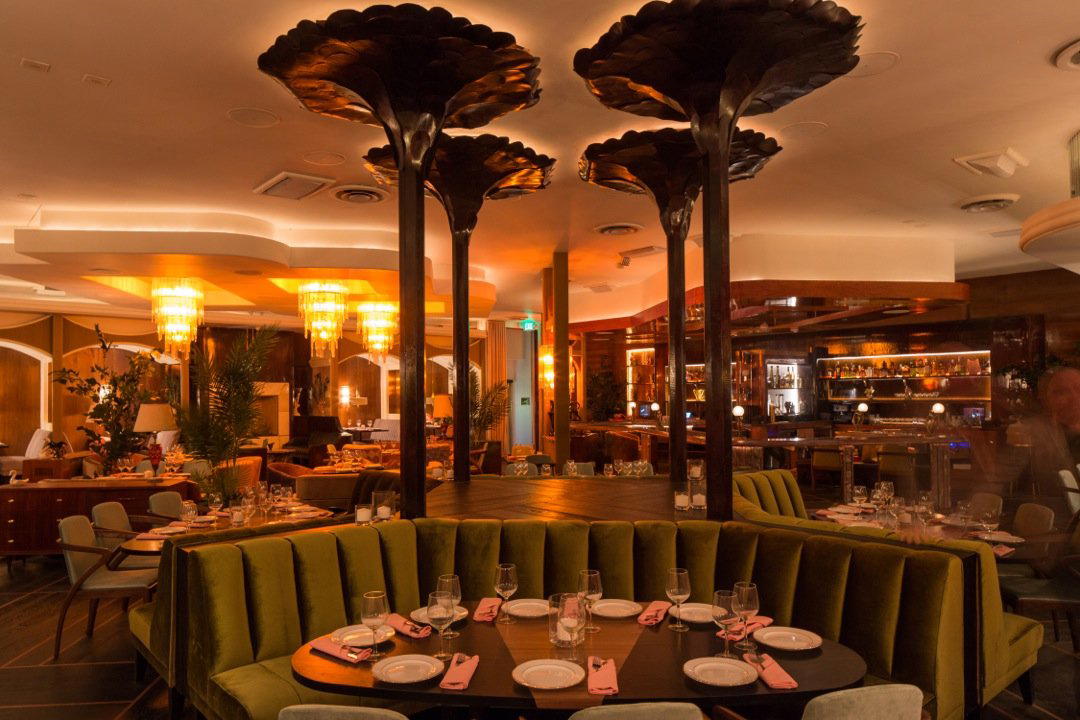
South Broadway, Reinvented From the Ground Up
Downtown Los Angeles's South Broadway corridor has spent the better part of a decade in a state of productive tension between its historic theatre district past and the hospitality infrastructure that has followed adaptive-reuse development southward from the Arts District. The DTLA Proper Hotel, a 1920s-era building converted into one of the city's more architecturally considered hotel properties, sits squarely in that transition zone at 1100 S Broadway. Dahlia, the hotel's primary dining room, inherits that layered context: the bones of an older Los Angeles pressing up against a kitchen format that reads as firmly contemporary California.
Approaching the space, the scale of the Proper's lobby sets expectations that the restaurant reinforces rather than contradicts. The design language in this part of Downtown leans toward exposed materials and decorative density rather than the stripped-back minimalism that dominates West Side dining rooms. Dahlia operates within that register, a room that signals considered informality rather than ceremony, which in Los Angeles increasingly marks a deliberate positioning choice. The city's dining conversation has moved away from white-tablecloth formality at almost every price point; what fills that space matters.
California Sourcing as Editorial Statement
The broader shift in California fine and near-fine dining over the past decade has been less about technique and more about supply chain transparency. Where restaurants like Single Thread Farm in Healdsburg built an entire identity around farm-to-table vertical integration, and where Blue Hill at Stone Barns in Tarrytown turned agricultural philosophy into a formal dining proposition, urban California restaurants occupy a middle ground: sourcing matters, but the kitchen translates it for a city audience rather than foregrounding the farm narrative didactically.
Dahlia sits within that urban California model. A hotel dining room at this tier in Los Angeles is not evaluated against destination tasting-menu counters, the Hayatos and Katos that operate in a different register of commitment and price. The relevant comparison is the growing cohort of hotel restaurants in the city that have moved beyond amenity status to function as neighborhood dining destinations in their own right. In that cohort, the sourcing story, what the kitchen is working with and from where, becomes one of the primary differentiators.
California's agricultural geography gives any serious kitchen genuine options. The Central Valley, the coastal farms of the Santa Ynez and Salinas corridors, and the year-round growing conditions of Southern California all feed into Los Angeles's supply chain in ways that East Coast restaurant cities cannot match structurally. A kitchen on South Broadway in any given month has access to a range of produce, proteins, and specialty ingredients that shifts meaningfully through the seasons, which is why the seasonal lens matters more here than in cities where the growing calendar is compressed.
Placing Dahlia in the Los Angeles Dining Conversation
Los Angeles's restaurant conversation tends to cluster around a few poles. The Michelin-recognized counter formats, Somni at the molecular-progressive end, Providence anchoring contemporary seafood in the mid-Wilshire corridor, occupy one tier. Below that, a dense and competitive middle ground of ingredient-focused, accessible-luxury restaurants has emerged across Silver Lake, Los Feliz, and increasingly Downtown. Dahlia occupies a position in that latter conversation, attached to a hotel that gives it visibility and a baseline audience, but operating in a market where that audience is also eating at Osteria Mozza and the better newcomers in the Arts District.
The hotel-restaurant relationship cuts both ways. It provides operational stability and a captive guest base that pure standalone restaurants lack; it also creates the perception challenge that any hotel dining room must overcome to be taken seriously by the local dining community. In Los Angeles, the Proper Hotels have generally managed that challenge better than most mid-tier hotel groups, partly through design investment and partly through choosing kitchen programs that have a point of view rather than a safe-harbor menu.
Nationally, the conversation around ingredient sourcing at this restaurant tier is moving toward specificity. The model pioneered by farms-as-partners at places like Smyth in Chicago or the produce-forward ethos that defines the best of what Frasca Food and Wine in Boulder does with regional producers, is filtering down into hotel dining rooms that want to signal seriousness. Provenance language on menus, named farms, specific growing regions, seasonal menu rotations, has become a trust marker at this price point rather than a premium differentiator.
Timing and Seasonal Considerations
Downtown Los Angeles dining patterns shift noticeably through the year. The spring and early summer months, when Southern California produce is at its most varied and the hotel's rooftop draws weekend crowds, represent peak energy for the corridor. Fall brings a different clientele as convention and event traffic returns to the area around the Staples Center and the Broad. Dahlia's position within the hotel means it absorbs those rhythms, which has practical implications for booking and for what the kitchen is likely to be doing at any given time.
For a city comparison outside Los Angeles, the hotel-dining model at this tier is better understood by looking at what Addison in San Diego has done within its resort context, or how Lazy Bear in San Francisco built a community dining identity within a fixed format. Neither is a direct parallel, but both illustrate the range of outcomes available to kitchens that commit to a clear position rather than defaulting to hotel-safe programming.
For context on where Dahlia sits within the broader Los Angeles dining map, our full Los Angeles restaurants guide covers the city's current tiers in detail, from the counter-format omakase rooms to the neighbourhood-anchor restaurants that define each district's character.
Planning a Visit
Dahlia is located within the DTLA Proper Hotel at 1100 S Broadway, Los Angeles, CA 90015. Downtown LA's South Broadway is accessible via the Metro A and E Lines, with 7th Street/Metro Center a short walk north. Street parking and hotel valet are the most practical options for those driving. Weekday evenings offer a calmer dining pace than weekends, when the Proper's rooftop activity and the surrounding South Park neighbourhood draw larger crowds. As with most hotel restaurants operating in this tier, booking ahead is advisable rather than optional.
Quick Reference: DTLA Proper Hotel, 1100 S Broadway, Los Angeles, CA 90015. Reservations recommended, particularly Thursday through Saturday.
Continue exploring
More in Los Angeles
Restaurants in Los Angeles
Browse all →
Bars in Los Angeles
Browse all →

Hotels in Los Angeles
Browse all →
Wineries in Los Angeles
Browse all →
At a Glance
- Elegant
- Sophisticated
- Intimate
- Cozy
- Trendy
- Date Night
- Special Occasion
- Brunch
- Hotel Restaurant
- Craft Cocktails
Current opening hours
- Monday
- Closed
- Tuesday
- Closed
- Wednesday
- Closed
- Thursday
- Closed
- Friday
- 11 AM–11 PM
- Saturday
- 11 AM–11 PM
- Sunday
- 11 AM–4 PM
Hours can change for holidays and private events. Last verified .
Cozy yet sophisticated atmosphere with blush-pink Roman plaster walls, lavender zellige tiles, textured tilework, vintage furnishings, and warm lighting that shifts with nuanced tones.
Know Before You Go
- Getting there
- DTLA Proper Hotel, 1100 S Broadway, Los Angeles, CA 90015