Google: 4.6 · 2,606 reviews
Da Poke Shack
On the Ali'i Drive stretch of Kailua-Kona, Da Poke Shack operates where Hawaii's raw-fish tradition meets the specific sourcing advantages of the Big Island's coastal waters. The format is casual and counter-service, but the ingredient logic is serious: this is poke built around proximity to the Pacific rather than supply-chain convention. A reliable stop for anyone tracing the evolution of Hawaii's most exported dish back to its source.
 Discover on Pearl
Pearl is the En Primeur Club membership app — saves, bookings, and concierge access live there. Same editors, same standards.
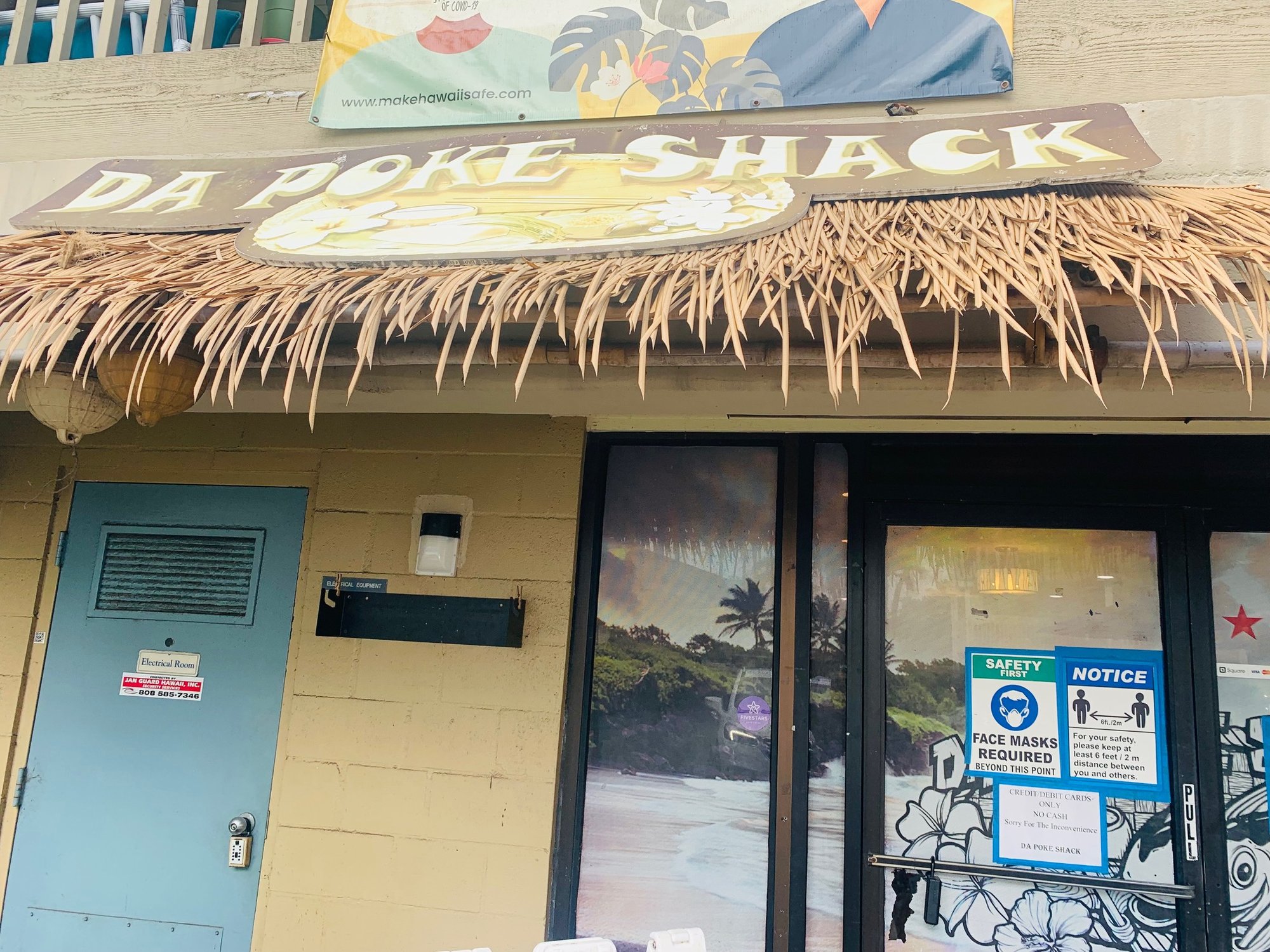
Where the Pacific Comes Ashore on Ali'i Drive
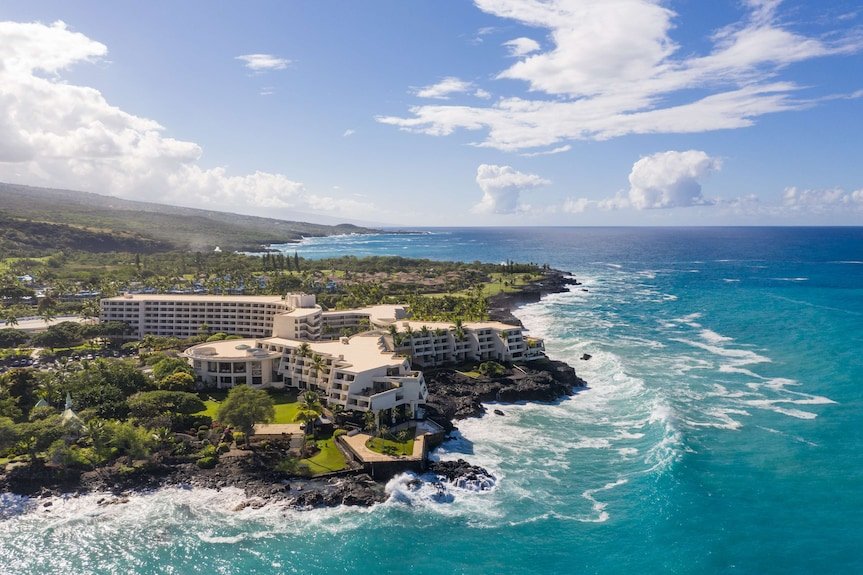
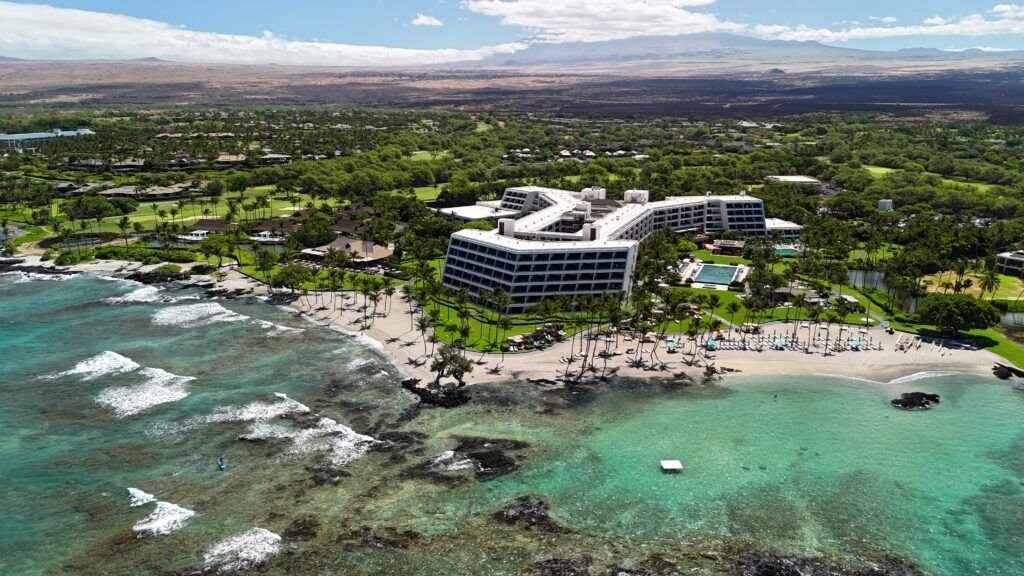
The stretch of Ali'i Drive running through Kailua-Kona has a particular quality in the mid-morning hours: the ocean sits close enough to the road that you can smell it before you see it, and the light off the water arrives at an angle that makes everything feel provisional, local, and immediate. Da Poke Shack operates within that environment, and the setting is not incidental to what it serves. Poke, as a dish category, has been abstracted and exported to the point where the connection between raw fish and the ocean that produced it has become largely theoretical in most cities that now claim to serve it. Here, that connection is literal and short.
The address on Ali'i Drive places the shack within Kailua-Kona's low-key commercial corridor, a stretch that runs between resort developments and working waterfront without committing to either register. The format is counter-service, the atmosphere is uncomplicated, and the throughline is fish. That simplicity is a feature, not a compromise.
The Sourcing Logic Behind Hawaiian Poke
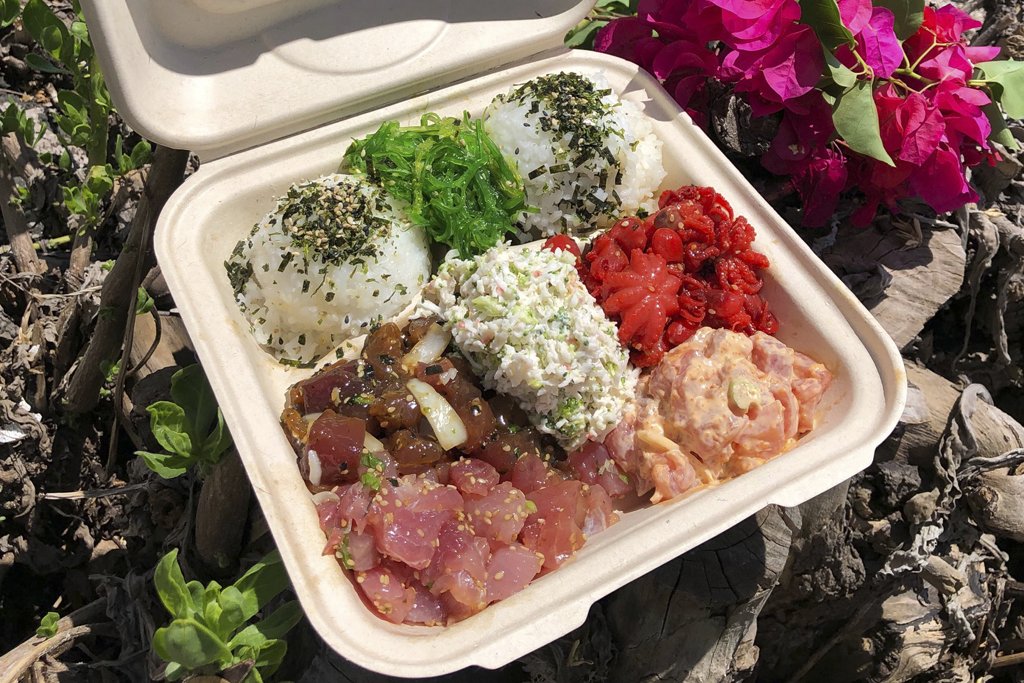
To understand what Da Poke Shack is doing, it helps to understand what poke originally was and how its sourcing geography shaped the dish. Traditional Hawaiian poke developed as a way of preparing freshly caught reef fish, cut close to the bone to minimize waste, and dressed with whatever was available: sea salt, kukui nut, seaweed gathered from the same waters. The Big Island's position in the Pacific gives it direct access to ahi tuna, mahi-mahi, and other pelagic species caught in waters that run deep and cold just offshore. The leading poke counters on the island source within that logic, keeping the gap between ocean and bowl as small as the fishing calendar allows.
This stands in deliberate contrast to the poke bowl category that has spread across the continental United States over the past decade, where the fish is typically farmed Atlantic salmon or previously frozen ahi traveling considerable distance before it reaches the customization station. The industrialized version is not without its own appeal, but it is a different product. When ingredient provenance is the subject, the geography of the Big Island changes the terms of the conversation entirely.
Restaurants working in the sourced-ingredient tradition, whether Blue Hill at Stone Barns in Tarrytown drawing from its own farm, Single Thread Farm in Healdsburg operating within its integrated agricultural program, or Smyth in Chicago working through its network of regional producers, all make the same fundamental argument: proximity between source and plate changes what ends up on that plate. Da Poke Shack makes the same argument, at a fraction of the price point and without the tasting-menu format. The sourcing discipline is comparable; the register is entirely different.
Poke in Its Competitive Context
The Big Island has a different culinary tempo than Oahu. Honolulu's poke scene has grown competitive and somewhat self-conscious, with counters now operating with the same kind of menu engineering you might find in a fast-casual restaurant group. Kona's equivalent is smaller in scale and less concerned with brand positioning. What you find along the Kailua-Kona waterfront corridor tends to be more operationally direct: a limited selection, high turnover of fresh product, and a customer base split between locals who know what they want and visitors who are willing to follow their lead.
Da Poke Shack sits within that local-counter tradition. The format is not designed to accommodate lengthy deliberation. The better approach, consistent with how regulars at any serious poke counter operate, is to ask what came in that morning and make decisions quickly. High-volume turnover at a well-positioned counter is its own quality signal: the fish moves fast enough that it rarely sits.
For context on the broader range of serious sourced-seafood dining, Le Bernardin in New York City and Providence in Los Angeles both operate within a sustainable-catch framework at the formal end of the spectrum. ITAMAE in Miami works within a Nikkei-inflected tradition that takes Pacific fish seriously from a different cultural angle. None of these are direct comparisons to a counter-service poke shack on Ali'i Drive, but they share a foundational commitment to fish quality as the non-negotiable starting point. The price tier and format differ by an order of magnitude; the underlying sourcing logic does not.
Planning Your Visit
Da Poke Shack operates on the counter-service model, which means no reservations and no booking complexity. The practical considerations are simpler: arrive earlier in the day when selection is at its widest, since high-demand preparations sell through before the afternoon. Ali'i Drive has parking, though the waterfront stretch gets congested during peak visitor hours. The venue is in Kailua-Kona, which functions as the Big Island's west-side hub; most visitors staying anywhere on the Kohala Coast or in Kona town will pass within a short drive of this stretch of Ali'i Drive in the normal course of island movement.
For anyone building a broader picture of where to eat in the area, TJ'S BBQ By The Beach offers a different register of local cooking along the same coastal corridor. Our full Holualoa restaurants guide maps the broader eating options across the area for additional context.
The comparison venues operating at formal dinner price points, including The French Laundry in Napa, Addison in San Diego, Lazy Bear in San Francisco, Emeril's in New Orleans, The Inn at Little Washington in Washington, Frasca Food and Wine in Boulder, The Wolf's Tailor in Denver, Oyster Oyster in Washington, D.C., Atomix in New York City, and Atelier Moessmer Norbert Niederkofler in Brunico, all represent what sourcing-led cuisine looks like when it operates at the tasting-menu level. Da Poke Shack occupies the opposite end of the format spectrum, which does not diminish the sourcing argument; it simply strips it of ceremony.
Comparison Snapshot
These are the closest comparables we have in our database for quick context.
| Venue | Cuisine | Price | Awards | Notes |
|---|---|---|---|---|
| Da Poke Shack | This venue | |||
| Le Bernardin | French, Seafood | $$$$ | Michelin 3 Star | French, Seafood, $$$$ |
| Lazy Bear | Progressive American, Contemporary | $$$$ | Michelin 2 Star | Progressive American, Contemporary, $$$$ |
| Atomix | Modern Korean, Korean | $$$$ | Michelin 2 Star | Modern Korean, Korean, $$$$ |
| Per Se | French, Contemporary | $$$$ | Michelin 3 Star | French, Contemporary, $$$$ |
| Masa | Sushi, Japanese | $$$$ | Michelin 3 Star | Sushi, Japanese, $$$$ |

At a Glance
- Casual
- Rustic
- Hidden Gem
- Casual Hangout
- Standalone
- Local Sourcing
Casual take-out style shop with limited outdoor shared tables and a cool, unassuming atmosphere.