Mauna Lani, Auberge Resorts Collection




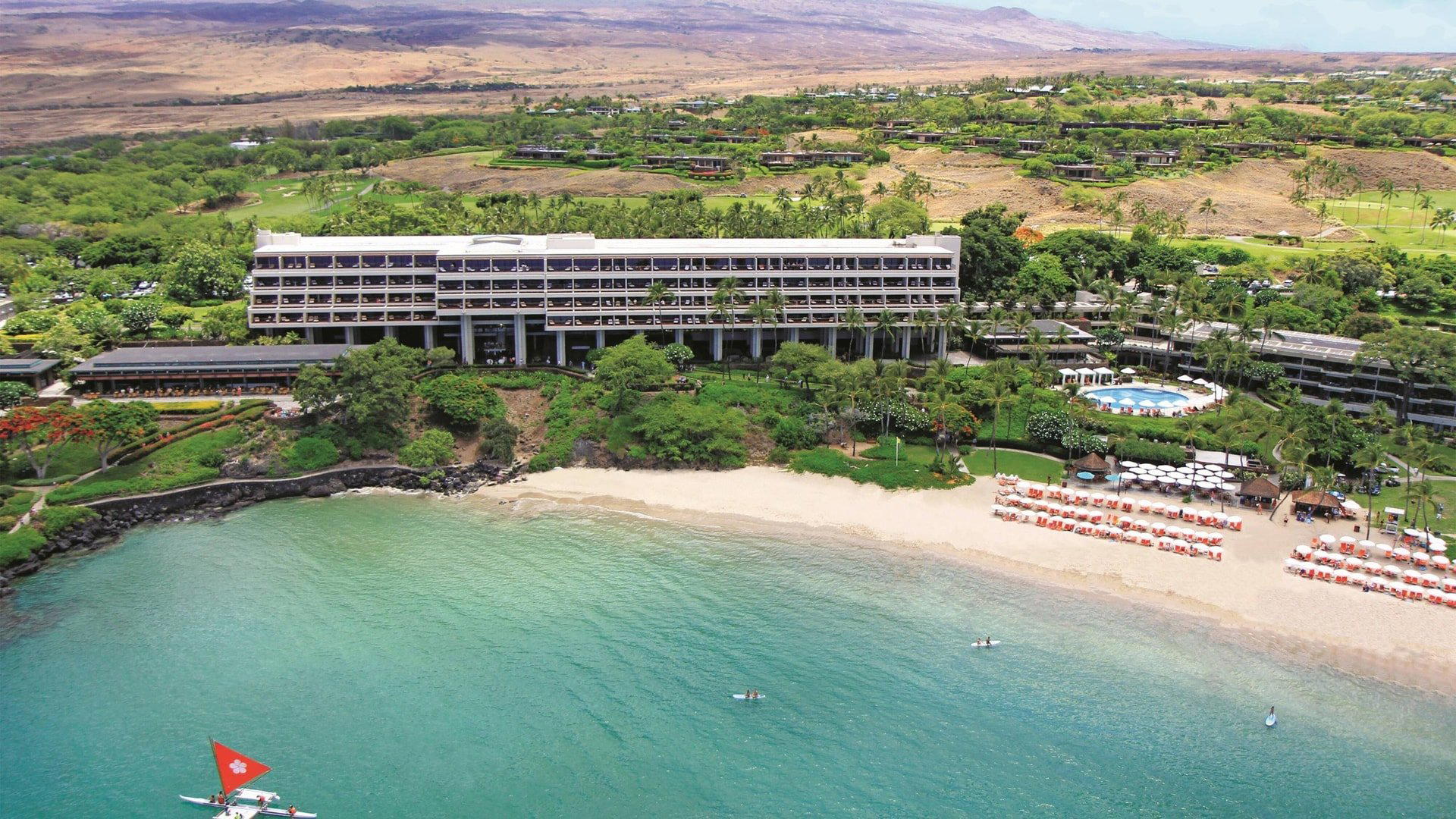
On the Kohala Coast of Hawaii's Big Island, Mauna Lani earned a Michelin Key in 2024 and sits within the Auberge Resorts Collection. The property's 341 rooms occupy an arrow-shaped building flanked by twin beaches, with five beachfront bungalows, two 18-hole golf courses, and CanoeHouse restaurant anchoring a food programme rooted in island ingredients. Rates begin at $900 per night.
Pearl is the En Primeur Club membership app — saves, bookings, and concierge access live there. Same editors, same standards.
- Address
- 68-1400 Mauna Lani Dr, Waimea, HI 96743
- Phone
- +1 855-201-3179
- Website
- auberge.com
- Directions
- Get directions
 Saves & bookings on Pearl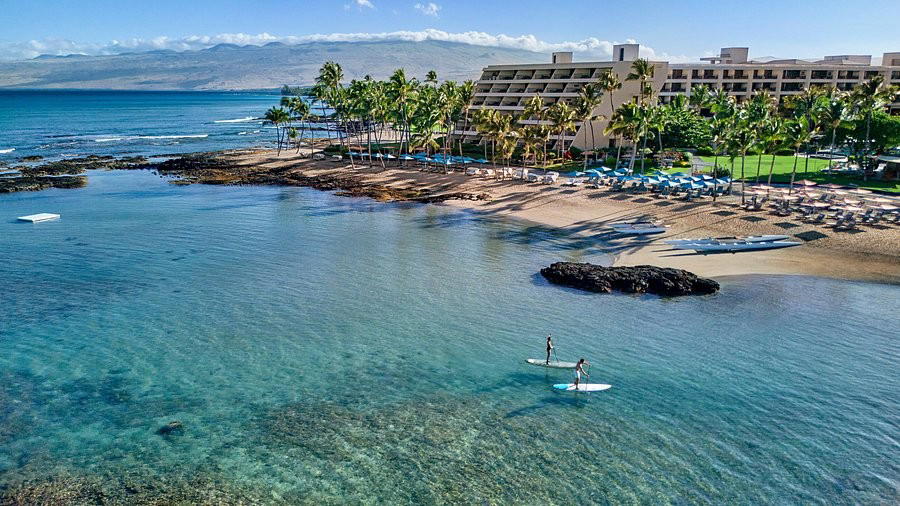
Where the Kohala Coast Sets Its Own Terms
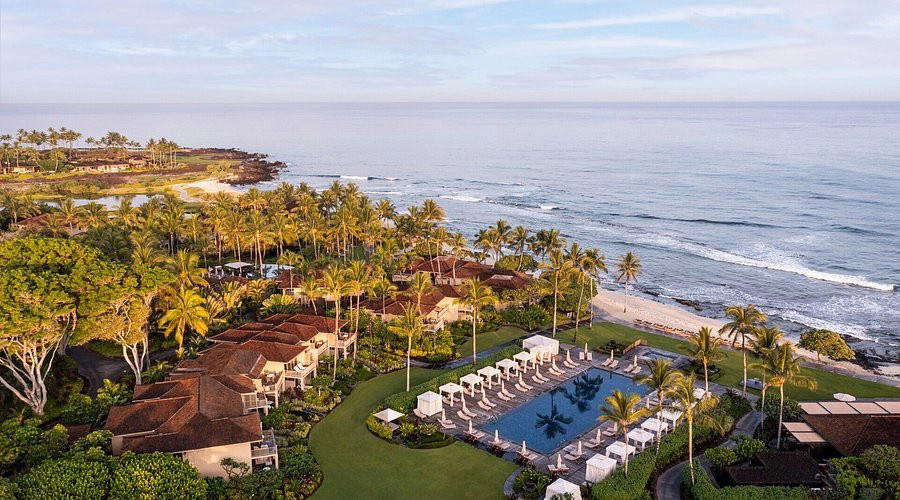
The Kohala Coast road runs through fields of hardened black lava before the entrance to Mauna Lani appears, and that contrast is not accidental. The Big Island's west coast has long operated differently from the resort strips of Maui or Waikiki: fewer properties, wider distances between them, and a guest demographic that tends to arrive with a longer itinerary and a lower tolerance for the choreographed tropical familiar. Within that context, Mauna Lani occupies a specific position. Its arrow-like building sits at the tip of a lava peninsula flanked by two angled beaches, a configuration that gives the majority of its 341 rooms at least a partial ocean sightline. That is not a given on the Big Island, where the coastline is more cliff and a'a lava than sand. The property's Michelin Key recognition in 2024 places it among a small group of Hawaiian resort addresses that have submitted their food programme to third-party scrutiny rather than resting on location alone. For a broader orientation to the area's dining and hospitality options, see our full Kohala Coast restaurants guide.
The Food Programme: CanoeHouse at the Centre
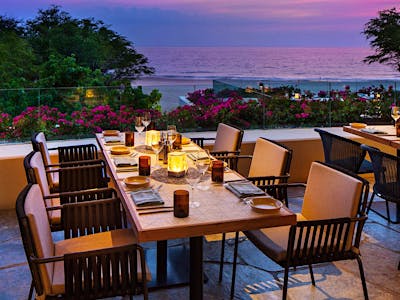
Hawaiian resort dining has historically divided between the perfunctory buffet breakfast and the high-margin surf-and-turf dinner, with little editorial ambition between those poles. Mauna Lani's approach moves against that pattern. CanoeHouse, the property's flagship restaurant, has held a place in the island's dining conversation for decades rather than seasons, which is a meaningful distinction in a market where restaurant concepts turn over quickly. The kitchen works with the island's produce calendar, and dishes like the Hamakua loco moco, which blends mushroom into the hamburger steak and pairs it with basil fried rice, mushroom gravy, a chicken-fried oyster, and a pea shoot salad, demonstrate how Hawaiian comfort formats can absorb local ingredient sourcing without becoming precious about it.
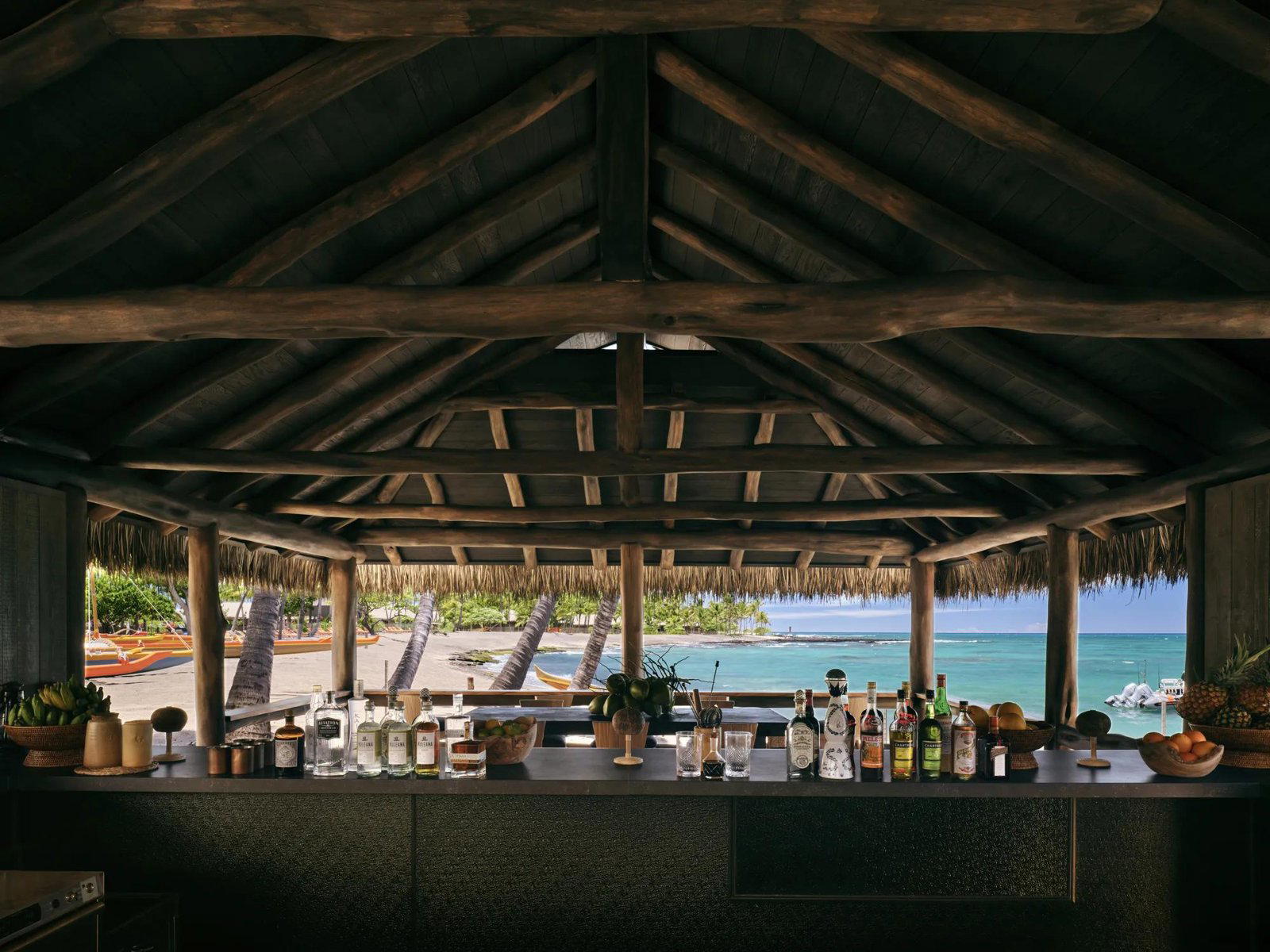
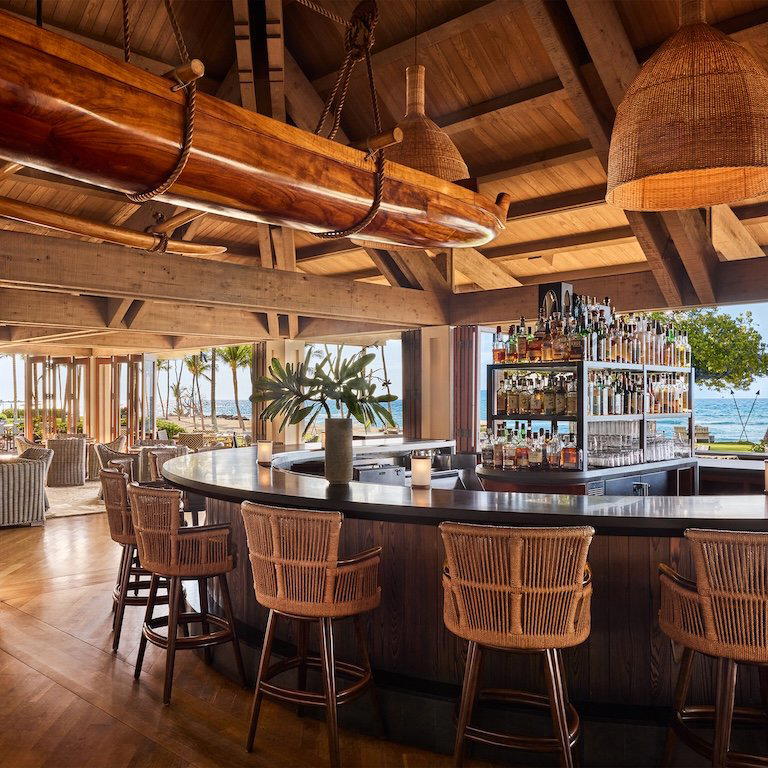
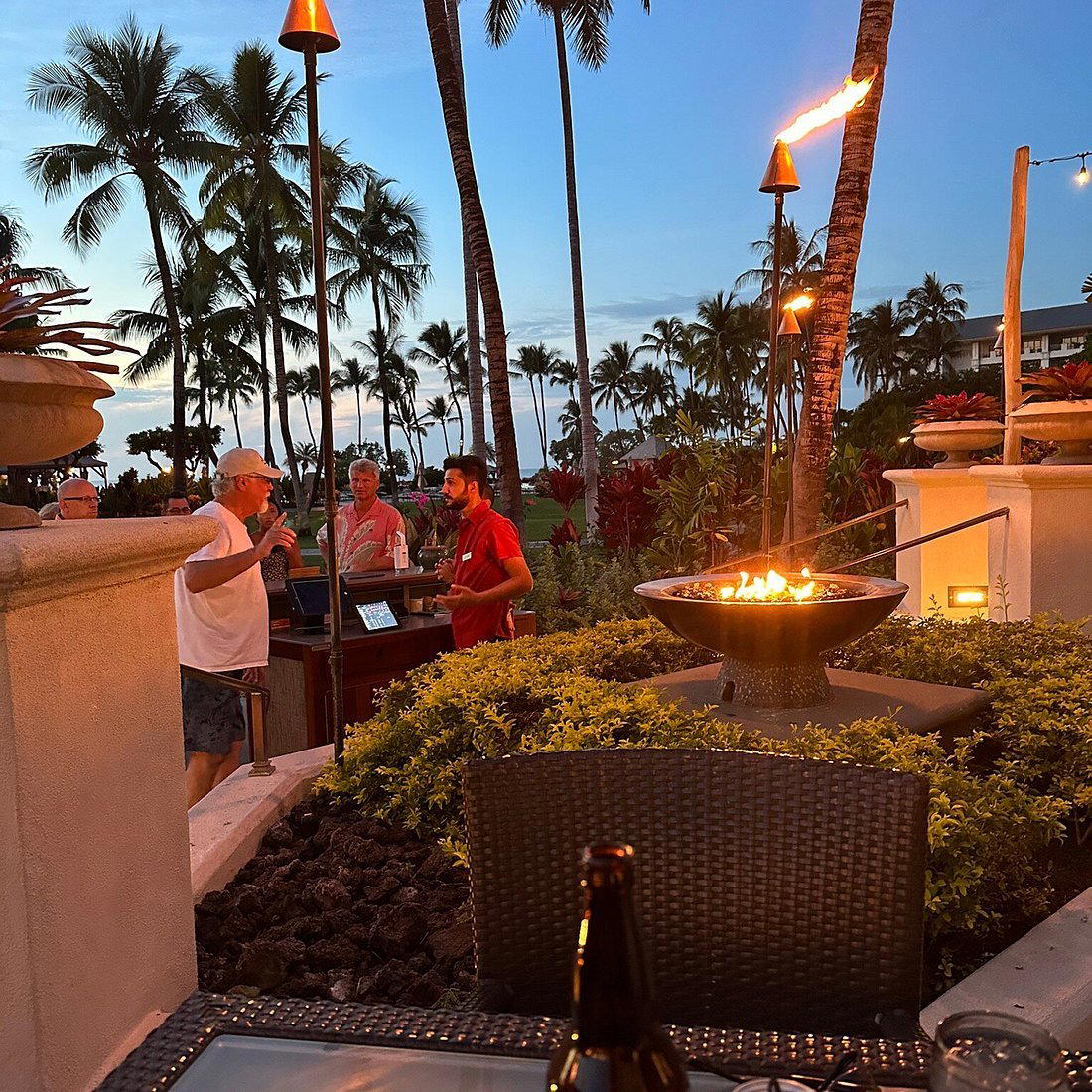
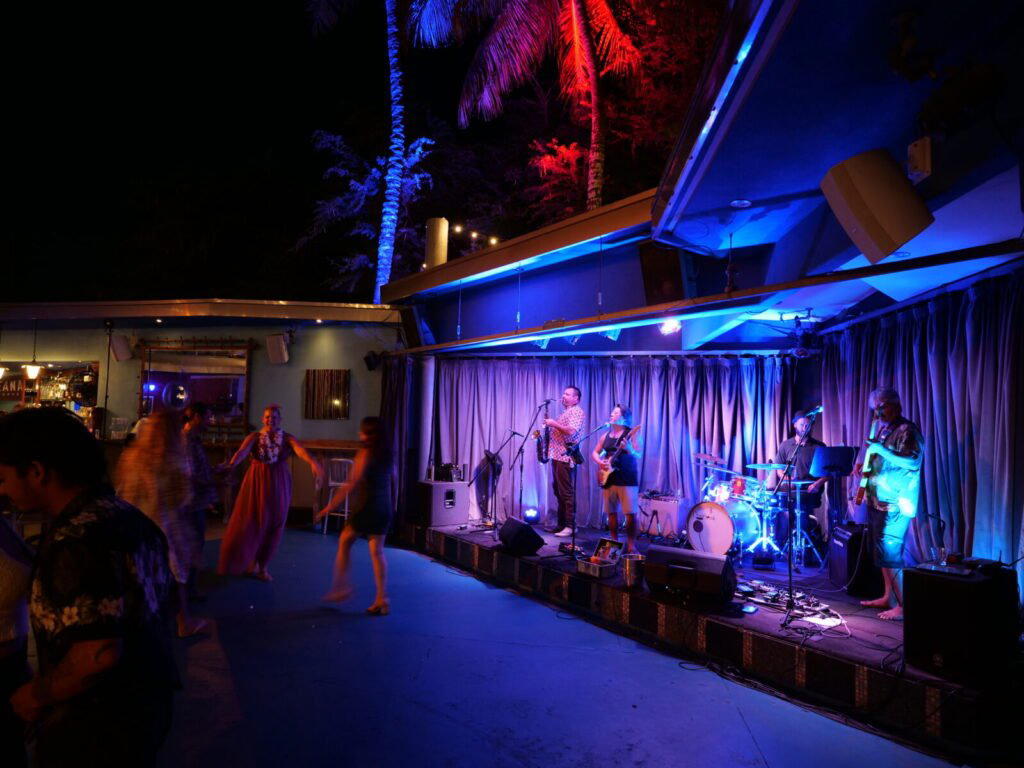
HāLani and Hā Bar extend that approach into the morning, where made-to-order items sit alongside the standard breakfast spread rather than replacing it entirely. The Surf Shack adds an informal layer: fresh ahi poke and live local musicians in a setting designed to connect the beach to the Great Lawn, keeping the food programme active across the full day rather than concentrating it into dinner reservations. This kind of distributed dining architecture, where eating occasions are mapped to activity rhythms rather than simply to mealtimes, is increasingly what separates the considered resort food offer from the afterthought one. The 2024 Michelin Key serves as external validation that the programme is being read by the same audience that evaluates standalone restaurants.
For comparison, the Auberge Resorts Collection's founding property, Auberge du Soleil in Napa, built its reputation on similar principles: a location with strong provenance, a food offer anchored in regional ingredients, and a room product that functions as a backdrop for the sensory experience rather than the main event. Mauna Lani applies the same logic to a Pacific setting.
The Room Product and Its Range
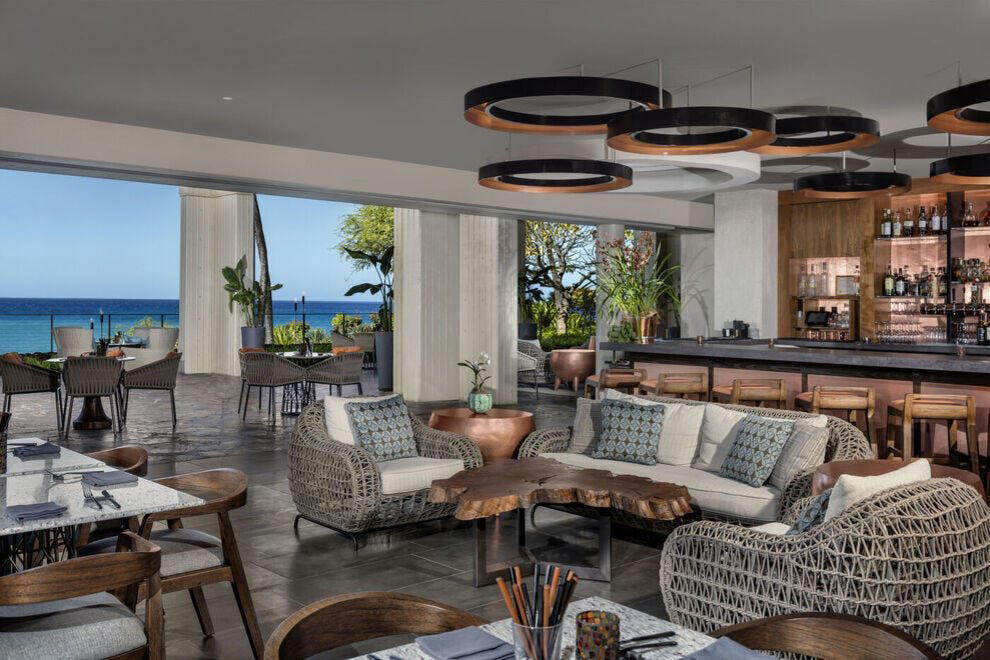
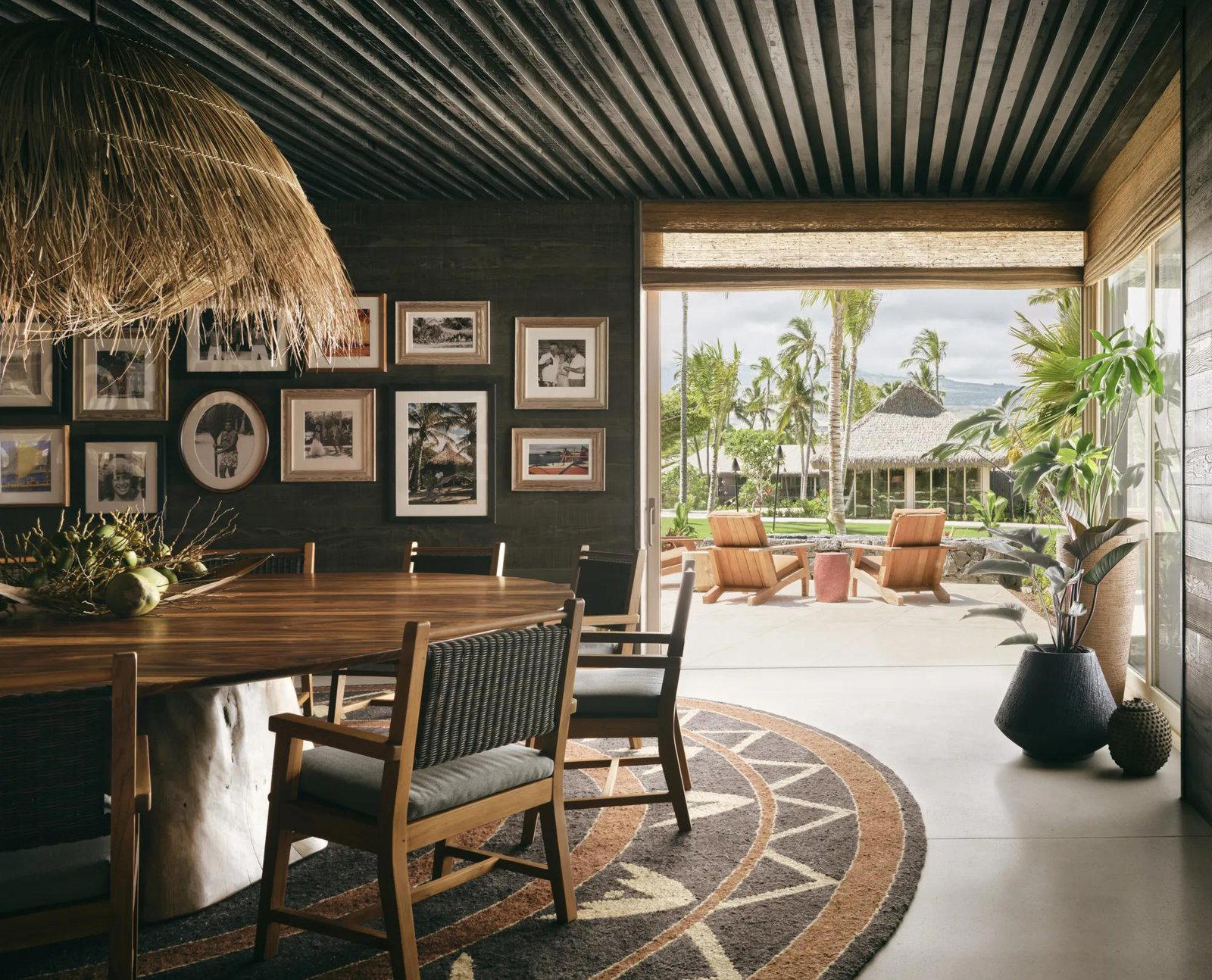
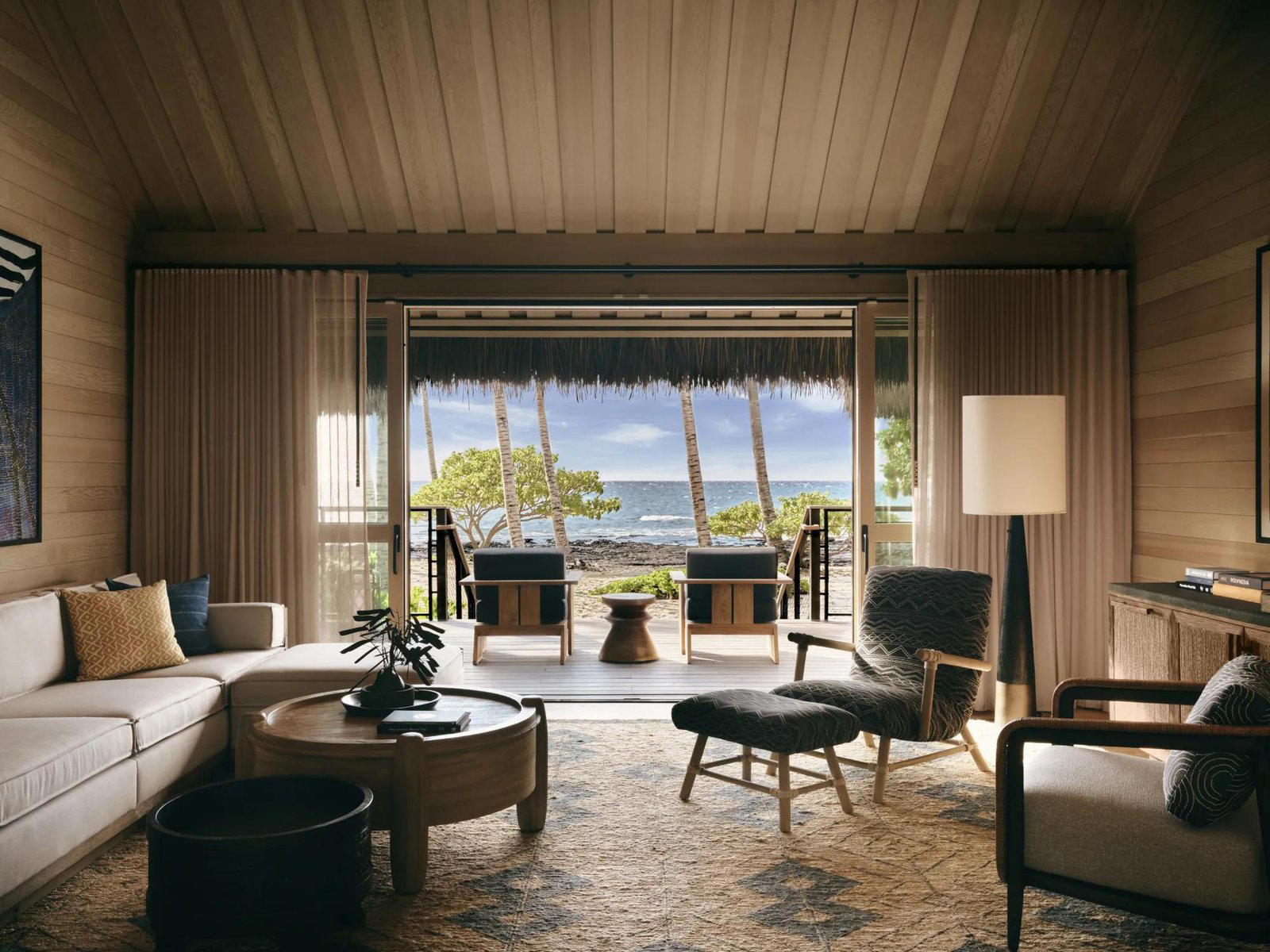
After a comprehensive renovation, the interiors were handled by Meyer Davis, whose approach translated contemporary Hawaiian design into something with more discipline than the mid-century kitsch that dominated the islands' hotel stock for decades. Natural fabrics and koa wood furniture sit against a palette of white and tan with muted green accents. The rope headboard references canoe lashing, one of several design decisions that connect material choices to Hawaiian craft tradition rather than treating local culture as surface decoration. These details are more coherent than they might sound in description.
The standard room runs 640 square feet, which is generous by urban standards and functional by resort ones. The five bungalows, each at 4,000 square feet, operate in a different register entirely: two master suites, a large living area, a private pool and spa, a private entrance, and a butler's kitchen with butler service. Three of the five bungalows sit directly on the beach, which addresses one of the consistent limitations of Big Island hospitality. The pool chair situation, a persistent irritant at many Hawaiian properties where loungers become scarce before 8am, is handled here by an egalitarian allocation system across both the adult pool and the main pool. These are the kinds of operational details that distinguish a well-managed large resort from a poorly managed one.
At the top of the room category scale, this kind of private-bungalow offer places Mauna Lani in comparison with properties like Kona Village, A Rosewood Resort in Kailua Kona, which also positions itself around the Big Island's coastal character and private-accommodation formats. The competitive set is small, and the points of differentiation are specific.
Cultural Programming and the Land Itself
The property sits in the piko, the Hawaiian term for centre, of five volcanic mountains, and that geography shapes its cultural offer in ways that go beyond the decorative. Danny Akaka serves as the resort's kahu hānai, a knowledge keeper, and leads sessions on the island's mythology. The Hale 'I'ike Cultural Center runs programmes including kōnane, the Hawaiian board game, and there are organised hikes to an ancient petroglyph site on the property's grounds. The sea turtle conservation programme, through which guests help measure young honu before their release, represents the kind of participatory naturalist activity that has become a benchmark for responsible resort programming across the Pacific.
The two 18-hole golf courses add a different dimension. The South Course, built on a 16th-century lava flow, plays through a'a lava, which is as demanding a visual setting as golf produces anywhere in the United States. The North Course moves through kiawe forest. Both were designed by Homer Flint, Raymond Cain, and Robin Nelson. Water sports, organised through the Surf Shack, run from stand-up paddleboarding and kayaking to outrigger canoe excursions and what the property describes as underwater rock running.
Properties that attempt a similar integration of land-specific programming with high-end accommodation include Amangiri in Canyon Point, where the geological landscape structures the activity offer, and Post Ranch Inn in Big Sur, where the coastal terrain defines the guest experience before any programme element does. Each of those properties works a different landscape, but the structural logic is comparable: the land is not the backdrop, it is the argument for being there.
How to Plan Your Stay
Mauna Lani sits at 68-1400 Mauna Lani Drive in Waimea, Hawaii 96743, on the Kohala Coast of the Big Island. The property is within walking distance of The Shops at Mauna Lani, which includes galleries, stores, and additional dining options. Rates begin at $900 per night. Reservations require additional information to be confirmed and must be arranged through a customer service team rather than through a standard online booking channel, so building time into the planning process is advisable. The 2024 Michelin Key applies to the full property. Nearby, Fairmont Orchid provides an alternative for guests weighing Kohala Coast options. For those comparing resort formats across the continental United States and further afield, the editorial record at Blackberry Farm in Walland, Bernardus Lodge and Spa in Carmel Valley, Canyon Ranch Tucson, Little Palm Island Resort and Spa in Little Torch Key, and Four Seasons at The Surf Club in Surfside offers useful calibration points for a similar price tier. Those seeking more intimate scale might also consider Troutbeck in Amenia, Sage Lodge in Pray, or Alpine Falls Ranch in Superior. Urban luxury references at this tier include The Fifth Avenue Hotel in New York City, Raffles Boston, Chicago Athletic Association, Hotel Bel-Air in Los Angeles, Aman New York, 1 Hotel San Francisco, and Amangani in Jackson Hole. International comparisons that share the design-led, culturally rooted positioning include Aman Venice and Badrutt's Palace Hotel in St. Moritz. For those drawn to food-forward inn formats, SingleThread Farm Inn in Healdsburg and Ambiente, A Landscape Hotel in Sedona round out the reference set.
Price and Recognition
| Venue | Price | Awards |
|---|---|---|
| Mauna Lani, Auberge Resorts CollectionThis venue — the venue you are viewing | Michelin 1 Key | This venue |
| Aman New York | Michelin 3 Key, World's 50 Best | Not listed |
| Amangiri | Michelin 3 Key, World's 50 Best | Not listed |
| Hotel Bel-Air | Michelin 3 Key, World's 50 Best | Not listed |
| The Beverly Hills Hotel | Michelin 3 Key, World's 50 Best | Not listed |
| The Carlyle, A Rosewood Hotel | Michelin 2 Key, World's 50 Best | Not listed |
Recognition history
Dated appearances from independent guides and award organizations, with the underlying list record or original source where available.
Forbes Recommended
Forbes
Star Wine List
Star Wine List
Virtuoso Luxury Hotel Partner
Virtuoso
Forbes Recommended
Forbes
Michelin 1 Key
Michelin
Continue exploring
More in Kohala Coast
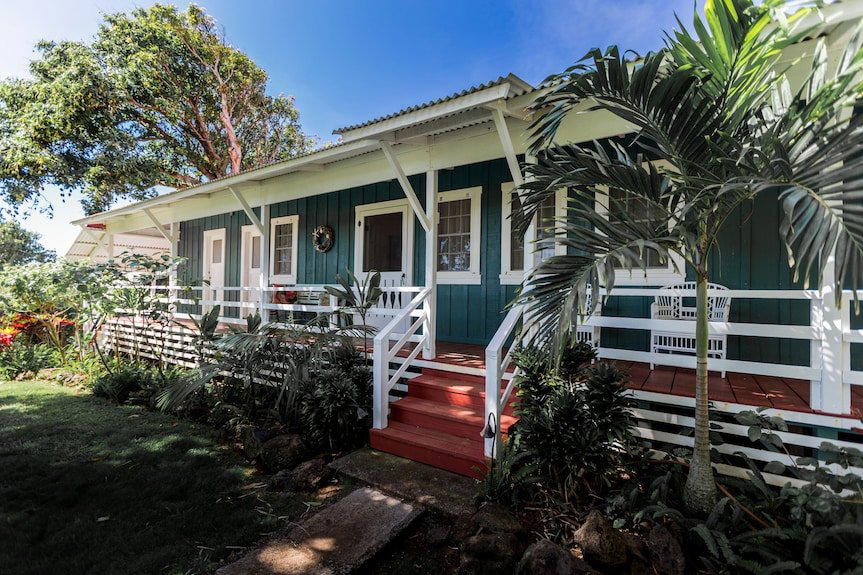
Hotels in Kohala Coast
Browse all →
Bars in Kohala Coast
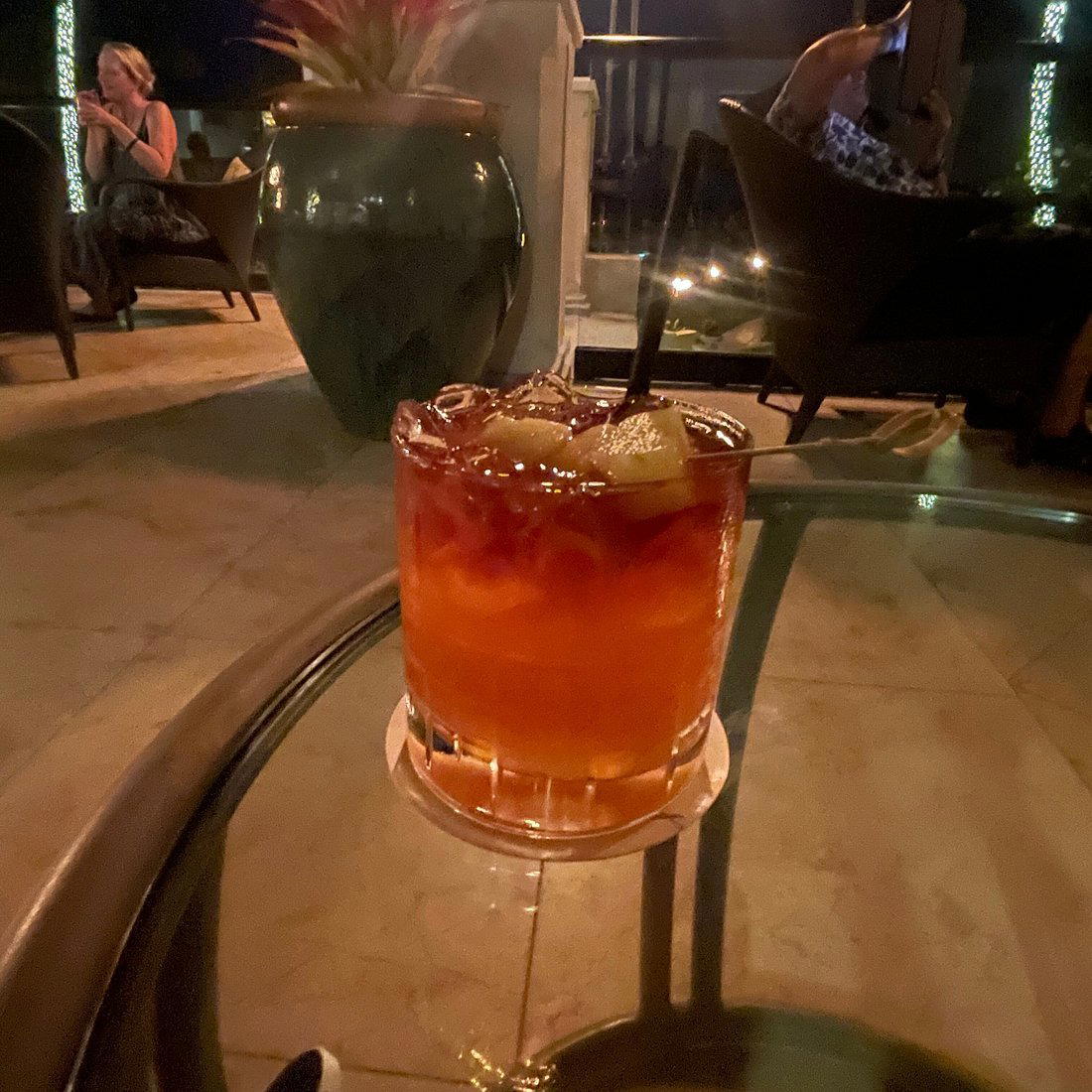
Browse all →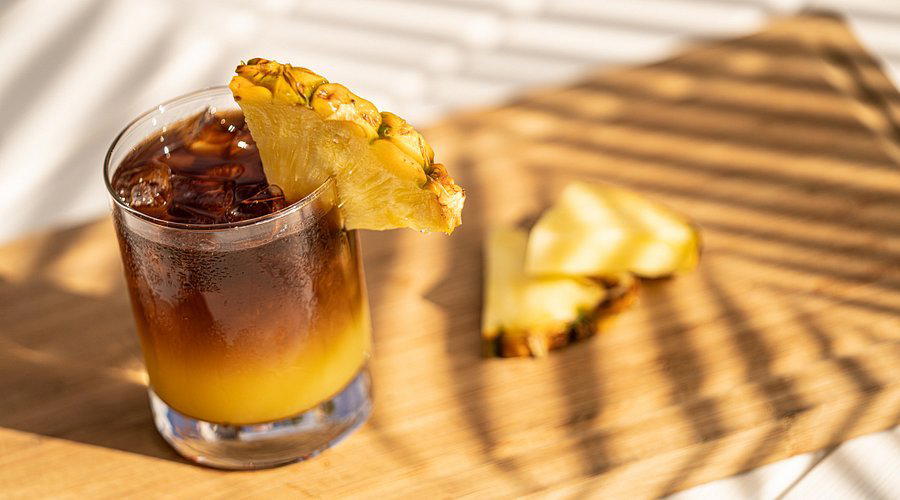
At a Glance
- Elegant
- Scenic
- Sophisticated
- Intimate
- Honeymoon
- Family Vacation
- Wellness Retreat
- Weekend Escape
- Beachfront
- Infinity Pool
- Golf Course
- Destination Spa
- Wi Fi
- Pool
- Spa
- Fitness Center
- Room Service
- Concierge
- Valet Parking
- Kids Club
- Beach Access
- Golf Course
- Waterfront
- Garden
- Wi Fi
- Pool
- Spa
- Fitness Center
- Room Service
- Concierge
- Valet Parking
- Kids Club
- Beach Access
- Golf Course
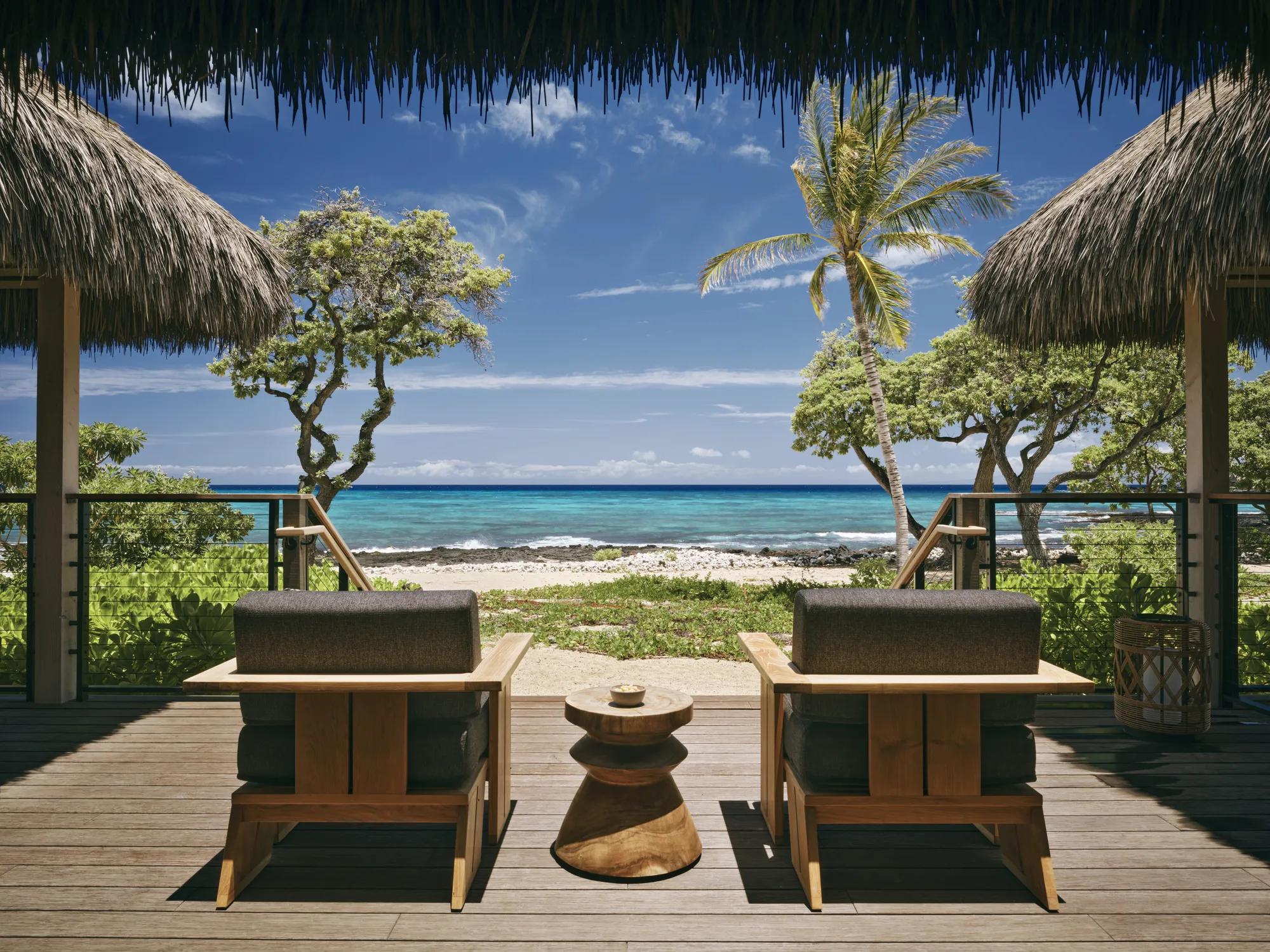
Understated natural décor featuring bright, refined spaces with hardwood floors, natural fabrics, and textures evoking a soulful Hawaiian escape.
Know Before You Go
- Getting there
- 68-1400 Mauna Lani Dr, Waimea, HI 96743