
CUT at 99 Church Street brings Wolfgang Puck's steakhouse format into Lower Manhattan, where the Financial District's shift toward serious dining has created space for a room that prioritizes architecture as much as protein. The space operates in the upper tier of New York's steakhouse category, where design, sourcing credentials, and room presence carry as much weight as the cut itself.
Pearl is the En Primeur Club membership app — saves, bookings, and concierge access live there. Same editors, same standards.
- Address
- 99 Church St, New York, NY 10007
- Phone
- +16468801995
- Website
- wolfgangpuck.com
- Directions
- Get directions
 Saves & bookings on Pearl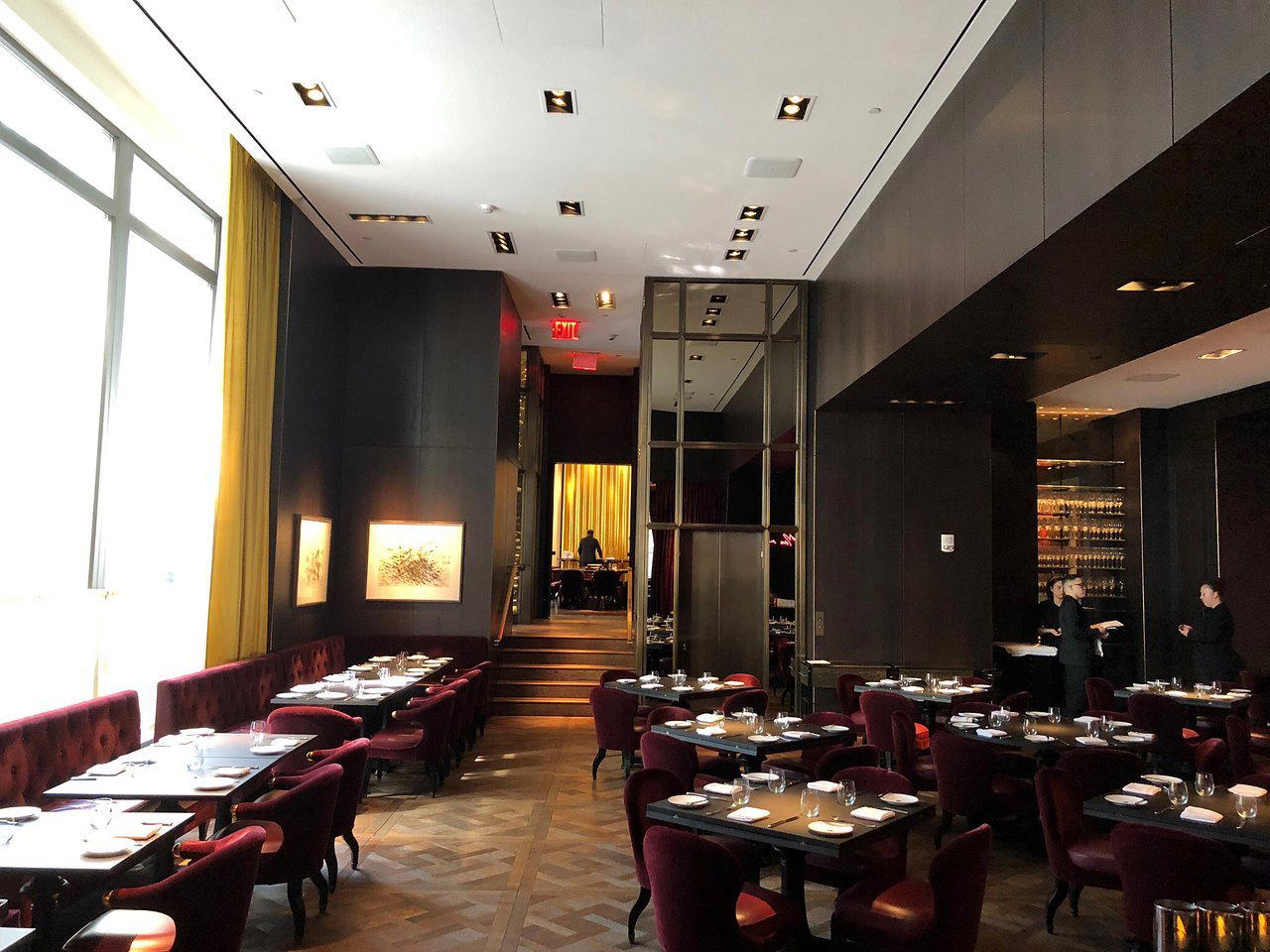
A Room Built for the Weight of the Meal
The steakhouse as a building type has always carried a particular spatial logic: dark wood, leather, a sense of enclosure that makes the diner feel insulated from the city outside. Lower Manhattan's version of that tradition, however, has been complicated by the neighbourhood itself. The Financial District around Church Street is not the classic Midtown steakhouse corridor. It is a district that has spent the better part of two decades evolving from a lunch-trade-only zone into something with genuine evening density, and the dining rooms that have succeeded here tend to treat architecture as a signal of permanence rather than a quick renovation job.
CUT, at 99 Church Street, sits inside the Baccarat Hotel, and that context matters architecturally before a single plate arrives. The Baccarat brand built its New York flagship around the logic of a jewel box, with crystal as the organizing material metaphor running from the lobby through the bar and into the dining spaces. That approach produces a particular kind of room, one where light is scattered rather than focused, where surfaces hold reflections, and where the geometry feels formal without being rigid. For a steakhouse operating in that container, the effect is a departure from the wood-and-brass idiom that defines the category's more traditional addresses.
Where CUT Sits in the New York Steakhouse Conversation
New York's premium steakhouse tier is crowded with long-running institutions, and any room opening or operating against that backdrop has to answer a positioning question: are you competing on heritage, on sourcing credentials, on room theatrics, or on something else entirely? CUT's answer has consistently been the hotel-integrated, design-forward model that Wolfgang Puck established when he brought the concept to Beverly Hills and then to other cities. The format places it in a different competitive set than the Peter Luger lineage or the old-school Midtown chophouses. It is closer, in category terms, to what happens when a luxury hotel decides its dining room should function as a genuine destination rather than a convenience for guests.
That positioning puts it in conversation with how the city's other upper-tier dining rooms handle space and identity. Le Bernardin uses its room to signal classical restraint; Per Se at the Time Warner Center makes the view do work that the room supports rather than competes with; Eleven Madison Park built its identity partly around the proportion of its Art Deco dining hall. In each case, the physical container is load-bearing for the overall experience. CUT's Baccarat context follows that logic, though it applies it to a format, the luxury steakhouse, that has historically been more resistant to architectural self-consciousness.
The Steakhouse Format at This Price Point
The premium steakhouse category in New York operates with a fairly stable set of expectations: dry-aged beef from named programs, a wine list that tilts heavily toward California Cabernet and Bordeaux, sides designed to be shared, and a room that can absorb a table of eight conducting business without the conversation leaking to the next booth. What separates the upper tier from the mid-market is less the protein itself and more the accumulated specificity of every surrounding decision: glassware weight, service spacing, the precision of the bread course, whether the potato arrives correctly seasoned without adjustment.
At the $$$$ price point, the room's architecture becomes part of the value proposition in a way it simply is not at lower price tiers. Diners paying at this level are buying a total environment, not just a meal, and the Baccarat Hotel's spatial logic delivers that in a way that a freestanding steakhouse on a side street cannot easily replicate.
Lower Manhattan as a Dining District
Church Street and the surrounding blocks have changed significantly since the area's post-2001 rebuilding accelerated. The residential population of Lower Manhattan has grown, the hotel stock has diversified upward, and evening restaurant covers no longer depend entirely on the pre-theater or post-finance-meeting crowd. That demographic shift has made it viable for a restaurant like CUT to anchor in the neighbourhood rather than Midtown, where the traditional steakhouse cluster remains concentrated around the East 40s and 50s.
Compared to the Midtown corridor, the area reads quieter at dinner, which suits the Baccarat Hotel's pitch of considered luxury over scene-making energy.
The Puck Steakhouse Model Across Cities
CUT exists in multiple cities, and understanding the format's logic helps frame what the New York room is attempting. The concept applies fine-dining service architecture to a format that has historically been resistant to that level of formality. Where the classic American steakhouse depended on volume and institutional familiarity, the CUT model depends on the hotel relationship, the design investment, and the sourcing story. That makes it more comparable, in structural terms, to how The French Laundry in Napa or Blue Hill at Stone Barns in Tarrytown operate as destination dining anchored to a specific place and physical experience, though the cuisine category is entirely different.
Other high-investment American dining rooms that have thought carefully about space and format, Smyth in Chicago, Addison in San Diego, Single Thread Farm in Healdsburg, each demonstrate that the physical container of a meal functions as editorial content, communicating values before the menu does. CUT's Baccarat setting makes that argument in a specifically New York register.
For those tracking how the steakhouse format is being rethought across the country, it is worth noting what other serious American rooms are doing with format and space: Lazy Bear in San Francisco, Providence in Los Angeles, Emeril's in New Orleans, The Inn at Little Washington, and Frasca Food and Wine in Boulder all treat the room as an argument, not just a container. CUT's Baccarat context places it in that company, even if the format is a different category entirely. European rooms doing similar architectural work include Atelier Moessmer Norbert Niederkofler in Brunico and Dal Pescatore in Runate, where the physical setting carries substantial weight in the overall experience.
Know Before You Go
Address: 99 Church Street, New York, NY 10007
Setting: Inside the Baccarat Hotel, Lower Manhattan
Category: Premium hotel steakhouse, $$$$ price tier
Nearest Transit: Fulton Street and World Trade Center stations (multiple lines)
Booking: Reserve in advance, particularly for weekend evenings and business-oriented weeknight slots, the combination of hotel guests and destination diners means availability compresses quickly
Leading timing: Weekday evenings offer more room to appreciate the architecture without the full weekend density
Where the Accolades Land
Comparable venues nearby, for context on price, style, and recognition.
| Venue | Cuisine | Price | Notes |
|---|---|---|---|
| CUTThis venue — the venue you are viewing | Modern Steakhouse | $$$$ | Not listed |
| Rocco Steakhouse | Classic Italian-American Steakhouse | $$$$ | Midtown South-Flatiron-Union Square |
| Wollensky's Grill | American Steakhouse Grill | $$$$ | East Midtown-Turtle Bay |
| Bourbon Steak New York | Polished American Steakhouse | $$$$ | Central Park |
| Talia's Steakhouse | Glatt Kosher Steakhouse | $$$$ | Upper West Side (Central) |
| MarkJoseph Steakhouse | Classic New York Steakhouse | $$$$ | Financial District-Battery Park City |
Recognition history
Dated appearances from independent guides and award organizations, with the underlying list record or original source where available.
Wine Spectator Best of Award of Excellence
Wine Spectator
Continue exploring
More in New York City
Restaurants in New York City
Browse all →


Bars in New York City
Browse all →

Hotels in New York City
Browse all →








At a Glance
- Modern
- Sophisticated
- Elegant
- Business Dinner
- Group Dining
- Celebration
- Special Occasion
- Private Dining
- Design Destination
- Hotel Restaurant
- Standalone
- Extensive Wine List
- Craft Cocktails
- Sommelier Led
- Local Sourcing
- Street Scene
Current opening hours
- Monday
- 7 AM–11 PM
- Tuesday
- 7 AM–11 PM
- Wednesday
- 7 AM–11 PM
- Thursday
- 7 AM–11 PM
- Friday
- 7 AM–11 PM
- Saturday
- 7 AM–11 PM
- Sunday
- 7 AM–11 PM
Hours can change for holidays and private events. Last verified .
A polished, contemporary steakhouse atmosphere with a downtown Manhattan power-dining feel, described as having great ambiance, striking red-accented design, and a refined but relaxed vibe.