Covacha

Compared to New York's more theatrical Mexican openings, Covacha on Columbus Avenue keeps its focus squarely on western Mexico: birria broth, slow-roasted beef shank, and an agave-forward bar stocked with tequila, mezcal, and boutique agave wines. A 2024 Michelin Bib Gourmand recipient It delivers generous portions at accessible prices in a dining room that draws families and celebratory tables in equal measure.
Pearl is the En Primeur Club membership app — saves, bookings, and concierge access live there. Same editors, same standards.
- Address
- 368 Columbus Ave, New York, NY 10024
- Phone
- (212) 712-2929
- Website
- covachany.com
 Saves & bookings on Pearl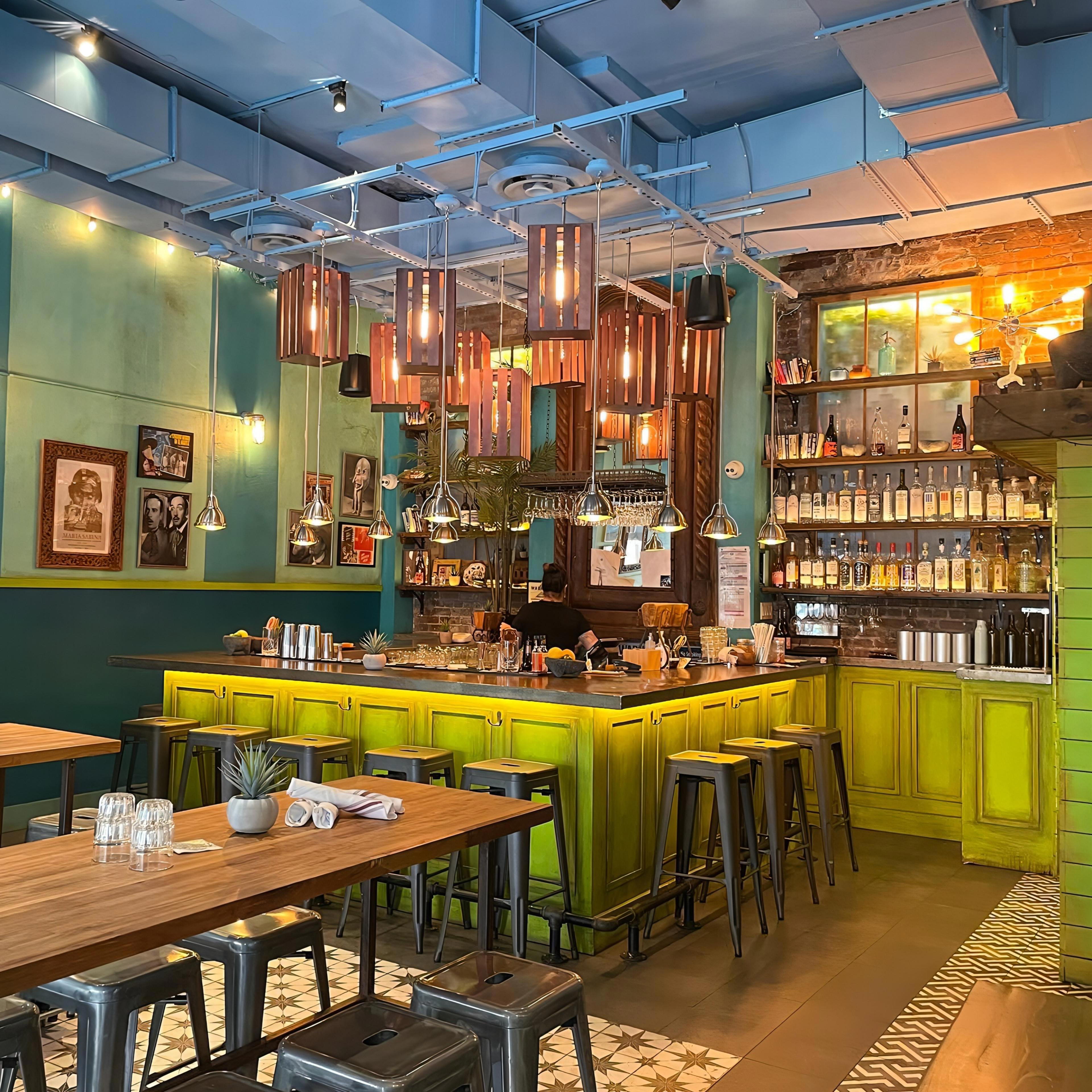
The Room Before the Menu
Covacha is a Mexican restaurant in New York City, holding a Michelin Bib Gourmand in 2024 and priced at about $45 per person. Covacha, at 368 Columbus Ave, fits that character. The dining room is festive without being performative, animated by families, groups of friends, and the kind of celebratory tables that suggest a place has earned its regulars rather than borrowed them. The energy is warm and collective, the sort that builds organically when the food gives people a reason to stay at the table.
That atmosphere is the first signal of what Covacha is doing editorially within New York's Mexican dining field. Where places like Oxomoco have built their identity around wood-fired ambition and a more studied aesthetic, and where Atla leans toward the all-day, light-touch downtown crowd, Covacha stakes its claim in the tradition of the rancho: the rural western Mexican table where sharing is structural and restraint is beside the point.
Jalisco as a Reference Point
New York's Mexican dining has broadened considerably over the past decade, moving from a landscape dominated by Tex-Mex approximations and Oaxacan-inflected tasting menus into something more geographically specific. Restaurateur Cristina Castañeda's project here is rooted in the traditions of western Mexico, with Jalisco's ranchos as its organising principle. That specificity matters. Jalisco is the home of tequila, mariachi, and a cooking culture centred on communal, slow-cooked meat dishes that reward patience and resist refinement for its own sake.
That regional grounding puts Covacha in a different conversation from the broader Pan-American wave that has shaped New York dining in recent years. The Peruvian-inflected acid brightness of ceviche bars, the Argentine parrilla tradition, the Yucatecan cochinita pibil that increasingly appears on upscale menus, these represent a Latin American breadth that has expanded the city's repertoire. Covacha's contribution is narrower and more insistent: this is Jalisco cooking, executed without the editorial smoothing that tends to make regional Mexican food legible to a generalist audience but less honest to its source.
What the Menu Argues
The menu is concise and structured without apology. Chicken quesabirrias open proceedings: crisp parcels served with birria broth for dipping, a format that has moved from street-food ubiquity to mainstream menu fixture across New York in recent years. Birria Landia built a cult following around the format at the accessible end; Covacha's version sits within a fuller dining context where the birria logic extends to the main courses.
The barbacoa tapatía is the anchor dish: slow-roasted beef shank served with tortillas and brothy beans, assembled at the table by the diner. It is unapologetically hands-on and deliberately imprecise in presentation, the kind of dish that resists the plated elegance that defines the upper tiers of New York's Mexican fine dining. Portions are generous and prices remain accessible at the $$ tier, which in the context of the Upper West Side represents a considered positioning rather than an accident.
Chef Arthur Dutter executes a menu that shows no visible interest in shortcuts or filters. The cooking is genuine rather than overworked, a distinction that matters in a city where Mexican food frequently passes through several layers of editorial intervention before reaching the plate. Compare this to the more concept-forward approaches at Alta Calidad or the produce-driven refinement at ABC Cocina, and Covacha's position becomes clearer: it is less interested in what Mexican food can become than in what it already is in its place of origin.
The Agave Bar as Argument
Agave spirits have undergone significant reframing in the American market over the past several years. Tequila, once positioned as a shots category or a margarita base, now supports a collector culture of aged expressions and estate-bottled blanco with price points that rival premium Scotch. Mezcal has developed its own connoisseur tier, with single-village, small-batch bottlings drawing the kind of scrutiny once reserved for Burgundy producers. Covacha's bar reflects this shift with a focused selection of tequila, mezcal, and boutique agave wines, a category that remains marginal in most New York bar programs and signals a level of category knowledge that goes beyond stocking a well-known house pour.
The agave wine page in particular represents a genuine niche. Wines produced from agave plants, distinct from distilled spirits, occupy a small but growing space within Mexican beverage culture. Their presence here, alongside the Jalisco-anchored food program, suggests a bar built by people who know the source material rather than people working backward from what a Manhattan agave bar is expected to stock.
Where Covacha Sits in the comparable set
The 2024 Michelin Bib Gourmand recognition is the relevant credential here. The Bib Gourmand designation marks quality cooking at accessible prices, a different judgment than a star, and in some ways a more precise one for a restaurant operating at the $$ tier. It places Covacha in a specific cohort within the Michelin framework: places where the inspectors found something worth tracking that is not competing on luxury or spectacle.
| Venue | Price Tier | Recognition | Format | Neighbourhood |
|---|---|---|---|---|
| Covacha | $$ | Michelin Bib Gourmand 2024 | À la carte, family-style | Upper West Side |
| Oxomoco | $$$ | Michelin recognition | Wood-fired, à la carte | Greenpoint |
| Atla | $$ | Editorial recognition | All-day, à la carte | NoHo |
| Alta Calidad | $$ | Michelin Bib Gourmand | À la carte | Boerum Hill |
Planning Your Visit
Covacha is at 368 Columbus Ave, New York, NY 10024, on the Upper West Side. The casual room suits groups and longer dinners. The birria-based dishes and the agave bar are the two pillars worth anchoring a visit around.
Further afield, for readers tracking serious American regional cooking at different price points, Emeril's in New Orleans, Lazy Bear in San Francisco, Single Thread Farm in Healdsburg, and Providence in Los Angeles each represent a different answer to the question of what a serious American dining room looks like in 2024.
- Flautas
- Birria
- Barbacoa Tapatía
- Chilaquiles
- Guacamole Ashes
- Camarones Ajillo
The Short List
Comparable venues nearby, for context on price, style, and recognition.
| Venue | Cuisine | Price | Notes |
|---|---|---|---|
| CovachaThis venue — the venue you are viewing | Mexican | $$$ | Not listed |
| Alta Calidad | Prospect Heights, Modern Mexican | $$ | Not listed |
| Oso | Not listed | $$ | Hamilton Heights-Sugar Hill, Modern Mexican Street Food |
| Lupa | Not listed | $$$ | Greenwich Village, Traditional Roman Trattoria |
| El Fish Marisqueria | Not listed | $$$ | Upper West Side-Lincoln Square, Mexican Seafood Fusion |
| Kanoyama | Not listed | $$$ | East Village, Traditional Japanese Sushi Omakase |
Recognition history
Dated appearances from independent guides and award organizations, with the underlying list record or original source where available.
Michelin Bib Gourmand
Michelin
Michelin Bib Gourmand
Michelin
Continue exploring
More in New York City
Restaurants in New York City
Browse all →
Bars in New York City
Browse all →

Hotels in New York City
Browse all →

Wineries in New York City
Browse all →


At a Glance
- Lively
- Whimsical
- Energetic
- Elegant
- Family
- Group Dining
- Celebration
- Casual Hangout
- Brunch
- Standalone
- Open Kitchen
- Craft Cocktails
- Beer Program
- Local Sourcing
- Farm To Table
Current opening hours
- Monday
- 11:30 AM–9 PM
- Tuesday
- 11:30 AM–9 PM
- Wednesday
- 11:30 AM–9 PM
- Thursday
- 11:30 AM–9 PM
- Friday
- 11:30 AM–10 PM
- Saturday
- 11:30 AM–10 PM
- Sunday
- 11:30 AM–9 PM
Hours can change for holidays and private events. Last verified .
Lively and festive with lime green, yellow, and other bright hues decorating the dining room; warm and welcoming atmosphere with lively energy from families and celebratory tables; features a mini loft and amply stocked bar.