
Contrada Govinda occupies a quiet address on Via Valpetrosa in Milan's historic centre, where Chef Nata Qatibashvili fuses Italian ingredients with Middle Eastern flavour logic under a sustainability framework that shapes sourcing, seasonality, and waste reduction. The kitchen skews heavily vegetable-forward without leaning on the usual plant-based clichés, and the cooking rewards diners who want assertive flavour rather than decorative restraint.
 Discover on Pearl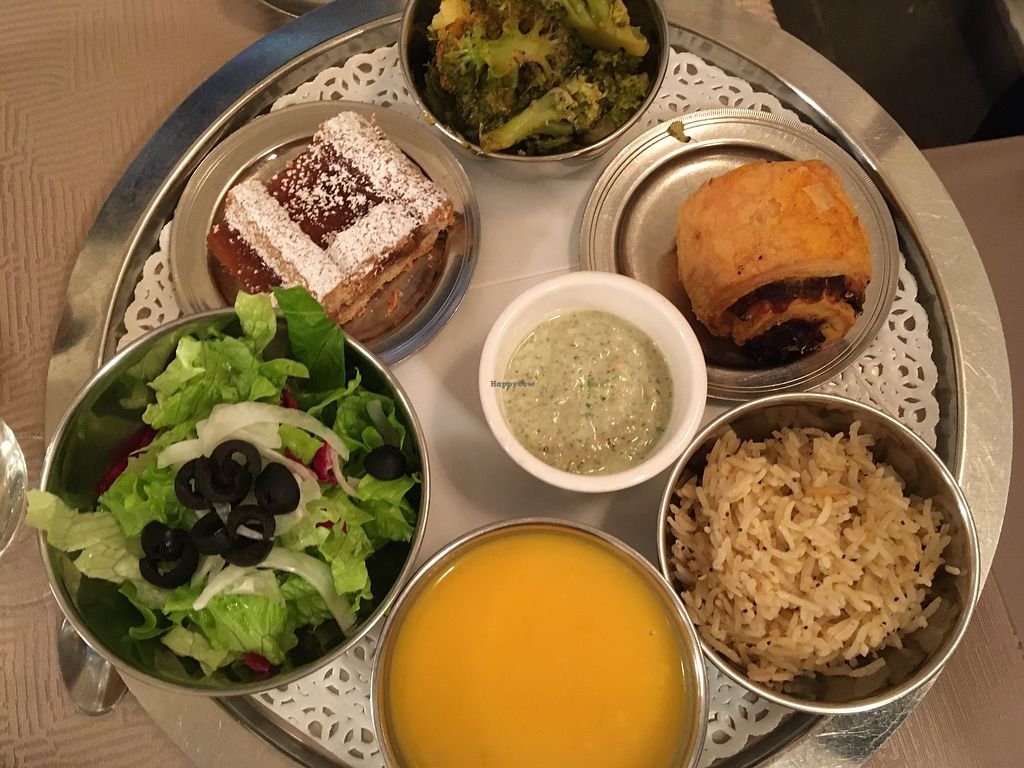
Where Italian Produce Meets Middle Eastern Flavour Logic
Milan's dining culture has long organised itself around a clear hierarchy: the white-tablecloth institutions of the Quadrilatero, the contemporary Milanese tasting menus at places like Enrico Bartolini, Cracco in Galleria, Andrea Aprea, and Seta, and then a looser, harder-to-categorise tier of smaller kitchens doing something genuinely different. Contrada Govinda sits in that third bracket, at Via Valpetrosa, 5, in the 20123 postcode that puts it within easy reach of the Duomo district without any of the tourist-trap positioning you might expect. The address is quiet, the signage understated, and the experience inside follows the same logic: substance before spectacle.
What makes the kitchen interesting is not simply that it crosses culinary borders, but the precision with which it does so. Italian cuisine and Middle Eastern cooking share certain foundational instincts — respect for the agricultural calendar, the use of legumes and grains as structural elements, the understanding that a vegetable properly handled needs no apology. Chef Nata Qatibashvili works in that overlap deliberately, and the result sits closer to a coherent point of view than to fusion eclecticism. The flavour combinations here are assertive; this is a kitchen that commits.
The shortlist, unlocked.
Hard-to-book tables, cellar releases, and concierge-planned trips.
Get Exclusive Access →The Cultural Roots of What's on the Plate
To understand why the Italian-Middle Eastern combination works, it helps to look at culinary history rather than geography. The movement of ingredients across the Mediterranean — spices travelling north from North Africa and the Levant into Sicilian and Southern Italian cooking , is centuries old. Dishes that read as distinctly Italian today, from caponata to certain rice preparations, carry traces of that long exchange. Contrada Govinda makes that latent relationship explicit, using Italian seasonal produce as the raw material and applying Middle Eastern flavour principles , spice layering, fermented condiments, grain-forward composition , as the method.
This is a notably different approach from the high-intervention creativity on show at the city's €€€€ tasting-menu counters. Restaurants like Verso Capitaneo are pushing progressive Italian cooking in one direction; Contrada Govinda is asking a different question entirely, one rooted in cross-cultural borrowing rather than technical novelty. Internationally, kitchens at Osteria Francescana in Modena and Piazza Duomo in Alba have shown that Italian cooking becomes most interesting when it engages honestly with influence rather than pretending to purity. Contrada Govinda applies that logic at a smaller scale, with fewer theatrics and a tighter focus on flavour.
Sustainability as Method, Not Marketing
The restaurant's sustainability framework is worth taking seriously because it is operationally specific rather than decoratively vague. The philosophy described by the kitchen centres on three things: eliminating ingredient waste through whole-product use, sourcing according to the agricultural calendar rather than convenience, and maintaining the integrity of the supply chain between farm and plate. These are constraints that shape cooking decisions , what gets ordered, what gets used in full, what appears on the menu and when.
In practice, this means the menu moves with the seasons in a way that is more disciplined than at many Italian restaurants that claim the same commitment. A kitchen serious about not wasting produce has to develop genuine depth with each ingredient rather than cycling through them decoratively. For the diner, it means that what arrives at the table reflects what is actually good right now, rather than what was available at the required price point six months ago. That is a distinction worth paying attention to, particularly in a city where seasonal language sometimes functions more as positioning than as practice.
Across Italy, a growing number of kitchens are operating with comparable discipline. Atelier Moessmer Norbert Niederkofler in Brunico has built an internationally recognised programme around Alpine produce and zero-waste principles. Dal Pescatore in Runate represents a different model, but shares the conviction that restraint in sourcing produces better food. Contrada Govinda operates at a different scale and price point from both, but belongs to the same broader argument about what responsible Italian cooking looks like in practice.
The Vegetable-Forward Angle
The kitchen's vegetable emphasis deserves a specific note, because it functions differently from the way plant-forward cooking is typically framed in European restaurant culture. This is not a kitchen organised around substitution , replacing meat proteins with vegetable proteins and hoping no one notices. The Middle Eastern flavour logic that shapes the menu treats vegetables, legumes, and grains as primary subjects, not supporting cast. Dishes built around chickpeas, aubergine, preserved lemon, and fresh herbs in their correct season carry a different kind of satisfaction than anything that requires an apology for the absence of protein.
This positions Contrada Govinda usefully for a specific type of diner: someone who eats without dietary restrictions but finds the relentless meat-centricity of much Italian trattoria cooking limiting after a few days in the city. It is also relevant context that the kitchen applies the same flavour intensity to its vegetable-led plates that other restaurants reserve for premium animal proteins. The Middle Eastern spice logic delivers that depth without requiring it.
Milan in Context
Milan's restaurant culture rewards exploration beyond the obvious tier. The city's most-reviewed tables , the Michelin-recognised rooms and the grand Galleria addresses , represent one version of the city, and an accurate one. But the more interesting story in 2024 and 2025 is what is happening in the smaller, less categorised spaces, particularly among kitchens whose frame of reference extends beyond the Italian peninsula. For a city with Milan's international commercial character and its long history of absorbing outside influence into local culture, the food scene has sometimes been slower to reflect that openness than the fashion and design industries. Contrada Govinda belongs to the cohort that is correcting that imbalance.
For practical planning: the restaurant is located in central Milan at Via Valpetrosa, 5, within walking distance of Cadorna and Cordusio metro stations. Given the kitchen's sustainability-driven, seasonal approach, visiting outside peak tourist months , broadly, avoid August when much of Milan closes , gives the leading chance of experiencing the menu at full expression. Booking ahead is advisable, though the restaurant's online presence is limited; direct contact via in-person enquiry or through local concierge services is the most reliable approach given that phone and website details are not publicly listed through standard channels.
For a broader view of what Milan's dining scene offers at different price points and styles, see our full Milan restaurants guide. Those planning a wider trip can also consult our Milan hotels guide, bars guide, wineries guide, and experiences guide. For comparison against Italy's more formally recognised dining rooms, Enoteca Pinchiorri in Florence and Le Calandre in Rubano represent the country's formal fine dining tier, while internationally, Le Bernardin in New York and Emeril's in New Orleans offer useful reference points for how serious ingredient sourcing translates across different culinary traditions.
Frequently Asked Questions
- Is Contrada Govinda child-friendly?
- The vegetable-forward, flavour-forward menu and central Milan setting make it a reasonable choice for families with older children who eat adventurously; younger children or very picky eaters may find the Middle Eastern spice profile less accommodating.
- What should I expect atmosphere-wise at Contrada Govinda?
- The room sits at the quieter, more considered end of Milan's mid-range dining spectrum: this is not the theatrical energy of the city's grand tasting-menu rooms, nor the loud informality of a neighbourhood trattoria. Expect a setting that lets the food carry the experience, consistent with a kitchen whose philosophy prioritises ingredient and flavour over spectacle.
- What do regulars order at Contrada Govinda?
- The kitchen's reputation is built on its vegetable-led plates shaped by Middle Eastern spice logic, so lean toward whatever is described as seasonal and vegetable-forward on the day's menu. Chef Nata Qatibashvili's approach means the strongest dishes tend to reflect what is currently at peak in the Italian agricultural calendar, prepared with the layered flavour depth that characterises the cross-cultural cooking style.
A Pricing-First Comparison
Comparable options at a glance, pulled from our tracked venues.
| Venue | Price | Awards | Notes |
|---|---|---|---|
| Contrada Govinda | Chef Nata Qatibashvili and the restaurant Contrada Govinda swear by sustainabili… | This venue | |
| Enrico Bartolini | €€€€ | Michelin 3 Star | Creative, €€€€ |
| Cracco in Galleria | €€€€ | Michelin 1 Star | Modern Cuisine, €€€€ |
| Andrea Aprea | €€€€ | Michelin 2 Star | Modern Italian, Italian Contemporary, €€€€ |
| Seta | €€€€ | Michelin 2 Star | Modern Italian, €€€€ |
| Contraste | €€€€ | Michelin 1 Star | Progressive Italian, Modern Cuisine, €€€€ |
Need a table?
Our members enjoy priority alerts and concierge-led booking support for the world's most difficult tables.
Get Exclusive AccessThe shortlist, unlocked.
Hard-to-book tables, cellar releases, and concierge-planned trips.
Get Exclusive Access →