
Clutch Hitter gives Itami a serious ramen address in the Kansai ramen conversation, with tsukemen and ramen rather than tasting-menu ceremony. Its repeated Tabelog Ramen WEST 100 selections place it in a selective regional group, while the small counter-and-table format keeps the experience closer to everyday Japanese noodle culture than destination dining theatre.
Pearl is the En Primeur Club membership app — saves, bookings, and concierge access live there. Same editors, same standards.
- Address
- Japan, 〒664-0017 Hyogo, Itami, Mizugaoka, 1 Chome−19−19 瑞ケ丘久保ハイツ
- Website
- twitter.com
 Saves & bookings on Pearl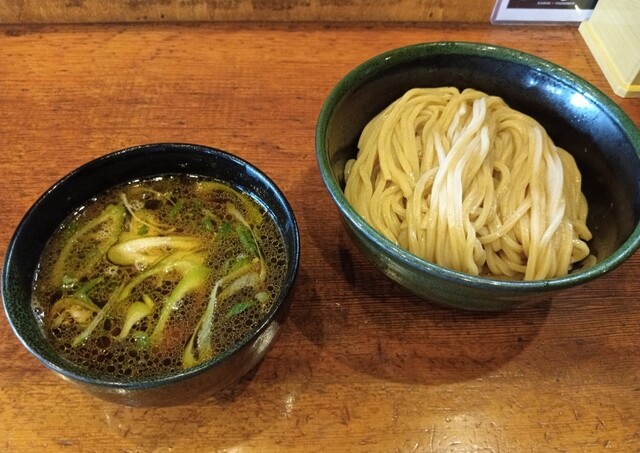
Approaching a suburban ramen shop in Itami differs from joining a central Osaka queue. The rhythm is quieter, the competition less performative, and the test more direct: broth, noodles, toppings, turnover, and whether the bowl merits a detour beyond the usual urban dining corridors. Clutch Hitter belongs to the smaller Kansai category where ramen is not a late-night afterthought but the main event, with tsukemen and ramen carrying the meal.
That matters because western Japan’s ramen culture is often framed by big-city gravity: Osaka for density, Kyoto for old shops and chicken-based bowls, Kobe for port-city range. Itami sits outside that glare. A ramen shop here must earn attention without neighborhood spectacle, and repeated selection for Tabelog Ramen WEST 100 in 2018, 2023, 2024, and 2025 gives this address a concrete signal beyond local familiarity. In a category where hundreds of shops can look similar from the pavement, that recognition pattern is the useful marker.
Tsukemen gives the kitchen its clearest argument
Tsukemen changes ramen’s pacing. Instead of noodles disappearing into soup immediately, the format separates texture from broth: noodles on one side, dipping soup on the other. That puts more pressure on noodle structure and temperature management. Standard ramen can blur small weaknesses through heat and momentum; tsukemen gives less cover. Clutch Hitter’s category listing around tsukemen and ramen places it in that more technical lane, where the point is not only flavor intensity but how the noodle holds its bite through the meal.
Ingredient sourcing in ramen is not only about luxury produce. It is about whether the shop’s choices read coherently: wheat selection for noodle chew, animal or seafood elements for broth depth, tare for salinity and identity, fat for aroma, and toppings that support rather than crowd the bowl. Japanese ramen culture has become increasingly ingredient-literate over the past two decades, with diners comparing flour character, soup clarity, pork handling, and dried-seafood presence with the seriousness once reserved for sushi rice or soba water. At this tier, the bowl succeeds when those components feel deliberately aligned rather than merely abundant.
That is where tsukemen’s appeal becomes practical as well as culinary. It lets diners read the noodles first, then the broth, then how the two meet. In Kansai, where lighter dashi traditions sit beside heavier contemporary ramen styles, the format has become a useful middle ground: concentrated enough for impact, structured enough for comparison. Clutch Hitter fits that conversation better than a generic ramen stop, and its Tabelog recognition suggests regular diners treat it as part of the region’s serious noodle circuit.
Itami's casual dining scene rewards narrow specialists
Itami is not built around one restaurant strip for visitors to conquer. Its dining map is dispersed, with neighborhood specialists, bakeries, gyoza counters, and casual Japanese restaurants doing much of the work. That makes a focused ramen shop more legible: a tight menu category, quick meal architecture, and a room suited to solo dining as naturally as a small group. The format is compact, with counter seating and tables rather than a lounge-like dining room, exactly how this food should be judged.
Compared with local casual options such as Gafuu An, Chibune Ya, and Gyoza Senmonten Osaka Ou Itami ten, the draw here is narrower and more specialist. Grimm and PATISSERIE LACROIX reflect the city’s lower-key everyday eating pattern, where patisserie, gyoza, and neighborhood meals sit close together in the same itinerary. Ramen with regional awards recognition changes the stakes: it gives Itami a reason for a noodle-focused stop rather than a convenience meal between larger Kansai plans.
The comparison is not about formality but intent. Travelers planning around high-end dining in Japan often over-index on omakase counters and kaiseki rooms, then treat ramen as spontaneous filler. That is a mistake in places like Hyogo, where ramen shops can be technically serious without becoming expensive or ceremonial. The restaurant is a useful corrective: the meal remains casual, but the category discipline is strong enough to anchor a detour.
How to fit it into an Itami food day
The practical decision is whether ramen is the anchor or punctuation mark. In Itami, it works better as the anchor for a compact food route: noodles first, then sweets, coffee, or a lighter second stop elsewhere in the city. Visitors building a broader local itinerary should use our full Itami restaurants guide for nearby dining context, while our full Itami hotels guide, our full Itami bars guide, our full Itami wineries guide, and our full Itami experiences guide are better for assembling the rest of the day rather than treating ramen as an isolated stop.
For readers mapping Japanese casual food more broadly, the useful comparison is not luxury versus cheap eating, but specialization versus breadth. A focused ramen shop in Itami belongs to the same editorial category of precise, single-purpose dining as a curry specialist, an onigiri counter, or a sake-led small plate bar: narrow formats where repeatability and ingredient judgment matter. For that broader frame, compare the role of a specialist address such as [Curry Senmon Ten] Maruyama Kyoju. in Sapporo, Onigiri Time in Pasadena, or Jōdo Saké Bar in Los Angeles. Each works because the format is tight and the diner knows what question the kitchen is trying to answer.
It also helps to separate this meal from restaurants where setting, extended service, or cross-category menus define the experience. -Grilled beef Sukiyaki- KAMAKURA TANUKIAN 鎌倉 たぬき庵 in Kamakura. 鮪と炭火焼き うお炭 秋葉原店 in Tokyo.cafe in Osaka.know in Kumamoto, and (Shoku) Vietnam in Kawasaki sit in different lanes. The restaurant asks for a simpler reading: a regional ramen specialist with a track record of Tabelog Ramen WEST 100 selections, in a city where a focused bowl can carry more editorial weight than a longer meal.
- Shio ramen
- Tsukemen (various limited flavors)
- Cold shio ramen with octopus
- Meat shoyu ramen
- Oyster miso tsukemen
- Red shrimp tsukemen
Comparable Spots, Quickly
Comparable venues by cuisine and price in the same metro.
| Venue | Cuisine | Price | Notes |
|---|---|---|---|
| Clutch HitterThis venue — the venue you are viewing | Ramen and Tsukemen Shop | $$ | Not listed |
| がふうあん | Japanese Ramen | $$ | 西台 |
| Gafuu An | Traditional Japanese Ramen Shop | $$ | Itami |
| Grimm | Neighborhood bakery & cake shop | $ | / 西台 |
| Gyoza Senmonten Osaka Ou Itami ten | Osaka-style Gyoza Specialty Shop | $ | Itami |
| Chibune Ya | Japanese Udon & Teishoku | $ | Itami |
Recognition history
Dated appearances from independent guides and award organizations, with the underlying list record or original source where available.
Tabelog 100 #37 · No. 37
Tabelog · Tabelog 100 - Ramen - WEST - 2025
Continue exploring
More in Itami
Restaurants in Itami
Browse all →

Bars in Itami
Browse all →
Hotels in Itami
Browse all →

Wineries in Itami
Browse all →
At a Glance
- Cozy
- Lively
- Solo
- Casual Hangout
- After Work
- Standalone
Current opening hours
- Monday
- Closed
- Tuesday
- 11:30 AM–2 PM, 6–9 PM
- Wednesday
- 11:30 AM–2 PM, 6–9 PM
- Thursday
- 11:30 AM–2 PM, 6–9 PM
- Friday
- 11:30 AM–2 PM, 6–9 PM
- Saturday
- 11:30 AM–2 PM, 6–9 PM
- Sunday
- 11:30 AM–2 PM
Hours can change for holidays and private events. Last verified .
Casual neighborhood ramen shop with a warm, family-run feel where the owner (“oyaji”) cooks and the daughter runs social media; the atmosphere is lively but relaxed, focused on slurping noodles rather than formal dining.